Photo: Made with AI
Strategic Assessment of Fenwick, CT
Multiple tactical vulnerabilities. Population density, target proximity, or disaster risk are likely compounding. A retreat property and exit planning is required.
What does the Strategic Assessment tell us?
Our Strategic Assessment grades tactical survivability of an area. Major population centers, military targets, fallout zones, natural disasters, and border exposure all drive risk — lower exposure means a more defensible position in a crisis.
This is heavily inspired by Joel Skousen's Strategic Relocation book. Highly recommended you checkout the book ($)What does this tell us?
Our Strategic Assessment grades tactical survivability of an area. Major population centers, military targets, fallout zones, natural disasters, and border exposure all drive risk — lower exposure means a more defensible position in a crisis.
This is heavily inspired by Joel Skousen's Strategic Relocation book. Highly recommended you checkout the book ($)Strategic Pillars

Key Distances
Regional Safe Places
Below is our recommended "safe zones" in Connecticut and the surrounding area based on our strategic heuristics. For most people, it's unrealistic to live in a “safe zone” full-time due to work, family or other personal reasons. They tend to be more rural. However, many of these areas are perfect for second homes and retreat properties that double as a vacation home or even a short-term rental.
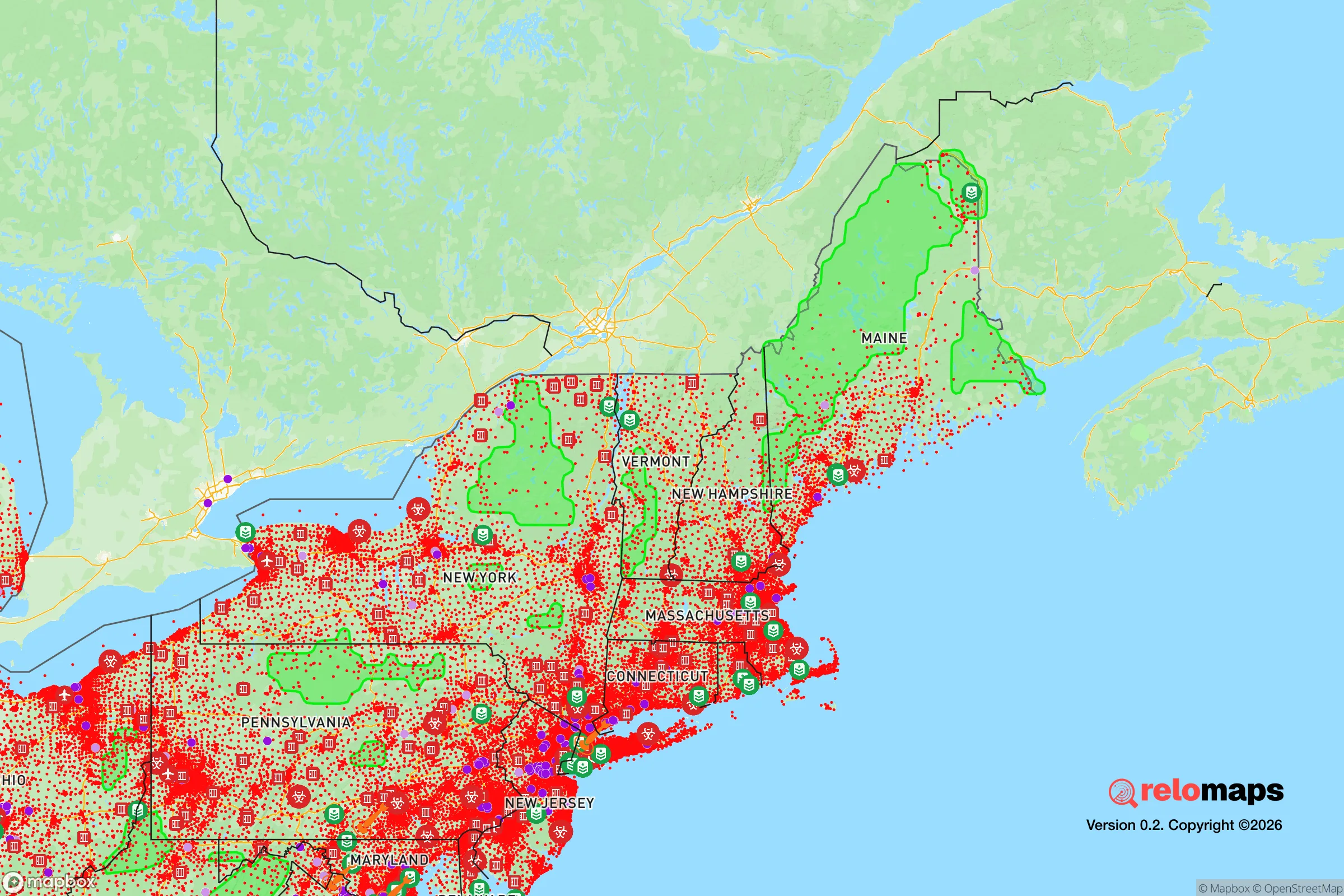
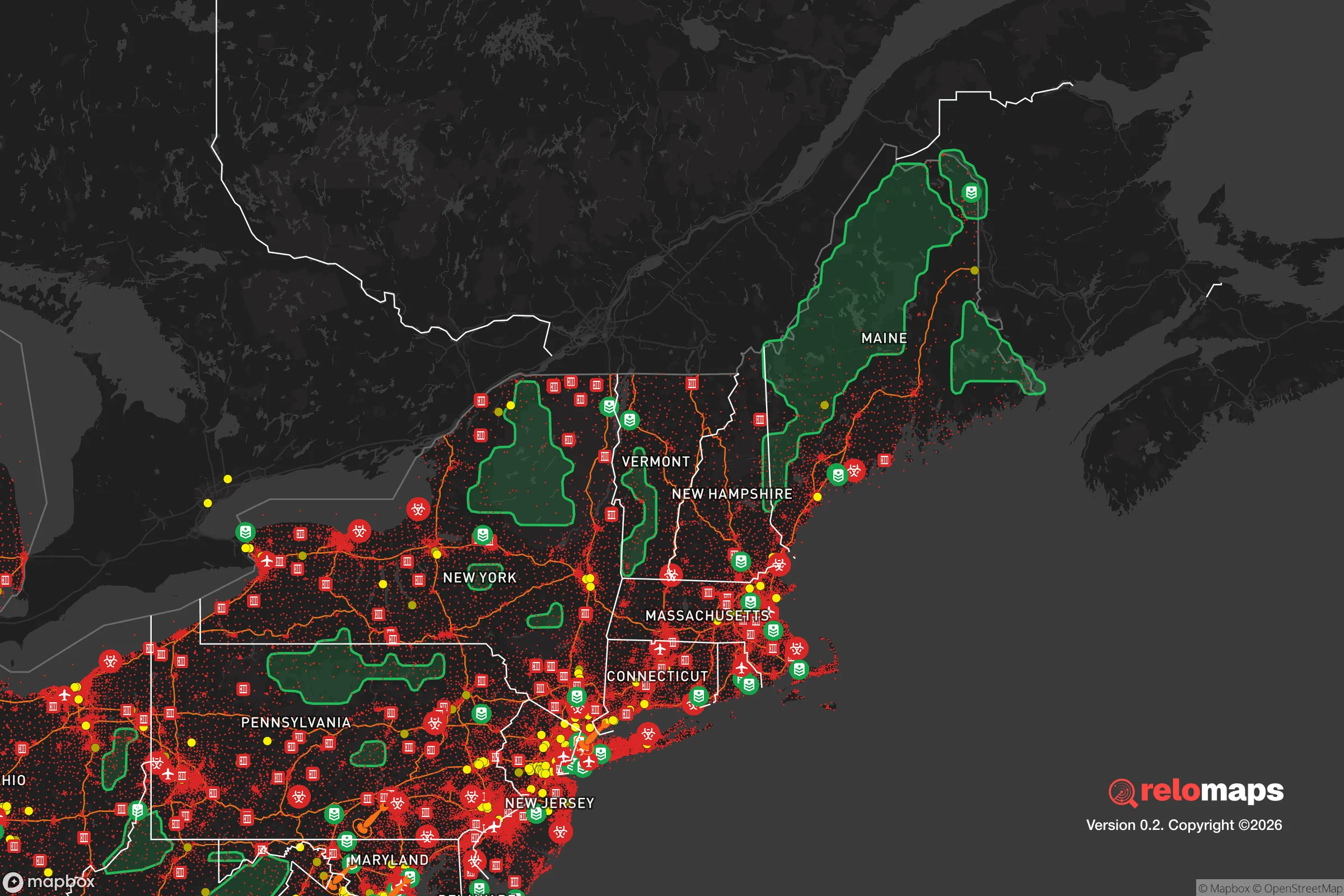


Important Note: For informational purposes only. This does not mean nothing bad ever happens in the green zones. Please use common sense. This is based on public data and modeled with AI. We tried to take a conservative approach but mistakes happen. We update this regularly as new information becomes available.
Solar Generator Recommendations
Backup power matters more here than in safer locations. We've picked three solar generators across budgets and capacity tiers — start with the budget unit if you only need a few essentials, or step up if you want to run a fridge and HVAC for days at a time.

Jackery Portable Power Station Explorer 300
Budget OptionPower on the Go: Weighing only 11 lbs, it's convenient to set up and store with book-sized foldable solar panels

BLUETTI Portable Power Station AC180
Designed for both indoor and outdoor scenarios, AC180 is highly capable as it has a robost capacity and continuous output power.

EF ECOFLOW DELTA Pro Ultra Power Station
Upgraded PickEcoFlow DELTA Pro Ultra is a whole-home energy system designed to grow with your family. Integrated with the Smart Home Panel 2, it scales to meet your evolving energy needs — keeping your home powered, intelligent, and secure through every stage of life.
We earn a commission, at no additional cost to you.
Strategic Assessment Analysis
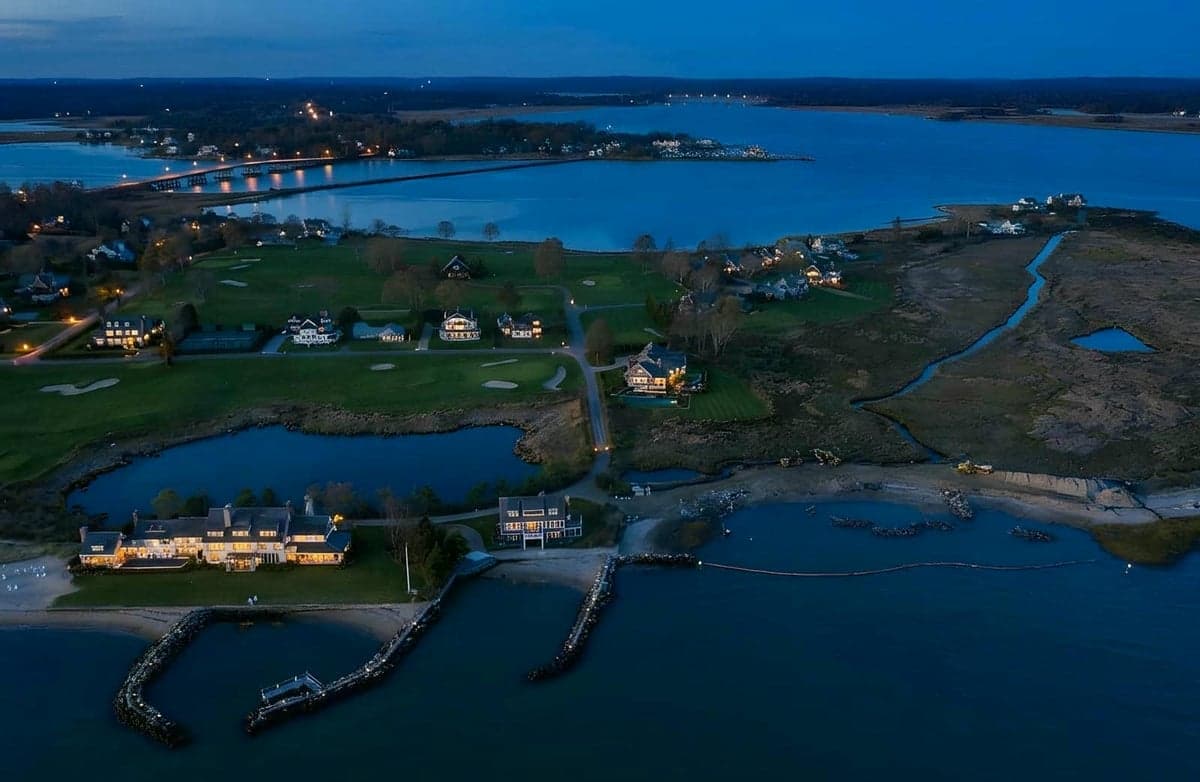
Fenwick, Connecticut, offers a unique strategic position for those prioritizing resilience, but it requires a clear-eyed assessment of both its strengths and its vulnerabilities. This small, affluent borough on Long Island Sound, part of Old Saybrook, is not a remote survivalist redoubt; rather, it is a coastal enclave that balances proximity to critical infrastructure with exposure to population centers and natural threats. For a relocator with a conservative, prepper mindset, Fenwick presents a mixed picture: strong local governance and community cohesion, but significant risks from its location near major transit corridors and potential fallout targets.
Geographic position and natural advantages for long-term security
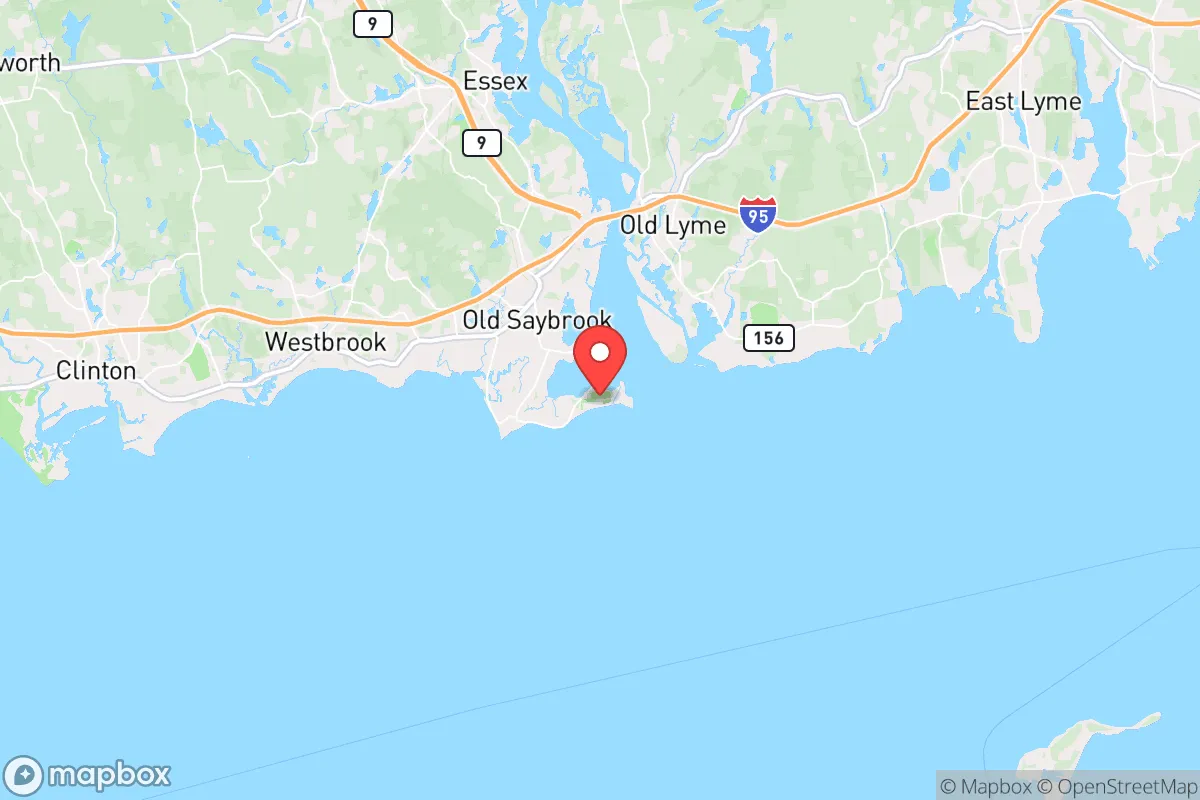
Fenwick sits at the mouth of the Connecticut River, where it meets Long Island Sound. This position provides several natural advantages. The borough is essentially a peninsula, bounded by water on three sides, which inherently limits access points and creates a natural defensible perimeter. The Connecticut River offers a reliable freshwater source and a potential route for evacuation or resupply by water, should road networks become compromised. The surrounding area of Old Saybrook and the lower Connecticut River Valley is characterized by a mix of tidal marshes, woodlands, and agricultural land, providing some buffer from the denser suburban sprawl found further inland. The local economy is anchored by tourism, maritime industries, and a small but stable base of professional services, which means the area is not entirely dependent on a single employer or industry. For a relocator, the key takeaway is that Fenwick’s geography offers a degree of natural isolation and resource access that is rare along the densely populated Northeast corridor. The Long Island Sound also moderates temperatures, reducing the risk of extreme winter events that could complicate off-grid living, though it does not eliminate them.
Risks, exposures, and proximity to fallout-relevant landmarks
The most significant strategic weakness of Fenwick is its proximity to major population centers and critical infrastructure that would be high-value targets in a national crisis. The borough is roughly 30 miles east of New Haven and 40 miles west of New London, both of which host major transportation hubs, industrial facilities, and military-related assets. New London is home to the U.S. Coast Guard Academy and the Naval Submarine Base New London in Groton, a primary target for any adversary seeking to cripple U.S. naval capabilities. The I-95 corridor, which runs just north of Fenwick, is a vital east-coast artery that would be a choke point for movement and a likely target for disruption. The nearby Millstone Nuclear Power Station in Waterford, approximately 15 miles east, presents a dual risk: it is a potential target for attack, and its proximity means any accident or sabotage could render the area uninhabitable for an extended period. Additionally, the borough’s coastal location makes it vulnerable to storm surge from hurricanes and nor’easters, which could cut off access and damage critical infrastructure. For a relocator, the calculus is clear: Fenwick offers some natural defenses, but it sits within the blast radius—both literal and figurative—of several high-consequence targets. The area’s reliance on a single bridge (the Fenwick Bridge) for road access is a critical vulnerability; a single point of failure could trap residents or prevent resupply.
Practical resilience for a relocator: food, water, energy, and defensibility
For a relocator focused on practical self-sufficiency, Fenwick presents a mixed bag. Water is abundant from the Connecticut River and Long Island Sound, but it requires treatment—brackish or saline water is not potable without desalination or reverse osmosis, and river water needs filtration and boiling. The local water table is high, making private wells feasible in some parts of Old Saybrook, but Fenwick itself is largely on a public water system supplied by the town. Food security is moderate: the surrounding area has some farmland, but it is not a major agricultural hub. The Connecticut River Valley does support orchards, dairy, and vegetable farms, but a relocator would need to establish relationships with local growers or invest in significant personal production. The maritime environment offers fishing, shellfishing, and crabbing, which could supplement diets, but these resources are subject to contamination from runoff or industrial accidents. Energy resilience is a concern. The grid in coastal Connecticut is vulnerable to storms and aging infrastructure. Solar is viable, but coastal salt air accelerates corrosion, and the borough’s tree cover can limit panel placement. Natural gas is available in the area, but a prepper should plan for a multi-fuel generator and a substantial fuel cache. Defensibility is the strongest asset. The peninsula layout means only one road in and out, which can be monitored and controlled. The community is small (under 1,000 year-round residents) and affluent, which typically correlates with higher levels of local organization and private security. However, the same affluence means that many homes are vacation properties, leaving them empty for large portions of the year—a potential security risk if looters or displaced persons target unoccupied structures. The local police force is small, and response times from state police could be significant in a widespread event.
The overall strategic picture for Fenwick is one of calculated risk. It is not a remote, off-grid sanctuary, but it is a defensible coastal position with access to water and maritime resources. The primary threats are its proximity to high-value military and infrastructure targets, its vulnerability to storm surge, and its single-point-of-failure road access. For a relocator with a conservative, prepper mindset, Fenwick could serve as a secondary position—a place to ride out a short-term crisis or to stage from, but not a long-term survival retreat. The area’s social and political climate is generally moderate to conservative, with a strong emphasis on property rights and local control, which aligns with the values of the target audience. However, the high property values and seasonal population mean that building a resilient, self-sufficient homestead here requires significant capital and a willingness to navigate local zoning and coastal regulations. If the goal is to be prepared for civic unrest or mass casualty events, Fenwick offers a defensible base with good water access, but it demands a robust plan for evacuation or resupply if the I-95 corridor or the Millstone plant becomes a liability. In short, it is a location for those who want to be near the action but not in it—a strategic outpost, not a fortress.

* Values derived from national, state, county, city and local statistics and may differ in a specific area. Last updated: 2026-04-30T04:12:28.000Z
Narrative content on this page is AI-generated and may contain mistakes. Verify any details that matter before acting on them.
ReloMaps may earn a commission from affiliate links at no extra cost to you.

