 Popular
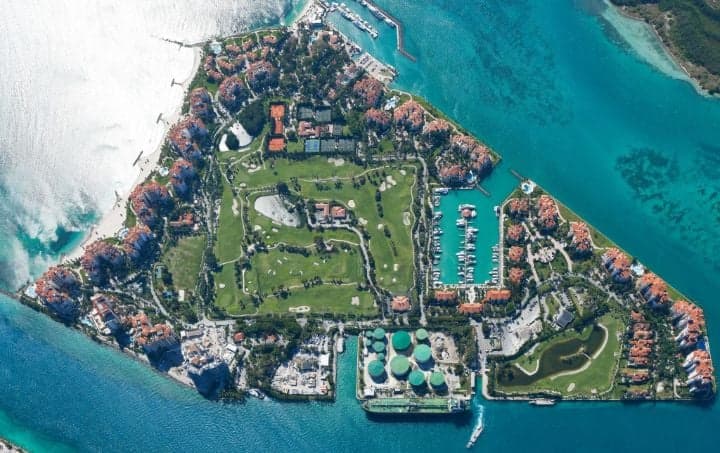
Photo: Wikipedia
Demographics of Fisher Island, FL
Affluence Level in Fisher Island, FL
An elite concentration of wealth — high incomes, strong home values, advanced degrees, and minimal poverty signal a top-tier socioeconomic profile.
Census doesn't track above $250K
People of Fisher Island, FL
Fisher Island, Florida, is an ultra-exclusive barrier-island community of 830 residents, characterized by extraordinary wealth, a 73.2% college-educated population, and a demographic profile that is overwhelmingly White (86.6%) with a notable Indian-subcontinent minority (2.7%) and a small Hispanic presence (8.1%). The island’s population is defined by its extreme selectivity—access is by ferry or private boat only—and its identity as a gated enclave for the global elite, with a density that feels more like a private resort than a traditional city. Foreign-born residents make up just 5.3% of the population, a figure that understates the transient, high-net-worth nature of many part-time residents who maintain primary homes elsewhere.
How the city was settled and grew
Fisher Island’s human history begins not with indigenous settlement or colonial farming, but with a deliberate act of 20th-century land speculation. The island was originally part of the Miami Beach peninsula until a hurricane carved the current channel in 1905. In 1919, automotive pioneer Carl G. Fisher purchased the island as part of his larger development of Miami Beach, envisioning it as an exclusive retreat. The first major wave of settlement came in the 1920s, when Fisher built the Fisher Island Club and a handful of Mediterranean-style villas, drawing wealthy northern industrialists and socialites who arrived by yacht. The Fisher Island Club neighborhood, centered on the original clubhouse and its surrounding cottages, became the nucleus of this early elite community, with families like the Vanderbilts and Mellons spending winters there. The island remained sparsely populated through the mid-20th century, used primarily as a private getaway for the rich, with no permanent residential development beyond a few dozen homes.
Modern era (post-1965)
The modern transformation of Fisher Island began in the 1970s and accelerated after 1985, when the island was redeveloped as a luxury condominium community. The post-1965 era saw no significant influx of immigrant groups or domestic migrants in the traditional sense; instead, the island’s population shifted from seasonal aristocrats to a global class of financiers, corporate executives, and celebrities. The Sunset Harbour neighborhood, featuring the island’s tallest condominium towers, absorbed many of these new residents—primarily White, American-born professionals from the Northeast and Midwest seeking a tax-advantaged Florida base. The Villa Venezia and Villa Firenze districts, composed of Mediterranean-style villas and low-rise condos, attracted a smaller but notable cohort of Indian-subcontinent families (2.7% of the current population), many of whom are executives in technology, finance, or healthcare with primary ties to Mumbai or Bangalore. The Hispanic population (8.1%) is concentrated in service and hospitality roles, living in staff quarters within the Marina Village area, though their numbers are small and largely invisible to the island’s social fabric. The 0.0% Black and 0.0% East/Southeast Asian figures reflect the island’s extreme economic barriers—purchase prices for condos routinely exceed $2 million, and monthly HOA fees often surpass $5,000—which effectively filter out all but the wealthiest households regardless of ethnicity.
The future
Fisher Island’s population is heading toward further homogenization by wealth, not by race or ethnicity. The island is not tribalizing into distinct ethnic enclaves; rather, it is consolidating as a single, ultra-affluent enclave where economic status overrides demographic diversity. The Indian-subcontinent community, while small, is likely to grow modestly as global wealth shifts toward South Asia, but it will remain a minority within an overwhelmingly White, American-born majority. The Hispanic population is plateauing, as service roles are increasingly filled by workers who commute from mainland Miami rather than live on-island. The 0.0% Black and East/Southeast Asian figures are unlikely to change significantly unless the island’s pricing structure shifts—which is improbable given the limited land and high demand. Over the next 10–20 years, Fisher Island will likely see a slight aging of its population, as existing residents age in place, and a continued influx of international buyers from Europe and the Middle East, who may increase the foreign-born share modestly. The island’s character as a quiet, security-obsessed sanctuary for the super-rich will remain unchanged.
For someone moving in now, Fisher Island is becoming an even more exclusive version of itself: a place where demographic diversity is minimal and economic homogeneity is absolute. The population is stable, wealthy, and insular, with no signs of significant change in its racial or ethnic composition. This is a community for those who prioritize privacy, luxury, and social insulation over diversity or urban energy—and the data confirms that is exactly what it delivers.

* Values derived from national, state, county, city and local statistics and may differ in a specific area. Last updated: 2026-10-10T16:27:27.000Z
Narrative content on this page is AI-generated and may contain mistakes. Verify any details that matter before acting on them.
ReloMaps may earn a commission from affiliate links at no extra cost to you.

