 Popular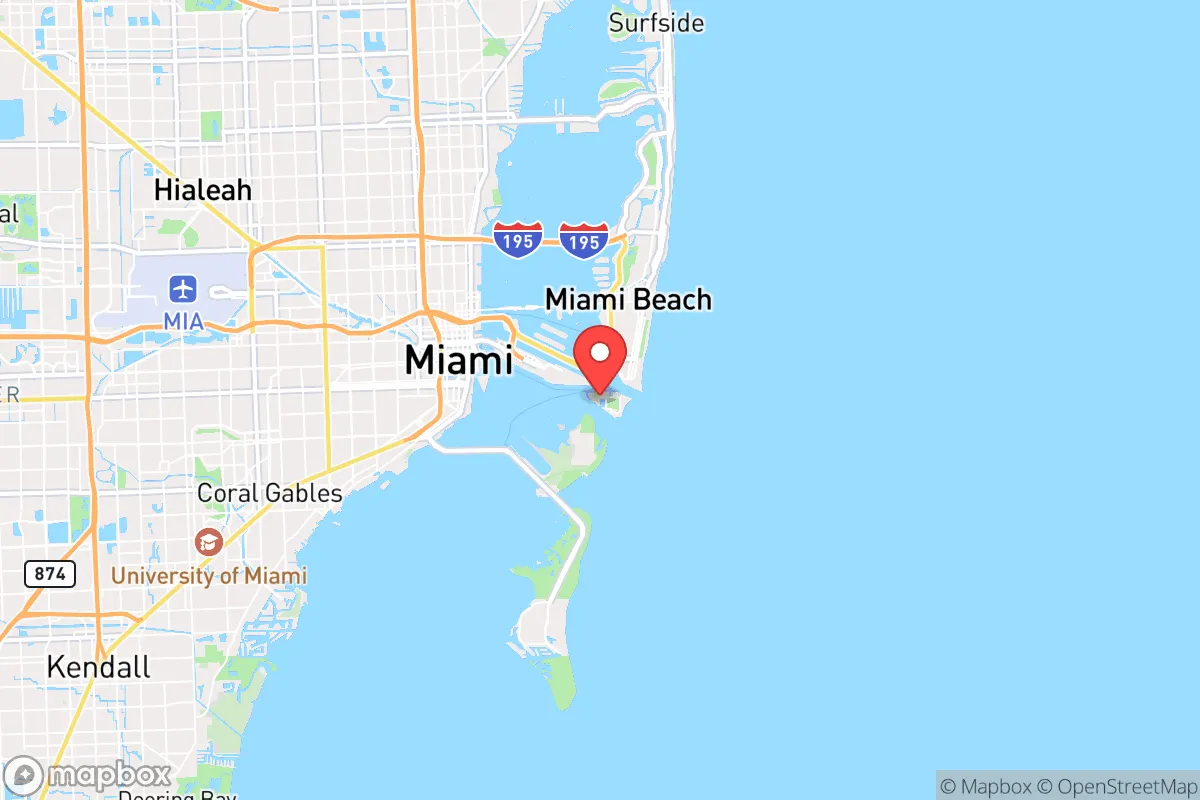
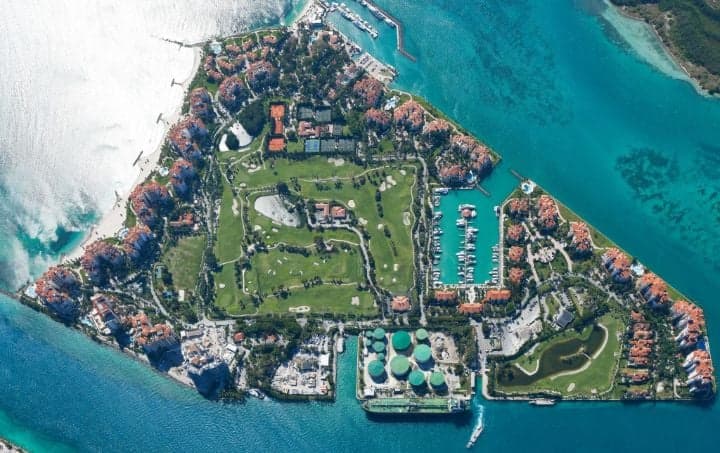
Photo: Wikipedia
Political ClimatePolitical Climate in Fisher Island, FL
District shown is the primary district for this city’s centroid. Cities may span multiple districts.
Local Political AnalysisPolitical Analysis of Fisher Island, FL
Fisher Island is a deep blue outlier in a red state, and honestly, it feels like a different country sometimes. The Cook PVI here is D+18, meaning this tiny, ultra-exclusive island leans more Democratic than almost any other place in Florida. That’s a stark contrast to the state as a whole, which sits at R+5. It wasn’t always this way—back in the 90s, you’d find a lot more quiet conservatives here, folks who just wanted privacy and low taxes. Now, the political energy is overwhelmingly progressive, and the shift has been pretty dramatic over the last decade.
How it compares
Drive 15 minutes north to Miami Beach, and you’ll still find a liberal vibe, but it’s not as uniformly left as Fisher Island. Head west to Coral Gables or Pinecrest, and you’ll hit solidly conservative neighborhoods where people actually push back on the kind of government overreach we see creeping in here. The contrast is sharp: in Fisher Island, you’ve got a homeowners’ association that can feel like a mini-government, dictating everything from landscaping to guest policies. Off the island, in places like Key Biscayne or even parts of Brickell, there’s more of a live-and-let-live attitude. The state’s R+5 lean means Florida as a whole still values personal freedom—low taxes, limited business regulation, and a general distrust of big government. Here on Fisher Island, you’re more likely to hear support for expanded public health mandates, stricter environmental rules, and higher taxes on the wealthy, which is ironic given the residents’ net worth.
What this means for residents
For those of us who’ve been here a while, the biggest concern is how much the local governance has started to feel like an extension of the progressive agenda. The island’s own board has pushed for things like mandatory electric vehicle charging stations in every garage and stricter noise ordinances that feel less about peace and more about control. It’s a slippery slope. If you value your right to do what you want with your own property—whether that’s a gas-powered boat, a generator, or just having a loud party on a Saturday night—you’re going to feel the squeeze. The state government in Tallahassee is pushing back on this kind of overreach, with preemption laws on everything from vacation rentals to vaccine mandates, but Fisher Island’s local leadership seems determined to go the other way. It’s a constant tug-of-war between the island’s blue bubble and the red state surrounding it.
What really sets Fisher Island apart culturally is the sense of entitlement to impose one’s values on others. You see it in the push for “sustainability” initiatives that come with fines and fees, not just encouragement. The long-term trajectory worries me: if the current trend holds, we’ll see more rules, more oversight, and less personal liberty. For now, the best advice is to keep a close eye on local elections and push back when the board tries to overstep. The state’s conservative framework is a safety net, but it only works if you’re willing to use it.

State Political ClimatePolitical Climate in Florida
State Political AnalysisPolitical Environment in the State
Florida is a solidly Republican state with a Cook PVI of R+5, but that number barely captures the drama of the last two decades. The state has lurched from a classic swing state—decided by 537 votes in 2000—to a reliable red anchor in the Southeast, driven by a massive influx of conservative-leaning transplants from the Northeast and Midwest, plus a rightward shift among Hispanic voters, especially in Miami-Dade and along the I-4 corridor. The trajectory has been unmistakable: in 2008, Obama won Florida by 2.8 points; in 2024, Trump carried it by over 13 points. The dominant coalition today is a mix of suburban families, rural conservatives, and a growing bloc of Cuban-American and Venezuelan-American voters who see the GOP as the party of economic freedom and anti-communism.
Urban vs. rural divide
The political map of Florida is a study in stark contrasts. The major metros—Miami, Fort Lauderdale, Orlando, Tampa, and Jacksonville—are not monoliths. Miami-Dade County, once a Democratic stronghold, has flipped hard right: in 2020, Trump lost it by only 7 points; in 2024, he won it outright, driven by Cuban and Venezuelan precincts in Hialeah and Doral. Meanwhile, Orlando’s Orange County remains reliably blue, buoyed by Puerto Rican voters and a younger, more diverse population. Tampa’s Hillsborough County is a perennial toss-up, while Jacksonville’s Duval County has trended redder as suburban growth in places like St. Johns County (the most conservative county in the state) pulls the region right. The rural Panhandle—towns like Panama City, Pensacola, and Tallahassee’s surrounding counties—is deep red, with some precincts voting 80%+ Republican. The I-4 corridor, stretching from Tampa through Lakeland to Daytona Beach, is the state’s political heartland, and it has shifted decisively red since 2016, with Polk County (Lakeland) now reliably Republican.
Policy environment
Florida’s policy environment is a case study in conservative governance. There is no state income tax, a major draw for relocators. The regulatory posture is business-friendly, with a right-to-work law and minimal zoning restrictions in many areas. Education policy has been a flashpoint: Governor Ron DeSantis signed the Parental Rights in Education Act (HB 1557, the “Don’t Say Gay” law) in 2022, restricting classroom instruction on sexual orientation and gender identity through third grade, and expanded it through 12th grade in 2023. The state also leads on school choice, with the Family Empowerment Scholarship program giving nearly 500,000 students access to private school vouchers. Healthcare policy is mixed: Florida did not expand Medicaid under the ACA, and the state has banned gender-affirming care for minors (SB 254, 2023). Election laws tightened after 2020, with SB 90 (2021) adding voter ID requirements, limiting drop boxes, and restricting third-party ballot collection. The state also passed a 15-week abortion ban in 2022 (HB 5), later amended to six weeks in 2023 (SB 300), with no exceptions for rape or incest.
Trajectory & freedom
On the whole, Florida has become more free under conservative governance, especially in areas of parental rights, gun rights, and economic liberty. The state enacted constitutional carry (permitless carry) in 2023 (HB 543), allowing any law-abiding adult to carry a concealed firearm without a permit. Property rights were strengthened with the passage of SB 250 (2023), which limits homeowners’ association authority to regulate flags, signs, and solar panels. The state also preempted local mask and vaccine mandates during COVID, and DeSantis signed the “Anti-Riot” Act (HB 1, 2021) to stiffen penalties for violent protests. However, there are areas of concern for liberty-minded residents: the state has aggressively used its power to punish corporations that “debank” customers for political reasons (SB 214, 2023), and it has waged a high-profile war with Disney over the company’s opposition to the Parental Rights Act, revoking the Reedy Creek Improvement District’s special tax status. Some conservatives worry about the state’s heavy-handed approach to corporate regulation, even when targeting woke companies.
Civil unrest & political movements
Florida has seen relatively little civil unrest compared to states like Oregon or New York, but flashpoints exist. The 2020 George Floyd protests in Miami, Orlando, and Jacksonville were largely peaceful, though there were isolated incidents of looting in downtown Miami. The state’s immigration politics are front and center: Governor DeSantis has bused migrants to Martha’s Vineyard and California, and the state passed SB 1718 (2023), which requires businesses with 25+ employees to use E-Verify and makes it a felony to transport undocumented immigrants into the state. There is no sanctuary city movement in Florida; state law preempts any local “sanctuary” policies (SB 168, 2019). Election integrity remains a hot topic: the 2020 election in Florida was widely seen as smooth, but the state has since purged voter rolls and tightened rules, drawing criticism from Democrats. Organized activist movements are visible: the Florida chapter of Moms for Liberty is one of the most active in the country, and the state has seen a surge in conservative “school board wars” over curriculum and library books. On the left, groups like the Florida Rights Restoration Coalition continue to push for felon voting rights, though a 2018 constitutional amendment (Amendment 4) was gutted by the legislature in 2019, requiring felons to pay all fines and fees before voting.
Projection
Over the next 5-10 years, Florida is likely to become even more conservative. In-migration from blue states—especially New York, California, and Illinois—continues at a pace of roughly 1,000 new residents per day, and these transplants tend to be older, wealthier, and more conservative than the average American. The Hispanic vote, particularly among Cuban-Americans and Venezuelan-Americans, is solidifying as a Republican bloc, while Puerto Rican voters in Central Florida remain more Democratic but are not growing as fast. The state’s demographic future is also shaped by a booming retiree population in places like The Villages, which is one of the most conservative communities in America. However, there are warning signs: the cost of living, especially housing and insurance, is rising fast, which could slow in-migration. Climate change and hurricane risk are also long-term concerns that could shift migration patterns. But for the foreseeable future, Florida’s political trajectory is clear: more tax cuts, more school choice, more gun rights, and a continued war on woke corporate influence. A new resident moving in now should expect to find a state that is aggressively conservative, with a government that is not afraid to use its power to enforce that vision.
Bottom line for a new resident: If you value low taxes, parental control over education, strong gun rights, and a government that pushes back against progressive overreach, Florida is one of the best bets in the country. But be prepared for a state that is also deeply engaged in culture wars, with a governor who sees himself as a national conservative leader. The weather is hot, the politics are hotter, and the freedom is real—but it comes with a side of constant political drama. If that sounds like your kind of place, pack your bags and head to the Sunshine State.
* Values derived from national, state, county, city and local statistics and may differ in a specific area. Last updated: 2026-10-10T16:27:27.000Z
Narrative content on this page is AI-generated and may contain mistakes. Verify any details that matter before acting on them.
ReloMaps may earn a commission from affiliate links at no extra cost to you.

