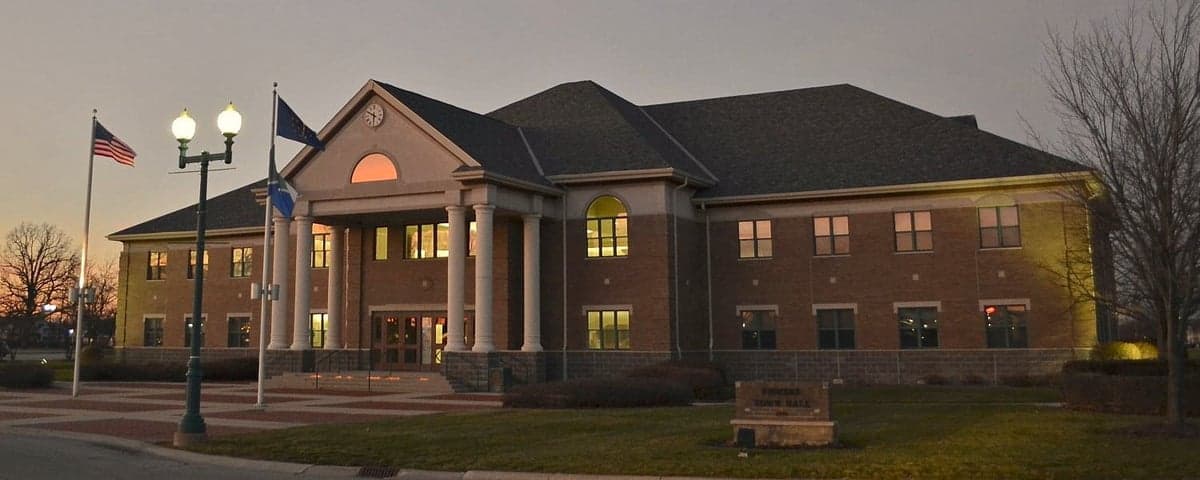
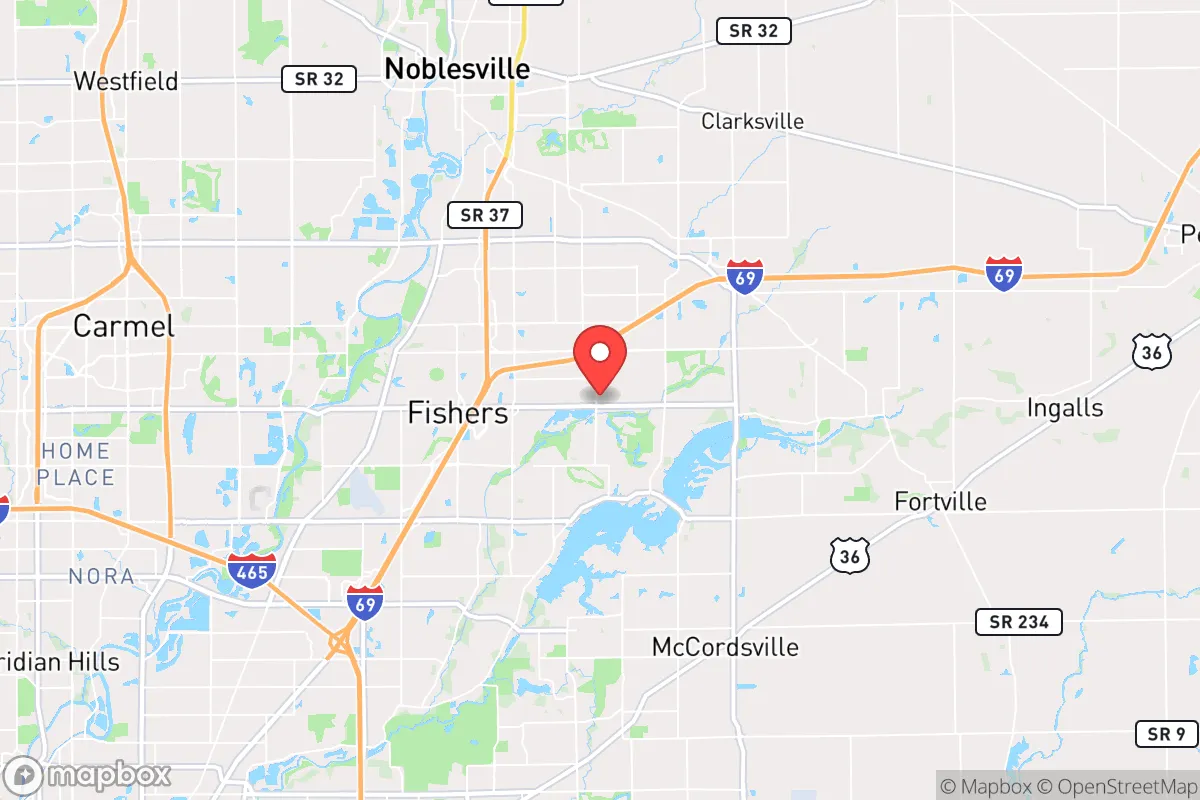
Photo: Wikipedia
Demographics of Fishers, IN
Affluence Level in Fishers, IN
An upper-middle-class area. Household wealth, education levels, and homeownership run ahead of national benchmarks.
People of Fishers, IN
Fishers, Indiana is a rapidly growing suburban city of over 100,000 residents, characterized by a highly educated population (66.2% college-educated) and a predominantly white demographic base (79.4%). The city’s identity is shaped by its transformation from a quiet farming crossroads into a master-planned tech and logistics hub, attracting families and professionals seeking top-ranked schools and low crime rates. Today, Fishers is notably diverse for central Indiana, with significant and distinct East/Southeast Asian (4.0%) and Indian-subcontinent (3.7%) communities, alongside smaller Black (4.9%) and Hispanic (3.8%) populations, creating a patchwork of ethnic enclaves within a largely white, affluent suburb.
How the city was settled and grew
Fishers was founded in the 1830s as a small agricultural settlement along the White River, named after the Fisher family who operated a gristmill. The arrival of the railroad in the 1840s spurred modest growth, but the population remained under 500 until the mid-20th century. The original settlers were primarily white Protestant farmers of German and English descent, who established the historic Fishers Village district around what is now 116th Street and Allisonville Road. A second wave came after World War II, when returning veterans and Indianapolis workers built modest homes in the Lantern Oaks and Oaklandon neighborhoods, drawn by cheap land and the promise of a rural escape from the city. These early residents were almost entirely white, and the area remained a sleepy crossroads until the 1990s.
Modern era (post-1965)
The modern demographic transformation of Fishers began in earnest after the 1965 Immigration and Nationality Act, but the city’s real boom started in the 1990s and accelerated after 2000. The construction of Interstate 69 and the expansion of the Hamilton County tech corridor turned Fishers into a prime destination for corporate relocations, particularly in life sciences and logistics. The first major non-white influx came from East/Southeast Asian professionals—engineers and IT workers—who settled in the Thorpe Run and Brooks Landing subdivisions, drawn by the nationally ranked Hamilton Southeastern Schools. A distinct Indian-subcontinent community began forming in the 2010s, concentrated in newer developments like Geist Overlook and Admirals Bay near Geist Reservoir, where larger homes and proximity to Indianapolis’s tech employers proved attractive. The Black population grew more slowly, from under 1% in 2000 to 4.9% today, with families settling in the Sunblest Farms area and the mixed-income Fishers Station district. The Hispanic population, at 3.7%, is smaller than in neighboring Noblesville and remains dispersed, with no single dominant enclave. The foreign-born share (5.6%) is modest for a suburb of this size, reflecting that most growth has come from domestic in-migration—white families from the Midwest and Northeast seeking better schools and lower taxes.
The future
Fishers is likely to continue diversifying, but the pace will be gradual. The city’s Nickel Plate District—a dense, walkable downtown built from scratch—is attracting younger, more diverse professionals, including a growing number of mixed-race families and second-generation Indian and East/Southeast Asian residents who are assimilating into the broader suburban culture. The Indian-subcontinent community, in particular, is expanding rapidly through chain migration and family reunification, and is expected to approach 5-6% of the population by 2035. The East/Southeast Asian population is plateauing, as many families are now moving to newer exurbs like Westfield. The white share will likely decline to around 72-74% over the next decade, but Fishers will remain a predominantly white, upper-middle-class suburb. The city is not tribalizing into distinct ethnic enclaves—neighborhoods like Thorpe Run and Geist Overlook are increasingly mixed—but income segregation is rising, with the Geist Reservoir area becoming wealthier and whiter, while older neighborhoods near I-69 are seeing more rental housing and modest diversity.
For a conservative-leaning mover, Fishers represents a stable, family-oriented community that is slowly becoming more diverse without losing its core character. The schools remain excellent, taxes are low, and the city’s master-planned growth ensures that new development is orderly. The key trade-off is that the city is no longer the homogeneous, rural-escape suburb of the 1990s—it is a dense, diverse, and increasingly expensive place where newcomers will find neighbors from a wide range of backgrounds, but where conservative values and a strong sense of community still dominate daily life.

* Values derived from national, state, county, city and local statistics and may differ in a specific area. Last updated: 2026-04-22T10:27:21.000Z
Narrative content on this page is AI-generated and may contain mistakes. Verify any details that matter before acting on them.
ReloMaps may earn a commission from affiliate links at no extra cost to you.

