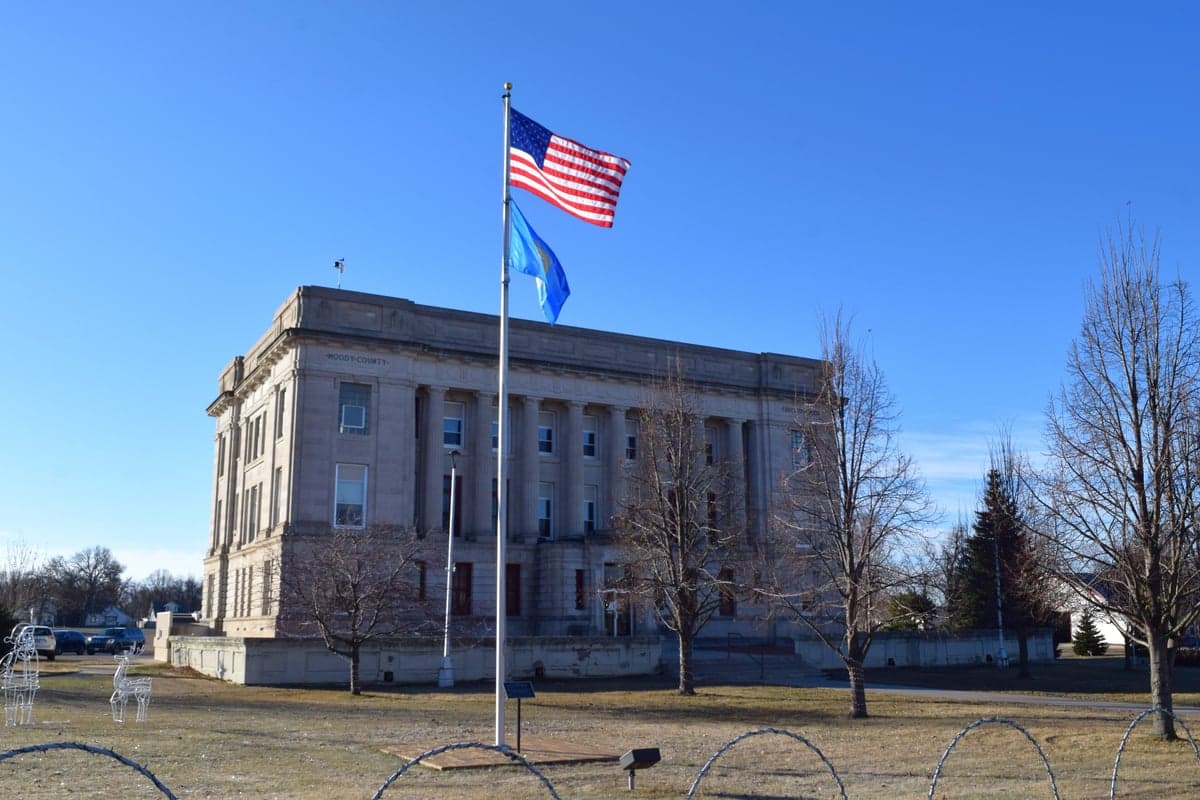
Photo: Wikipedia
Demographics of Flandreau, SD
Affluence Level in Flandreau, SD
A below-average socioeconomic profile. Incomes, home values, and educational attainment trail the U.S., with higher poverty and unemployment.
People of Flandreau, SD
Flandreau, South Dakota, is a small, tight-knit community of 2,291 residents where a majority-white population (55.4%) coexists with a significant Native American presence, a growing Hispanic community (8.1%), and a notable East/Southeast Asian population (4.7%). The city’s identity is shaped by its roots as a railroad and agricultural hub, its role as the seat of Moody County, and the nearby Flandreau Indian School, which has drawn Native families for generations. With a foreign-born share of 4.3% and a college attainment rate of 24.0%, Flandreau remains a working-class town where family ties and local institutions anchor daily life.
How the city was settled and grew
Flandreau was founded in the 1850s by European-American settlers drawn by the promise of fertile farmland along the Big Sioux River. The town’s growth accelerated after the railroad arrived in the 1870s, making it a regional shipping point for grain and livestock. The original settlers—primarily of German, Norwegian, and Irish stock—built homes in the Historic Downtown District near the railroad depot and along West Pipestone Avenue, where many of the earliest wood-frame houses still stand. By the early 1900s, the Flandreau Indian School (established 1893) brought Native American students from tribes across the northern Plains, and some families settled permanently in the East Side neighborhood near the school grounds. A second wave of European immigrants arrived in the 1910s, with Russian-German Mennonites establishing farms south of town and building the South Flandreau area’s modest homes. The city’s population peaked around 2,400 in the 1920s, then stabilized as agriculture mechanized and younger generations moved to larger cities.
Modern era (post-1965)
After the 1965 Immigration and Nationality Act, Flandreau saw modest diversification. The most significant change came from the Flandreau Indian School, which continued to draw Native American families—primarily from the Lakota, Dakota, and Ojibwe nations—who settled in the North Side neighborhood near the school and along South Crescent Street. By the 1990s, a small but steady influx of Hispanic workers arrived, recruited by local meatpacking plants and agricultural operations; they concentrated in rental housing along East First Avenue and in the West End mobile home parks. The East/Southeast Asian population (4.7%) is largely composed of Hmong and Vietnamese families who came in the 1980s and 1990s, initially sponsored by church groups and later drawn by factory jobs at the Flandreau Industrial Park on the city’s eastern edge. The Black population (1.7%) is small and dispersed, with no single neighborhood concentration. The Indian-subcontinent population remains at 0.0%. The white share has declined from roughly 80% in 1990 to 55.4% today, driven by an aging white population and out-migration of young adults to Sioux Falls, while minority groups have younger age profiles and higher birth rates.
The future
Flandreau’s population is slowly diversifying, but the trend is toward integration rather than tribalization into distinct enclaves. The Hispanic and East/Southeast Asian communities are growing through natural increase and continued labor migration, though the pace is limited by the city’s small size and lack of major employers beyond the school, a casino, and light manufacturing. The Native American population is stable, with many families maintaining ties to reservations while living in Flandreau for school and work. The white population is projected to continue declining slowly as older residents pass away and younger adults leave for Sioux Falls (45 minutes south) or out of state. Over the next 10–20 years, Flandreau will likely become slightly more Hispanic and Asian, but it will remain a predominantly white and Native community. New housing development is concentrated in the Prairie View Addition on the northwest edge, which is attracting a mix of young families and retirees, but no single ethnic group dominates there.
For someone moving in now, Flandreau offers a stable, low-cost community where neighborly ties are strong and the pace of life is slow. The city is becoming more diverse but remains culturally conservative, with a focus on family, church, and local sports. The biggest adjustment for newcomers will be the small-town scale—there is no major retail or nightlife—and the need to build connections through local institutions like the school, churches, or the Moody County Fair. It is a place where roots are planted, not a transient stopover.

* Values derived from national, state, county, city and local statistics and may differ in a specific area. Last updated: 2026-05-01T15:08:13.000Z
Narrative content on this page is AI-generated and may contain mistakes. Verify any details that matter before acting on them.
ReloMaps may earn a commission from affiliate links at no extra cost to you.

