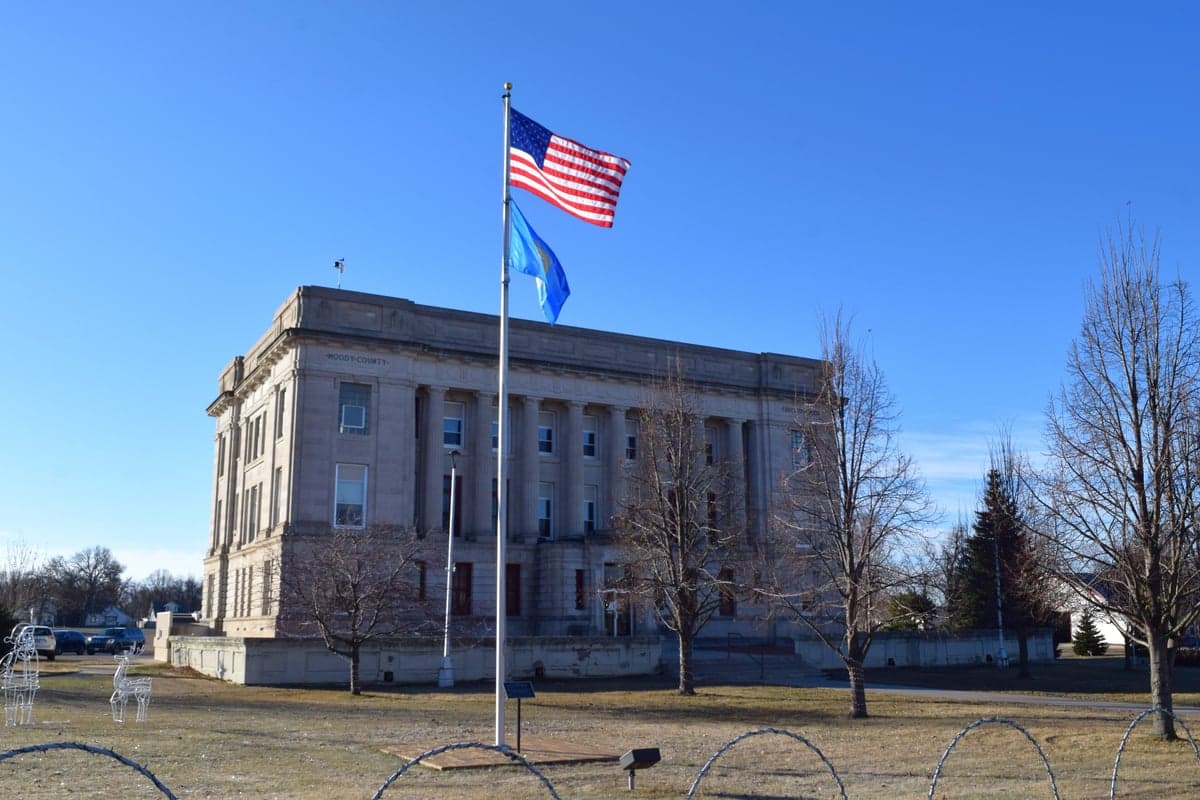
Photo: Wikipedia
Personal Sovereignty in Flandreau, SD
Viable for self-reliance. Generally workable, though some barriers may limit total independence.
What does Personal Sovereignty tell us?
Personal Sovereignty measures your capacity for self-reliance and independence with minimal government friction. Higher scores mean fewer barriers between you and the way you want to live... but it assumes you have the space you need and good neighbors.
What does this tell us?
Personal Sovereignty measures your capacity for self-reliance and independence with minimal government friction. Higher scores mean fewer barriers between you and the way you want to live... but it assumes you have the space you need and good neighbors.
State Policy
Energy independence: Importer (35% of energy produced in-state)
Personal Liberty
Homesteading

Personal Liberty Analysis
Flandreau, South Dakota, offers a notably high degree of personal sovereignty compared to much of the United States, largely because the state government maintains a deliberately limited footprint in daily life. For individuals and families who prioritize autonomy—whether from federal overreach, state mandates, or cultural pressure to conform—this small town in Moody County presents a strategic environment where the default posture is one of permission rather than restriction. The combination of a low-tax, low-regulation state framework, strong gun rights, and a rural landscape that still allows for genuine self-reliance makes Flandreau a serious consideration for those who view personal freedom as the foundation of security.
Tax burden and regulatory posture: How South Dakota keeps government small
South Dakota has no state income tax—personal or corporate—which immediately removes a layer of government intrusion into earnings and savings. For a single individual or a family, this means every dollar earned stays in your pocket, not funneled to a state bureaucracy. The state also has no inheritance tax, no estate tax, and no intangible property tax, making it a favorable jurisdiction for building generational wealth without the state taking a cut at death. Property taxes in Moody County are moderate, with effective rates typically around 1.1% to 1.3% of assessed value, and the state offers a sales tax of 4.5% (with local additions bringing it to roughly 6.5% in Flandreau). More importantly, the regulatory environment is intentionally thin: South Dakota has no state-level occupational licensing for many trades, no state-level rent control, and a right-to-work law that prevents forced union membership. For a prepper or survivalist mindset, this means fewer bureaucratic hurdles when starting a home-based business, building a workshop, or simply living without constant government paperwork. The state legislature has also passed laws preempting local governments from enacting stricter regulations than the state—meaning Flandreau’s city council cannot suddenly impose a ban on backyard chickens, rainwater collection, or home-based firearms manufacturing. This regulatory predictability is a major advantage for anyone seeking to live with minimal interference.
Self-defense and gun law specifics: Constitutional carry and castle doctrine
South Dakota is a constitutional carry state, meaning no permit is required to carry a concealed firearm for anyone legally allowed to possess one. Flandreau residents can carry openly or concealed without a license, and the state does not require registration of firearms or ammunition. The castle doctrine is codified in state law, with no duty to retreat in one’s home, vehicle, or place of business—if someone unlawfully enters, you are legally presumed to have a reasonable fear of death or great bodily harm, and you may use deadly force. Stand-your-ground protections extend to any place where you have a legal right to be. For parents, this means your home and your vehicle are legally defensible spaces without the risk of prosecution for defending your family. The state also preempts local governments from enacting their own gun control ordinances, so Flandreau cannot suddenly ban certain firearms or magazine capacities. Background checks are only required for purchases from licensed dealers; private sales between individuals require no paperwork. For a survivalist perspective, this is a jurisdiction where the legal framework supports, rather than hinders, the ability to arm oneself and one’s household. The nearest major city, Sioux Falls, is about 45 minutes away, but its gun laws are identical to Flandreau’s due to state preemption—no urban loopholes to worry about.
Self-reliance and homesteading viability: Lot sizes, zoning, and off-grid feasibility
Flandreau sits in the heart of Moody County, where agricultural zoning is the norm and residential lot sizes in the surrounding unincorporated areas can be as large as several acres without triggering special permits. Within the city limits, standard residential lots are typically one-quarter to one-half acre, but the city’s zoning code is relatively permissive: chickens, bees, and small livestock are allowed with minimal restrictions, and there are no prohibitions on vegetable gardens, composting, or rainwater collection. For those looking to go further off-grid, properties just outside town—within a 10-minute drive—offer 5- to 40-acre parcels where you can build a home, install solar panels, drill a well, and set up a septic system without needing a lengthy approval process. South Dakota has no state-level ban on rainwater harvesting, and the state’s building codes are among the least restrictive in the nation: there is no statewide mandatory energy code for residential construction, and many rural homes are built without a permit at all (though a permit is required for a septic system). For a prepper, this means you can establish a self-sufficient homestead—growing food, generating power, storing water—without the government dictating how you do it. The local climate is harsh (USDA Zone 4b, with winter lows hitting -30°F), but that’s a challenge of nature, not of bureaucracy. The soil in the Big Sioux River valley is fertile, and the growing season (about 140 days) is long enough for most cold-hardy crops. If you’re serious about food independence, Flandreau’s regulatory environment lets you pursue it without a zoning board telling you what you can plant or how many chickens you can keep.
Personal liberties: Parental rights, medical autonomy, speech, and property
South Dakota has been a national leader in protecting parental rights, with a 2023 law (SB 128) that explicitly affirms parents’ fundamental right to direct the upbringing, education, and healthcare of their children. This means no mandatory school curriculum that overrides parental values, no forced medical procedures without consent, and no government interference in how you raise your kids—short of abuse or neglect. The state also passed a law in 2024 prohibiting schools from using a student’s preferred pronouns without parental notification, and it has banned gender transition procedures for minors. For parents concerned about medical autonomy, South Dakota does not have a state vaccine mandate for children attending public school (though certain vaccines are required for enrollment, with a broad religious exemption available). Medical freedom is further supported by the state’s lack of a certificate-of-need law for healthcare facilities, meaning you can theoretically start a private clinic or buy medical equipment without state permission. On speech and property, South Dakota is a strong First Amendment state with no hate speech laws that criminalize political or religious expression, and property rights are protected by a state-level takings clause that requires compensation for any regulatory reduction in property value. For a survivalist, this legal environment means you can speak your mind, keep your property, and raise your children according to your own values without the state acting as an adversary. The only notable limitation is that South Dakota does not have a state-level right-to-try law for terminally ill patients (though federal law covers that), and medical marijuana is legal only with a state-issued card—recreational use remains illegal. Still, for those who view government overreach as the primary threat to personal sovereignty, Flandreau offers a legal framework that is far more aligned with individual liberty than most of the country.
Overall, Flandreau represents a strategic relocation option for those who prioritize personal sovereignty above all else. It is not a libertarian utopia—there are still property taxes, sales taxes, and some state-level restrictions—but compared to the regulatory density of the coasts or even the Upper Midwest’s more progressive states (Minnesota, Wisconsin, Illinois), South Dakota’s posture is one of restraint. For a single individual or a family with a prepper or survivalist mindset, the combination of no income tax, constitutional carry, permissive zoning, strong parental rights, and minimal state interference creates an environment where you can actually live the way you choose, without constantly fighting the government. The trade-off is isolation—Flandreau’s population is just over 2,200, and the nearest major airport is an hour away—but for many, that isolation is precisely the point. If your goal is to build a life where your autonomy is the default and government is a distant, limited presence, Flandreau, South Dakota, is a serious contender.

* Values derived from national, state, county, city and local statistics and may differ in a specific area. Last updated: 2026-05-01T15:08:13.000Z
Narrative content on this page is AI-generated and may contain mistakes. Verify any details that matter before acting on them.
ReloMaps may earn a commission from affiliate links at no extra cost to you.

