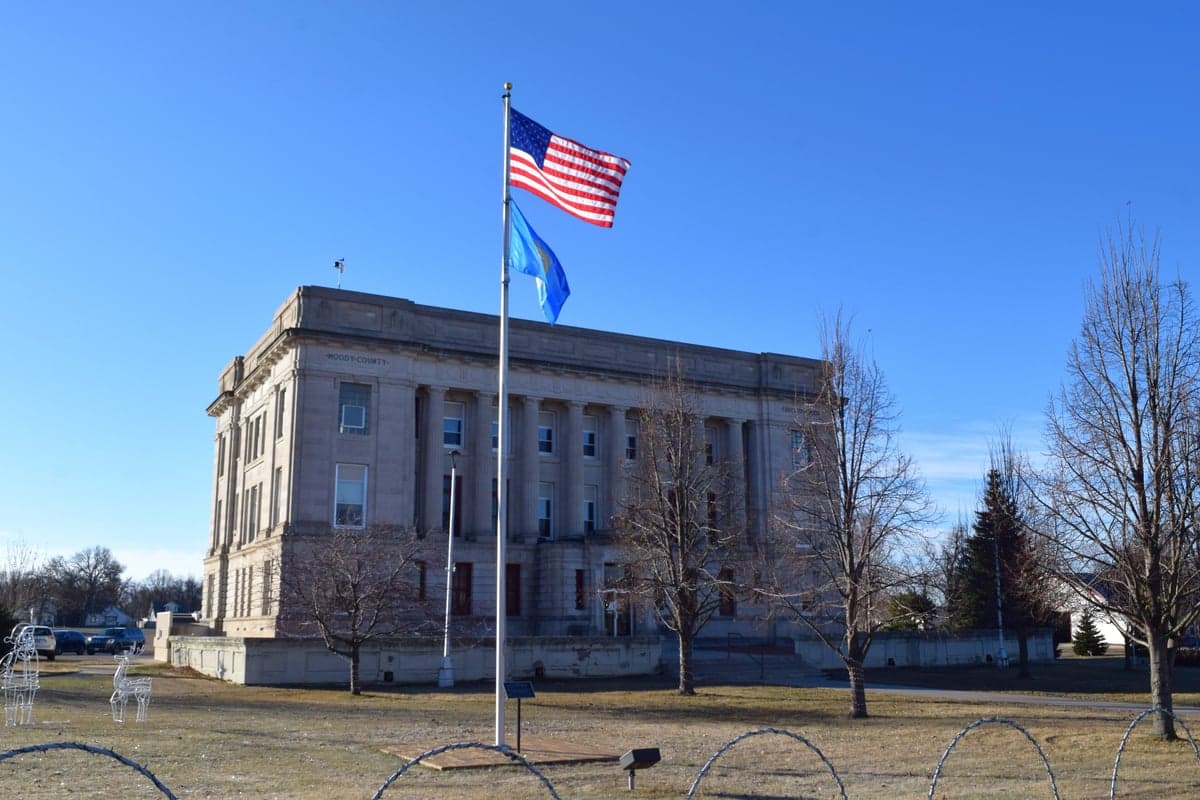
Photo: Wikipedia
Strategic Assessment of Flandreau, SD
Workable tactical position. Some exposure to population density or targets, but generally defensible in a crisis.
What does the Strategic Assessment tell us?
Our Strategic Assessment grades tactical survivability of an area. Major population centers, military targets, fallout zones, natural disasters, and border exposure all drive risk — lower exposure means a more defensible position in a crisis.
This is heavily inspired by Joel Skousen's Strategic Relocation book. Highly recommended you checkout the book ($)What does this tell us?
Our Strategic Assessment grades tactical survivability of an area. Major population centers, military targets, fallout zones, natural disasters, and border exposure all drive risk — lower exposure means a more defensible position in a crisis.
This is heavily inspired by Joel Skousen's Strategic Relocation book. Highly recommended you checkout the book ($)Strategic Pillars

Key Distances
Regional Safe Places
Below is our recommended "safe zones" in South Dakota and the surrounding area based on our strategic heuristics. For most people, it's unrealistic to live in a “safe zone” full-time due to work, family or other personal reasons. They tend to be more rural. However, many of these areas are perfect for second homes and retreat properties that double as a vacation home or even a short-term rental.
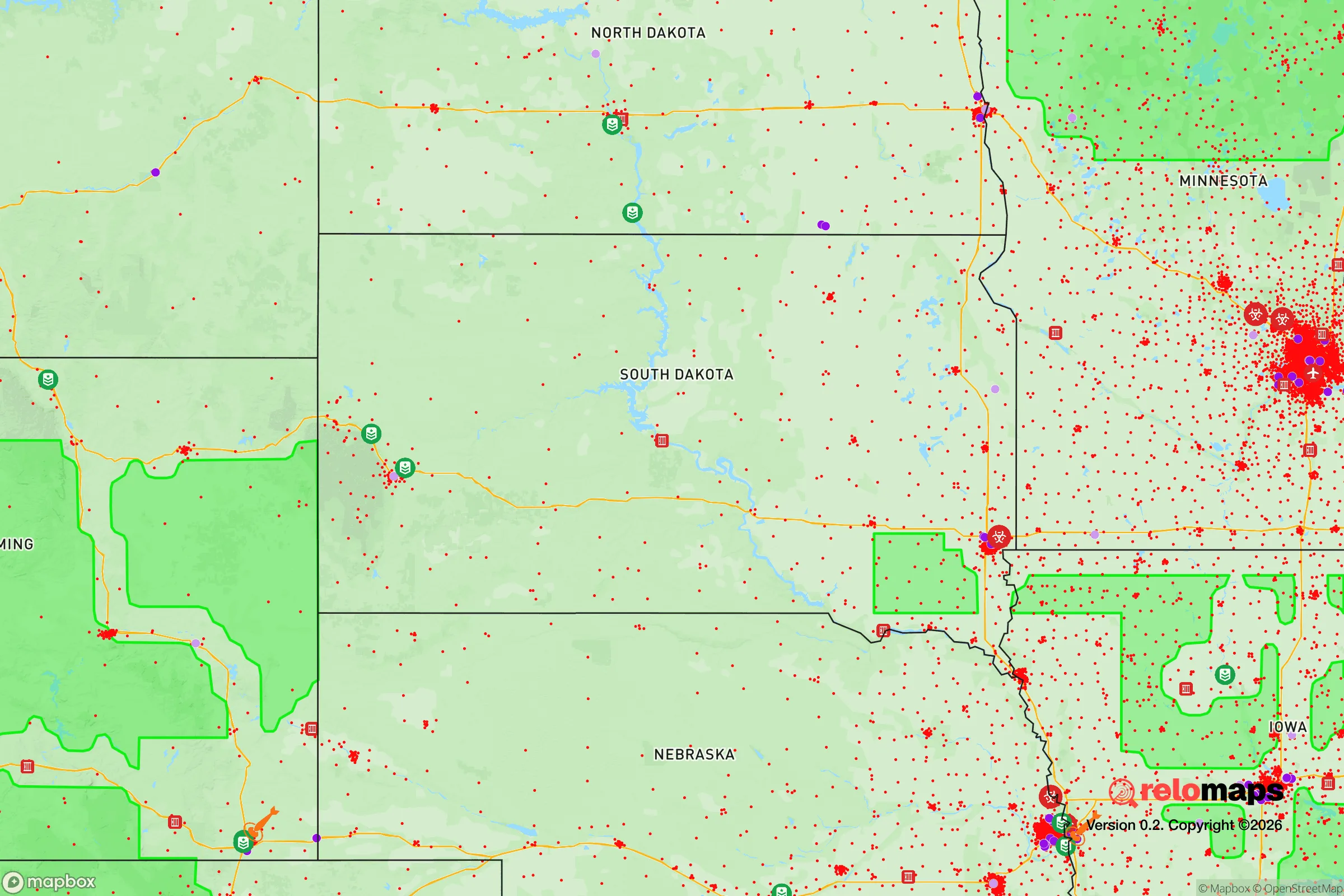


Important Note: For informational purposes only. This does not mean nothing bad ever happens in the green zones. Please use common sense. This is based on public data and modeled with AI. We tried to take a conservative approach but mistakes happen. We update this regularly as new information becomes available.
Solar Generator Recommendations
Backup power matters more here than in safer locations. We've picked three solar generators across budgets and capacity tiers — start with the budget unit if you only need a few essentials, or step up if you want to run a fridge and HVAC for days at a time.

Jackery Portable Power Station Explorer 300
Budget OptionPower on the Go: Weighing only 11 lbs, it's convenient to set up and store with book-sized foldable solar panels

BLUETTI Portable Power Station AC180
Designed for both indoor and outdoor scenarios, AC180 is highly capable as it has a robost capacity and continuous output power.

EF ECOFLOW DELTA Pro Ultra Power Station
Upgraded PickEcoFlow DELTA Pro Ultra is a whole-home energy system designed to grow with your family. Integrated with the Smart Home Panel 2, it scales to meet your evolving energy needs — keeping your home powered, intelligent, and secure through every stage of life.
We earn a commission, at no additional cost to you.
Strategic Assessment Analysis
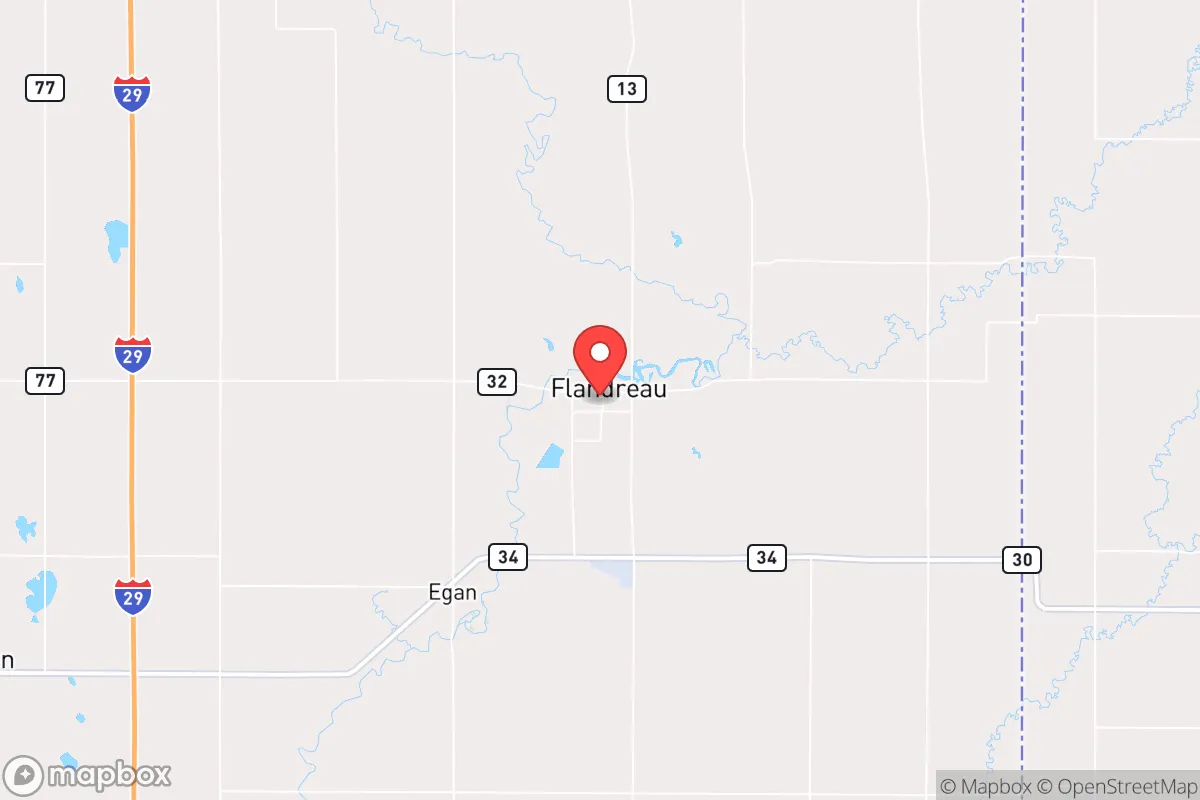
Flandreau, South Dakota, offers a compelling strategic position for those prioritizing long-term resilience and self-sufficiency in an increasingly uncertain national landscape. Located in Moody County, roughly 45 miles north of Sioux Falls and 30 miles south of Brookings, this small town of roughly 2,300 people sits at a sweet spot—close enough to access regional medical and supply hubs, yet far enough to avoid the immediate fallout of a major urban crisis. The area’s low population density, strong agricultural base, and relative isolation from major interstate corridors make it a defensible anchor point for individuals or families seeking to weather civic unrest, economic collapse, or mass casualty events. For a conservative-leaning relocator concerned with preserving autonomy and community bonds, Flandreau represents a pragmatic, under-the-radar option that balances accessibility with genuine distance from the chaos of larger metros.
Geographic position and natural advantages for long-term security
Flandreau’s location in eastern South Dakota places it within the fertile James River Valley, a region known for reliable rainfall and rich topsoil—critical for any prepper’s food security calculus. The Big Sioux River runs just west of town, providing a surface water source that can supplement wells and rainwater catchment systems. The surrounding landscape is predominantly flat, open farmland, which offers clear sightlines and limited cover for potential threats, but also means that defensible positions require deliberate planning—think reinforced rural homesteads rather than urban chokepoints. Winters are harsh, with average January lows around 5°F and frequent blizzards, which serves as a natural barrier to unprepared transient populations and forces residents to develop genuine cold-weather survival skills. The area’s low seismic and tornado risk (relative to the central Plains) adds another layer of stability. For a relocator, the key advantage is that Flandreau sits at the intersection of two U.S. Highways—13 and 81—providing multiple egress routes without being a natural chokepoint that would attract attention during a crisis. The nearest major interstate, I-29, runs 20 miles west, offering a quick escape vector to Canada or the Dakotas’ sparsely populated western regions if needed.
Risks, exposures, and proximity to fallout-relevant landmarks
No strategic assessment is complete without acknowledging the threats. Flandreau’s primary risk exposure comes from its proximity to Sioux Falls, a city of 200,000 that serves as a regional economic and medical hub. In a mass casualty event or civil unrest scenario, Sioux Falls could become a source of refugee flow, resource competition, and potential violence. The 45-mile buffer is significant but not insurmountable—a determined group could cover that distance in under an hour by vehicle. More concerning is the presence of the Flandreau Indian School, a federal boarding school operated by the Bureau of Indian Education, which could become a target for federal intervention or a focal point for social unrest given ongoing tensions around Native American rights and federal land management. Additionally, the town sits roughly 100 miles from the Ellsworth Air Force Base near Rapid City, which houses B-1B bombers and is a high-value target in any conflict scenario—though the distance and intervening terrain provide substantial buffer. The Pipestone National Monument in Minnesota, 30 miles east, is a cultural and religious site that could attract protest activity. For the prepper, the biggest practical risk is the area’s reliance on a single major employer—the Flandreau Santee Sioux Tribe’s Royal River Casino—which means economic stability is tied to discretionary spending and tourism, both of which could collapse in a prolonged crisis. The town’s water supply comes from the Big Sioux River aquifer, which is vulnerable to contamination from upstream agricultural runoff or intentional sabotage. A prudent relocator should budget for a deep well and a multi-stage filtration system.
Practical resilience for a relocator: food, water, energy, and defensibility
For the serious prepper, Flandreau’s practical resilience hinges on three pillars: agricultural self-sufficiency, energy independence, and community cohesion. The surrounding Moody County is over 90% farmland, with corn, soybeans, and cattle operations dominating. This means land is affordable—expect $3,000–$5,000 per acre for raw farmland—and local farmers’ markets, co-ops, and seed exchanges are accessible. The Flandreau Farmers Market runs June through October, and the Moody County Extension Office offers workshops on canning, livestock management, and soil conservation. For water, a private well is the standard; the Big Sioux River’s alluvial aquifer provides reliable yields at depths of 50–150 feet, but testing for nitrates and pesticides is essential. Energy resilience is more challenging: the local grid is served by Xcel Energy, which has a mixed reliability record during winter storms. Solar is viable—the area averages 200 sunny days per year—but battery storage is critical for winter months. Wood heating is common, with ample timber along the Big Sioux River corridor. Defensibility is the weak point: the open terrain offers little natural cover, so a relocator should prioritize a property with a berm, reinforced perimeter, and a clear line of sight to all approaches. The town’s small police force (6 officers) and volunteer fire department mean that in a crisis, you are largely on your own. However, the local culture of mutual aid—rooted in the area’s strong Lutheran and Catholic church communities—can be leveraged for neighborhood watch and resource sharing. The Flandreau Santee Sioux Tribe operates its own law enforcement and emergency services, which adds a layer of complexity but also potential partnership for those who build trust.
The overall strategic picture for Flandreau is one of cautious optimism for the prepared relocator. It is not a hardened bunker location—it lacks the mountainous terrain, deep natural defenses, or extreme isolation of a Montana or Idaho retreat. But for someone who values community, agricultural viability, and a low-profile existence, it offers a realistic path to long-term resilience. The key is to act before the next crisis: secure a property with a well, install solar and wood heat, build relationships with local farmers and the tribal community, and maintain a low social footprint. The town’s conservative lean—Moody County voted +38 R in 2024—aligns with a self-reliance mindset, and the local gun culture is strong, with multiple shooting ranges and a Cabela’s in nearby Sioux Falls. The biggest wildcard is the casino economy: if tourism collapses, the town’s tax base and social fabric could fray. But for a single individual or family willing to invest in land, skills, and neighborly trust, Flandreau provides a defensible, resource-rich base from which to ride out the coming storms. It’s not a fortress—it’s a farmstead with a plan. And in a world where the grid is fragile and the cities are tinderboxes, that might be exactly what you need.

* Values derived from national, state, county, city and local statistics and may differ in a specific area. Last updated: 2026-05-01T15:08:13.000Z
Narrative content on this page is AI-generated and may contain mistakes. Verify any details that matter before acting on them.
ReloMaps may earn a commission from affiliate links at no extra cost to you.

