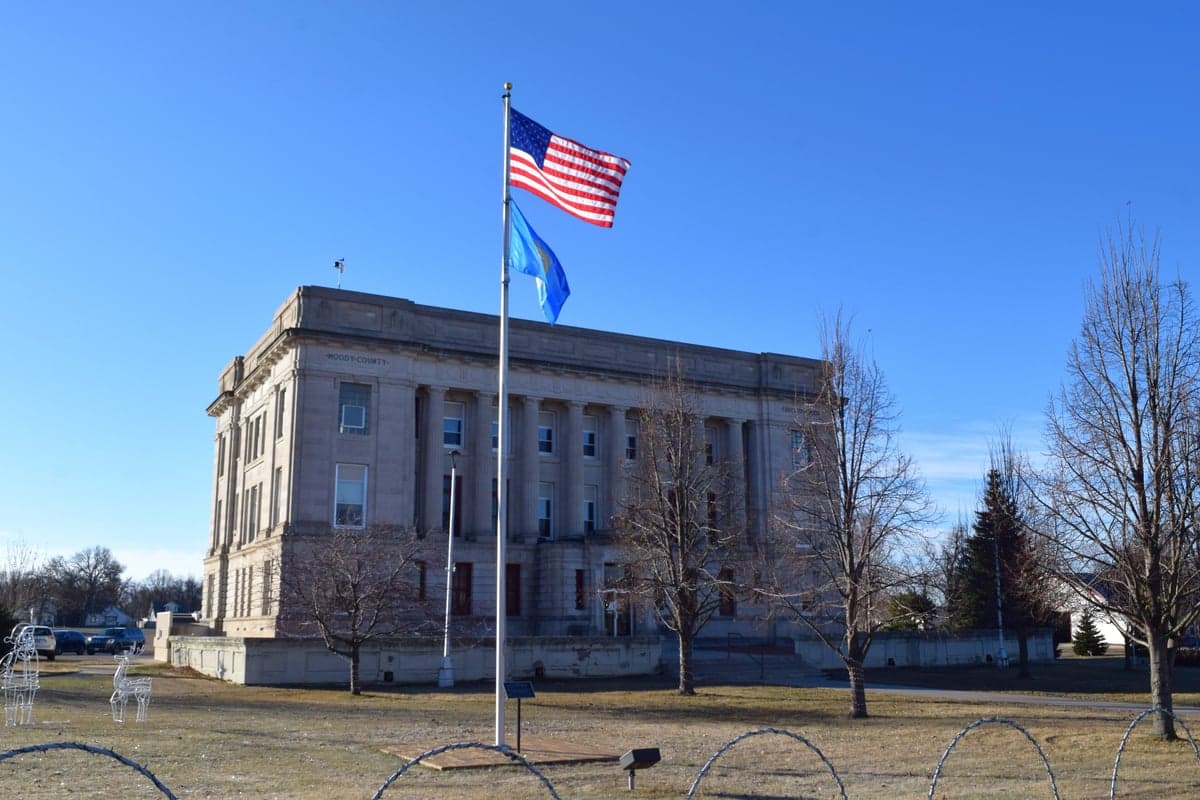
Photo: Wikipedia
Political ClimatePolitical Climate in Flandreau, SD
District shown is the primary district for this city’s centroid. Cities may span multiple districts.
Inherited from parent state — no local data available.
Local Political AnalysisPolitical Analysis of Flandreau, SD
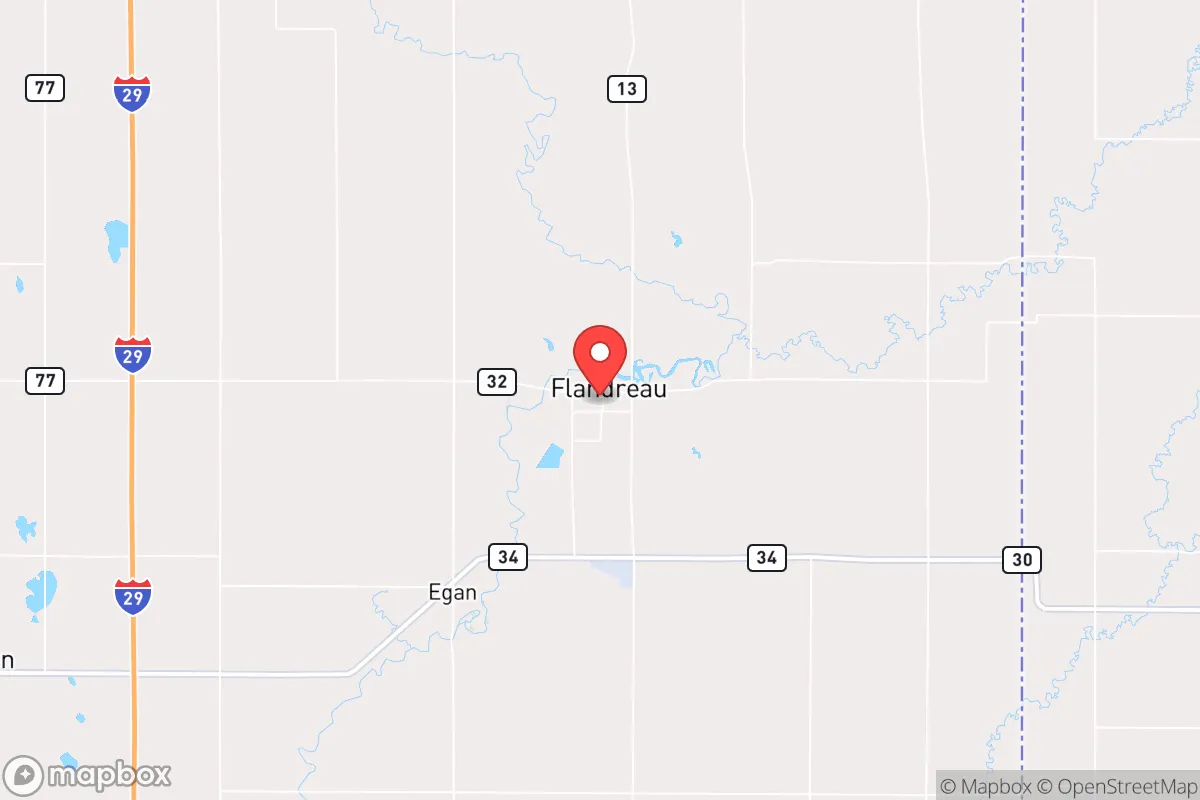
Flandreau, South Dakota, is about as reliably conservative as small-town America gets, with a Cook PVI of R+15 that tells you most of what you need to know before you even set foot in Moody County. The town has voted solidly Republican in every presidential election going back decades, and that trend hasn't budged even as some neighboring areas have started to wobble. If you're looking for a place where traditional values still hold the line and government overreach is met with a healthy dose of skepticism, Flandreau is the real deal.
How it compares
Drive thirty minutes west to Sioux Falls, and you'll feel the political temperature shift noticeably. The state's largest city has been trending more moderate over the last decade, with a growing number of younger transplants and out-of-state newcomers pushing it toward a purple-ish shade. Flandreau, by contrast, has stayed firmly red. The contrast is even sharper if you head north to Brookings, home to South Dakota State University, where the college-town vibe brings a more progressive tilt to local elections and policy debates. Flandreau's rural character and agricultural base keep it anchored in a common-sense, limited-government mindset that doesn't get swept up in the latest coastal trends. The surrounding Moody County commission is reliably conservative, and local school board races rarely see the kind of ideological fights you'd find in more urbanized districts. That stability is a big part of why folks who've been here a while feel like they can still breathe without someone in Pierre or Washington telling them how to live.
What this means for residents
For daily life, Flandreau's political climate translates into lower taxes, fewer regulations, and a general hands-off approach from local government. The city council isn't in the business of micromanaging businesses or homeowners, and there's a strong cultural expectation that personal freedoms—whether it's how you raise your kids, what you do on your own land, or how you run your small business—are respected. That said, there are some warning signs on the horizon. The state legislature in Pierre has seen a slow creep of federal-style thinking on issues like property rights and land use, and some of the more aggressive public health mandates that swept through other parts of the country during recent years did make a brief appearance here. The local pushback was strong enough to keep most of it at bay, but it's a reminder that no place is completely insulated from the overreach that's become common in blue states. Longtime residents keep a close eye on any proposed zoning changes or state-level preemptions that could chip away at local control.
Culturally, Flandreau is a place where the Second Amendment is still a given, not a debate. The annual Moody County Fair and the Flandreau Santee Sioux Tribe's presence add layers to the community that aren't purely political, but the underlying conservative ethos is consistent. If you're worried about the direction of the country and want a spot where the old-school values of self-reliance and limited government still hold weight, this town is a solid bet. Just keep an eye on Pierre and the slow drip of progressive ideas that sometimes trickle down from the state capital—because once that genie is out of the bottle, it's hard to get it back in.

State Political ClimatePolitical Climate in South Dakota
State Political AnalysisPolitical Environment in the State
South Dakota is one of the most reliably conservative states in the nation, with a solid Republican trifecta that has held for decades. The state hasn’t voted for a Democratic presidential candidate since 1964, and in 2024, Donald Trump carried it by over 30 points. The dominant coalition is a mix of rural agricultural interests, small-government libertarians, and a growing number of conservative transplants fleeing blue states. Over the last 10-20 years, the state has shifted even further right, driven by an influx of new residents to places like Rapid City and Sioux Falls, while the rural counties have only hardened their GOP loyalty.
Urban vs. rural divide
The political map of South Dakota is starkly divided between a few small urban centers and vast, deeply red rural expanses. Sioux Falls, the largest city, is the state’s most competitive area—Minnehaha County voted for Trump by about 12 points in 2024, down from 18 in 2020, as the city has attracted younger professionals and some out-of-state moderates. Rapid City in Pennington County is reliably red but not as deep as the countryside, with Trump winning by around 20 points. The real conservative strongholds are the rural counties: Harding County in the northwest went 85% for Trump, and McPherson County in the north-central region hit 90%. The Pine Ridge Indian Reservation (Shannon County) is a notable exception—it’s one of the few areas that votes heavily Democratic, but its population is small and turnout is low. The divide isn’t just about population density; it’s cultural. The urban areas are more diverse economically, with healthcare and tech jobs, while rural counties depend on agriculture and ranching, making them fiercely protective of property rights and gun freedoms.
Policy environment
South Dakota’s policy environment is a textbook example of conservative governance. There is no state income tax, and the sales tax is a moderate 4.5%, though local add-ons can push it to 6.5% in some cities. Property taxes are relatively low compared to the national average, but they’ve crept up in fast-growing areas like Harrisburg and Tea near Sioux Falls. The state has a strong right-to-work law and is a “shall issue” state for concealed carry—no permit needed since 2019. Education policy is dominated by school choice: the state has a robust voucher program (the “South Dakota Opportunity Scholarship”) and no common core mandates. Healthcare is a mixed bag—the state expanded Medicaid in 2023 under Governor Kristi Noem, a move that upset some fiscal conservatives, but it was done via a ballot initiative, not legislative action. Election laws are strict: voter ID is required, and there’s no same-day registration. The state also has a “trigger law” that would ban abortion if Roe v. Wade were overturned, which it was in 2022, and the law now bans abortion at all stages with narrow exceptions. For a conservative, this is a state where the government largely stays out of your life—except when it comes to protecting life and property.
Trajectory & freedom
South Dakota has been on a trajectory of expanding personal freedom over the last decade, particularly in gun rights and parental control. In 2021, the state passed a “constitutional carry” law, allowing any adult who can legally own a firearm to carry it openly or concealed without a permit. In 2023, Governor Noem signed a bill banning transgender girls from participating in female sports in K-12 schools, and in 2024, the state passed a “Parents’ Bill of Rights” that requires schools to notify parents about curriculum changes and medical services. On the medical front, the state has resisted federal mandates—during COVID, Noem refused to impose lockdowns or mask mandates, and the state legislature passed a law banning vaccine passports. However, there have been some concerning moves: in 2023, the state created a “Office of the Inspector General” to audit state agencies, which some see as a potential overreach into local governance. Property rights remain strong, with no statewide zoning laws, but local governments in Brookings and Vermillion have tried to impose rent control measures, which were quickly struck down by the legislature. Overall, the trend is toward more freedom, but vigilance is needed to keep it that way.
Civil unrest & political movements
South Dakota is not a hotbed of civil unrest, but there have been notable flashpoints. The Dakota Access Pipeline protests in 2016-2017 drew thousands of activists to the state, mostly from outside, and resulted in clashes with law enforcement. The state’s response was firm—then-Governor Dennis Daugaard called in the National Guard—and the pipeline was completed. More recently, the “Noem vs. the tribes” conflict has escalated: in 2023, Governor Noem banned the use of state funds for “critical race theory” in schools, and in 2024, she proposed a bill to allow the state to prosecute crimes on tribal land, which the tribes see as a sovereignty violation. The Oglala Sioux Tribe has threatened to secede from the state, though that’s mostly symbolic. On the right, there’s a growing “constitutional sheriff” movement in rural counties like Butte County, where sheriffs have declared they won’t enforce federal gun laws. Election integrity is a hot topic—the state uses paper ballots and has post-election audits, but some activists want hand-counting of all ballots, a push that gained steam after the 2020 election. For a new resident, you won’t see daily protests, but you’ll hear plenty of talk about sovereignty and local control at coffee shops in Sturgis or Deadwood.
Projection
Over the next 5-10 years, South Dakota is likely to become even more conservative, but with some internal tensions. The in-migration from states like California, Illinois, and Minnesota is accelerating—Sioux Falls grew by 12% between 2020 and 2024, and Rapid City by 8%. These newcomers are mostly conservative-leaning, but they bring different priorities: they want lower taxes and less regulation, but they also want better schools and infrastructure. This could create a split between “old guard” ranchers who oppose any government spending and “new guard” transplants who want more services. The state’s population is aging, and the rural areas are shrinking—by 2030, half the state’s population will live in just three counties (Minnehaha, Pennington, and Lincoln). This will shift political power toward the urban areas, but those areas are still red, just less deep. Expect more fights over property taxes as home values rise, and more battles over school funding as the voucher program expands. The biggest wildcard is the tribal relationship—if the state continues to assert jurisdiction over reservations, it could lead to federal intervention. For a conservative moving in, the next decade looks stable: more of the same, but with growing pains in the cities.
Bottom line for a new resident: South Dakota is a safe bet if you want a state that respects your gun rights, keeps taxes low, and leaves you alone. The political climate is stable and conservative, but it’s not static—the growth in Sioux Falls and Rapid City is changing the culture, and you’ll need to stay engaged to keep the government from creeping in. If you’re a parent, the school choice options are excellent, and the parental rights laws are strong. If you’re a single individual, the lack of income tax and the outdoor lifestyle are huge draws. Just be aware that the winters are long, and the politics can be as harsh as the weather—but for a conservative, it’s one of the best places to call home.
* Values derived from national, state, county, city and local statistics and may differ in a specific area. Last updated: 2026-05-01T15:08:13.000Z
Narrative content on this page is AI-generated and may contain mistakes. Verify any details that matter before acting on them.
ReloMaps may earn a commission from affiliate links at no extra cost to you.

