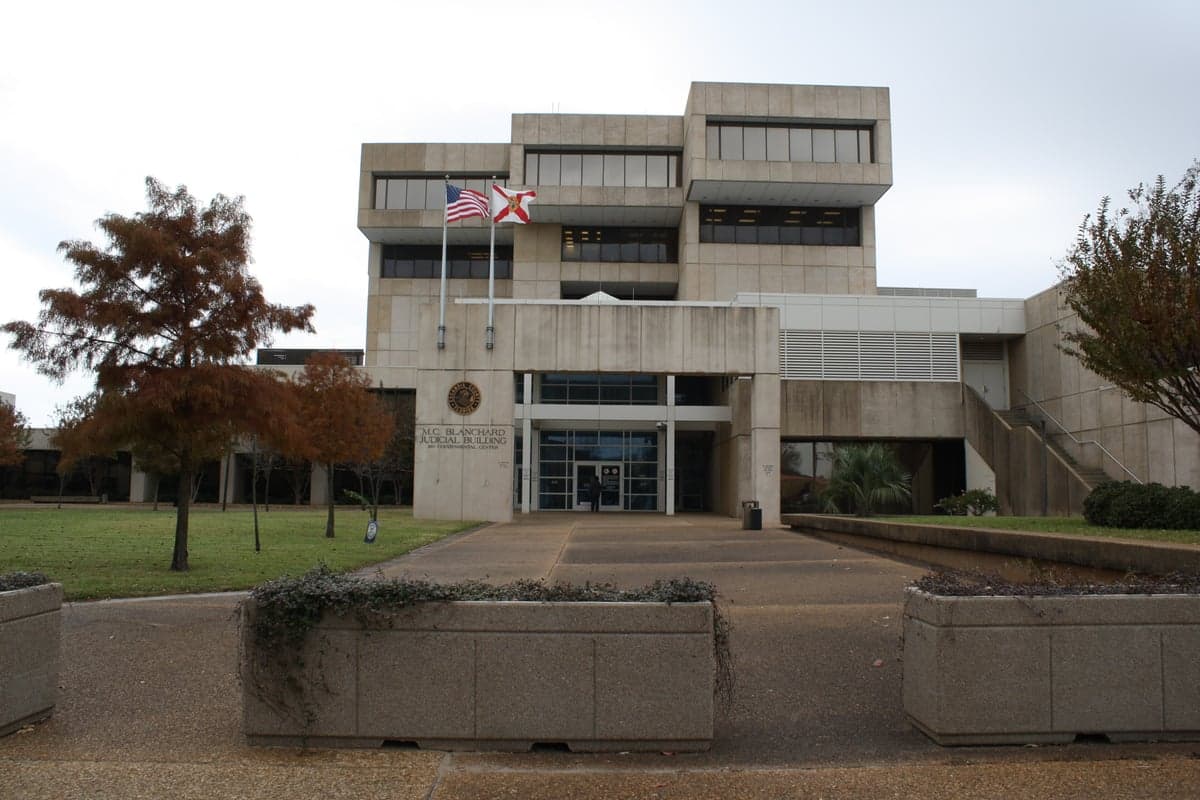
Photo: Wikipedia
Quality of Life in Escambia County
A livable area that tracks near national norms for affordability, walkability, and neighborhood health.
What does Quality of Life tell us?
Quality of Life measures an area by evaluating factors like cost of living, nearby amenities, country club access, airport proximity, socioeconomic signals and neighborhood character. For large states, this is a general average — quality of life can vary dramatically between metro areas, suburbs, and rural communities within the same state.
What does this tell us?
Quality of Life measures an area by evaluating factors like cost of living, nearby amenities, country club access, airport proximity, socioeconomic signals and neighborhood character. For large states, this is a general average — quality of life can vary dramatically between metro areas, suburbs, and rural communities within the same state.
Cost of Living
3% below national average
98%
The Real Cost of Living in Escambia County for 2026
| Tier | Individual | Family (4) |
|---|---|---|
| Survival | $20k | $37k |
| Comfortable | $46k | $67k |
| Luxury | $118k+ | $183k+ |
| Elite (Top 5%) | $139k+ | $216k+ |
Quality-of-Life Analysis
Escambia County, Florida, offers a broad spectrum of living environments, from the dense, historic urban core of Pensacola to the quiet, pine-shaded subdivisions of Cantonment and the rural farmlands near Molino. This diversity means a single county can accommodate a Navy pilot stationed at NAS Pensacola, a remote worker seeking a beach-adjacent downtown loft, and a family looking for acreage and lower taxes, all within a 30-minute drive. The county’s overall cost of living index sits at 97 (100 is the U.S. average), with a median home value of $234,200 and median rent of $1,234, but these figures mask significant variation between its distinct communities.
Largest town(s) & population centers
Pensacola is the county’s undisputed hub, home to roughly 54,000 residents and the region’s major employers, including Navy Federal Credit Union, Ascension Sacred Heart Hospital, and the University of West Florida. Daily life here ranges from walkable downtown lofts near Palafox Street’s restaurants and art galleries to historic neighborhoods like East Hill and North Hill, where century-old oak trees canopy brick streets. The city also includes the Perdido Key barrier island, a high-end beach community with gated condos and vacation rentals. Pensacola’s commute averages 23.7 minutes, slightly below the national average, making it feasible to live in the city center and work at the naval air station or the sprawling Navy Federal campus in nearby Pace. The city’s public schools, such as Washington High School and West Florida High School, draw families, while the downtown core attracts young professionals and retirees who prioritize walkability and cultural amenities over square footage.
Smaller towns & rural pockets
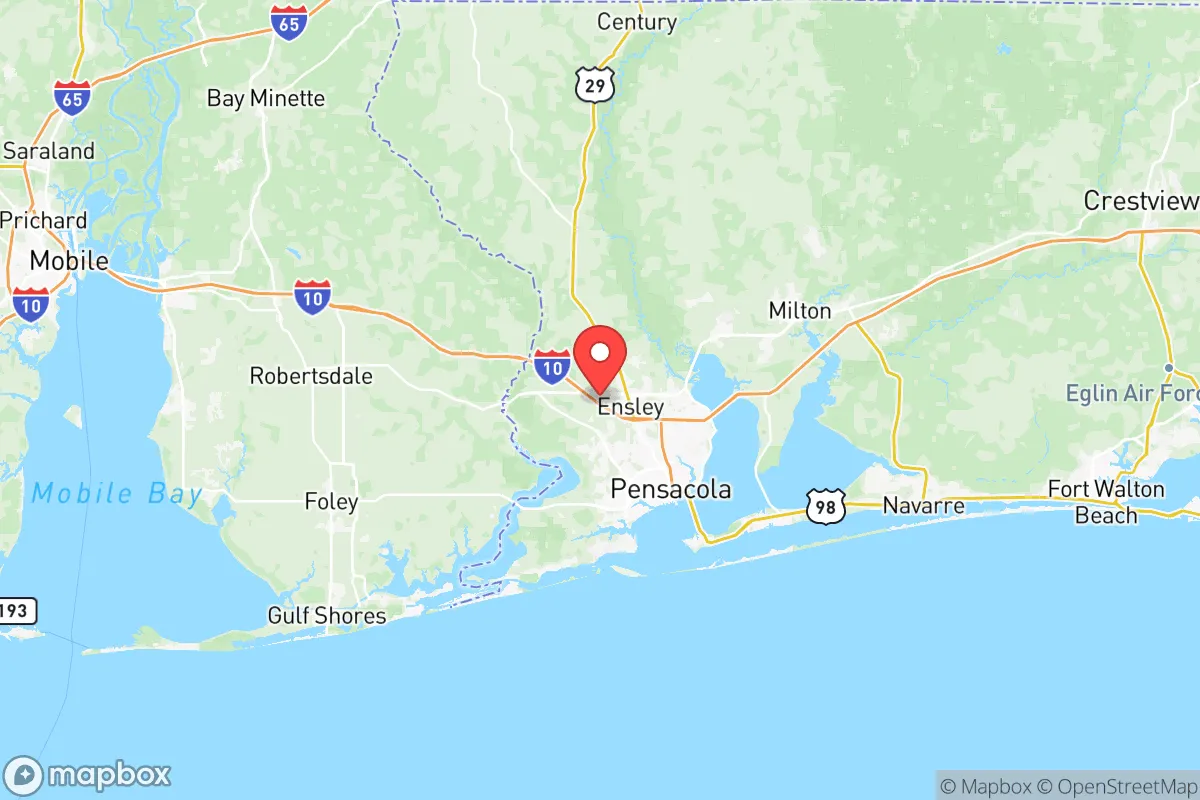
Outside Pensacola, the county’s character shifts markedly. Cantonment, about 12 miles north of downtown, is a unincorporated community of roughly 8,000 people that feels distinctly suburban-rural, with newer subdivisions on large lots, a handful of local churches, and easy access to Highway 29. Molino, further north near the Alabama line, is the county’s most rural census-designated place, with a population under 1,300, no stoplights, and a landscape of hay fields, mobile homes, and older ranch houses. Ensley, just north of Pensacola city limits, is a working-class area with a mix of strip malls and modest single-family homes, while Myrtle Grove and Warrington, south of downtown, are older, denser suburbs with a higher share of rental properties and a more transient population tied to the naval base. These smaller communities lack the dining and entertainment options of Pensacola but offer lower housing costs and a quieter pace of life.
Cost & lifestyle range
The cost spread across Escambia County is wide. At the high end, Perdido Key and East Hill in Pensacola see median home values well above the county average of $234,200, often exceeding $400,000 for waterfront or historic properties. Rent in these areas can push $1,800 for a two-bedroom. At the low end, Molino and Cantonment offer median home values closer to $160,000–$190,000, and rents for a two-bedroom can fall below $1,000. The trade-off is clear: lower-cost areas have longer commutes to Pensacola’s job centers (Molino to downtown is roughly 30 minutes), fewer grocery options, and no ride-share coverage. The county’s property tax rate is a flat 1.0% of assessed value, with no additional city tax in unincorporated areas, which slightly favors rural buyers. Amenities also diverge sharply: Pensacola offers the Pensacola Museum of Art, the Saenger Theatre, and the Blue Wahoos minor-league baseball stadium, while rural residents rely on county parks like the 1,400-acre Garcon Point Water Management Area for recreation.
The resident who thrives in Escambia County is one who understands the trade-offs between urban convenience and rural space. Military families and healthcare workers often gravitate to Pensacola’s walkable core or the beachside communities for short commutes and amenities. Families seeking larger lots, lower home prices, and a slower rhythm find a good fit in Cantonment or Molino, provided they are willing to drive for most services. The county’s mix of a strong military presence, a growing remote-work population, and a stable base of local employers means that both ends of the spectrum — the downtown loft and the rural homestead — are viable, sustainable choices within a single county line.

Crime in Escambia County
Generally safer than 68% of comparable U.S. locations.
Violent CrimeViolent Crime Analysis
Property CrimeProperty Crime Analysis
Crime Analysis
Escambia County, Florida, presents a mixed safety picture where property crime rates significantly exceed national averages while violent crime remains below the state median, creating distinct risk profiles depending on where residents live and work. The county's 2024 reported violent crime rate of 207.9 incidents per 100,000 residents sits roughly 20% below the Florida state average, but the property crime rate of 901.5 per 100,000 runs approximately 15% higher than the national benchmark. These figures mask sharp internal disparities between the urban core of Pensacola, the county's largest city and seat, and its more suburban and rural communities like Cantonment, Century, and Molino.
Crime in context
Escambia County's violent crime rate of 207.9 per 100,000 is notably lower than Florida's statewide average of roughly 260 per 100,000, placing it among the safer half of Florida's 67 counties for violent offenses. However, the property crime rate of 901.5 per 100,000 tells a different story, exceeding both the Florida average of approximately 780 per 100,000 and the national rate of about 700 per 100,000. The gap is driven primarily by larceny-theft and motor vehicle theft, which together account for nearly 80% of all property crimes reported countywide. Pensacola itself reports property crime rates roughly 30% higher than the county average, while the unincorporated areas near Cantonment and along the Perdido Key corridor see rates closer to the national norm. The county's location along the I-10 corridor and proximity to the Alabama state line contribute to property crime patterns, as stolen vehicles and goods can move quickly across jurisdictions.
What residents experience
Daily life in Escambia County involves navigating a justice system shaped by local prosecutorial priorities and judicial philosophy. The State Attorney's Office for the First Judicial Circuit, which covers Escambia and Santa Rosa counties, has historically pursued moderate-to-conservative charging policies, but the progressive influence of elected officials in Pensacola's city government has led to diversion programs and reduced sentencing minimums for nonviolent property offenses. This ideological tilt, while intended to reduce recidivism, has a direct and measurable consequence: repeat property offenders cycle through the system more quickly, contributing to the elevated property crime rate. Residents in the urban core, particularly in Pensacola's East Hill and downtown districts, report higher rates of vehicle break-ins and package thefts, while suburban neighborhoods in Bellview and Myrtle Grove experience more residential burglaries. The city of Century, in the county's northern reaches, faces unique challenges with drug-related property crime due to its isolation and limited law enforcement resources. Victims of property crime in Escambia County often express frustration with case clearance rates below 20% for larceny, a figure that reflects both resource constraints and the prioritization of violent offenses by the sheriff's office.
Neighborhood-level variation in Escambia County is substantial and predictable. The safest areas cluster in the southwestern corner near Perdido Key and along the Santa Rosa County line in areas like Beulah and Gonzalez, where violent crime rates drop below 100 per 100,000 and property crime approaches the national average. Pensacola's downtown core and the Warrington area near Naval Air Station Pensacola report violent crime rates 40-60% above the county average, driven by concentrated poverty and transient populations. The county's unincorporated communities of Molino and Walnut Hill, while rural and generally safe for violent crime, experience elevated rates of agricultural equipment theft and trespassing. For residents weighing a move to Escambia County, the choice between urban convenience and suburban safety is stark: property crime in Pensacola proper is nearly double the rate found in the county's outlying communities, and the progressive criminal justice policies championed by city leaders show no signs of reversing this trend.
* Values derived from national, state, county, city and local statistics and may differ in a specific area. Last updated: 2026-08-02T10:22:54.000Z
Narrative content on this page is AI-generated and may contain mistakes. Verify any details that matter before acting on them.
ReloMaps may earn a commission from affiliate links at no extra cost to you.

