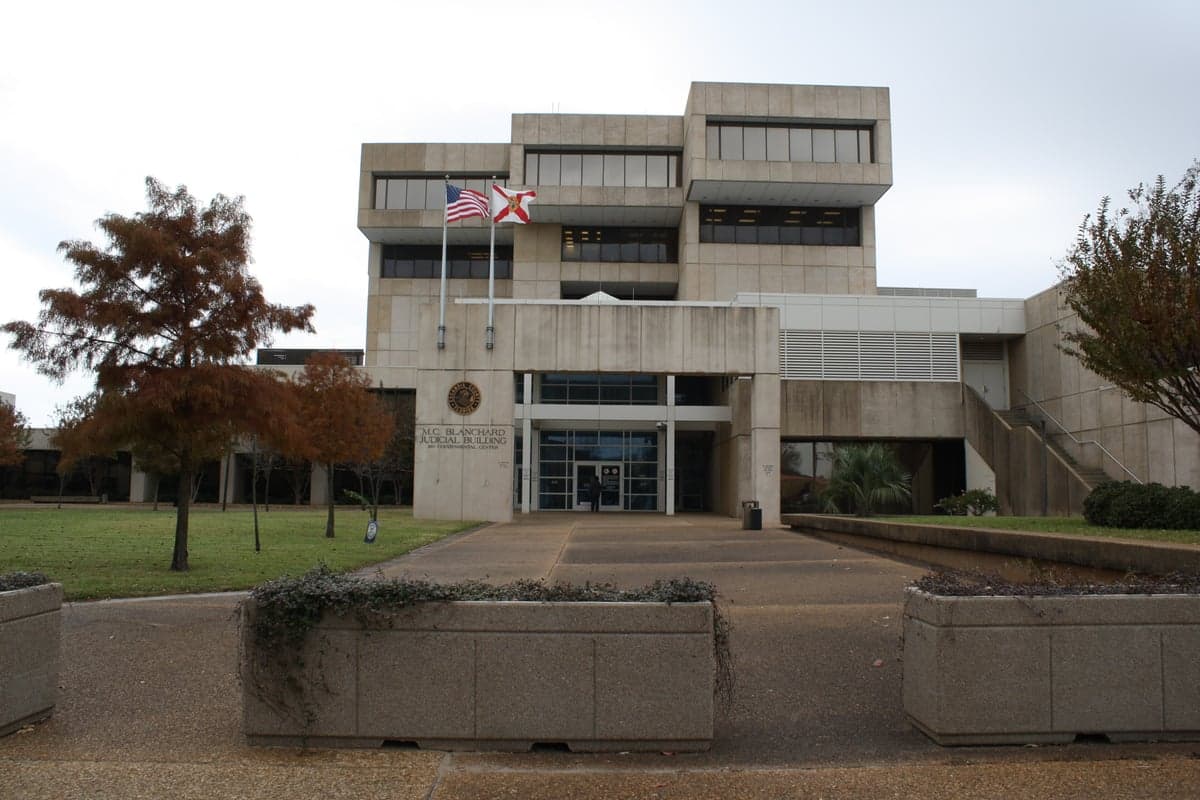
Photo: Wikipedia
Strategic Assessment of Escambia County
Meaningful friction. Expect exposure to either population pressure, blast zones, or natural disaster risk. Consider buying a retreat property.
What does the Strategic Assessment tell us?
Our Strategic Assessment grades tactical survivability of an area. Major population centers, military targets, fallout zones, natural disasters, and border exposure all drive risk — lower exposure means a more defensible position in a crisis.
This is heavily inspired by Joel Skousen's Strategic Relocation book. Highly recommended you checkout the book ($)What does this tell us?
Our Strategic Assessment grades tactical survivability of an area. Major population centers, military targets, fallout zones, natural disasters, and border exposure all drive risk — lower exposure means a more defensible position in a crisis.
This is heavily inspired by Joel Skousen's Strategic Relocation book. Highly recommended you checkout the book ($)Strategic Pillars

Key Distances
Strategic Assessment Analysis
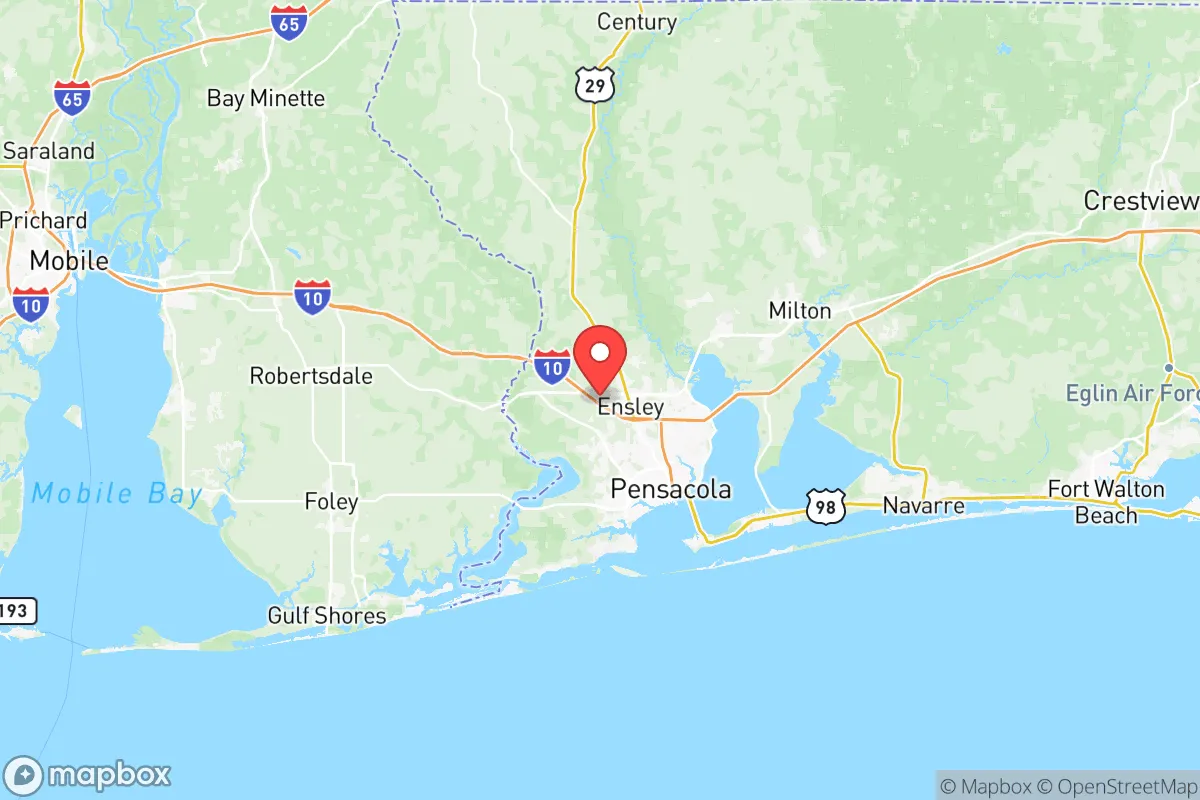
Escambia County, Florida, offers a strategic mix of geographic insulation and practical self-sufficiency that appeals to relocation-minded readers prioritizing resilience. Anchored by Pensacola, the county sits at Florida’s westernmost edge, buffered from the densest Gulf Coast population centers while still providing access to critical infrastructure. Its position along the Gulf of Mexico and the Alabama state line gives it a distinct advantage: proximity to military and logistical assets without the congestion and vulnerability of larger metro areas like Mobile or New Orleans. For a relocator weighing disaster readiness and long-term stability, Escambia County presents a defensible, resource-rich option — but one that requires clear-eyed awareness of its exposure to both natural and man-made risks.
Geographic position and natural advantages for long-term stability
Escambia County’s location is its strongest card. It sits roughly 200 miles east of New Orleans and 50 miles west of the Florida capital, Tallahassee, placing it outside the immediate fallout zones of major Gulf Coast industrial corridors. The county is home to Naval Air Station Pensacola, a major military installation that anchors the local economy and provides a stabilizing institutional presence. The base’s airfield and deep-water port capabilities offer logistical redundancy in a crisis. To the north, the county transitions into the pine forests and low-density rural areas of northern Escambia and adjacent Santa Rosa County, providing a natural buffer and potential retreat zones. The Pensacola Bay system offers abundant freshwater sources and marine resources, while the region’s aquifer — the Floridan — is one of the most productive in the Southeast. For a relocator, this means reliable groundwater access, a long growing season for food production, and a climate that supports year-round subsistence agriculture. The county’s position also places it within a day’s drive of multiple major cities — Mobile, Tallahassee, even Atlanta — but far enough to avoid their immediate vulnerabilities.
Natural and man-made risks: what to watch for in Escambia County
No resilience assessment is honest without addressing the downsides. Escambia County’s Gulf Coast location makes it a target for hurricanes and tropical storms, with the 2024 season reminding locals that storm surge and wind damage are recurring threats. The county’s low-lying coastal areas, particularly around Pensacola Beach and Perdido Key, are vulnerable to flooding. Inland areas north of Interstate 10 fare better, but heavy rainfall can still overwhelm drainage systems. Beyond weather, the county sits within 100 miles of two major oil refineries: the Chevron Pascagoula Refinery in Mississippi (about 60 miles west) and the PBF Energy Chalmette Refinery near New Orleans (roughly 150 miles southwest). While not directly adjacent, these facilities represent potential industrial accident or targeted disruption risks. More proximately, the Escambia County landfill and the Pensacola Energy gas storage facility are local infrastructure points that could become liabilities in a prolonged grid-down scenario. The county also hosts the Pensacola International Airport and a busy rail corridor, both of which are potential chokepoints or targets. For the resilience-minded relocator, the key takeaway is that Escambia’s risks are manageable with proper siting — choose property north of I-10 and away from the immediate coast to mitigate the most serious threats.
Practical resilience for a relocator: food, water, energy, and defensibility
Escambia County offers strong fundamentals for a self-sufficient lifestyle. The Floridan Aquifer provides abundant, high-quality groundwater, and many rural properties already rely on private wells. Rainfall averages around 65 inches per year, supporting rain catchment systems and gardening without the drought stress seen in the western U.S. The growing season stretches from March to November, allowing for multiple crop cycles and the possibility of year-round food production with season extension techniques. Local soil varies from sandy coastal loam to richer clay loam inland, but with amendment, most areas can support vegetables, fruit trees, and livestock. The county’s agricultural extension service and active homesteading community provide practical knowledge sharing. For energy, the region is served by Gulf Power (now Florida Power & Light), but grid reliability is a concern during storms. Solar potential is good — the area averages over 220 sunny days per year — and net metering policies are favorable for grid-tied systems. Off-grid solar with battery storage is increasingly common among preppers and homesteaders in the area. Defensibility is a mixed picture: the county’s population of roughly 330,000 is concentrated in Pensacola and its immediate suburbs, leaving large tracts of rural land in the northern half of the county. Properties with good road access but low visibility, set back from main highways, offer a balance of accessibility and security. The presence of NAS Pensacola and the nearby Eglin Air Force Base (in Okaloosa County, about 40 miles east) provides a military presence that could aid in post-disaster security, though it also makes the area a potential target. For the relocator, the smart play is to buy land in northern Escambia or adjacent Santa Rosa County, where population density drops and natural buffers increase.
The overall strategic picture for Escambia County is one of cautious optimism. It offers genuine advantages — abundant water, a long growing season, military infrastructure, and a location that balances access with insulation — that make it a viable choice for the resilience-minded relocator. The risks are real but localized: hurricanes, industrial facilities within a 100-mile radius, and the inherent vulnerabilities of a coastal county. The key is to choose your specific location carefully. Avoid the immediate coast and the floodplains of the Escambia and Yellow Rivers. Look north of I-10, where elevation rises and development thins out. With proper siting, a well on a few acres of piney woods, and a solar array, Escambia County can support a long-term, self-sufficient lifestyle. It’s not a perfect bunker — no place is — but it’s a solid, defensible option for someone who wants to be close enough to infrastructure to be practical, far enough to be safe, and smart enough to prepare for what comes.

* Values derived from national, state, county, city and local statistics and may differ in a specific area. Last updated: 2026-08-02T10:22:54.000Z
Narrative content on this page is AI-generated and may contain mistakes. Verify any details that matter before acting on them.
ReloMaps may earn a commission from affiliate links at no extra cost to you.

