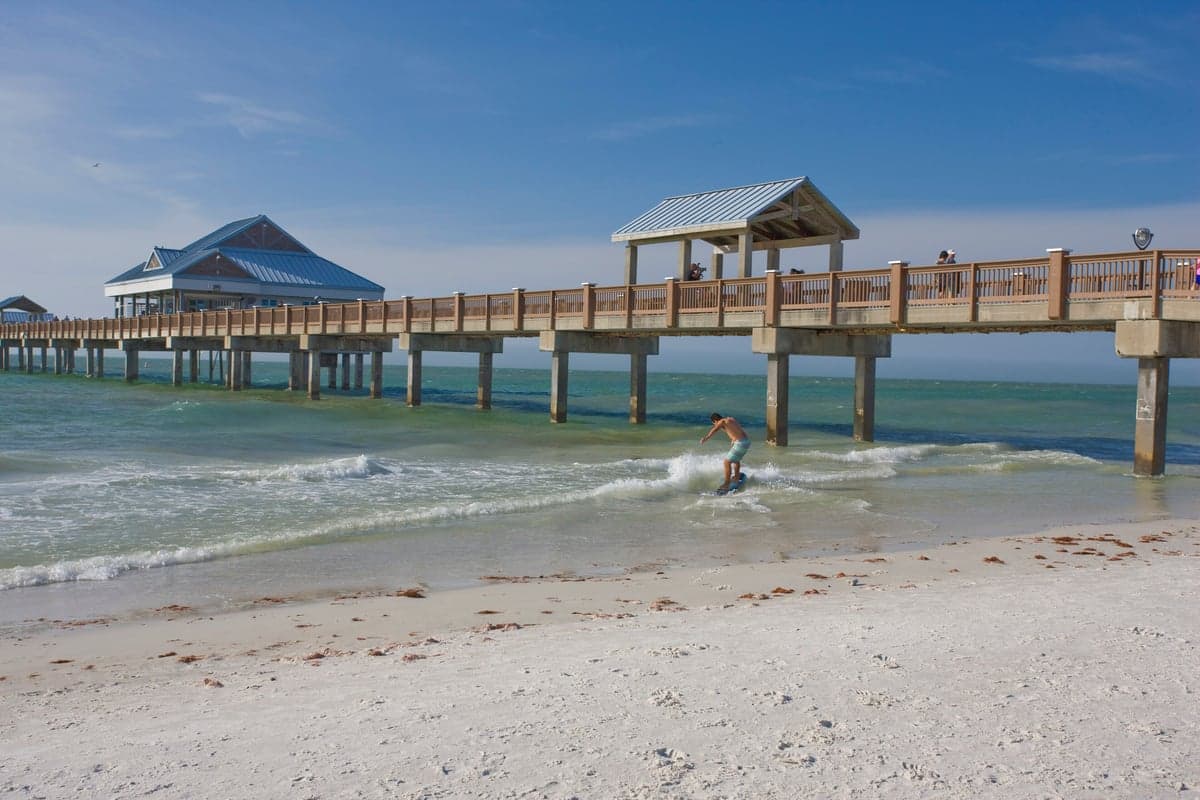
Photo: Wikipedia
Personal Sovereignty in Pinellas County
Viable for self-reliance. Generally workable, though some barriers may limit total independence.
What does Personal Sovereignty tell us?
Personal Sovereignty measures your capacity for self-reliance and independence with minimal government friction. Higher scores mean fewer barriers between you and the way you want to live... but it assumes you have the space you need and good neighbors.
What does this tell us?
Personal Sovereignty measures your capacity for self-reliance and independence with minimal government friction. Higher scores mean fewer barriers between you and the way you want to live... but it assumes you have the space you need and good neighbors.
State Policy
Energy independence: Importer (10% of energy produced in-state)
Personal Liberty
Homesteading

Personal Liberty Analysis
Pinellas County presents a complex and often contradictory environment for personal sovereignty, where Florida’s strong state-level protections for individual rights clash with dense urban governance and a heavily regulated coastal landscape. For the conservative-leaning individual or parent prioritizing autonomy, the county offers a solid legal foundation—no state income tax, robust self-defense laws, and a constitutional carry framework—but the day-to-day reality is shaped by local ordinances, zoning codes, and a population density that can feel suffocating to those accustomed to wide-open spaces. The key to thriving here lies in choosing the right municipality, as the difference between the unincorporated scrublands of North Pinellas and the hyper-regulated beach towns of the south is night and day.
Tax burden and regulatory posture in Pinellas County
Florida’s lack of a state income tax is the single biggest win for personal sovereignty here, but Pinellas County layers on its own costs. The combined county and municipal sales tax rate hits 8.5% in most cities like St. Petersburg and Clearwater, which is among the highest in the state. Property taxes are manageable by national standards—around 0.85% of assessed value—but homeowners in coastal zones like Treasure Island and Madeira Beach face mandatory flood insurance and strict building elevation requirements that can double the true cost of ownership. Regulatory posture is mixed: the county enforces a strict 35-foot height limit on new construction in most residential areas, and the Pinellas County Construction Licensing Board is known for aggressive enforcement of contractor rules, which can frustrate DIY-minded property owners. For those seeking minimal government interference, the unincorporated areas of East Lake and Palm Harbor offer slightly looser zoning than the coastal cities, but no part of Pinellas truly escapes the long arm of the Southwest Florida Water Management District, which controls well permits and stormwater runoff with a heavy hand.
Self-defense and gun law specifics in Pinellas County
Florida’s constitutional carry law, effective July 2023, is the cornerstone of personal sovereignty here—no permit is required to carry a concealed firearm for anyone legally allowed to possess one. Pinellas County Sheriff Bob Gualtieri has publicly supported the law, and deputies generally do not engage in the kind of preemptive gun confiscation seen in some blue states. However, local nuance matters: St. Petersburg and Largo have city ordinances that restrict discharging firearms within city limits, even on private property, which can be a shock for newcomers from rural areas. The county’s gun ranges are plentiful—the Wyoming Antelope Club in Pinellas Park and the St. Petersburg Gun Club in Feather Sound offer memberships and training—but the wait times for NRA-certified classes can stretch weeks due to demand. Stand-your-ground laws apply statewide, and the county’s courts have historically been favorable to self-defense claims, though the 6th Judicial Circuit (covering Pinellas and Pasco) has seen a slight uptick in prosecutions for brandishing in public disputes since 2024. For the survivalist, the key takeaway is that your right to carry is strong, but your right to shoot on your own land is severely limited by density—this is not a county for backyard target practice.
Self-reliance and homesteading viability in Pinellas County
True off-grid living in Pinellas County is nearly impossible due to density and water management rules, but pockets of self-reliance exist for those willing to adapt. Minimum lot sizes in unincorporated areas are typically 7,500 square feet, but many older neighborhoods in Dunedin and Safety Harbor have lots under 5,000 square feet, making serious gardening or livestock a challenge. The county allows up to four chickens per household in most residential zones, but roosters are banned outright, and beekeeping requires a permit and neighbor notification. Rainwater collection is legal but limited to two 55-gallon barrels per property without a special permit from the water management district—a far cry from the cistern systems common in Texas hill country. Solar panels are permitted by right, but the county’s historic preservation boards in Old Northeast St. Petersburg and Pass-a-Grille have been known to reject installations on aesthetic grounds. For serious homesteading, the East Lake area near the Pasco County line offers the best balance: larger lots (up to 1 acre in some subdivisions), fewer HOAs, and a more rural feel, though well water is increasingly regulated due to saltwater intrusion. The bottom line: Pinellas is a county for micro-homesteading—think container gardens and solar chargers, not acreage and livestock.
Personal liberties in Pinellas County: parental rights, medical autonomy, speech, and property
Florida’s Parental Rights in Education Act (HB 1557) and the Medical Freedom Act (SB 2524, 2024) provide a strong legal shield for parents and individuals in Pinellas County. School boards in Clearwater and Largo have been generally compliant with state law regarding curriculum transparency and parental notification, though the Pinellas County School Board has faced lawsuits from both sides of the mask mandate debate since 2021. Medical autonomy is bolstered by state law prohibiting vaccine passports and employer mandates, but the county’s hospital system—dominated by BayCare and HCA Florida—has been slow to adopt alternative treatment protocols, and the Pinellas County Medical Society remains aligned with mainstream public health guidance. Free speech is protected by the Florida Constitution, but local noise ordinances in St. Pete Beach and Indian Rocks Beach have been used to shut down political rallies and religious gatherings on public beaches, leading to ongoing First Amendment litigation. Property rights are strong on paper—Florida’s Private Property Rights Protection Act limits eminent domain—but the county’s Community Development Code imposes strict setback requirements and tree preservation rules that can feel like a taking to landowners wanting to clear brush for a garden or build a workshop. For the parent concerned about school indoctrination, the Palm Harbor and East Lake areas offer the most conservative school board representation, while St. Petersburg remains a progressive stronghold where parental rights battles are more common.
Compared to other Florida counties, Pinellas offers a moderate-to-strong sovereignty environment that is heavily dependent on your specific location and lifestyle. The state-level protections for gun rights, parental authority, and tax freedom are genuine and enforceable, but the county’s urban density, aggressive water management, and local zoning codes create friction that a survivalist would not find in Pasco County to the north or Hernando County to the northwest. For the single individual or family willing to live in the less-populated eastern corridor—East Lake, Tarpon Springs, or the rural fringe of Palm Harbor—Pinellas can work as a base of operations, with access to the Gulf for fishing and trade routes via I-275. But for those seeking true autonomy—off-grid power, livestock, and minimal government interaction—this county is a compromise at best. The smart play is to treat Pinellas as a legal and economic hub while maintaining a secondary property or bug-out location in a less regulated county, because the density here will only increase as Florida’s population continues to surge.

* Values derived from national, state, county, city and local statistics and may differ in a specific area. Last updated: 2026-05-28T13:02:37.000Z
Narrative content on this page is AI-generated and may contain mistakes. Verify any details that matter before acting on them.
ReloMaps may earn a commission from affiliate links at no extra cost to you.

