Photo: Wikipedia
Demographics of Pinellas County
Affluence Level in Pinellas County
A middle-class area roughly in line with national averages across income, home values, education, and employment.
People of Pinellas County
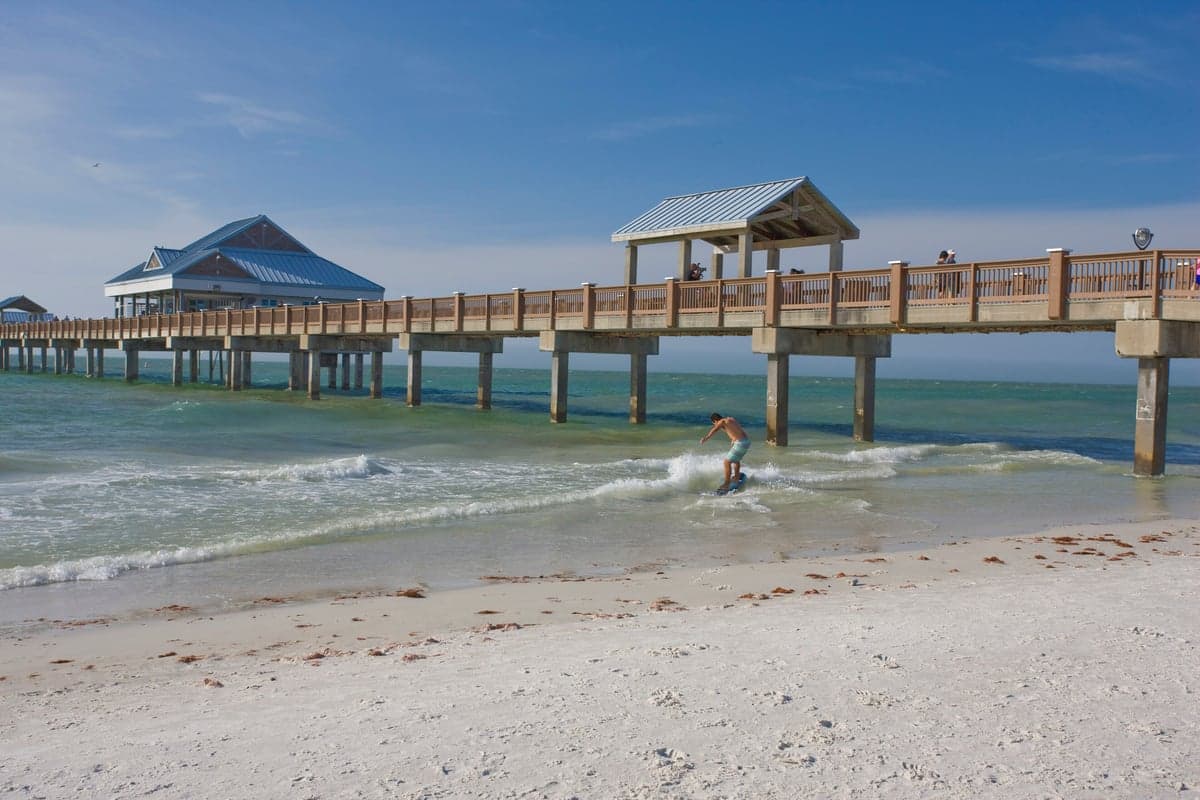
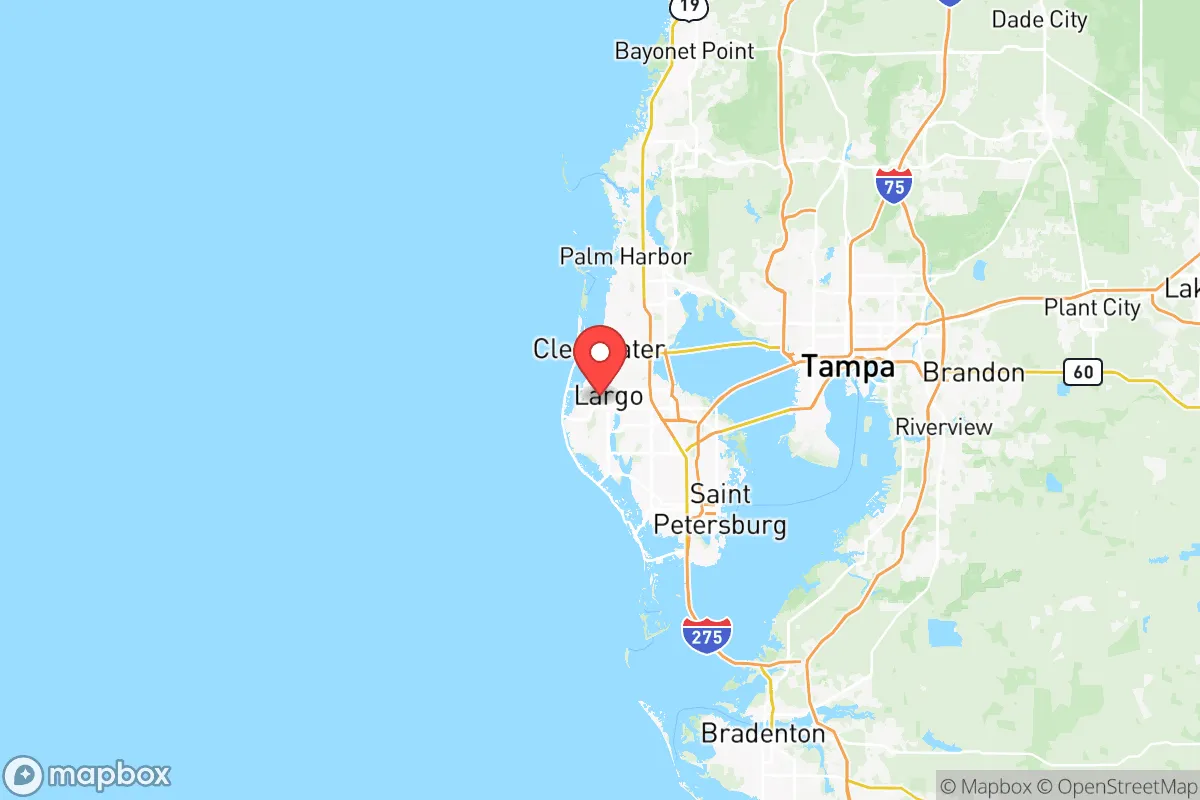
Pinellas County, Florida, is home to 960,565 residents, a densely populated peninsula where 71.6% of the population identifies as White, 10.9% as Hispanic, 9.5% as Black, and 2.8% as East/Southeast Asian, with a notably low foreign-born rate of 4.3%. The county’s human character is defined by a blend of historic Southern roots, a strong retiree and veteran presence, and a growing professional class drawn to the Tampa Bay area’s economy. Distinctive identity markers include a deep attachment to Gulf Coast beach culture, a politically mixed but increasingly conservative-leaning electorate, and a population that is older than the state average, with a median age of 47.3. This is a place where the past of small fishing and tourism towns has been rapidly overlaid by suburban sprawl, yet the local identity remains fiercely independent and community-oriented.
Settlement & growth (pre-1960)
Long before European contact, the area now known as Pinellas County was inhabited by the Tocobaga people, a Native American tribe of the Safety Harbor culture, who lived in small fishing villages along the coast. Spanish explorers, including Pánfilo de Narváez in 1528 and Hernando de Soto in 1539, made brief contact, but no permanent European settlement took hold. The region remained sparsely populated through the Spanish and British colonial periods, largely due to its swampy interior and the fierce resistance of the Seminole people, who used the area as a refuge during the Seminole Wars of the 1830s and 1840s.
American settlement began in earnest after the Third Seminole War ended in 1858. The first permanent non-Native settlers were mostly Scots-Irish and English farmers from Georgia and the Carolinas, drawn by the promise of cheap land under the Armed Occupation Act of 1842. They established small agricultural hamlets, the most notable being Clearwater, founded in 1841 as a trading post, and Safety Harbor, named for its natural springs. These early communities were isolated, subsisting on cotton, citrus, and timber, and remained tiny through the Civil War and Reconstruction.
The real transformation began with the arrival of the railroad. In 1888, the Orange Belt Railway reached St. Petersburg, then a village of just 300 people, connecting the peninsula to the national rail network. This sparked the first major land boom. Developers, led by Russian-born railroad magnate Peter Demens, marketed St. Petersburg as a winter resort for wealthy Northerners. The city’s population exploded from 300 in 1888 to over 14,000 by 1920. This wave was overwhelmingly White, native-born Americans from the Midwest and Northeast—many of them retirees, invalids seeking the climate’s health benefits, and speculators. The 1920s land bust and the Great Depression slowed growth, but the county’s population still doubled between 1930 and 1940 to 91,852.
World War II brought a decisive shift. The U.S. Army established Barksdale Field (later Albert Whitted Airport) and the St. Petersburg Army Air Base, drawing thousands of servicemen and defense workers. After the war, many of these veterans returned to settle permanently, fueling a second boom. The completion of the Sunshine Skyway Bridge in 1954 and the construction of Interstate 275 in the 1960s opened the county to massive suburban development. Largo, Dunedin, and Tarpon Springs grew from sleepy fishing villages into bedroom communities. Tarpon Springs retained a unique character: it became the center of a Greek immigrant community that arrived in the 1900s to work the sponge-diving industry, a wave that peaked around 1910 and remains a strong cultural enclave today. By 1960, Pinellas County’s population had reached 374,665, a fourfold increase from 1940, driven almost entirely by domestic migration from the Rust Belt and the Northeast.
Modern era (post-1965)
The 1965 Hart-Cellar Act had a muted effect on Pinellas County compared to other Florida metros. The county’s foreign-born population remains low at just 4.3%, far below the state average of 21%. The primary demographic shifts since 1965 have come from domestic migration, not international immigration. The most significant trend has been the continued influx of White retirees and working-age families from the Midwest, Northeast, and Canada, drawn by low taxes, warm weather, and the county’s reputation as a safe, conservative-leaning haven. This wave has concentrated in planned retirement communities like Sun City Center (technically in Hillsborough but adjacent) and the sprawling subdivisions of Palm Harbor and East Lake.
The county’s Black population, at 9.5%, has deep roots. The historic African American community was centered in the Gas Plant District of St. Petersburg, a thriving neighborhood founded by freed slaves and their descendants in the late 1800s. This area was largely demolished in the 1980s for urban renewal projects, including the construction of Tropicana Field, displacing many families to southern St. Petersburg and Midtown. Since 2000, the Black population has grown modestly, driven by younger families seeking affordable housing in the county’s southern and eastern fringes.
The Hispanic population, now 10.9%, is the fastest-growing demographic group. This growth is primarily from Puerto Rican and Cuban migration, with smaller numbers from Mexico and Central America. Unlike the historic enclaves in Miami or Tampa, Pinellas County’s Hispanic community is more dispersed, though concentrations exist in Lealman (an unincorporated area near St. Petersburg) and parts of Clearwater. The East/Southeast Asian population, at 2.8%, is largely Vietnamese and Filipino, many of whom arrived as refugees or through family reunification after 1975. They are concentrated in the Largo and Seminole areas, often working in healthcare, hospitality, and the service sector. The Indian subcontinent population, at 0.8%, is a smaller, more recent cohort, primarily professionals in tech and medicine, with no single enclave.
Suburbanization has been the dominant force since 1965. The county is now almost entirely built out, with a density of 3,400 people per square mile, making it the most densely populated county in Florida. The once-distinct towns of St. Pete Beach, Madeira Beach, and Redington Beach have merged into a continuous urban strip along the barrier islands. The interior, once pine flatwoods and orange groves, is now a grid of subdivisions, strip malls, and golf courses.
The future
Pinellas County’s population is projected to grow slowly, reaching roughly 1.1 million by 2040, constrained by a lack of undeveloped land. The population is aging, with the 65+ cohort expected to exceed 30% by 2030. This will increase demand for healthcare, assisted living, and age-restricted housing, particularly in Dunedin and Palm Harbor. The county is not homogenizing; rather, it is tribalizing into distinct generational and lifestyle enclaves: retiree-heavy coastal towns, family-oriented suburban subdivisions, and a younger, more diverse urban core in St. Petersburg.
The Hispanic and East/Southeast Asian communities will continue to grow, but from a low base, and are likely to assimilate into the broader culture rather than form insular enclaves. The foreign-born rate will rise slowly but remain below the state average. The biggest cultural shift is the in-migration of younger, more liberal professionals from other states, drawn by the revitalization of downtown St. Petersburg. This group is gradually shifting the county’s political and cultural identity, but the overall character remains conservative and family-oriented. For a new resident, Pinellas County offers a stable, built-out environment with strong schools, low crime, and a clear sense of place—but it is a place that is increasingly expensive and crowded, with little room for the kind of explosive growth seen elsewhere in Florida.
For someone moving in now, Pinellas County is becoming a mature, settled suburb with a strong retiree and family base, where the historic identity of small beach towns is giving way to a denser, more diverse, but still predominantly White and conservative-leaning community. The opportunities lie in its established infrastructure and quality of life; the trade-offs are high housing costs and limited space for future expansion.

* Values derived from national, state, county, city and local statistics and may differ in a specific area. Last updated: 2026-05-28T13:02:37.000Z
Narrative content on this page is AI-generated and may contain mistakes. Verify any details that matter before acting on them.
ReloMaps may earn a commission from affiliate links at no extra cost to you.

