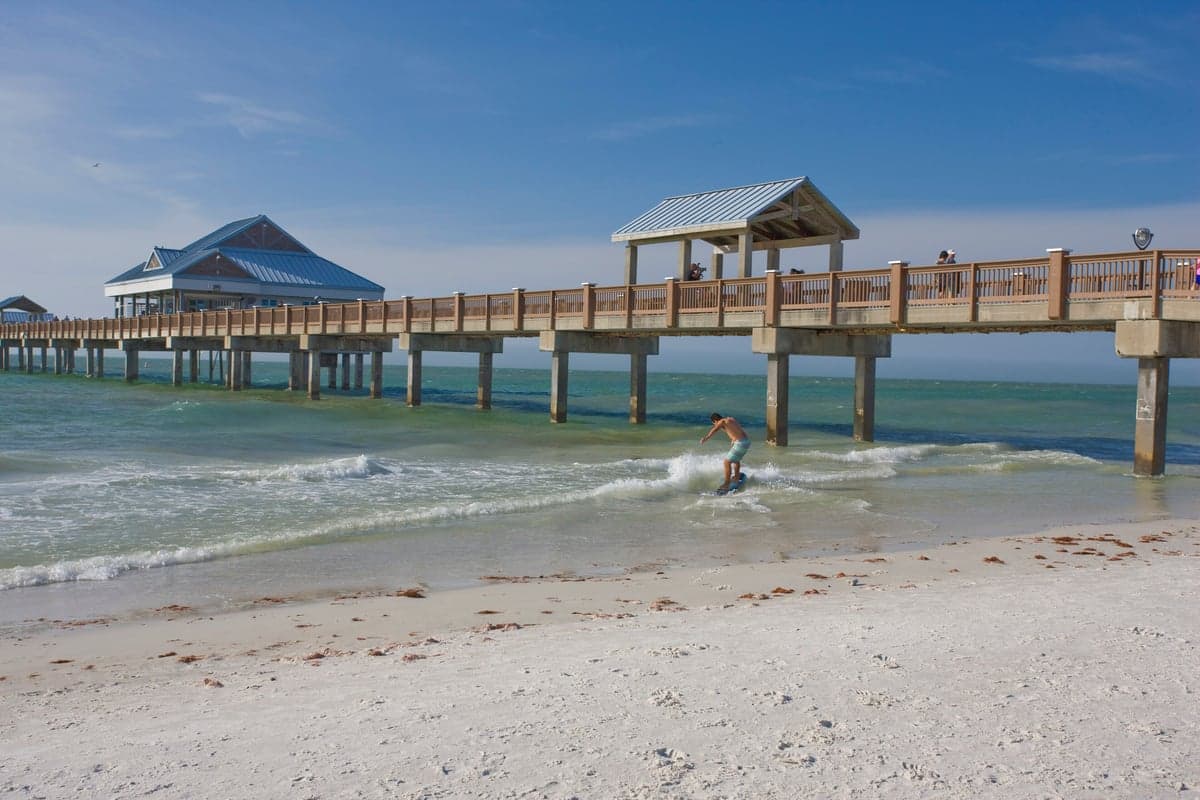
Photo: Wikipedia
Quality of Life in Pinellas County
A livable area that tracks near national norms for affordability, walkability, and neighborhood health.
What does Quality of Life tell us?
Quality of Life measures an area by evaluating factors like cost of living, nearby amenities, country club access, airport proximity, socioeconomic signals and neighborhood character. For large states, this is a general average — quality of life can vary dramatically between metro areas, suburbs, and rural communities within the same state.
What does this tell us?
Quality of Life measures an area by evaluating factors like cost of living, nearby amenities, country club access, airport proximity, socioeconomic signals and neighborhood character. For large states, this is a general average — quality of life can vary dramatically between metro areas, suburbs, and rural communities within the same state.
Cost of Living
24% above national average
77%
The Real Cost of Living in Pinellas County for 2026
| Tier | Individual | Family (4) |
|---|---|---|
| Survival | $24k | $46k |
| Comfortable | $62k | $91k |
| Luxury | $127k+ | $197k+ |
| Elite (Top 5%) | $172k+ | $266k+ |
Quality-of-Life Analysis
Pinellas County, Florida, offers a remarkably dense spectrum of quality-of-life options, from the high-energy urban core of St. Petersburg to the quiet, old-Florida fishing villages along its southern coast. The county is essentially a peninsula, fully built out with no unincorporated rural land, meaning the "rural pockets" are actually small, historic towns that have resisted intense development. This geography attracts a diverse mix: young professionals and artists drawn to St. Petersburg's revitalized downtown, families seeking the suburban stability of Clearwater and Largo, and retirees or watermen looking for the slow-paced, maritime character of places like Gulfport and Tierra Verde.
Largest town(s) & population centers
The county's dominant population centers are St. Petersburg (pop. ~260,000) and Clearwater (pop. ~117,000), which together anchor the urbanized northern and central spine of the county. Daily life in St. Petersburg revolves around its walkable downtown, the St. Pete Pier, and a thriving arts scene anchored by the Salvador Dalí Museum and the Morean Arts Center. Clearwater, by contrast, is more family-oriented and suburban, with its economy heavily tied to tourism (Clearwater Beach) and corporate headquarters (e.g., Raymond James Financial). The average commute of 25.3 minutes is manageable by Florida standards, largely because most employment is within the county itself, though traffic on U.S. 19 and I-275 can be heavy during peak hours. Largo, the third-largest city, offers a more affordable, middle-class lifestyle with a strong sense of community around Largo Central Park and the Florida Botanical Gardens.
Smaller towns & rural pockets
Because Pinellas is entirely incorporated, its "small towns" are independent municipalities that have preserved distinct identities. Gulfport, just south of St. Petersburg, is a quirky, walkable waterfront village with a historic casino building, a weekly farmers market, and a strong LGBTQ+ friendly vibe. Dunedin, on the northern coast, is a Scottish-themed town with a vibrant Main Street, craft breweries, and direct access to the Pinellas Trail, a 38-mile multi-use path that connects the county. Tarpon Springs, the northernmost city, is famous for its Greek heritage and sponge docks, offering a unique cultural enclave with a working waterfront. Tierra Verde and Isla del Sol are affluent, insular communities on barrier islands, offering a resort-like lifestyle with strict homeowners associations. The only true "rural" feel is found in the Feather Sound area near the St. Pete-Clearwater Airport, where large lots and wooded buffers create a semi-rural enclave within the urban matrix.
Cost & lifestyle range
The cost of living in Pinellas County is 24% above the national average (COL index: 124), but this figure masks significant internal variation. At the high end, Belleair Shore and Indian Rocks Beach feature median home values well above $800,000, with waterfront properties commanding millions. At the more affordable end, Lealman (an unincorporated community near St. Petersburg) and parts of South St. Petersburg have median home values closer to $319,000, the countywide median. Renters face a median of $1,525, which is steep for the region but still below Miami-Dade. Lifestyle choices are stark: residents in Old Northeast (St. Petersburg) pay a premium for historic bungalows and walkability to downtown, while those in East Lake (unincorporated) get larger lots and newer construction but require a car for everything. The Pinellas Trail is a unifying amenity, allowing cyclists and pedestrians to traverse the county without a car, but most daily errands still require driving.
Pinellas County is best suited for people who want a dense, amenity-rich coastal lifestyle without the sprawl of Tampa or the extreme costs of Miami. It works well for professionals who can afford the 24% COL premium in exchange for short commutes and beach access, and for retirees who value walkable downtowns and cultural offerings. Families may find the best balance in the northern suburbs like Palm Harbor or Safety Harbor, where schools are strong and housing is slightly more affordable than the barrier islands. Those seeking true rural living should look elsewhere—Pinellas is an urban county through and through, but its small towns offer a rare blend of historic character and modern convenience.

Crime in Pinellas County
Generally safer than 69% of comparable U.S. locations.
Violent CrimeViolent Crime Analysis
Property CrimeProperty Crime Analysis
Crime Analysis
Pinellas County presents a mixed safety picture for potential residents. With a violent crime rate of 206.6 per 100,000 residents and a property crime rate of 894.7 per 100,000, the county sits below the national average for violent offenses but above the national average for property crime. The county's dense urban corridor stretching from St. Petersburg through Clearwater to Largo concentrates most criminal activity, while smaller communities like Safety Harbor and Belleair Shore maintain notably lower incident rates.
Crime in context
Pinellas County's violent crime rate of 206.6 per 100,000 is roughly 40% lower than the national average of 380 per 100,000, placing it among the safer large Florida counties for violent offenses. However, the property crime rate of 894.7 per 100,000 exceeds the national average of approximately 1,954 per 100,000 but remains elevated compared to Florida's statewide property crime rate of roughly 1,700 per 100,000. The county's property crime numbers are driven primarily by theft from vehicles and package theft in tourist-heavy areas like Clearwater Beach and St. Pete Beach, where transient populations create more opportunities for opportunistic crime. By contrast, the violent crime rate is heavily influenced by incidents in downtown St. Petersburg and parts of mid-county unincorporated areas, while communities like Kenneth City and Redington Beach report violent crime rates below 100 per 100,000.
What residents experience
Daily life in Pinellas County involves navigating a reality where property crime is the more tangible threat. Residents in St. Petersburg's Historic Kenwood and Old Northeast neighborhoods report frequent car break-ins, while Clearwater's downtown area sees higher rates of theft and vandalism near tourist attractions. The county's Sixth Judicial Circuit, which covers Pinellas, has seen increasing criticism for progressive prosecutorial policies under State Attorney Bruce Bartlett, who took office in 2021. Bartlett's office has implemented diversion programs for nonviolent offenders and reduced cash bail requirements, policies that critics argue have contributed to a revolving-door effect for property criminals. In 2024, the county saw a 12% increase in auto thefts, with many suspects released on pretrial supervision within hours of arrest. Residents in safer enclaves like Belleair and Indian Rocks Beach report minimal interaction with crime, though they remain vulnerable to the same regional trends affecting the broader Tampa Bay area.
Neighborhood-level variation
The safety landscape across Pinellas County varies dramatically by jurisdiction and judicial approach. St. Petersburg, the county's largest city, accounts for roughly 40% of all reported crime despite having only 25% of the county's population. Neighborhoods south of Central Avenue in St. Petersburg, including Childs Park and Midtown, experience violent crime rates three to four times the county average, while the Snell Isle and Shore Acres areas remain among the safest in the city. In contrast, the northern cities of Dunedin and Tarpon Springs maintain violent crime rates below 150 per 100,000, benefiting from smaller police forces with closer community ties. The Pinellas County Sheriff's Office, which polices unincorporated areas and contracts with smaller cities, has maintained a more traditional law enforcement approach, leading to lower recidivism rates in those jurisdictions compared to cities with progressive prosecutors. For families prioritizing safety, the barrier islands from Madeira Beach to Honeymoon Island offer the lowest crime rates in the county, though they come with higher property costs and seasonal tourist congestion.
* Values derived from national, state, county, city and local statistics and may differ in a specific area. Last updated: 2026-05-28T13:02:37.000Z
Narrative content on this page is AI-generated and may contain mistakes. Verify any details that matter before acting on them.
ReloMaps may earn a commission from affiliate links at no extra cost to you.

