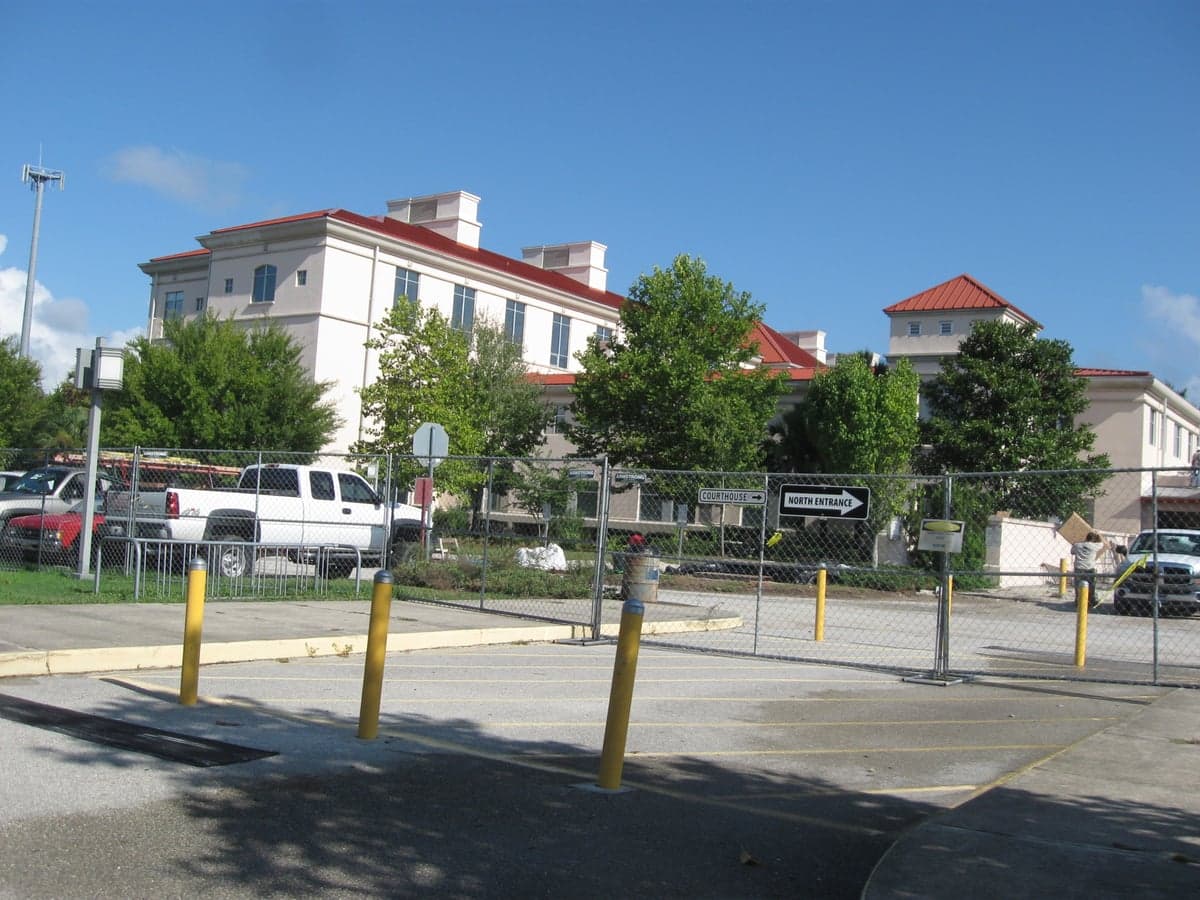
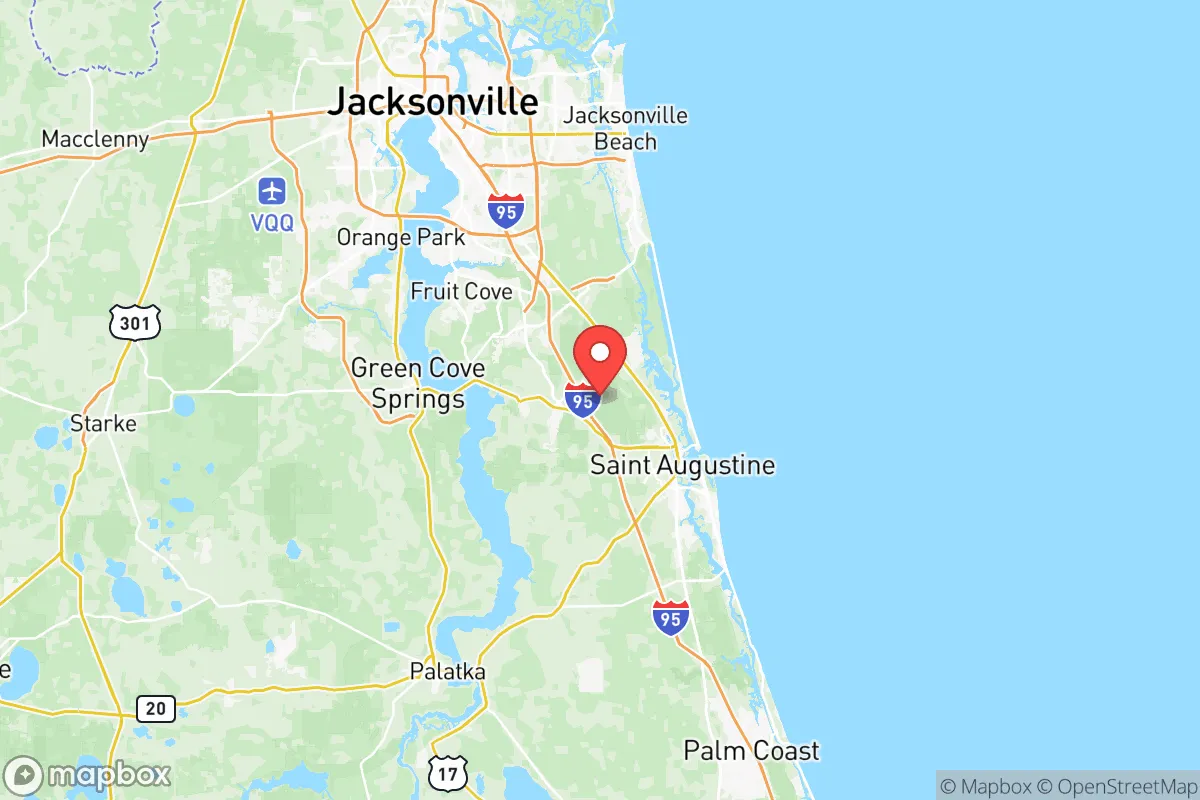
Photo: Wikipedia
Quality of Life in St Johns County
A livable area that tracks near national norms for affordability, walkability, and neighborhood health.
What does Quality of Life tell us?
Quality of Life measures an area by evaluating factors like cost of living, nearby amenities, country club access, airport proximity, socioeconomic signals and neighborhood character. For large states, this is a general average — quality of life can vary dramatically between metro areas, suburbs, and rural communities within the same state.
What does this tell us?
Quality of Life measures an area by evaluating factors like cost of living, nearby amenities, country club access, airport proximity, socioeconomic signals and neighborhood character. For large states, this is a general average — quality of life can vary dramatically between metro areas, suburbs, and rural communities within the same state.
Cost of Living
57% above national average
81%
The Real Cost of Living in St Johns County for 2026
| Tier | Individual | Family (4) |
|---|---|---|
| Survival | $28k | $53k |
| Comfortable | $89k | $131k |
| Luxury | $192k+ | $297k+ |
| Elite (Top 5%) | $228k+ | $354k+ |
Quality-of-Life Analysis
St Johns County, Florida, offers a quality-of-life spectrum that spans from the historic, amenity-rich coastal city of St. Augustine to the equestrian estates of the rural west and the master-planned suburbs of the county's southern corridor. The county's overall cost of living index of 157 (100 = U.S. average) reflects its desirability, but the experience of living here varies dramatically depending on whether a resident chooses a beachside condo, a new-construction subdivision, or a farmhouse on acreage. The county draws a diverse mix: retirees and history buffs to St. Augustine, young families to the fast-growing southern suburbs, and those seeking land and privacy to the unincorporated western areas.
Largest town(s) & population centers
St. Augustine, the county seat and oldest continuously occupied European-established settlement in the U.S., is the primary population center with roughly 15,000 residents within the city limits and over 70,000 in the greater urban area. Daily life here revolves around the historic district, the Bridge of Lions, and the beaches of Anastasia Island, with a walkable downtown dense with restaurants, galleries, and tourist attractions. St. Augustine Beach and Vilano Beach function as separate coastal communities within the same metro area, offering a quieter, surf-oriented lifestyle. South of St. Augustine, the unincorporated area of World Golf Village is a major suburban hub built around the World Golf Hall of Fame, featuring golf course communities, the First Coast Technical College campus, and extensive retail along International Golf Parkway. Further south, Palm Coast (Flagler County) borders the county line, but St. Johns County's own southern growth corridor—including the communities of Nocatee and SilverLeaf—has exploded in population, with master-planned developments offering new schools, community pools, and parks that attract families from across the Northeast and Midwest. The average commute across the county is 27 minutes, though residents in the southern suburbs often face longer drives into Jacksonville or St. Augustine for work.
Smaller towns & rural pockets
West of the coastal corridor, the county's character shifts markedly. Hastings, an agricultural town of about 650 residents, is the potato-growing capital of Florida and retains a working-farm feel with a small downtown and annual Potato Festival. Elkton is a tiny unincorporated crossroads community along State Road 207, surrounded by pine forests and sod farms. The western portion of the county, particularly along County Road 214 and near the St. Johns River, is sparsely populated with large tracts of land, horse farms, and hunting preserves. The St. Johns River communities—such as Picolata and Fruit Cove (the latter technically in the county's northwest)—offer riverfront living with deepwater docks and a slower pace, though Fruit Cove has seen suburban creep from Jacksonville. The Julington Creek area, straddling the Duval County line, is a mix of older riverfront homes and newer subdivisions, popular with Jacksonville commuters who want St. Johns County schools.
Cost & lifestyle range
The cost of living varies significantly across the county. At the high end, Anastasia Island and Matanzas Shores command median home values well above the countywide median of $457,600, with oceanfront properties frequently exceeding $1 million. The median rent of $1,775 is typical for a two-bedroom apartment in St. Augustine or Nocatee, but rents in the historic district can be 20-30% higher. At the lower end, Hastings and rural areas west of I-95 offer home values 30-40% below the county median, with older mobile homes and small ranch houses available under $250,000. The lifestyle range is equally broad: residents in Nocatee pay HOA fees for access to water parks and fitness centers, while those in Elkton may rely on well water and septic systems. Property taxes are relatively moderate for Florida, but insurance costs—particularly windstorm coverage near the coast—can add $3,000-$6,000 annually to housing costs.
St Johns County works best for those who can afford its premium on education and safety—the county consistently ranks among Florida's top five for public schools and lowest for crime. Families who prioritize school quality and are willing to commute 30-40 minutes for work thrive in the southern suburbs. Retirees and second-home buyers gravitate to the historic coast or the riverfront. Those seeking affordable land and a rural lifestyle will find it in the western agricultural belt, but should be prepared for limited services and longer drives to grocery stores and medical care. The county's diversity of settings means that a single county can accommodate a beach bum, a suburban soccer parent, and a cattle rancher—but each will pay a different price for that choice.

Crime in St Johns County
Generally safer than 69% of comparable U.S. locations.
Violent CrimeViolent Crime Analysis
Property CrimeProperty Crime Analysis
Crime Analysis
St. Johns County, anchored by St. Augustine and stretching from the Atlantic coast to the interior near the Duval County line, is one of Florida’s safest large counties. With a violent crime rate of 206.6 per 100,000 residents and a property crime rate of 894.7 per 100,000, the county sits well below both the Florida state average and national benchmarks, offering a security profile that appeals strongly to families and retirees relocating from higher-crime regions.
Crime in context
To understand St. Johns County’s safety advantage, compare its violent crime rate to the Florida average of roughly 380 per 100,000 and the national average of about 400 per 100,000. The county’s rate is nearly half the state figure and roughly 48% below the U.S. norm. Property crime, at 894.7 per 100,000, also undercuts the Florida average of approximately 1,800 per 100,000 and the national average of 1,950 per 100,000. This places St. Johns among the safest counties in the state, alongside suburban enclaves like Nassau County and Flagler County to the south. The county’s low crime rates are partly attributable to its affluent, educated population and a law enforcement presence that includes the St. Johns County Sheriff’s Office, the St. Augustine Police Department, and the Florida Highway Patrol. However, residents should note that the county’s judicial district, the 7th Judicial Circuit (shared with Volusia County), has seen some progressive-leaning policies in recent years, including diversion programs for non-violent offenders. While these programs aim to reduce recidivism, they can result in quicker release of property crime offenders, a concern for homeowners in areas like St. Augustine Shores and World Golf Village where thefts from vehicles occasionally spike.
What residents experience
Daily life in St. Johns County feels safe, with most violent crime concentrated in specific corridors rather than spread across residential neighborhoods. The city of St. Augustine, particularly its historic downtown and the West Augustine area, sees a higher share of aggravated assaults and robberies tied to tourism and transient populations. In contrast, the master-planned communities of Nocatee and Ponte Vedra Beach report violent crime rates near zero, with property crime limited to occasional package thefts and vehicle break-ins. The county’s St. Johns County School District is among the top-rated in Florida, and school safety is a priority, with resource officers in every school. Residents in Julington Creek and Fruit Cove often cite the low crime rate as a primary reason for choosing the area, though they should remain vigilant about property crime, which can rise during tourist season. The county’s approach to law enforcement is generally conservative, with the sheriff’s office emphasizing community policing and proactive patrols. That said, the broader judicial environment in the 7th Circuit, which includes Daytona Beach and its higher crime rates, can influence sentencing leniency for repeat property offenders, a dynamic that residents in St. Augustine Beach and Vilano Beach should monitor.
Neighborhood-level variation
Crime in St. Johns County is not uniform. The safest areas are the gated and semi-gated communities of Ponte Vedra Beach and Nocatee, where violent crime is virtually nonexistent and property crime is rare. The World Golf Village area, while generally safe, sees slightly higher property crime due to its mix of vacation rentals and retail. St. Augustine’s historic core and the West Augustine neighborhood have the highest violent crime rates in the county, though still low by national standards. For families, the Julington Creek and Fruit Cove areas offer excellent schools and very low crime, while St. Augustine Shores provides a middle-ground option with moderate property crime but strong community watch programs. Prospective residents should check specific subdivision crime maps and consider that the county’s overall safety is excellent, but vigilance is warranted in areas with higher transient traffic and where progressive judicial policies may reduce consequences for repeat offenders.
* Values derived from national, state, county, city and local statistics and may differ in a specific area. Last updated: 2026-06-05T17:46:50.000Z
Narrative content on this page is AI-generated and may contain mistakes. Verify any details that matter before acting on them.
ReloMaps may earn a commission from affiliate links at no extra cost to you.

