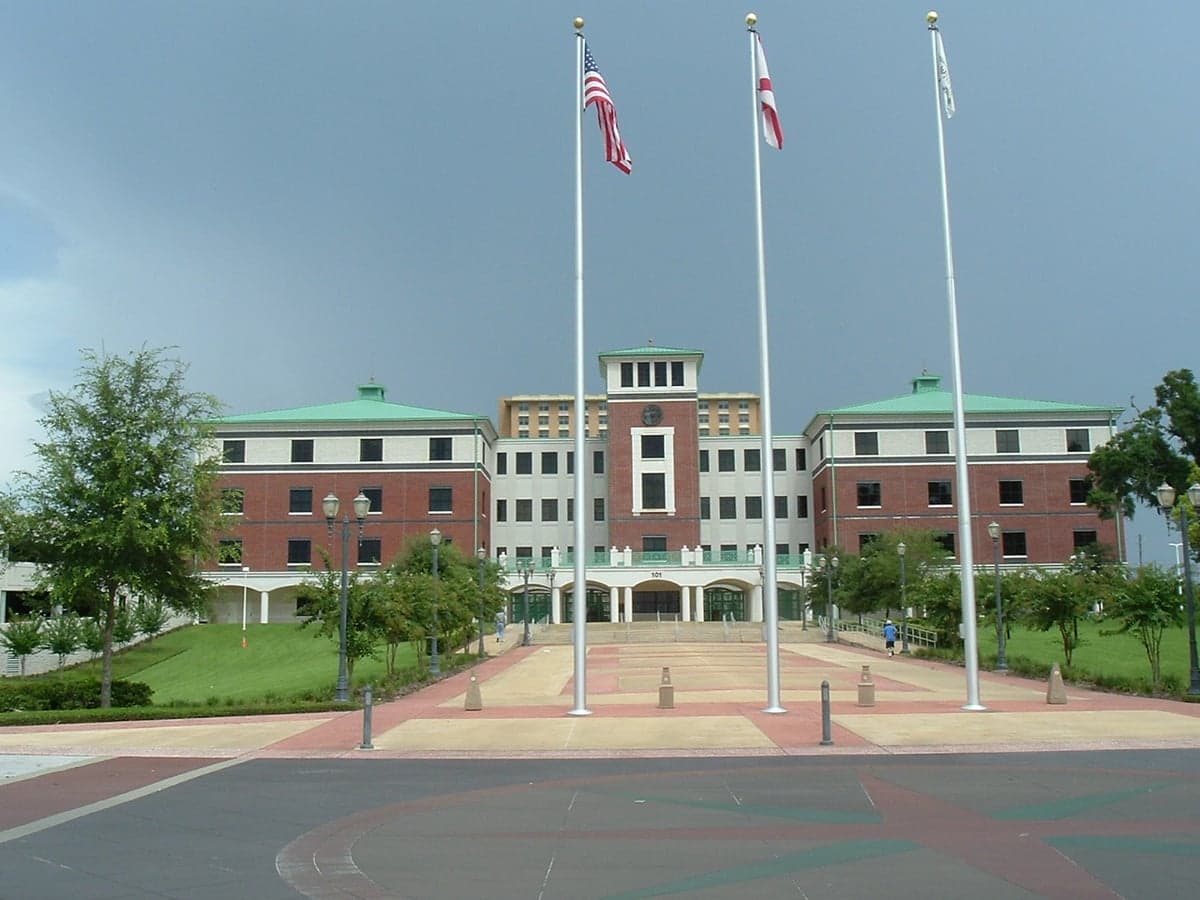
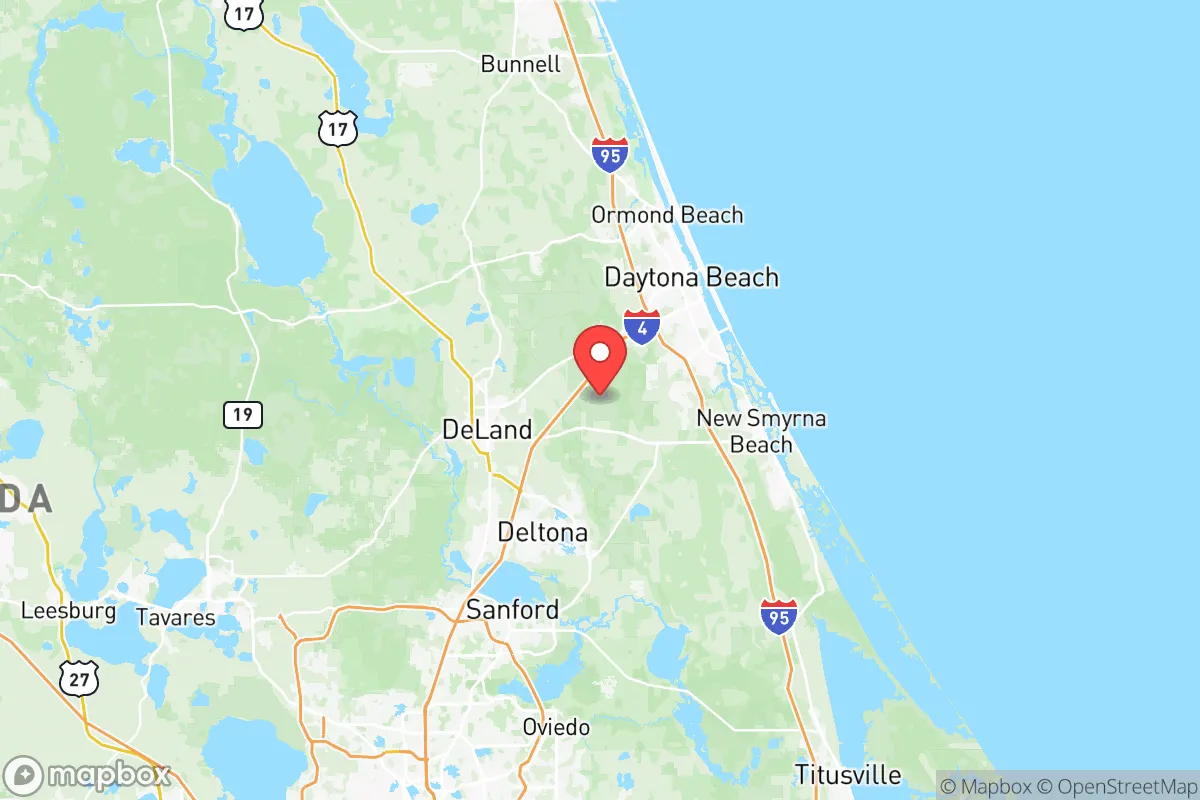
Photo: Wikipedia
Quality of Life in Volusia County
A livable area that tracks near national norms for affordability, walkability, and neighborhood health.
What does Quality of Life tell us?
Quality of Life measures an area by evaluating factors like cost of living, nearby amenities, country club access, airport proximity, socioeconomic signals and neighborhood character. For large states, this is a general average — quality of life can vary dramatically between metro areas, suburbs, and rural communities within the same state.
What does this tell us?
Quality of Life measures an area by evaluating factors like cost of living, nearby amenities, country club access, airport proximity, socioeconomic signals and neighborhood character. For large states, this is a general average — quality of life can vary dramatically between metro areas, suburbs, and rural communities within the same state.
Cost of Living
10% above national average
84%
The Real Cost of Living in Volusia County for 2026
| Tier | Individual | Family (4) |
|---|---|---|
| Survival | $22k | $41k |
| Comfortable | $54k | $79k |
| Luxury | $116k+ | $180k+ |
| Elite (Top 5%) | $137k+ | $212k+ |
Quality-of-Life Analysis
Volusia County offers a broad spectrum of living environments, from the Atlantic coast’s tourism-driven cities to inland agricultural communities and rural stretches. The county draws retirees seeking beachside condos, families looking for suburban schools in Deltona, and rural residents who value small-town solitude in places like Pierson or Seville. With a cost-of-living index of 110 (just above the national average), the trade-offs between coastal vibrancy and inland affordability define the county’s quality-of-life options.
Largest town(s) & population centers
The county’s three largest incorporated cities are Daytona Beach (population ~69,000), Deltona (~96,000), and Port Orange (~65,000). Daytona Beach is the economic and entertainment hub, anchored by the Daytona International Speedway, a boardwalk, and a mix of seasonal tourism and year-round service jobs. Daily life here can be loud during major events, but the beachside neighborhoods and historic district (like the Beach Street corridor) offer walkable pockets. Deltona, farther inland near Interstate 4, is a sprawling suburban bedroom community with a median home value near $260,000—below the countywide $278,000—and a large population of commuters heading to Orlando or Sanford. Port Orange, south of Daytona, is more family-oriented, with A-rated schools, retail clusters like the Pavilion at Port Orange, and easy access to the Halifax River for boating. Average commute across the county is 27 minutes, but residents in these larger towns can experience 30–40 minute drives depending on traffic near I-4 and US-1.
Smaller towns & rural pockets
Inland Volusia is dotted with smaller communities that offer a slower pace. DeLand (population ~36,000) is the county seat, home to Stetson University, a historic downtown with boutique shops and craft breweries, and a more liberal-leaning, artistic vibe compared to the coast. Further north, Orange City and Debary sit along the St. Johns River and attract retirees and commuters who want riverfront access without coastal prices. The unincorporated area of Cassadaga is a tiny, spiritualist enclave known for its psychic community and historic hotel. For true rural life, Pierson (the county’s fern capital) and Seville are agricultural hamlets where ferneries, citrus groves, and cattle ranches dominate the landscape. These areas lack big-box retail and have limited public water (many rely on wells), but offer land parcels under $5,000 per acre and property taxes well below the coastal rate. Edgewater, south of Port Orange, is a transitional town—more suburban than rural but still retaining mobile home parks and undeveloped riverfront lots.
Cost & lifestyle range
The cost-of-living spread is significant. At the high end, beachside neighborhoods in Daytona Beach Shores and Ponce Inlet have median home values exceeding $350,000–$400,000, particularly for oceanfront condos. Rents in these areas often exceed the county median of $1,368, sometimes reaching $1,800 for a two-bedroom with an ocean view. At the low end, rural Pierson and parts of west Deltona (around the I-4 corridor’s older subdivisions) offer home values as low as $180,000 and rents under $1,000 for modest single-family homes. New Smyrna Beach occupies a middle ground—its historic canal-front districts and Flagler Avenue commercial strip make it a desirable alternative to Daytona for retirees and second-home buyers, with median prices around $320,000. Property taxes are uniform across the county (around 1% of assessed value), but insurance costs vary sharply: coastal zones can see windstorm premiums double those inland. Amenities also split: coastal towns have restaurants, nightlife, and water sports; inland centers like DeLand offer university events, performing arts, and farmers markets; rural areas lack public transit and require a car for everything.
Volusia County best suits residents who value choice within a single county—you can live five minutes from the beach or twenty minutes from a fern field. Families with children often favor DeLand or Port Orange for their school systems; remote workers and retirees gravitate toward New Smyrna or the St. Johns River communities for lower key living without losing access to Daytona’s hospitals and airport; and those seeking acreage and quiet will find real value in Pierson or Seville. The 27-minute average commute holds only if you live and work in the same region—cross-county driving (e.g., Deltona to Daytona Beach) can push it to 40–50 minutes during peak hours.

Crime in Volusia County
Generally safer than 69% of comparable U.S. locations.
Violent CrimeViolent Crime Analysis
Property CrimeProperty Crime Analysis
Crime Analysis
Volusia County's safety picture is sharply divided between its coastal tourist corridor and inland communities, with an overall violent crime rate of 206.6 per 100,000 residents that masks wide variation at the city level. Daytona Beach and Holly Hill post the highest crime concentrations, driven in part by lenient judicial practices in the Seventh Judicial Circuit, while inland cities like Deland and Deltona offer comparatively lower risks for families. The county's property crime rate of 894.7 per 100,000 is heavily influenced by vehicle burglaries and package thefts in tourist-heavy zones along International Speedway Boulevard and A1A.
Crime in context
Volusia County's violent crime rate sits 17% below the Florida state average of approximately 249 per 100,000 but remains slightly above the national median for counties of similar population size. Property crime here runs 8% below the state average of 972 per 100,000, though that headline figure obscures a troubling trend: Daytona Beach reports property crime rates nearly triple the county average, while Port Orange and Ormond Beach consistently record rates 30-40% lower. The progressive-leaning State Attorney's Office in the Seventh Circuit, covering Volusia and Flagler counties, has faced criticism for plea deals that place repeat property offenders back on the street within weeks, a pattern that local law enforcement officials say undermines deterrence and keeps property crime elevated in high-traffic areas.
What residents experience
Daily safety concerns vary dramatically by municipality. In Deltona, one of Florida's largest cities by population without its own police department, residents rely on the Volusia County Sheriff's Office, which prioritizes community policing but operates with stretched resources across a sprawling suburban landscape. New Smyrna Beach sees seasonal spikes in petty theft and DUIs during bike weeks and holiday weekends, while Deland's downtown district has benefited from targeted patrols that reduced burglaries by 22% in 2024. Edgewater and Lake Helen, smaller towns with older populations and limited commercial corridors, report the lowest incident volumes countywide. A consistent complaint across all areas is retail theft from big-box stores on State Road 44 and I-4 corridor exits, where organized crews exploit the county's decentralized law enforcement response across municipal and sheriff's jurisdiction boundaries.
Neighborhood-level variation is pronounced and directly tied to the local justice environment. Areas under the jurisdiction of the State Attorney for the Seventh Judicial Circuit, which includes all of Volusia County, see higher recidivism for property crimes compared to neighboring counties with more traditional prosecutorial approaches—a 2025 Florida Department of Law Enforcement analysis showed property crime re-arrest rates in Volusia running 12% above the state average. The safest residential zones cluster in southern Volusia: southwestern Deltona near the Lake Monroe conservation area, the older oak-shaded streets of DeLand's Historic District, and the gated beachside enclaves of Ormond-by-the-Sea. The highest-risk corridors remain Daytona Beach's Midtown section, the US 1 corridor through Holly Hill, and the I-4 exit areas near Deltona where motels and gas stations attract transient populations. Residents considering a move should note that Daytona Beach accounts for nearly 40% of the county's violent crime despite having only 22% of its population, while Deltona and Port Orange together represent 30% of the population but just 15% of reported violent offenses.
* Values derived from national, state, county, city and local statistics and may differ in a specific area. Last updated: 2026-05-28T05:44:06.000Z
Narrative content on this page is AI-generated and may contain mistakes. Verify any details that matter before acting on them.
ReloMaps may earn a commission from affiliate links at no extra cost to you.

