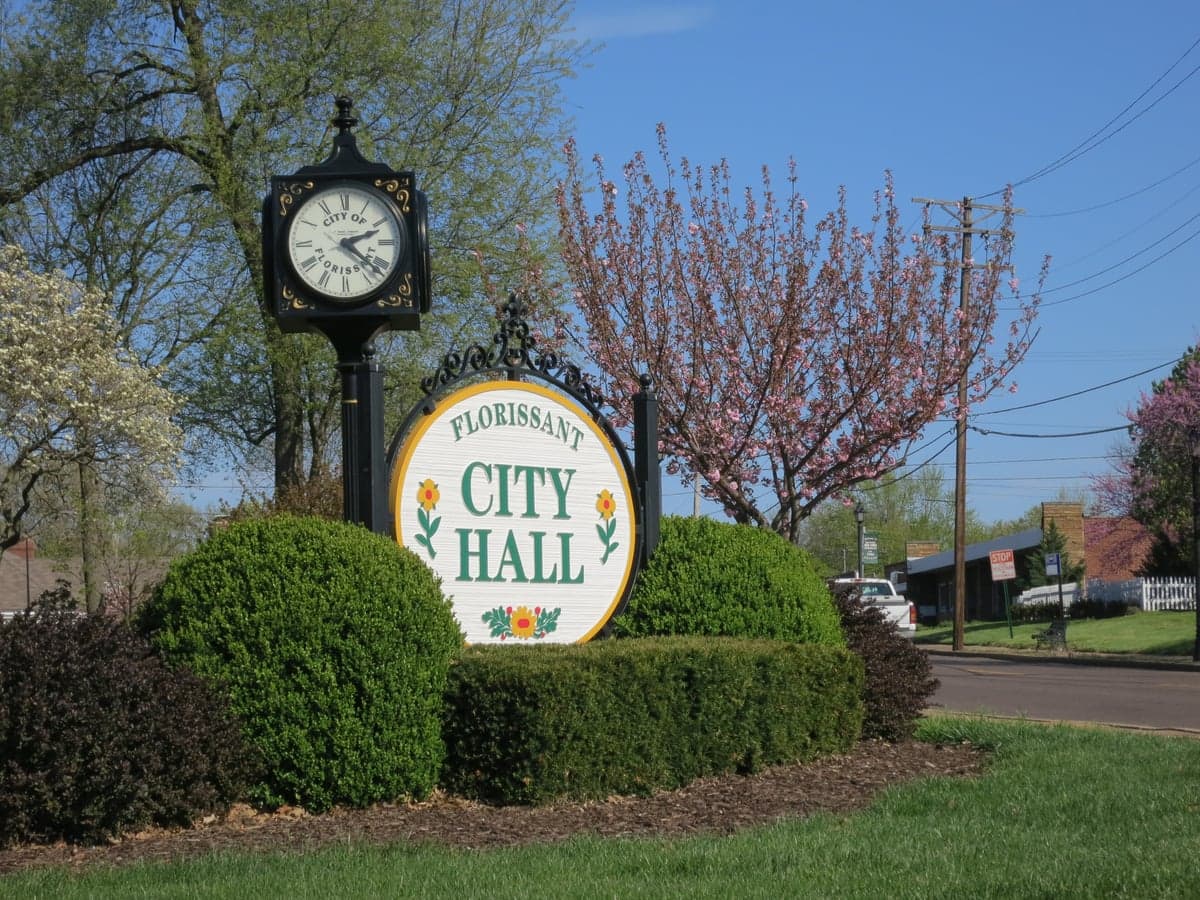
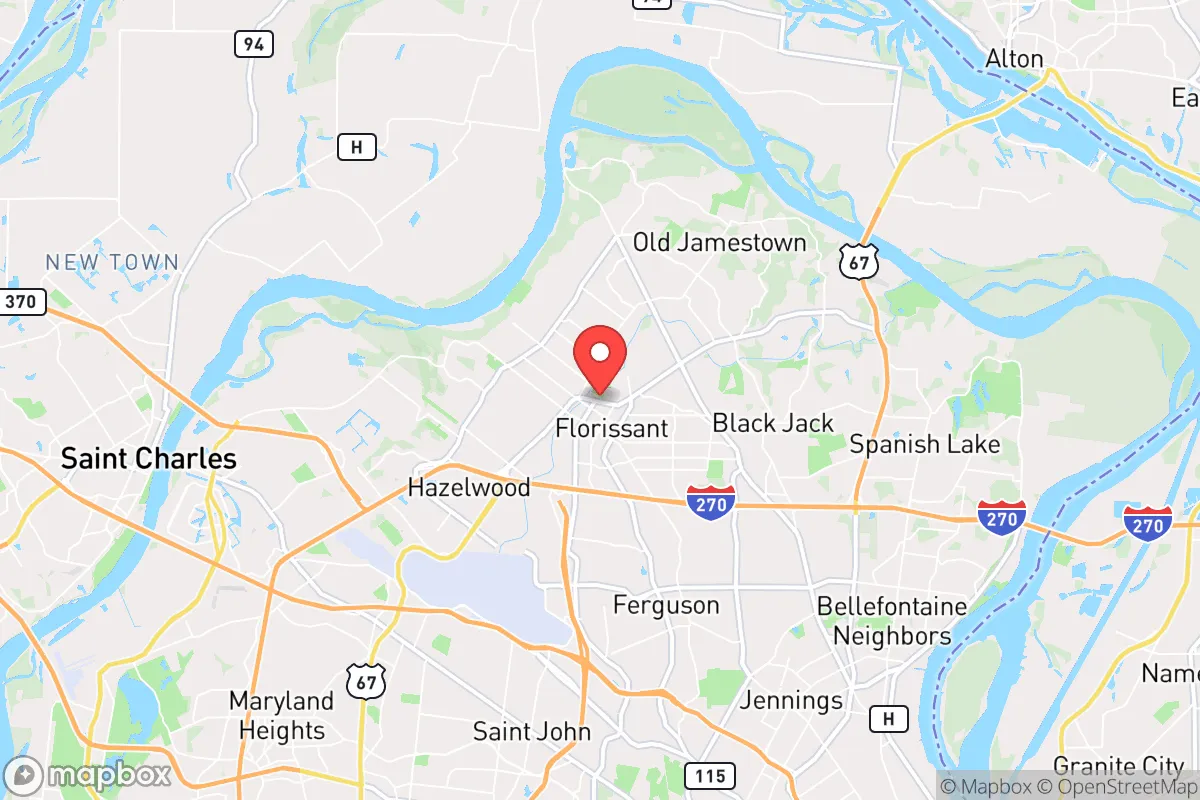
Photo: Wikipedia
Quality of Life in Florissant, MO
A high quality of life with strong walkability, manageable living costs, healthy neighborhood signals, and solid amenity access.
What does Quality of Life tell us?
Quality of Life blends cost of living, nearby amenities, socioeconomic signals, and neighborhood character. City-level scores represent the whole municipality; individual neighborhoods can differ.
What does this tell us?
Quality of Life blends cost of living, nearby amenities, socioeconomic signals, and neighborhood character. City-level scores represent the whole municipality; individual neighborhoods can differ.
Cost of Living
16% below national average
The Real Cost of Living in Florissant, MO for 2026
| Tier | Individual | Family (4) |
|---|---|---|
| Survival | $20k | $38k |
| Comfortable | $31k | $46k |
| Luxury | $90k+ | $140k+ |
| Elite (Top 5%) | $106k+ | $165k+ |
144%
The Area Signal
A metric tracking the socioeconomic signals of the area.
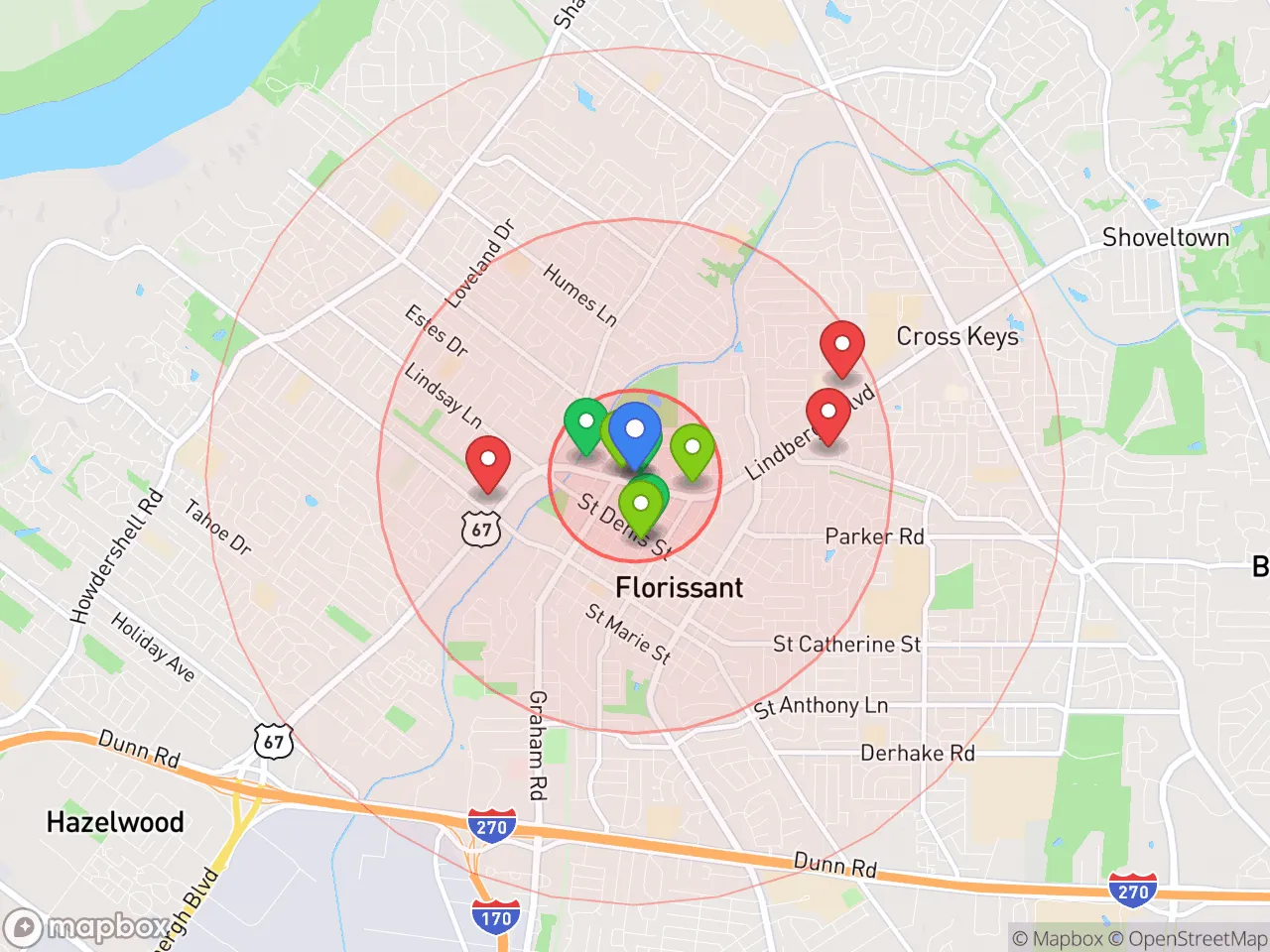
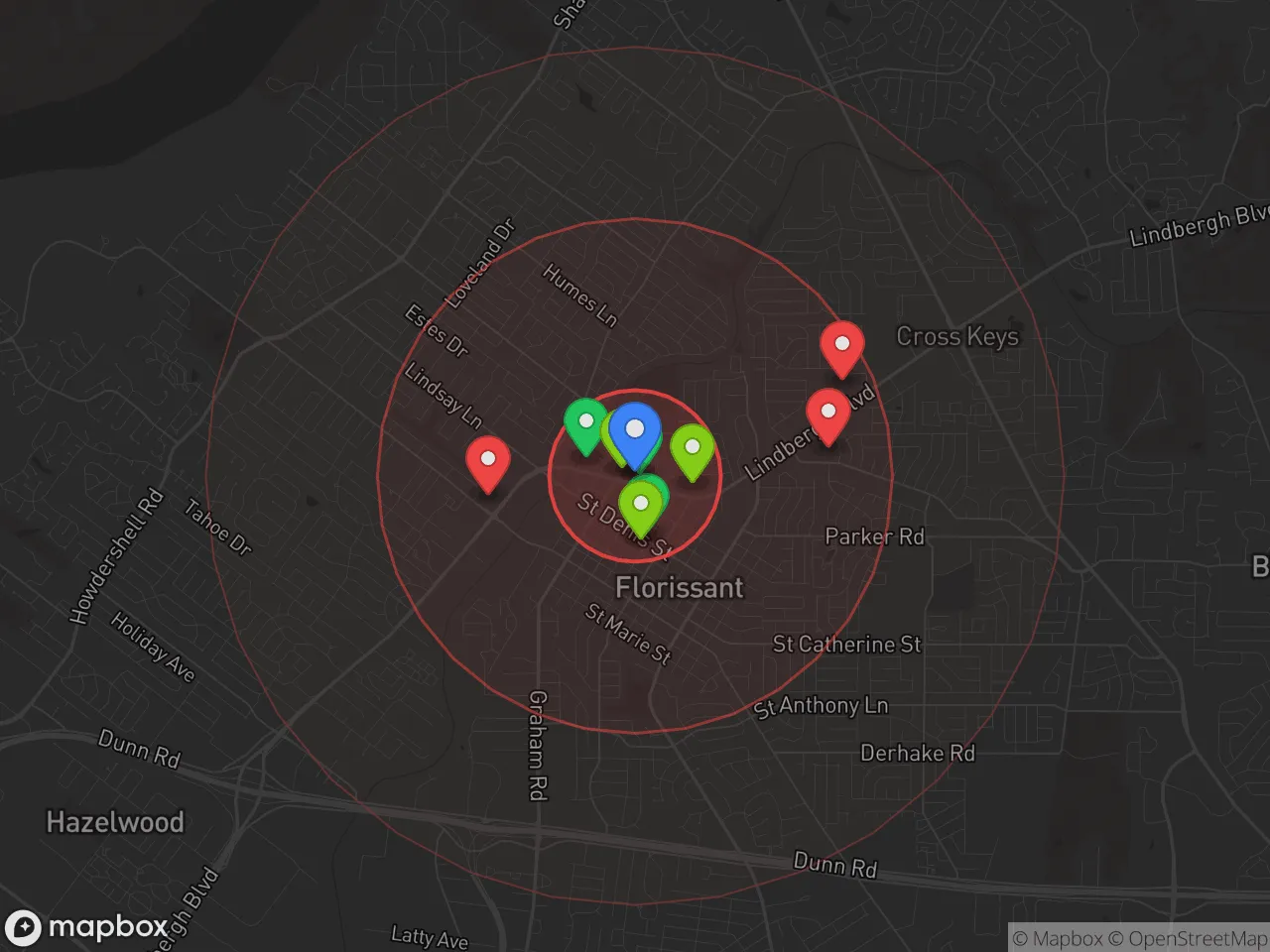
Hobbies
Explore the areaGroceries
5 within 10 miles
Gas
20 within 10 miles
Hospital
20 within 20 miles
Airport
Indianapolis International Airport
Post Office
USPS — Florissant, MO
Critical Amenities
Quality-of-Life Analysis
Florissant, Missouri, offers a quality of life defined by solid middle-class stability and affordability, attracting a mix of long-term families, first-time homebuyers, and retirees who prioritize value over urban flash. With a cost of living index of 84 (16% below the U.S. average), the city provides a notably lower financial barrier to homeownership and daily expenses compared to the St. Louis metro area, while maintaining access to the region’s job centers and cultural amenities. The population skews toward established households and older adults, with a median age around 39, creating a quiet, suburban feel where community ties run deep.
How housing costs and daily expenses compare to nearby St. Louis suburbs
Florissant’s affordability is its standout feature, particularly in housing. The median home value sits at $136,200, roughly half the national median and significantly below the St. Louis metro average of about $240,000. This makes it one of the most accessible entry points for homeownership in North St. Louis County. Median rent is $1,259, which is competitive with nearby suburbs like Hazelwood or Ferguson but often cheaper than areas closer to the city core like Clayton or University City. The average commute of 26 minutes is slightly longer than the national average of 25 minutes, but it reflects the practical trade-off: residents trade a few extra minutes in the car for a home that costs tens of thousands less. Property taxes in St. Louis County are moderate, and utility costs track below national averages, further stretching household budgets.
What daily life is like for families: schools, parks, and local amenities
Daily life in Florissant revolves around its extensive park system and the Hazelwood School District, which serves most of the city. The district includes several well-regarded elementary schools and Hazelwood West High School, which offers a range of Advanced Placement courses and extracurriculars. For recreation, residents have access to over 20 parks, including the 200-acre Florissant Valley Park with its fishing lakes, sports fields, and walking trails. The city’s historic Old Town district provides a walkable core with local restaurants, a farmers market, and community events like the annual Florissant Valley Days festival. Shopping and dining are concentrated along Lindbergh Boulevard and North Highway 67, with big-box retailers and chain restaurants dominating, though a handful of independent eateries and bakeries add local character. Healthcare access is solid, with SSM Health DePaul Hospital and Christian Hospital both within a 10-minute drive.
Who would thrive in Florissant’s current environment
Florissant is best suited for budget-conscious families, retirees on fixed incomes, and remote workers who value square footage and yard space over proximity to downtown nightlife. The low crime rate relative to nearby north-county suburbs (though higher than the national average) and the strong sense of neighborhood watch participation make it appealing for those raising children. Young professionals may find the social scene limited compared to St. Louis City or the Central West End, but the savings on housing allow for more disposable income for travel or hobbies. Overall, Florissant delivers a quiet, affordable, and family-oriented lifestyle that rewards those who prioritize financial breathing room and suburban convenience over urban energy.

Crime in Florissant, MO
Generally safer than 62% of comparable U.S. locations.
Violent CrimeViolent Crime Analysis
Property CrimeProperty Crime Analysis
Crime Analysis
Florissant, Missouri, reports a violent crime rate of 251 incidents per 100,000 residents and a property crime rate of 1,286.2 per 100,000, placing it above national averages for both categories. As a large suburb of St. Louis, the city's safety landscape is heavily influenced by the broader metropolitan area's crime trends and the progressive criminal justice policies of St. Louis County, which critics argue prioritize offender rehabilitation over public safety. This combination of elevated crime statistics and a justice system perceived as lenient creates a heightened risk environment for residents and businesses.
Crime in context
Florissant's violent crime rate of 251 per 100,000 is approximately 72% higher than the national average of roughly 380 per 100,000, while its property crime rate of 1,286.2 per 100,000 exceeds the U.S. average by about 35%. Compared to the state of Missouri, which has a violent crime rate of 540 per 100,000, Florissant appears safer, but this comparison is misleading because the state figure is inflated by St. Louis City's extreme rates. The more relevant benchmark is St. Louis County, where Florissant sits: the county's violent crime rate is around 350 per 100,000, meaning Florissant is below the county average but still significantly above safe thresholds. Property crime in Florissant is driven largely by theft and vehicle break-ins, with larceny-theft accounting for over 60% of all property offenses.
What residents experience
Residents report that property crime, particularly car break-ins and package theft, is a daily concern, especially in neighborhoods near major thoroughfares like North Lindbergh Boulevard and Washington Street. Violent crime, while less frequent, includes aggravated assaults and robberies that often occur in commercial areas or near apartment complexes. The St. Louis County Prosecuting Attorney's Office, led by a progressive prosecutor, has implemented policies such as reduced cash bail and diversion programs for non-violent offenders, which local community groups argue embolden repeat property criminals. Residents describe a pattern where stolen vehicles and burglary suspects are released quickly, undermining deterrence. This is especially frustrating for families and retirees who chose Florissant for its affordable housing and suburban feel, only to find their daily safety compromised by a justice system they perceive as soft on crime.
Neighborhood-level variation
Safety varies noticeably within Florissant. The western sections near the Missouri River, including the Old Town Florissant historic district, generally report lower crime rates due to higher homeownership and stronger neighborhood watch programs. In contrast, the eastern and southern areas bordering Hazelwood and Berkeley experience more frequent property crimes and occasional violent incidents, particularly around the Jamestown Mall site and along New Halls Ferry Road. Neighborhoods with active block associations and private security patrols see 30-40% fewer reported incidents than those without such organization. Prospective residents should research specific subdivisions and consider that even within a single zip code, safety outcomes can differ dramatically based on proximity to high-traffic corridors and the density of rental properties.
* Values derived from national, state, county, city and local statistics and may differ in a specific area. Last updated: 2026-04-29T23:52:30.000Z
Narrative content on this page is AI-generated and may contain mistakes. Verify any details that matter before acting on them.
ReloMaps may earn a commission from affiliate links at no extra cost to you.

