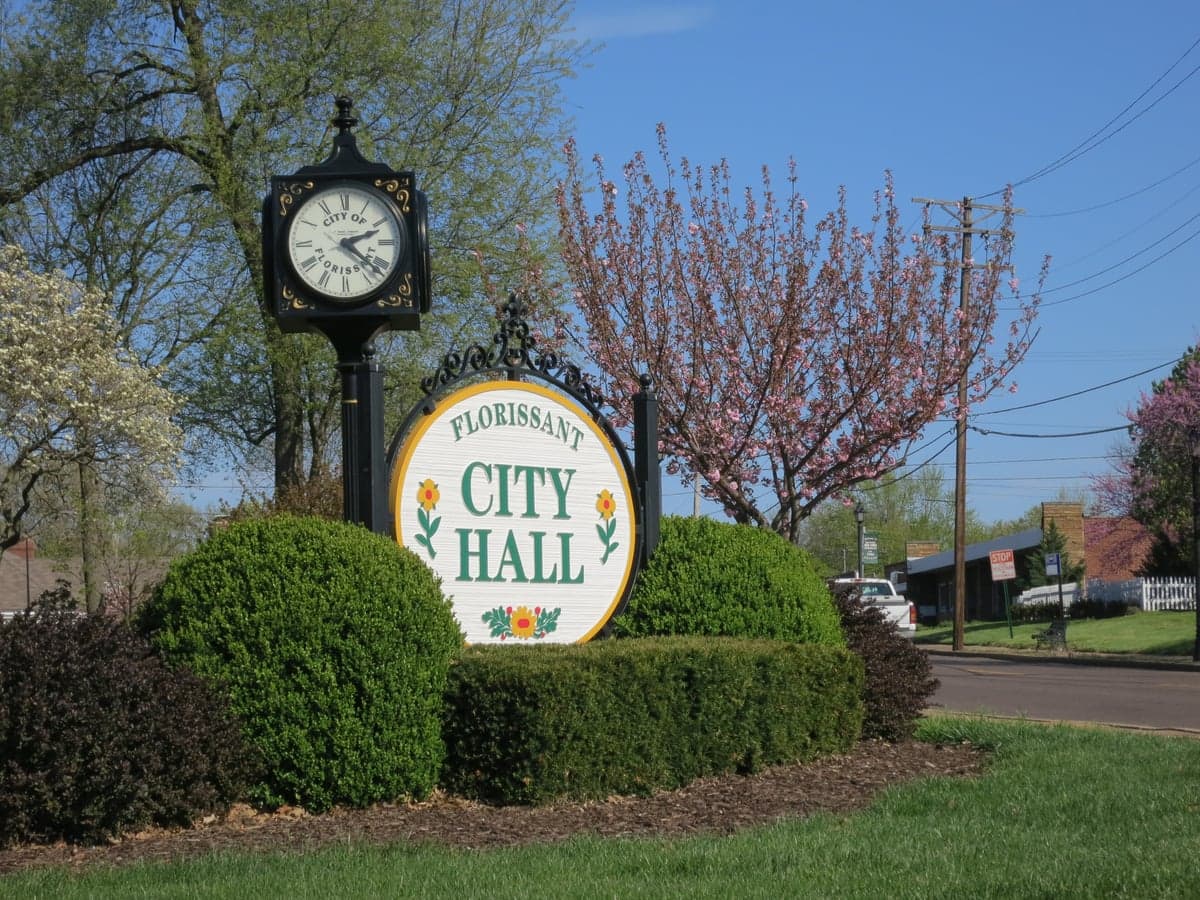
Photo: Wikipedia
Political ClimatePolitical Climate in Florissant, MO
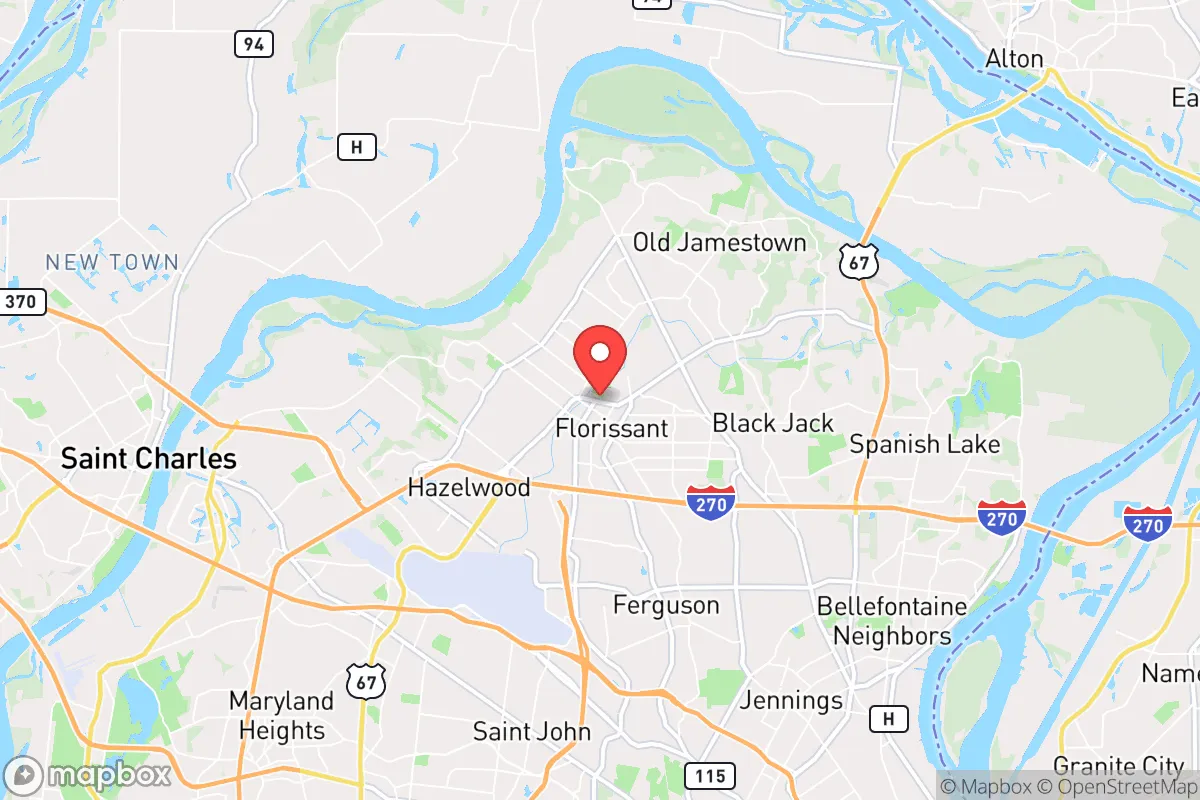
District shown is the primary district for this city’s centroid. Cities may span multiple districts.
Local Political AnalysisPolitical Analysis of Florissant, MO
Look, I've been in Florissant long enough to watch this place change, and the political numbers tell a story that's hard to ignore. With a Cook PVI of D+29, this area is one of the most reliably Democratic strongholds in the entire St. Louis region—and that's not exactly a point of pride for folks who value personal freedom and limited government. The shift hasn't been subtle; what was once a quiet, middle-class suburb where neighbors kept to themselves and the government stayed out of your business has become a place where progressive policies are creeping into everything from school boards to local ordinances. If you're someone who believes in individual responsibility over collective mandates, you'll want to know what you're walking into.
How it compares
Drive ten miles west to St. Charles or fifteen miles south to Wildwood, and you'll feel like you've entered a different world. Those communities lean reliably conservative, with lower taxes, fewer regulations, and a general attitude that the government should stay out of your garage, your backyard, and your kids' education. Florissant, by contrast, sits in the shadow of North St. Louis County, where the political machine has a long reach. The city council and county leadership have pushed through zoning restrictions, business licensing hurdles, and mask mandates that would make a small business owner's head spin. Even nearby Hazelwood and Ferguson, which share some of the same demographic trends, have seen more pushback against progressive overreach than Florissant has. It's a stark reminder that where you live in this metro area determines how much of your paycheck goes to taxes and how much say you have in your own life.
What this means for residents
For the average family here, the political climate translates into real, daily friction. Property taxes have crept up year after year, funding programs that sound good on paper but rarely deliver results—meanwhile, the roads in some neighborhoods still look like they've been through a war zone. If you run a small business, you've probably dealt with permitting delays and fees that make you wonder if the city actually wants you to succeed. And on the cultural front, there's a growing pressure to conform to progressive social norms, especially in the school district, where curriculum changes and diversity initiatives have sparked heated school board meetings. It's not that everyone here is on board with the direction—plenty of long-time residents are quietly frustrated—but the political machinery makes it hard to push back without being labeled as out of touch.
One thing that stands out about Florissant is how the local government has embraced a "we know best" attitude, especially since 2020. Mask mandates lingered longer here than in neighboring conservative towns, and there's been a steady push for "equity" policies that often come with more bureaucracy and less individual choice. If you're the kind of person who believes that your home, your business, and your family are your own domain, you'll find yourself swimming against the current. The long-term trajectory doesn't look promising either—as the county continues to trend blue, expect more regulations, higher taxes, and a culture that increasingly sees personal freedom as negotiable. It's not a bad place to live if you keep your head down, but don't expect the government to have your back when it comes to protecting your rights.

State Political ClimatePolitical Climate in Missouri
State Political AnalysisPolitical Environment in the State
Missouri has long been considered a bellwether state, but over the past 15-20 years, it has shifted decisively from a classic purple swing state to a solidly red one, with Republicans now holding supermajorities in both chambers of the General Assembly and every statewide office except the governorship (which flipped back to red in 2024). The state voted for Donald Trump by roughly 18 points in 2024, a significant rightward shift from the 9-point margin in 2016)Skip. This transformation is driven by a powerful urban-rural realignment, with the sprawling, conservative exurbs and rural counties overwhelming the shrinking Democratic strongholds of St. Louis and Kansas City.
Urban vs. rural divide
The political map of Missouri is a stark study in contrasts. The two major metropolitan areas—St. Louis and Kansas City—are deep blue islands in a sea of red. St. Louis City and County, along with Jackson County (Kansas City), reliably deliver 70%+ Democratic margins, but their population growth has stagnated or declined. Meanwhile, the fast-growing exurbs and suburbs are flipping hard right. St. Charles County, just northwest of St. Louis, has become a Republican stronghold, voting +35 for Trump in 2024, up from +20 in 2016. Greene County (Springfield) is a conservative anchor in the southwest, while Boone County (Columbia), home to the University of Missouri, remains a liberal outlier but is increasingly surrounded by deep-red rural counties. The real story is the I-70 corridor—counties like Callaway, Cooper, and Saline—which have shifted 10-15 points rightward since 2012 as St. Louis and KC liberals have moved further into the core cities, leaving the periphery to conservatives. The Bootheel region (e.g., Dunklin County) remains reliably red, driven by agricultural and cultural conservatism.
Policy environment
Missouri’s policy environment is among the most conservative in the Midwest. The state has a flat income tax rate of 4.8% (down from 5.4% in 2022), with a phased-in reduction to 4.5% by 2027. There is no state property tax on vehicles, and property taxes on real estate are among the lowest in the nation (effective rate around 0.8%). The state is a right-to-work state (though the law was repealed by ballot initiative in 2018, the legislature has since passed a new, more limited version). Education policy is a major battleground: Missouri has a robust school choice program, including charter schools in St. Louis and Kansas City, and a tax-credit scholarship program for private schools. In 2024, the legislature expanded the program to include all families, not just low-income. The state also passed a Parents’ Bill of Rights in 2023, requiring schools to notify parents of any curriculum changes related to sexuality or gender identity. On healthcare, Missouri did not expand Medicaid until 2021 (via ballot initiative), and the legislature has since tried to impose work requirements. Election laws have tightened: voter ID is required, and the state purged inactive voters from rolls in 2024. The state also passed a law banning ranked-choice voting in 2024.
Trajectory & freedom
Missouri is trending more free on most fronts, particularly on gun rights and parental rights. In 2021, the state passed a Second Amendment Preservation Act (SAPA), which declares federal gun laws that infringe on the right to keep and bear arms as “invalid” and prohibits state and local law enforcement from enforcing them. This law has been challenged in court but remains in effect, and it’s a point of pride for many conservatives. On medical freedom, Missouri passed a law in 2023 prohibiting COVID-19 vaccine mandates by private employers and government entities, and it banned the use of vaccine passports. The state also passed a law in 2024 prohibiting gender-affirming care for minors, a major win for parental rights advocates. Property rights are strong: Missouri is a “right to farm” state, with a constitutional amendment protecting agricultural practices from nuisance lawsuits. However, there are concerns about the growth of local government overreach. Some cities, like St. Louis and Kansas City, have passed local ordinances (e.g., minimum wage hikes, paid sick leave) that conflict with state law, leading to preemption battles. The state legislature has been aggressive in preempting local control on issues like firearms, eviction moratoriums, and mask mandates.
Civil unrest & political movements
Missouri has seen its share of civil unrest, particularly in the St. Louis area. The 2014 Ferguson protests following the Michael Brown shooting were a national flashpoint, and the city has seen periodic protests over police shootings since. More recently, the 2020 protests in Kansas City and St. Louis over George Floyd’s death were large but largely peaceful, though there were instances of looting and property damage. On the right, the “Patriot” movement is strong in rural areas, with groups like the Missouri State Militia and the Oath Keepers having a presence. The state has been a battleground over immigration: in 2024, the legislature passed a bill requiring law enforcement to cooperate with federal immigration authorities and banning “sanctuary city” policies. St. Louis and Kansas City have both been criticized by conservatives for their “welcoming city” ordinances, which limit cooperation with ICE. Election integrity remains a hot topic: the 2020 election saw no major irregularities, but the 2024 election cycle saw a push for hand-counting ballots in some rural counties, though it was ultimately rejected. The state’s Republican Attorney General, Andrew Bailey, has been aggressive in suing the Biden administration over federal overreach, including on Title IX and environmental regulations.
Projection
Over the next 5-10 years, Missouri is likely to become more conservative, not less. The demographic trends favor the GOP: the fastest-growing parts of the state are the exurbs of St. Louis (St. Charles, Lincoln, Warren counties) and the Springfield-Branson corridor, all of which are deeply red. The population of St. Louis City continues to decline, while Kansas City is growing slowly but is being outpaced by its suburbs. The state’s in-migration is coming from blue states like Illinois and California, but these newcomers are often conservatives fleeing high taxes and overreach, not liberals. The legislature will likely continue to push on school choice, tax cuts, and preemption of local progressive ordinances. The biggest wild card is the 2026 gubernatorial race, but the GOP primary will likely be a race to the right. A new resident should expect a state that is increasingly friendly to traditional values, low taxes, and limited government, but with the caveat that the two major cities will remain progressive enclaves with their own sets of challenges (crime, underfunded schools, and high property taxes).
Bottom line for a new resident: If you’re a conservative looking for a state that respects your gun rights, your parental authority, and your wallet, Missouri is a solid bet. You’ll find a welcoming culture in the suburbs and rural areas, but you’ll need to be strategic about where you live. Avoid the urban cores of St. Louis and Kansas City if you want to avoid progressive policies and higher crime. The exurbs—places like O’Fallon, Wentzville, and Lee’s Summit—offer the best balance of good schools, low taxes, and a like-minded community. Just be prepared for the occasional fight over local control, as the state continues to assert its authority over the cities.
* Values derived from national, state, county, city and local statistics and may differ in a specific area. Last updated: 2026-04-29T23:52:30.000Z
Narrative content on this page is AI-generated and may contain mistakes. Verify any details that matter before acting on them.
ReloMaps may earn a commission from affiliate links at no extra cost to you.

