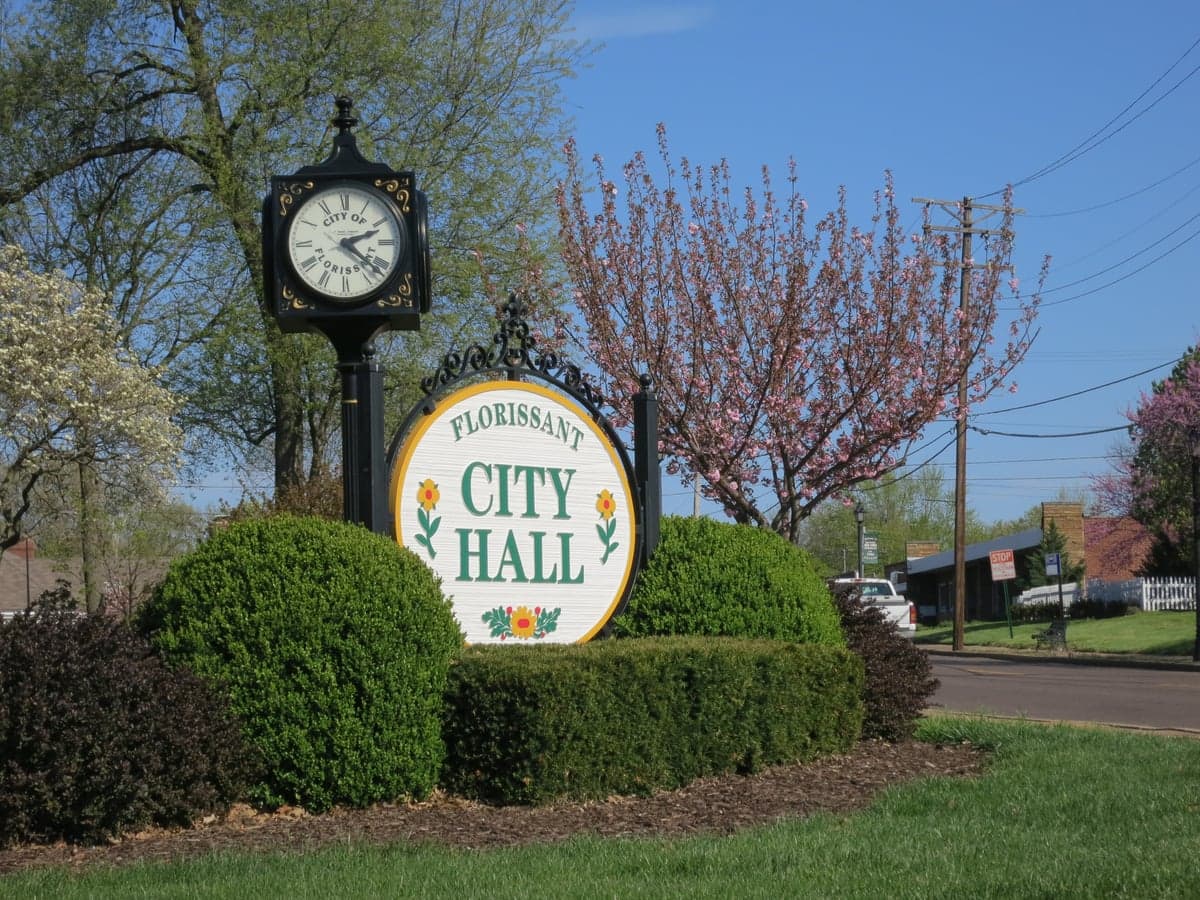
Photo: Wikipedia
Strategic Assessment of Florissant, MO
Meaningful friction. Expect exposure to either population pressure, blast zones, or natural disaster risk. Consider buying a retreat property.
What does the Strategic Assessment tell us?
Our Strategic Assessment grades tactical survivability of an area. Major population centers, military targets, fallout zones, natural disasters, and border exposure all drive risk — lower exposure means a more defensible position in a crisis.
This is heavily inspired by Joel Skousen's Strategic Relocation book. Highly recommended you checkout the book ($)What does this tell us?
Our Strategic Assessment grades tactical survivability of an area. Major population centers, military targets, fallout zones, natural disasters, and border exposure all drive risk — lower exposure means a more defensible position in a crisis.
This is heavily inspired by Joel Skousen's Strategic Relocation book. Highly recommended you checkout the book ($)Strategic Pillars

Key Distances
Regional Safe Places
Below is our recommended "safe zones" in Missouri and the surrounding area based on our strategic heuristics. For most people, it's unrealistic to live in a “safe zone” full-time due to work, family or other personal reasons. They tend to be more rural. However, many of these areas are perfect for second homes and retreat properties that double as a vacation home or even a short-term rental.


Important Note: For informational purposes only. This does not mean nothing bad ever happens in the green zones. Please use common sense. This is based on public data and modeled with AI. We tried to take a conservative approach but mistakes happen. We update this regularly as new information becomes available.
Solar Generator Recommendations
Backup power matters more here than in safer locations. We've picked three solar generators across budgets and capacity tiers — start with the budget unit if you only need a few essentials, or step up if you want to run a fridge and HVAC for days at a time.

Jackery Portable Power Station Explorer 300
Budget OptionPower on the Go: Weighing only 11 lbs, it's convenient to set up and store with book-sized foldable solar panels

BLUETTI Portable Power Station AC180
Designed for both indoor and outdoor scenarios, AC180 is highly capable as it has a robost capacity and continuous output power.

EF ECOFLOW DELTA Pro Ultra Power Station
Upgraded PickEcoFlow DELTA Pro Ultra is a whole-home energy system designed to grow with your family. Integrated with the Smart Home Panel 2, it scales to meet your evolving energy needs — keeping your home powered, intelligent, and secure through every stage of life.
We earn a commission, at no additional cost to you.
Strategic Assessment Analysis
Florissant, Missouri, sits in a peculiar strategic pocket: close enough to a major metropolitan area to offer logistical advantages, yet positioned in a way that could be leveraged for resilience if you plan ahead. As a St. Louis County suburb, it benefits from the region’s infrastructure—major highways, rail lines, and the Mississippi River—but it also inherits the risks of proximity to a large city that has seen significant population decline, fiscal strain, and periodic civil unrest. For a relocator with a prepper mindset, Florissant is not a bug-out location; it’s a potential base of operations that requires careful assessment of its geographic position, exposure to fallout-relevant targets, and practical day-to-day resilience. The key is understanding that this area offers a mix of suburban stability and access to resources, but only if you’re willing to actively manage the downsides of being near a major urban center.
Geographic position and natural advantages for long-term stability
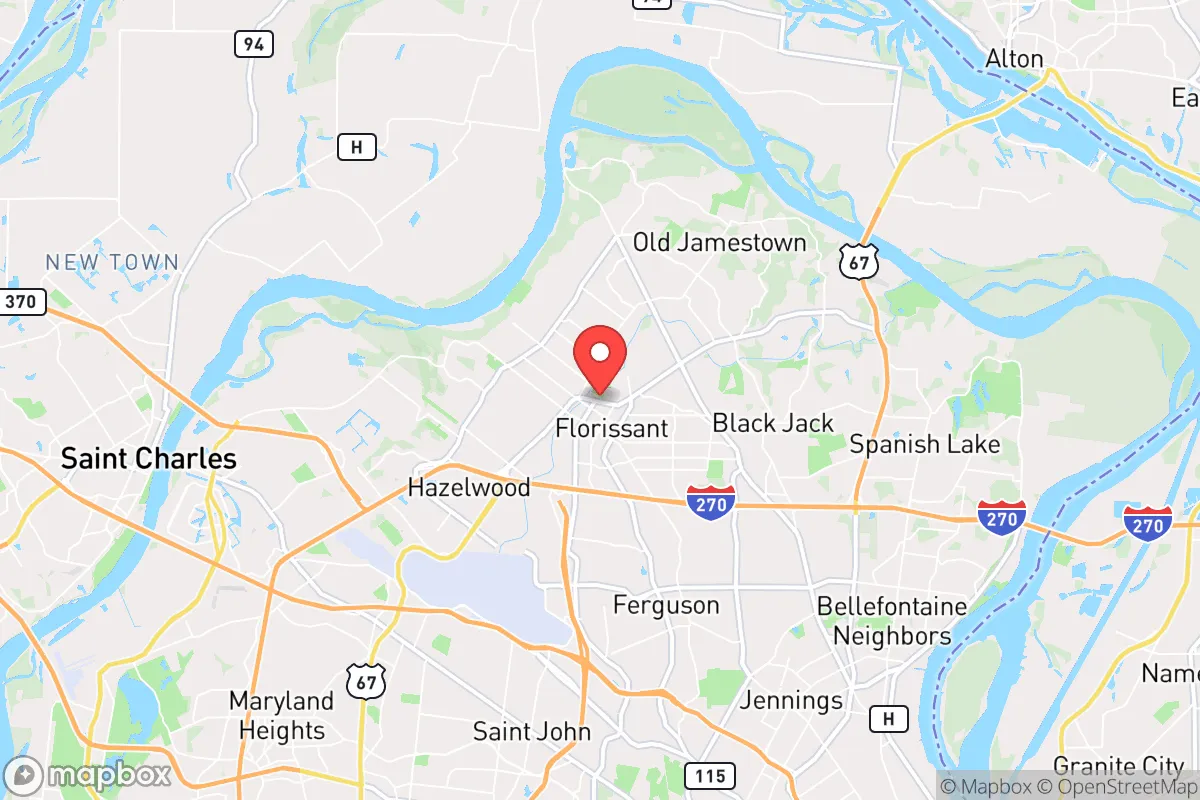
Florissant’s location in north St. Louis County places it roughly 15 miles northwest of downtown St. Louis, which is both a blessing and a curse from a strategic standpoint. The area sits on relatively flat terrain near the Missouri River floodplain, but it’s elevated enough to avoid the worst of river flooding that plagues parts of the region. The nearby confluence of the Missouri and Mississippi Rivers provides a massive water source—critical for any long-term survival scenario—but it also means you’re in a flood-prone corridor that requires careful property selection. The region’s climate is continental, with hot, humid summers and cold winters, which means you’ll need to plan for both heat and cold emergencies. The natural advantages here are access to water and relatively fertile soil for gardening, but the trade-off is that you’re in a densely populated suburban area with limited natural barriers. The Ozark foothills are about an hour southwest, offering a potential retreat zone, but Florissant itself is not defensible terrain. For a relocator, the strategic value lies in the area’s connectivity: you can reach rural Missouri, Illinois farmlands, or even the Mississippi River corridor within 30-45 minutes, giving you options for resupply or relocation if needed.
Risks, exposures, and proximity to fallout-relevant landmarks
The most significant strategic downside of Florissant is its proximity to multiple high-value targets that could become focal points during civil unrest, economic collapse, or a major disaster. Downtown St. Louis, with its federal buildings, corporate headquarters, and the Gateway Arch—a symbolic national landmark—is a likely target for any coordinated attack or protest escalation. Lambert-St. Louis International Airport is just 5 miles south of Florissant, making it a potential chokepoint for evacuation or a target for disruption. The region also hosts major industrial and chemical facilities along the Mississippi River, including refineries and manufacturing plants, which could pose secondary hazards if damaged. From a prepper perspective, the biggest concern is the potential for civil unrest: St. Louis has a history of protests and riots, and Florissant’s proximity to the city means you could see spillover effects, including roadblocks, curfews, or supply chain disruptions. Additionally, the area is within a few hours’ drive of several military installations, including Scott Air Force Base in Illinois and Fort Leonard Wood in south-central Missouri, which could become operational hubs during a crisis. While these bases are not direct threats, they could draw attention or become evacuation magnets. The bottom line: Florissant is not a safe distance from likely fallout zones, and you’ll need a solid plan for either hunkering down with robust supplies or evacuating quickly to less exposed areas.
Practical resilience for a relocator: food, water, energy, and defensibility
For a relocator serious about self-sufficiency, Florissant presents a mixed bag. The suburban layout means most homes are on standard lots with some yard space, but you’re unlikely to find acreage for large-scale gardening or livestock within city limits. Water is the biggest practical concern: the municipal supply comes from the Missouri River, which is vulnerable to contamination from upstream industrial sites or a coordinated attack on treatment facilities. A prepper should plan for at least two weeks of stored water, plus a reliable filtration system like a Berkey or a Sawyer filter. Rainwater collection is possible but limited by local ordinances and the relatively flat roof designs of most homes. For energy, the grid is reliable in normal times, but St. Louis County has experienced power outages from severe storms and ice events. Solar panels are a viable option, but you’ll need to check HOA restrictions—many Florissant neighborhoods have covenants that limit visible installations. A backup generator with a propane tank is a more practical short-term solution. Defensibility is the weakest point: Florissant is a typical suburban grid with multiple entry points, and during a crisis, you’d be relying on neighborhood cohesion rather than natural barriers. The best approach is to identify a home on a cul-de-sac or near a dead-end street, and to build relationships with neighbors who share your mindset. Food storage is straightforward—there are multiple grocery stores and big-box retailers within a 10-minute drive, but you’ll want to stockpile non-perishables and consider a chest freezer for bulk meat purchases. The area also has several farmers’ markets and local farms within 20-30 minutes, which can supplement your supply chain during normal times.
The overall strategic picture for Florissant is one of calculated risk. It’s not a remote survivalist haven, nor is it a high-risk urban core. For a conservative-leaning relocator who values community stability, access to resources, and the ability to monitor events from a relatively safe distance, Florissant offers a workable base—but only if you’re proactive. The area’s biggest strength is its logistical connectivity: you can reach rural retreat zones, medical facilities, and supply hubs quickly. Its biggest weakness is the same connectivity, which also makes it a potential target for spillover from St. Louis’s problems. If you’re willing to invest in water storage, backup power, and a solid neighborhood network, Florissant can serve as a staging ground for longer-term resilience. But if you’re looking for a place where you can truly disconnect and ride out a collapse, you’ll want to look further west toward the Ozarks or south toward the Missouri bootheel. Florissant is a strategic compromise—one that requires constant awareness and a plan B.

* Values derived from national, state, county, city and local statistics and may differ in a specific area. Last updated: 2026-04-29T23:52:30.000Z
Narrative content on this page is AI-generated and may contain mistakes. Verify any details that matter before acting on them.
ReloMaps may earn a commission from affiliate links at no extra cost to you.

