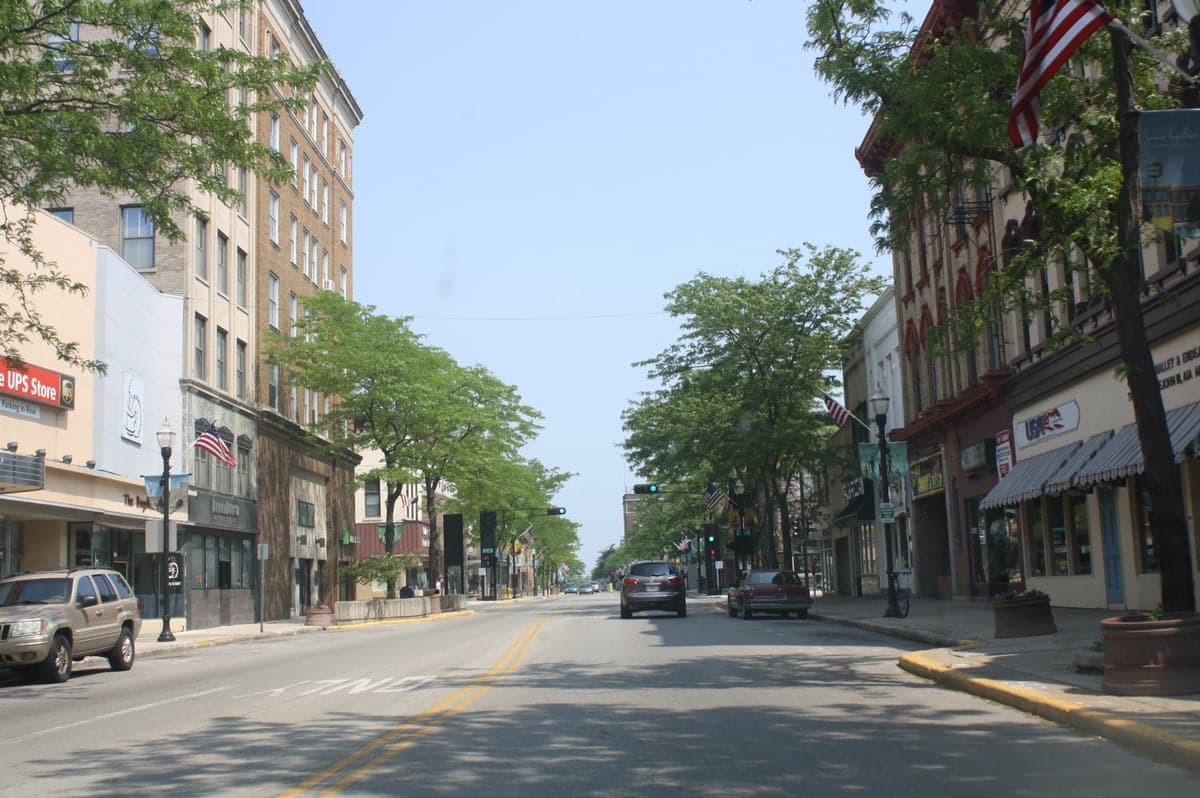
Photo: Wikipedia
Political ClimatePolitical Climate in Fond Du Lac, WI
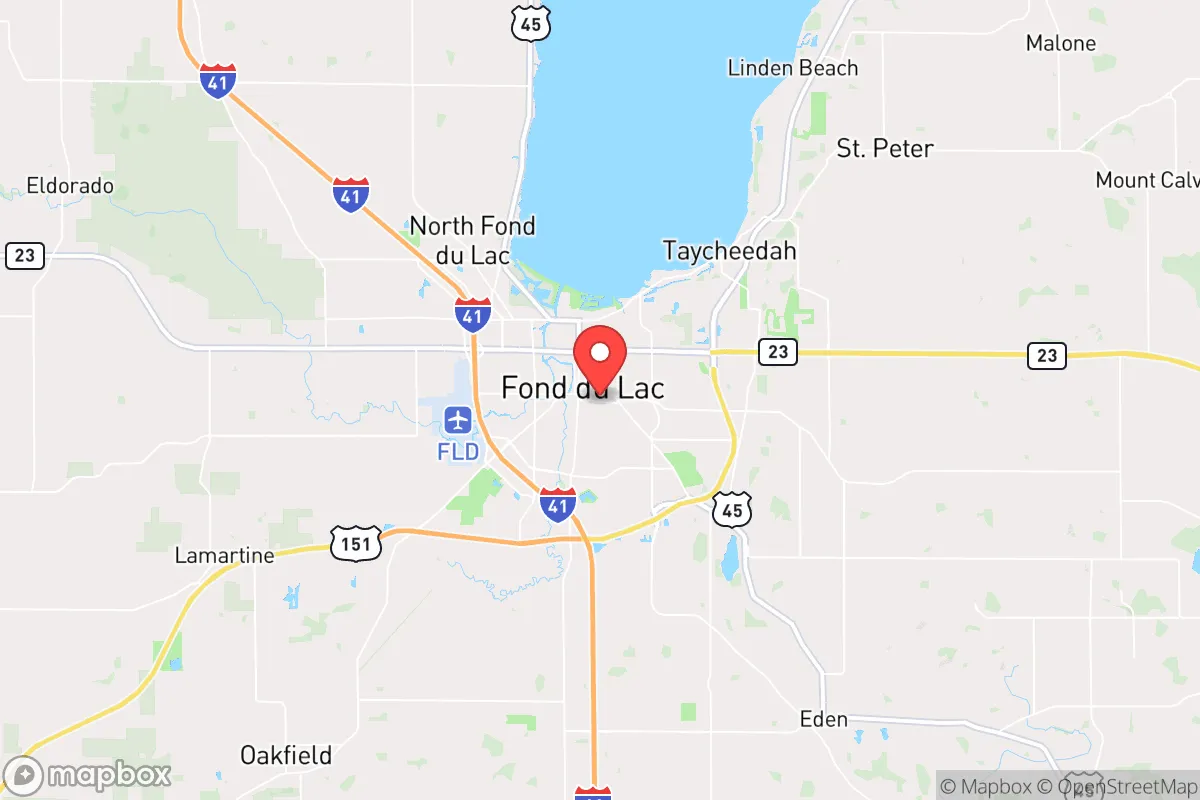
District shown is the primary district for this city’s centroid. Cities may span multiple districts.
Local Political AnalysisPolitical Analysis of Fond Du Lac, WI
Fond du Lac has long been a reliably conservative stronghold, and that hasn't changed much despite some national trends. The city and surrounding county sit at a Cook PVI of R+8, meaning it votes about eight points more Republican than the national average. In the 2024 presidential race, Fond du Lac County went for the GOP candidate by a solid 58% to 40%, a margin that feels about right for a place where common-sense values and personal responsibility still carry the day. But if you've lived here as long as I have, you've noticed the political winds shifting in subtle ways, and not always for the better.
How it compares
Drive twenty minutes north to Oshkosh, and you'll feel a different vibe—it's a bit more purple, with a Cook PVI of R+4 and a younger, more transient population tied to the university. Head south to West Bend, and you're in deeper red territory, with a PVI of R+12 and a more pronounced libertarian streak. The real contrast, though, is with Madison, just an hour southwest. That city's PVI of D+18 is a world apart, and you can see the cultural divide in everything from local ordinances to school board decisions. Fond du Lac sits in a sweet spot: conservative enough to feel like home, but close enough to the liberal bubble that you can't ignore the pressure coming from the state capital. The state legislature's recent moves to preempt local gun control and property tax hikes have been a relief, but you can bet the city council here has its share of folks who'd love to copy Madison's playbook if they thought they could get away with it.
What this means for residents
For those of us who value personal freedoms—like the right to own firearms without endless red tape, or the freedom to run a small business without drowning in regulations—Fond du Lac's political climate is mostly a comfort. The county board and city council have historically kept taxes reasonable and stayed out of people's lives. But there's a creeping concern: the school board has seen some contentious races lately, with candidates pushing "equity" initiatives that sound an awful lot like government overreach into how kids think and what they're taught. The 2023 school board elections saw a slate of conservative candidates win, but it was a close call, and the progressive side isn't giving up. If you're raising a family here, you're probably keeping a close eye on those meetings, because the next few cycles could tip the balance toward the kind of top-down social engineering that's already wrecking schools in bigger cities.
One thing that sets Fond du Lac apart is its stubborn, quiet resistance to the kind of performative politics you see elsewhere. There's no push for a "sanctuary city" status here, no talk of defunding the police—the local force is well-respected and adequately funded. The city's annual "Walleye Weekend" festival draws crowds without any political grandstanding. That's the Fond du Lac way: keep your head down, mind your own business, and don't let outsiders tell you how to live. But the long-term trend is concerning. As more people move up from the Milwaukee suburbs looking for cheaper housing, they bring their voting habits with them. If that migration continues, the R+8 rating could slip to R+4 or even lean-D within a decade. For now, though, Fond du Lac remains a place where a conservative can breathe easy—just don't take it for granted.

State Political ClimatePolitical Climate in Wisconsin
State Political AnalysisPolitical Environment in the State
Wisconsin has long been a classic swing state, but over the past decade it has hardened into a deeply polarized battleground where the rural-urban split defines everything. The state’s overall partisan lean is a razor-thin 50-50, with Republicans holding the legislature and Democrats winning statewide races by narrow margins—Joe Biden carried it by just 0.6 points in 2020, while Donald Trump won it in 2016 by 0.8 points. The 10-20 year trajectory shows a clear trend: the Milwaukee and Madison metros are pulling hard left, while the rest of the state—especially the WOW counties (Waukesha, Ozaukee, Washington) and the rural north and west—are digging in deeper red. This isn’t a purple state anymore; it’s a red state and a blue state sharing the same borders, and the tension is palpable.
Urban vs. rural divide
The political map of Wisconsin is a textbook case of geographic sorting. Milwaukee County is the Democratic stronghold, delivering over 60% of its votes to Biden in 2020, driven by the city itself and its inner-ring suburbs like Shorewood and Whitefish Bay. Dane County, home to Madison and the state’s liberal university hub, is even more lopsided—Biden got 75% there. These two counties alone produce a massive Democratic vote sink. But outside those islands, the story flips. The WOW counties (Waukesha, Ozaukee, Washington) are the Republican firewall, with Waukesha County giving Trump 57% in 2020. These are the classic suburban/exurban areas where families and small business owners have shifted rightward over the last two cycles, partly in reaction to COVID lockdowns and school closures in Milwaukee. Further north, counties like Marathon (Wausau) and Brown (Green Bay) are competitive but lean red, while the rural northwest—Burnett, Washburn, Sawyer—vote Republican by 20-30 point margins. The divide is so stark that you can drive 20 minutes from Madison’s liberal core into Mount Horeb and feel like you’ve entered a different political universe.
Policy environment
Wisconsin’s policy environment is a mixed bag that reflects its divided government. The state has a flat income tax of 4.4% (down from 7.75% in 2011), and property taxes are moderate—about 1.6% of home value, which is below the national average. The regulatory posture is business-friendly in the legislature, with right-to-work laws on the books and Act 10 (2011) still limiting public-sector union power. But the Democratic governor, Tony Evers, has vetoed Republican bills to expand school choice and cut taxes further. On education, the state has a robust voucher program in Milwaukee and Racine, but rural areas are seeing school closures and consolidation. Healthcare is a flashpoint: Wisconsin expanded Medicaid under the Affordable Care Act, but the legislature refused to take the federal expansion money, leaving a coverage gap. Election laws are a constant fight—voter ID is in place, but the state’s bipartisan election commission has been under fire from both sides. The bottom line: if you’re conservative, you’ll appreciate the low taxes and union reforms, but you’ll be frustrated by the governor’s veto pen and the slow creep of Madison’s progressive agenda.
Trajectory & freedom
On personal liberty, Wisconsin is a state in flux, and the trend is concerning for conservatives. Gun rights are strong—the state is a “shall issue” for concealed carry, with no permit required for open carry, and in 2024 the legislature passed a bill to allow permitless carry (though Evers vetoed it). Parental rights saw a win in 2023 with a law requiring schools to notify parents of a child’s mental health or gender identity changes, but it’s being challenged in court. Medical autonomy took a hit in 2022 when the state’s pre-Civil War abortion ban was briefly reinstated after Dobbs, but a court ruling in 2023 blocked it, leaving abortion legal up to 20 weeks. The legislature has passed bills to ban transgender procedures for minors and protect girls’ sports, but Evers has vetoed them. Property rights are generally respected, but the state’s Department of Natural Resources has a heavy hand in land use, especially in the Northwoods. The biggest freedom loss is taxation: while the flat tax is good, the state’s overall tax burden is still above the national average, and the governor’s proposed tax hikes on manufacturers and farmers have been blocked. The trajectory is a slow erosion of conservative wins as the Madison-Milwaukee axis grows in population and influence.
Civil unrest & political movements
Wisconsin has been a flashpoint for political violence and activism. The Kenosha riots of 2020, sparked by the Jacob Blake shooting, saw two nights of arson and looting, and the Kyle Rittenhouse trial became a national symbol of self-defense and the breakdown of law and order. Madison has seen regular protests—from the 2011 Act 10 union demonstrations to the 2020 Black Lives Matter marches that toppled statues on the Capitol grounds. On the right, the Wisconsin Institute for Law & Liberty (WILL) is a powerful legal activist group that has sued over election procedures and school mask mandates. Immigration politics are quieter here than in border states, but the state has no sanctuary policies, and the legislature passed a bill in 2023 to require local cooperation with ICE (vetoed by Evers). Election integrity is a live wire: the 2020 election saw Milwaukee’s “Democracy in the Park” events and the use of private grant money for election administration, both of which sparked lawsuits and legislative investigations. A new resident will notice the political tension in the air—yard signs, bumper stickers, and local news that’s constantly about the latest fight in the Capitol.
Projection
Over the next 5-10 years, Wisconsin is likely to become more polarized, not less. Demographic trends favor the Democrats: the Milwaukee and Madison metros are growing, while rural counties are shrinking. In-migration from Illinois is bringing more moderate-to-liberal voters to the southern tier, especially in Kenosha and Racine counties, which are becoming bedroom communities for Chicago. But the WOW counties are also growing, and the rural north is holding steady. The wild card is the state’s gerrymandered legislative maps, which the state supreme court (now with a 4-3 liberal majority after the 2023 election) is likely to redraw before 2024, potentially flipping the Assembly to Democratic control. If that happens, expect a wave of progressive legislation—higher taxes, expanded Medicaid, stricter gun laws, and abortion protections—that the governor can’t veto alone. For a conservative moving in now, the next decade will feel like a defensive battle: holding the line in the legislature while the cultural and demographic tide shifts. The state won’t become California, but it will become more like Illinois—a blue state with red pockets.
Bottom line for a new resident: If you’re a conservative, Wisconsin offers a decent tax environment and strong gun rights, but you’ll need to pick your location carefully. The WOW counties, the Fox Valley (Appleton, Green Bay), and the rural north are your safe zones. Avoid Milwaukee and Madison unless you’re prepared for high taxes, progressive policies, and a constant political fight. The state’s future is uncertain, but the one thing you can count on is that the battle lines will only get sharper.
* Values derived from national, state, county, city and local statistics and may differ in a specific area. Last updated: 2026-04-21T10:29:09.000Z
Narrative content on this page is AI-generated and may contain mistakes. Verify any details that matter before acting on them.
ReloMaps may earn a commission from affiliate links at no extra cost to you.

