 Popular
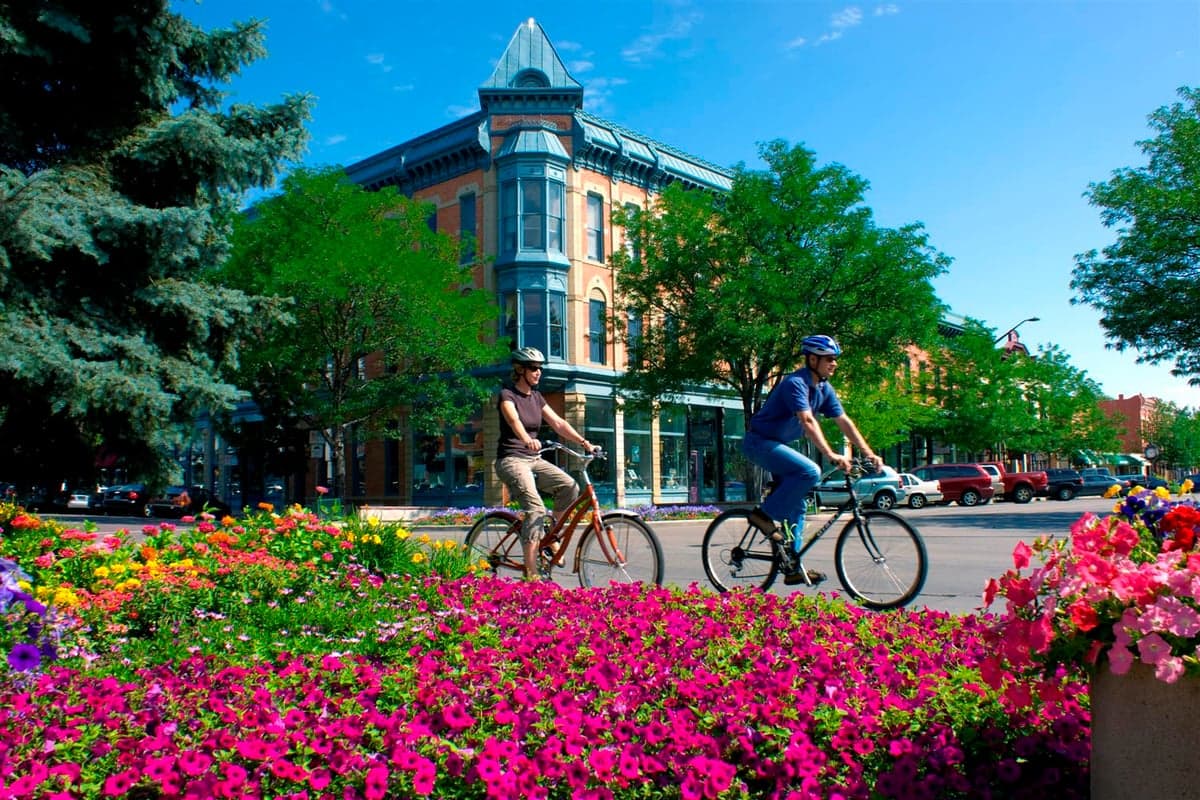
Photo: Wikipedia
Personal Sovereignty in Fort Collins, CO
Viable for self-reliance. Generally workable, though some barriers may limit total independence.
What does Personal Sovereignty tell us?
Personal Sovereignty measures your capacity for self-reliance and independence with minimal government friction. Higher scores mean fewer barriers between you and the way you want to live... but it assumes you have the space you need and good neighbors.
What does this tell us?
Personal Sovereignty measures your capacity for self-reliance and independence with minimal government friction. Higher scores mean fewer barriers between you and the way you want to live... but it assumes you have the space you need and good neighbors.
State Policy
Energy independence: Net exporter (110% of energy produced in-state)
Personal Liberty
Homesteading

Personal Liberty Analysis
Fort Collins, Colorado, presents a complex and often contradictory environment for personal sovereignty, one that demands careful navigation for those prioritizing autonomy and self-reliance. While the city’s natural beauty and outdoor access are undeniable, its local governance leans heavily into progressive policy frameworks that can feel intrusive to individuals and families accustomed to minimal government interference. For the survivalist or prepper mindset, Fort Collins offers a mixed bag: a strong culture of outdoor competency and community resilience, but a regulatory and tax climate that increasingly mirrors the coastal jurisdictions many seek to leave. The key to thriving here lies in understanding where local control ends and state preemption begins, and in strategically choosing your battles against a well-intentioned but often overreaching municipal apparatus.
Tax burden and regulatory posture: How Colorado’s fiscal landscape affects your autonomy
Colorado’s overall tax burden is moderate by national standards, but the local picture in Fort Collins requires scrutiny. The state’s flat income tax rate of 4.4% is relatively low, and there is no state-level estate or inheritance tax, which is a clear win for wealth preservation. However, Larimer County property taxes hover around 0.5% of assessed value, which is below the national average but can still bite on higher-valued properties. The real sovereignty concern is regulatory: Fort Collins operates under a home-rule charter that gives it broad latitude to impose local ordinances. This has resulted in a city that aggressively pursues environmental mandates, including strict building codes that push for energy efficiency upgrades and limitations on natural gas hookups in new construction. For a prepper, this means your ability to build a fully off-grid, self-sufficient home within city limits is severely constrained. The city’s permitting process for anything from rainwater collection systems to backyard chicken coops is bureaucratic and often requires multiple inspections. The regulatory posture here is one of active management of citizen behavior, not passive allowance of personal choice.
Self-defense and gun law specifics: What you can and cannot do in Fort Collins
Colorado is a shall-issue state for concealed carry permits, meaning if you meet the basic requirements—age 21, no felony record, completion of a certified training course—the county sheriff must issue your permit. Fort Collins itself does not have additional local gun bans, but the state-level landscape has shifted significantly. In 2023, Colorado passed a law raising the minimum age to purchase any firearm to 21, and a 2024 law banned the sale, transfer, and manufacture of so-called "assault weapons" and large-capacity magazines (over 15 rounds). These state preemptions override local control, so Fort Collins residents are subject to these restrictions regardless of city policy. Open carry is legal in Colorado without a permit, but Fort Collins has a local ordinance prohibiting open carry in city buildings and parks, which creates a patchwork of compliance zones. For the self-defense-minded individual, the practical takeaway is that your magazine capacity is capped, your rifle options are limited to non-semi-automatic platforms, and you must be hyper-aware of where you can legally carry. The city’s police department is generally professional but operates under a use-of-force policy that emphasizes de-escalation, which some may view as a constraint on immediate self-defense options. The legal environment here is trending toward restriction, not expansion, of the right to keep and bear arms.
Self-reliance and homesteading viability: Lot sizes, zoning, and off-grid feasibility
Within Fort Collins city limits, true homesteading is nearly impossible. Minimum lot sizes in residential zones are typically 5,000 to 7,000 square feet, and zoning codes strictly limit accessory structures, livestock, and agricultural activities. Keeping chickens is allowed with a permit and strict coop regulations, but goats, pigs, or larger livestock are prohibited. Rainwater collection is legal in Colorado, but only from rooftops and with a maximum storage capacity of 110 gallons per property—a pittance for serious water independence. Off-grid solar is permitted but must be grid-tied, meaning you cannot legally disconnect from the municipal power grid. The city’s building code requires connection to city water and sewer, making true off-grid living a legal impossibility within city limits. The workaround is to look at unincorporated Larimer County, particularly areas like Bellvue, Laporte, or the Poudre Canyon, where lot sizes of 5 to 35 acres are common and zoning is far more permissive. In those areas, you can install septic systems, drill wells, keep livestock, and build with fewer restrictions. The trade-off is a longer commute to Fort Collins for work and supplies, and a higher upfront cost for land and infrastructure. For the serious prepper, the county is the viable option; the city is not.
Personal liberties: Parental rights, medical autonomy, speech, and property
Parental rights in Colorado have been under increasing pressure. The state has a universal preschool program that many conservatives view as a vehicle for state-aligned curriculum, and the Colorado Department of Education has adopted comprehensive health education standards that include sexual orientation and gender identity topics from kindergarten onward. Fort Collins schools, particularly Poudre School District, have implemented policies that allow students to use preferred names and pronouns without parental notification, a flashpoint for many families. Medical autonomy is similarly constrained: Colorado has no religious or philosophical exemptions for childhood vaccination requirements in public schools, and the state’s END LIFE option (medical aid in dying) is legal but tightly regulated. On speech, Fort Collins is a generally tolerant city, but local ordinances against "discriminatory harassment" have been used to regulate public expression, particularly around political signage and public demonstrations. Property rights are the strongest liberty here, as Colorado is a non-disclosure state for real estate transactions, meaning sale prices are not public record, and there is no state-level rent control. However, Fort Collins has a landlord-tenant ordinance that imposes strict eviction timelines and habitability standards, which can feel like overreach to property owners. The overall picture is one of a city that actively manages personal choices in education, health, and expression, leaving less room for the individualist to operate without state oversight.
In the broader context of the Rocky Mountain West, Fort Collins ranks as a moderate-to-low sovereignty environment for the survivalist or prepper. It is more restrictive than rural Wyoming or eastern Colorado, but far less intrusive than Boulder or Denver. The city’s natural resources—clean water from the Poudre River, abundant sunshine for solar, and a strong local food movement—provide a foundation for self-reliance, but the regulatory framework actively discourages full independence. For the individual or family willing to live on the county fringe and commute in for work, the area offers a viable compromise between access to urban amenities and the freedom to build a resilient, self-sufficient life. For those who want to live entirely by their own rules, with minimal government oversight, Fort Collins is not that place—but it can be a strategic base of operations if you know where to draw your lines and are prepared to push back against the creeping reach of local ordinances.

* Values derived from national, state, county, city and local statistics and may differ in a specific area. Last updated: 2026-04-25T04:19:49.000Z
Narrative content on this page is AI-generated and may contain mistakes. Verify any details that matter before acting on them.
ReloMaps may earn a commission from affiliate links at no extra cost to you.

