 Popular
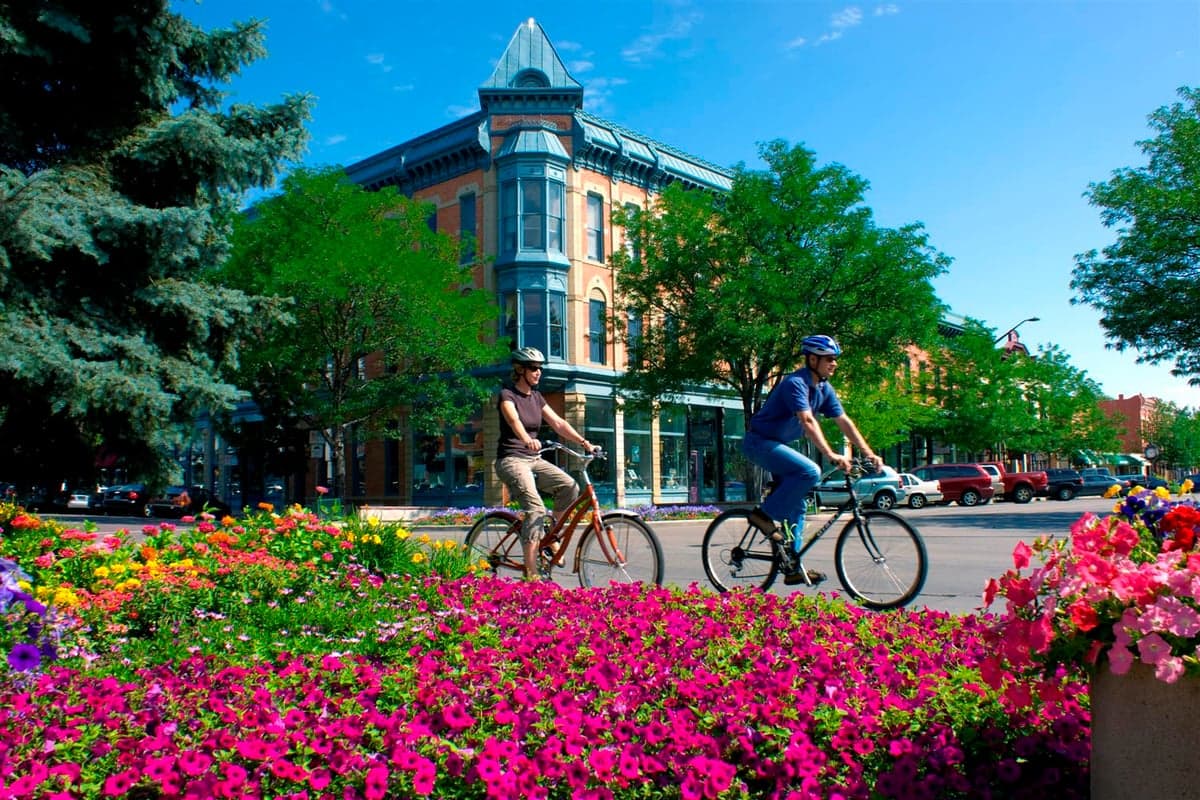
Photo: Wikipedia
Quality of Life in Fort Collins, CO
Above-average quality of iife. The area offers a reasonable cost of living, decent mobility, and a mix of neighborhood amenities.
What does Quality of Life tell us?
Quality of Life blends cost of living, nearby amenities, socioeconomic signals, and neighborhood character. City-level scores represent the whole municipality; individual neighborhoods can differ.
What does this tell us?
Quality of Life blends cost of living, nearby amenities, socioeconomic signals, and neighborhood character. City-level scores represent the whole municipality; individual neighborhoods can differ.
Cost of Living
64% above national average
The Real Cost of Living in Fort Collins, CO for 2026
| Tier | Individual | Family (4) |
|---|---|---|
| Survival | $27k | $50k |
| Comfortable | $102k | $150k |
| Luxury | $150k+ | $232k+ |
| Elite (Top 5%) | $176k+ | $273k+ |
56%
The Area Signal
A metric tracking the socioeconomic signals of the area.
Hobbies
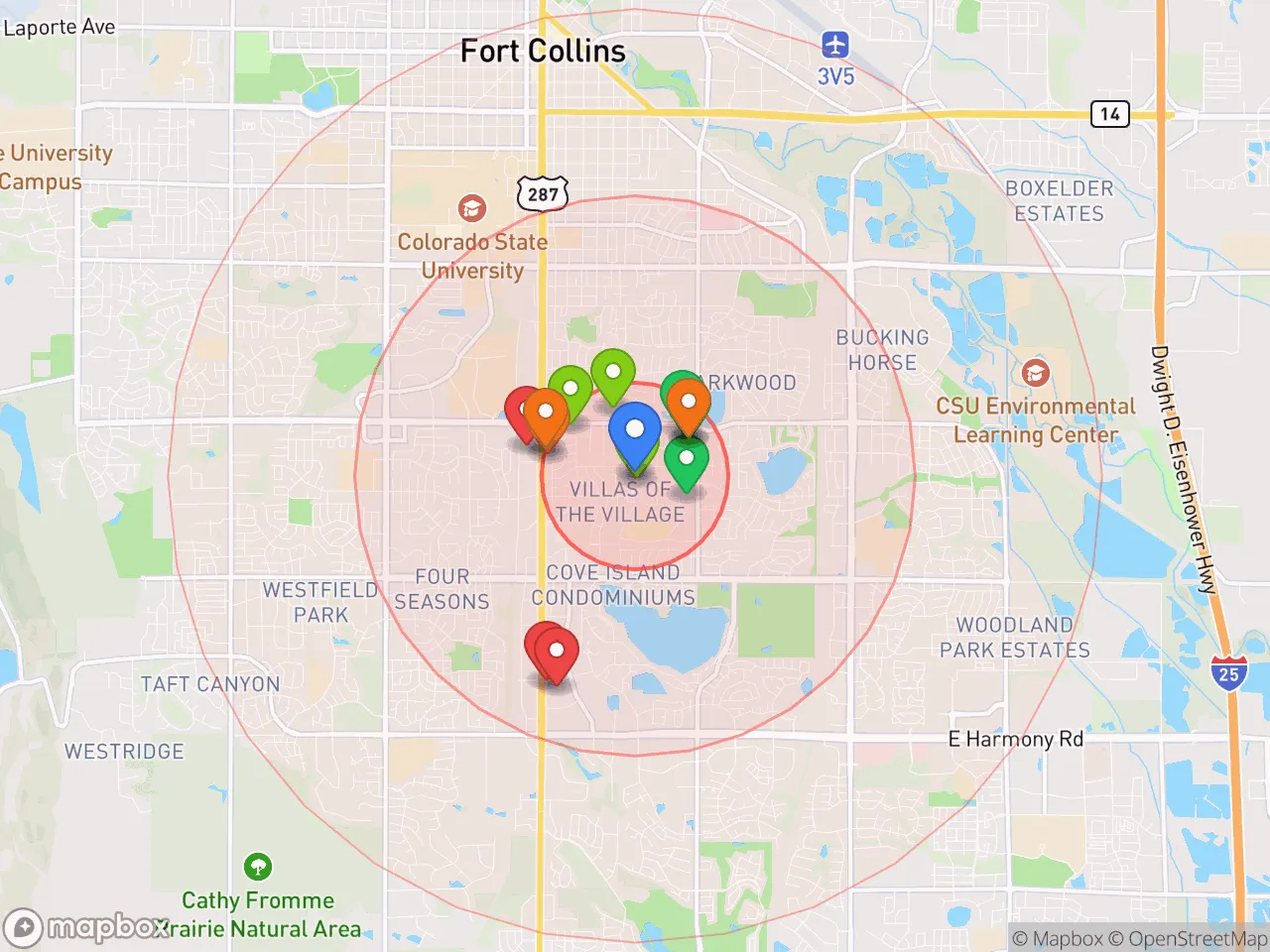
Explore the areaGroceries
8 within 10 miles
Gas
20 within 10 miles
Hospital
8 within 20 miles
Airport
DEN — Denver International
Post Office
USPS — Fort Collins, CO
Critical Amenities
Quality-of-Life Analysis
Fort Collins, Colorado, is an affluent, highly educated city where the typical resident is a college graduate working in tech, bioscience, or the outdoor industry, drawn by a lifestyle that blends mountain access with a vibrant downtown. The city’s cost of living index of 164 (100 = U.S. average) places it among the priciest midsize metros in the Rocky Mountain region, yet its median household income of roughly $72,000 supports a population that prioritizes quality of life over raw affordability. This is a place where a six-figure salary is common among the 30,000+ employees of major employers like OtterBox, Broadcom, and Colorado State University, but where service workers and recent graduates often face a tight squeeze on housing.
Cost of living, housing, and affordability compared to Denver and Boulder
Fort Collins is significantly cheaper than Boulder (COL index ~180) but slightly more expensive than Denver (COL index ~155), creating a middle ground that still strains budgets. The median home value sits at $548,400, roughly 20% below Boulder’s median but 10% above Denver’s; this price point puts a single-family home out of reach for the median earner without a dual income or a substantial down payment. Median rent of $1,661 is manageable for a two-income household but consumes over 30% of income for a single renter earning the area’s median wage. The average commute of 19.96 minutes is notably short for a Front Range city—Denver’s average is 27 minutes—which means residents can live farther from job centers without sacrificing time. Property taxes in Larimer County are low (roughly 0.5% of assessed value), but state income tax (flat 4.4%) and sales tax (8.0% combined) add to the overall cost burden.
What daily life is like for families, outdoor enthusiasts, and remote workers
Daily life in Fort Collins revolves around the Poudre River Trail system (over 40 miles of paved paths), Old Town Square’s breweries and farmers markets, and a school system that consistently ranks among Colorado’s best—Poudre School District’s high schools boast graduation rates above 90%. The city’s 300+ days of sunshine per year enable year-round cycling, hiking in nearby Horsetooth Mountain Open Space, and kayaking on the Cache la Poudre River. For families, the Discovery Museum and the Fort Collins Museum of Discovery provide hands-on learning, while the Lincoln Center hosts performing arts. Remote workers benefit from gigabit fiber internet (available in most neighborhoods via Comcast and CenturyLink) and coworking spaces like The Institute for the Built Environment and Cohere. The rhythm is slower than Denver’s—restaurants close by 9 p.m. on weeknights—but the city’s 20 breweries (including New Belgium and Odell) anchor a lively after-work social scene.
Fort Collins is best suited for professionals and families who can absorb its high housing costs in exchange for short commutes, top-tier schools, and immediate access to outdoor recreation. It is less ideal for those seeking urban density, nightlife, or bargain housing—Greeley and Loveland offer lower prices but fewer amenities. The city’s strong job market in clean energy, software, and veterinary medicine (CSU’s vet school is a national draw) means that newcomers with in-demand skills will find the trade-off worthwhile, while renters and first-time buyers should budget carefully or consider neighboring Timnath or Windsor for slightly lower prices.

Crime in Fort Collins, CO
Generally safer than 59% of comparable U.S. locations.
Violent CrimeViolent Crime Analysis
Property CrimeProperty Crime Analysis
Crime Analysis
Fort Collins, Colorado, presents a safety profile that requires careful scrutiny, particularly given its location within the progressive-leaning Larimer County justice system. While the city's violent crime rate of 286.3 per 100,000 residents is slightly below the national average, its property crime rate of 1,767.9 per 100,000 is significantly elevated, reflecting a broader trend seen in many Front Range communities. Prospective residents should weigh these statistics against the local political and prosecutorial environment, which can influence how crime is addressed and how quickly offenders return to the community.
Crime in context
Fort Collins' violent crime rate of 286.3 per 100,000 is roughly 18% lower than the national average of about 350 per 100,000, but it is notably higher than the Colorado state average of approximately 330 per 100,000. The property crime rate of 1,767.9 per 100,000 is a more pressing concern, exceeding both the national average (around 1,950) and the Colorado average (roughly 2,100). These figures place Fort Collins in a middle tier among Colorado's large metro-area cities, but the trend is worrisome. Like many communities in the Denver-Boulder-Fort Collins corridor, Larimer County has seen the influence of progressive district attorneys who prioritize diversion programs and reduced sentencing for non-violent and some violent offenses. This approach, while intended to reduce incarceration, has in practice led to higher recidivism rates and a perception that property crimes are treated with insufficient consequence, emboldening repeat offenders.
What residents experience
Daily life in Fort Collins is shaped by a palpable tension between the city's outdoor-oriented, family-friendly image and the reality of opportunistic crime. Residents frequently report car break-ins, bicycle thefts, and package thefts as the most common nuisances, particularly near Colorado State University and in the Old Town district. The progressive judicial philosophy in Larimer County, which emphasizes rehabilitation over punishment, has resulted in shorter sentences for property crime offenders and a higher likelihood of pre-trial release. For victims, this means stolen property is rarely recovered, and perpetrators often face minimal jail time. This environment directly impacts public safety: a 2023 analysis by the Larimer County District Attorney's office acknowledged that property crime recidivism rates had increased, with many offenders cycling through the system multiple times without meaningful deterrents.
Neighborhood-level variation
Safety in Fort Collins is not uniform. The highest concentrations of property crime occur in the central and southern parts of the city, including the Old Town, University, and South College Avenue corridors. These areas see elevated rates of theft, vandalism, and vehicle break-ins, driven by high foot traffic and transient populations. In contrast, neighborhoods in the northwest (e.g., Horsetooth Mountain area) and far southeast (e.g., Harmony Road corridor) report significantly lower crime rates, often 30-50% below the city average. However, even in these safer enclaves, the county's lenient prosecutorial policies mean that any crime that does occur is likely to be handled with a focus on offender rehabilitation rather than victim restitution. For families and retirees, the safest choice is to prioritize neighborhoods with strong homeowners' associations and private security patrols, as public resources are stretched thin by the justice system's emphasis on decarceration.
* Values derived from national, state, county, city and local statistics and may differ in a specific area. Last updated: 2026-04-25T04:19:49.000Z
Narrative content on this page is AI-generated and may contain mistakes. Verify any details that matter before acting on them.
ReloMaps may earn a commission from affiliate links at no extra cost to you.

