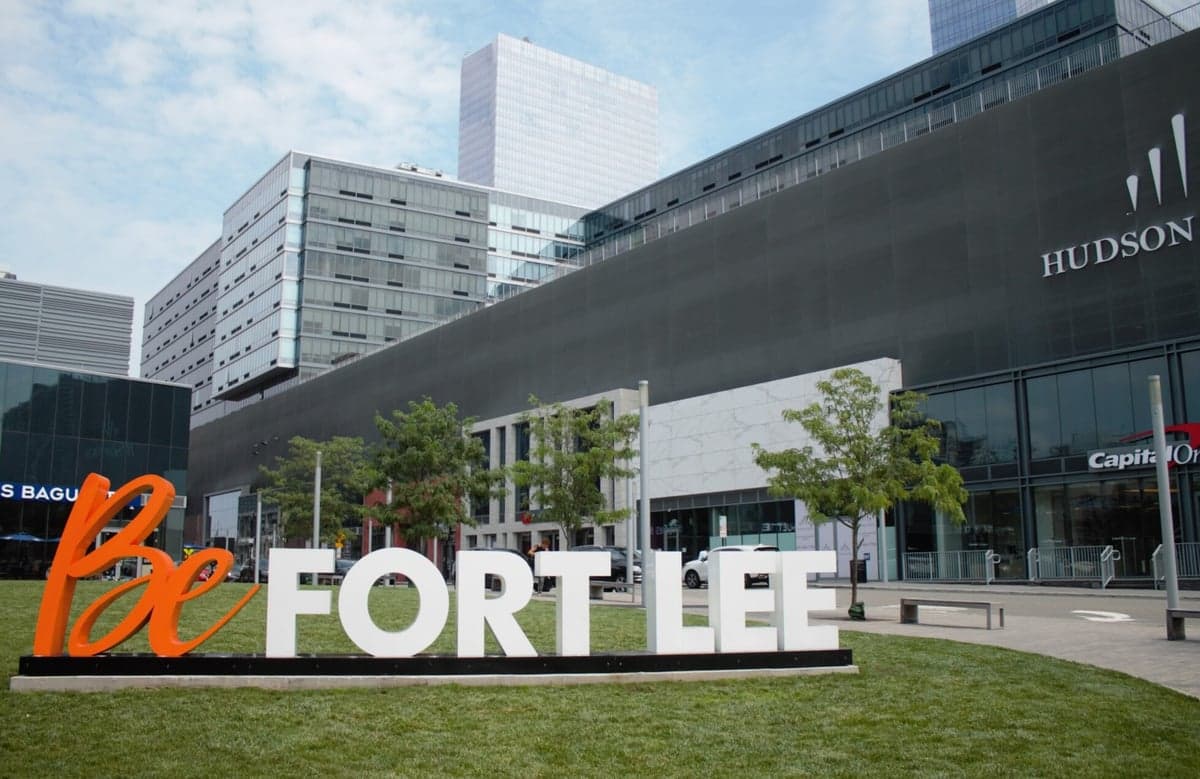
Photo: Wikipedia
Personal Sovereignty in Fort Lee, NJ
Viable for self-reliance. Generally workable, though some barriers may limit total independence.
What does Personal Sovereignty tell us?
Personal Sovereignty measures your capacity for self-reliance and independence with minimal government friction. Higher scores mean fewer barriers between you and the way you want to live... but it assumes you have the space you need and good neighbors.
What does this tell us?
Personal Sovereignty measures your capacity for self-reliance and independence with minimal government friction. Higher scores mean fewer barriers between you and the way you want to live... but it assumes you have the space you need and good neighbors.
State Policy
Energy independence: Importer (8% of energy produced in-state)
Personal Liberty
Homesteading

Personal Liberty Analysis
For a relocation researcher assessing personal sovereignty, Fort Lee, New Jersey presents a complex picture of constrained autonomy within a high-density, high-regulation environment. While the borough offers proximity to New York City and a diverse population, its location in Bergen County and the state of New Jersey means that individual freedoms—from tax burden to self-defense rights—are heavily circumscribed by state-level mandates. A survivalist or prepper mindset will find the area's regulatory posture and cultural norms a significant headwind, requiring careful consideration of trade-offs between urban convenience and personal liberty.
Tax burden and regulatory posture: how New Jersey’s fiscal policies impact your autonomy
New Jersey consistently ranks among the highest-taxed states in the nation, and Fort Lee is no exception. The state’s progressive income tax, with a top marginal rate of 10.75% on income over $1 million, directly reduces the capital available for self-reliance investments like land, supplies, or emergency funds. Property taxes in Bergen County are notoriously high—averaging roughly $10,000 to $12,000 annually for a median home—and are a fixed cost that erodes financial independence. The state’s regulatory posture extends to nearly every aspect of daily life: strict building codes, environmental regulations that limit land use, and a powerful state bureaucracy that can delay or deny permits for home improvements, solar panels, or even rainwater collection systems. For a prepper, this means that any attempt to harden a property or increase self-sufficiency will face layers of approval, fees, and potential legal challenges. The state’s reliance on property taxes to fund schools and services also means that local government has a strong incentive to maintain high property values, which can discourage alternative housing arrangements like tiny homes or accessory dwelling units that might otherwise support a more independent lifestyle.
Self-defense and gun law specifics: what you need to know about carrying and storing firearms
New Jersey’s gun laws are among the most restrictive in the country, and Fort Lee residents must navigate a system that treats firearm ownership as a heavily regulated privilege rather than a right. The state requires a Firearms Purchaser Identification Card (FPID) for long guns and a separate permit for each handgun purchase, with a 30-day waiting period between handgun purchases. Carrying a concealed firearm is effectively impossible for most residents: the state’s “justifiable need” standard, even after the Bruen decision, still requires a demonstrated threat, and the application process is lengthy, expensive, and subject to local police chief discretion. Magazine capacity is capped at 10 rounds, and certain firearms—including many popular AR-15 models—are banned by name. For a survivalist, this means that self-defense options are severely limited. The state’s “safe storage” laws also mandate that firearms be locked in a secure container or with a trigger lock when not in use, which can slow access in a home-defense scenario. While Fort Lee itself has a relatively low violent crime rate compared to nearby urban centers, the inability to carry or quickly access a firearm for personal protection is a significant erosion of personal sovereignty. The legal environment also creates a chilling effect on training: many ranges and instructors are reluctant to offer courses on defensive tactics due to liability concerns.
Self-reliance and homesteading viability: lot sizes, zoning, and off-grid feasibility
Fort Lee’s dense suburban character—with typical lot sizes of 5,000 to 10,000 square feet—makes traditional homesteading or off-grid living nearly impossible. Zoning regulations are strict, with most residential areas prohibiting livestock, large gardens, or structures like sheds or greenhouses without permits. The borough’s municipal code limits accessory structures to a small percentage of lot area, and any significant alteration to a property requires approval from the planning board. Rainwater collection is technically legal in New Jersey, but the state’s Department of Environmental Protection imposes strict guidelines on cistern size and use, and many municipalities have additional restrictions. Solar panels are allowed but subject to homeowner association (HOA) approval in many neighborhoods, and net metering policies are favorable but not guaranteed to remain so. For a prepper, the lack of land and the regulatory hurdles mean that self-reliance must be pursued through smaller-scale measures: container gardening, indoor hydroponics, and stockpiling supplies in a basement or garage. The borough’s location on the Palisades cliffs also limits access to natural water sources, and the dense population means that any disruption to utilities—power, water, or sewage—would affect thousands of people simultaneously, making community-level preparedness a necessity rather than an individual option. The nearby Palisades Interstate Park offers some wilderness access, but it is heavily regulated and patrolled, limiting its utility for survival training or resource gathering.
Personal liberties: parental rights, medical autonomy, speech, and property
New Jersey’s legal framework generally prioritizes state authority over individual or parental rights. In education, the state mandates comprehensive sex education, including LGBTQ+ content, and has a strong anti-bullying law that can override parental objections to curriculum. Parental rights in medical decisions are also constrained: minors can consent to certain treatments—including mental health services and substance abuse counseling—without parental knowledge, and the state’s vaccine mandates for school attendance are strict, with limited exemptions. Medical autonomy is further limited by the state’s single-payer health insurance system for certain populations and by regulations that restrict access to alternative or complementary treatments. Free speech is protected under the First Amendment, but New Jersey has some of the nation’s strictest laws against “harassment” and “cyber-harassment,” which can be applied broadly to online speech. Property rights are heavily circumscribed by zoning, environmental regulations, and the state’s “fair share” housing mandates, which require municipalities to allow high-density development. For a survivalist, the cumulative effect is a legal environment that discourages independent action and encourages reliance on state-approved systems. The state’s emergency management structure also centralizes authority, meaning that during a crisis—natural disaster, pandemic, or civil unrest—local officials have limited discretion to deviate from state directives. This can be a double-edged sword: while it provides a coordinated response, it also means that individual or community-level preparedness efforts may be overridden by state mandates.
In summary, Fort Lee offers a low-crime, well-serviced urban environment, but at the cost of significant personal sovereignty. The tax burden, restrictive gun laws, dense zoning, and state-level control over education and medical decisions create a system that prioritizes collective security over individual autonomy. For a survivalist or prepper, this is not a location for building a self-reliant homestead or maintaining a robust personal defense capability. Compared to areas in the South or Midwest—where lower taxes, looser gun laws, and larger lots are the norm—Fort Lee represents a trade-off: you gain access to a major metropolitan economy and infrastructure, but you surrender a substantial degree of control over your own life, property, and security. If your relocation priorities include maximizing personal sovereignty, this area should be approached with clear eyes and a plan to work within—or around—its many constraints.

* Values derived from national, state, county, city and local statistics and may differ in a specific area. Last updated: 2026-04-30T00:27:51.000Z
Narrative content on this page is AI-generated and may contain mistakes. Verify any details that matter before acting on them.
ReloMaps may earn a commission from affiliate links at no extra cost to you.

