Photo: Wikipedia
Quality of Life in Fort Lee, NJ
A high quality of life with strong walkability, manageable living costs, healthy neighborhood signals, and solid amenity access.
What does Quality of Life tell us?
Quality of Life blends cost of living, nearby amenities, socioeconomic signals, and neighborhood character. City-level scores represent the whole municipality; individual neighborhoods can differ.
What does this tell us?
Quality of Life blends cost of living, nearby amenities, socioeconomic signals, and neighborhood character. City-level scores represent the whole municipality; individual neighborhoods can differ.
Cost of Living
76% above national average
The Real Cost of Living in Fort Lee, NJ for 2026
| Tier | Individual | Family (4) |
|---|---|---|
| Survival | $36k | $68k |
| Comfortable | $82k | $121k |
| Luxury | $191k+ | $295k+ |
| Elite (Top 5%) | $226k+ | $351k+ |
88%
The Area Signal
A metric tracking the socioeconomic signals of the area.
Hobbies
Explore the areaGroceries
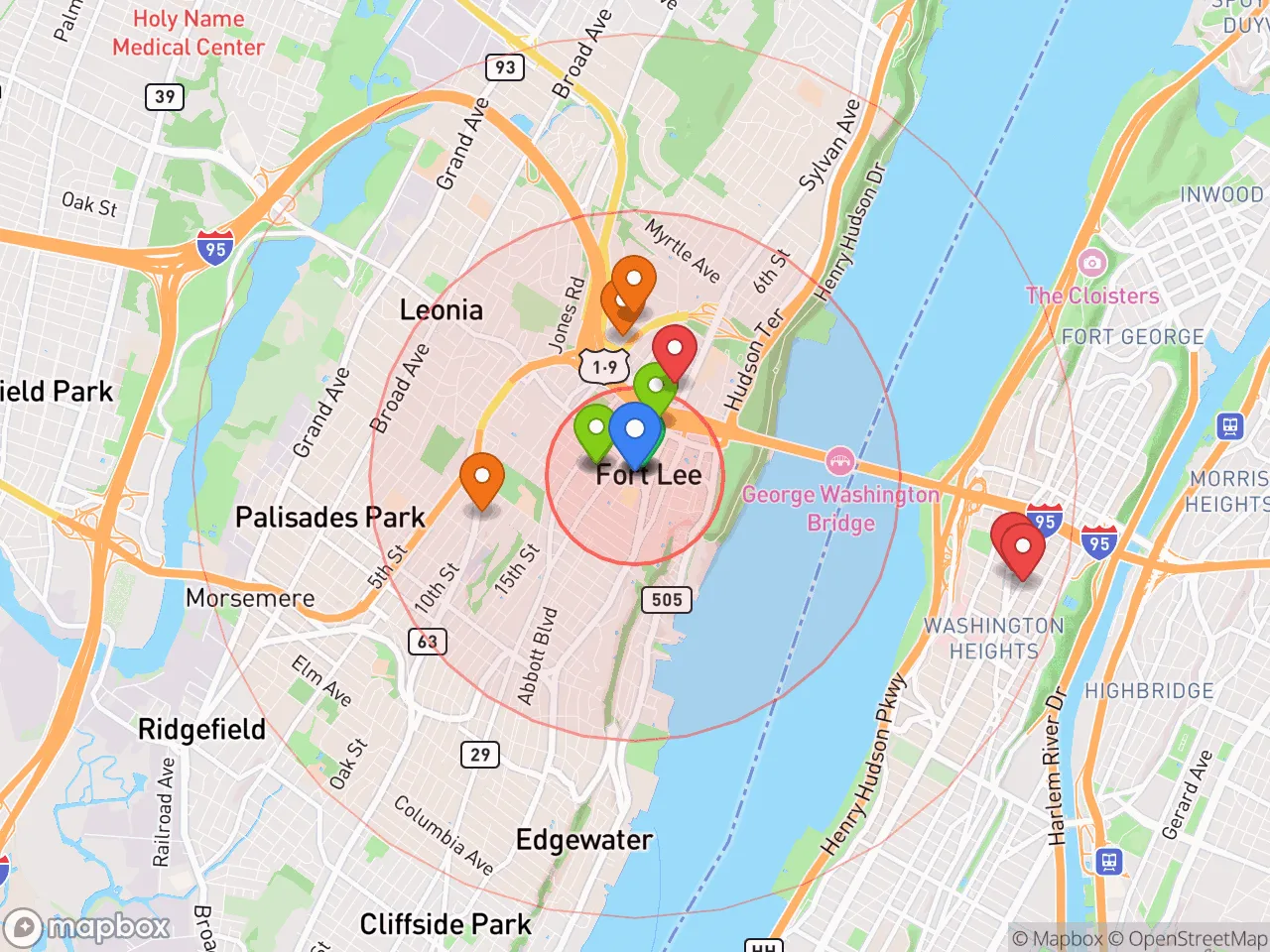
7 within 10 miles
Gas
20 within 10 miles
Hospital
20 within 20 miles
Airport
EWR — Newark Liberty International
Post Office
USPS — Fort Lee, NJ
Critical Amenities
Quality-of-Life Analysis
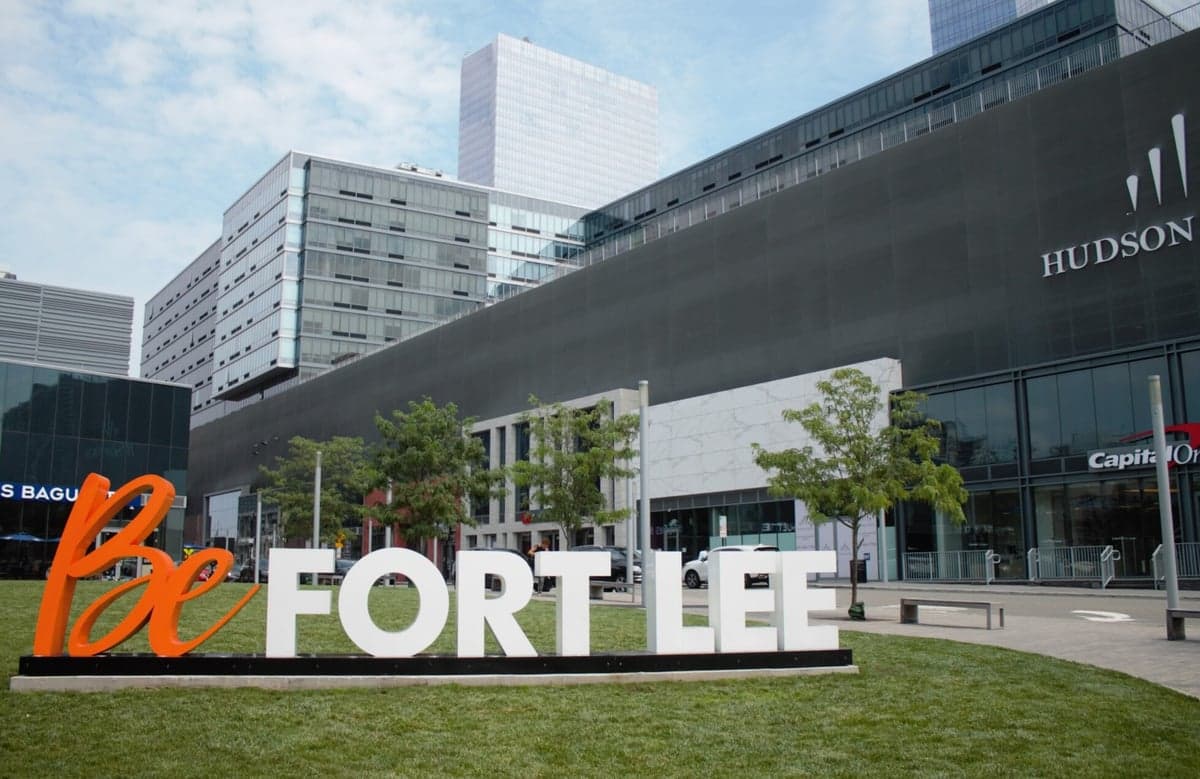
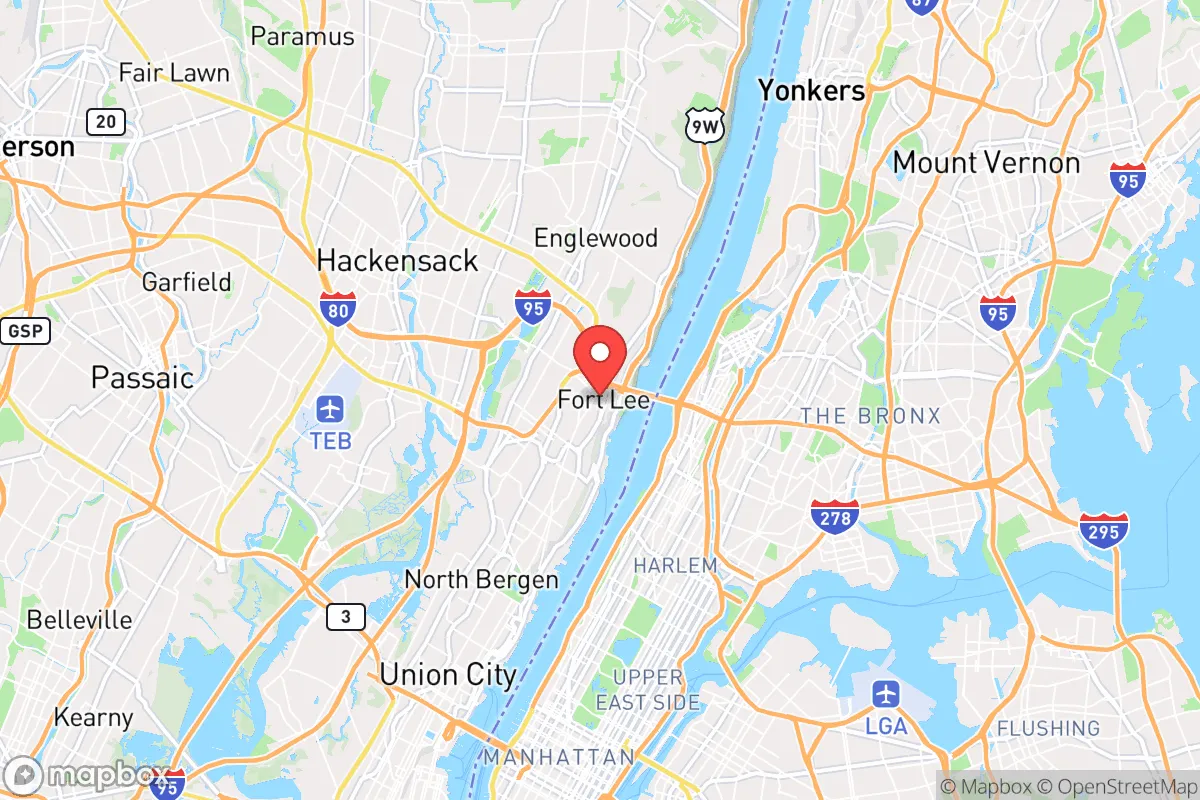
Fort Lee, New Jersey, is an affluent, densely packed borough of roughly 38,000 residents perched on the Palisades directly across the George Washington Bridge from Manhattan. Its population skews heavily toward high-income professionals, dual-career couples, and families who prioritize a short commute to Midtown over suburban sprawl, with a median household income well above the national average. The community is notably diverse, with large Korean-American and Russian-speaking populations, giving the town a distinctly international, cosmopolitan feel that sets it apart from more homogenous North Jersey suburbs.
Cost of living, housing, and affordability compared to New York City and Bergen County
Fort Lee’s cost of living index sits at 176 — 76 percent above the U.S. average — driven almost entirely by housing and transportation costs. The median home value of $422,200 is steep by national standards but notably lower than comparable Hudson River towns like Edgewater ($550,000+) or Weehawken ($600,000+), and a fraction of Manhattan’s median condo price. Median rent of $2,255 is roughly $500–$800 cheaper than a comparable one-bedroom in Midtown West, making Fort Lee a pragmatic choice for renters who need to be in New York City multiple times per week. Property taxes in Fort Lee are high — typical for Bergen County — averaging around $9,000–$11,000 annually on a median-value home, though the borough offers a broad range of housing stock from prewar garden apartments to luxury high-rises along the Boulevard East corridor. For buyers, the trade-off is clear: you pay a premium for proximity, but you avoid the city’s income tax and get significantly more square footage per dollar than across the river.
Schools, amenities, and what daily life is like for families and commuters
Fort Lee’s public school system is well-regarded, with Fort Lee High School consistently ranking in the top 30–40% of New Jersey high schools and offering a strong Advanced Placement program. The borough’s compact layout — roughly 2.5 square miles — means most errands are walkable or a short drive, and the downtown area along Main Street and Lemoine Avenue is dense with Korean restaurants, bakeries, supermarkets (H Mart is a local anchor), and small shops. Daily life revolves heavily around the commute: the average one-way trip is 34.7 minutes, which is manageable by regional standards, with NJ Transit buses (routes 151, 158, 159) and private jitneys running frequent service to the Port Authority Bus Terminal. For recreation, the borough maintains several parks including the 17-acre Fort Lee Historic Park with Hudson River views, and residents have easy access to the Palisades Interstate Park for hiking. The cultural scene is modest but active, anchored by the Fort Lee Film Commission and the borough’s historic role as the early-20th-century birthplace of the American film industry.
Fort Lee is best suited for professionals and families who work in New York City and are willing to pay a premium for a 30-minute door-to-door commute, a diverse community, and solid public schools. It is less ideal for those seeking a quiet, low-density suburban lifestyle or large single-family homes on acreage — the borough is dense, parking can be tight, and the pace is distinctly urban-adjacent. Retirees on fixed incomes may find the cost of living and property taxes challenging, but for dual-income households with city jobs, Fort Lee offers one of the most efficient commuter lifestyles in the New York metro area.

Crime in Fort Lee, NJ
Lower crime rates than 84% of comparable U.S. locations.
Violent CrimeViolent Crime Analysis
Property CrimeProperty Crime Analysis
Crime Analysis
Fort Lee, New Jersey, presents a mixed safety profile that requires careful consideration, particularly given its location within a large, liberal-leaning metropolitan area. While the town's violent crime rate of 108.3 incidents per 100,000 residents is notably lower than the national average, its property crime rate of 944.7 per 100,000 is a more significant concern. The broader context of Bergen County and the New York metro area, which often feature progressive district attorneys and judges, is a critical factor for potential residents to weigh, as such judicial philosophies can lead to reduced incarceration rates and more offenders remaining on the street, potentially undermining public safety.
Crime in context
Fort Lee's violent crime rate is approximately 71% lower than the national average, making it statistically safer than many comparable suburban communities. However, the property crime rate sits close to the national average, with theft and vehicle-related crimes being the most common offenses. When compared to the state of New Jersey as a whole, Fort Lee's violent crime numbers are favorable, but its property crime figures are elevated, reflecting its dense, transit-oriented environment near a major urban center. The influence of progressive criminal justice policies in the region, which often prioritize diversion programs and reduced sentencing, means that repeat property offenders may cycle through the system more quickly, a dynamic that directly impacts residents' sense of security.
What residents experience
Daily life in Fort Lee involves a heightened awareness of property crime, particularly package thefts, car break-ins, and bicycle thefts, which are common in densely populated areas with easy access to major highways. Violent incidents, such as assaults or robberies, are rare but do occur, often concentrated in commercial districts or near transit hubs late at night. Residents frequently report that while they feel safe walking in their neighborhoods during the day, they take precautions at night, such as locking car doors and avoiding isolated parking lots. The presence of a progressive legal environment means that even when arrests are made, the likelihood of swift, punitive consequences for non-violent offenders is diminished, a reality that can erode trust in the justice system and encourage a "see something, say something" culture among neighbors.
Neighborhood-level variation in Fort Lee is notable. The area near the George Washington Bridge and Main Street experiences higher foot traffic and, consequently, more opportunistic crime. In contrast, the residential neighborhoods west of Anderson Avenue and near the Palisades tend to have lower crime rates, benefiting from less through-traffic and stronger community watch programs. Prospective residents should prioritize properties with secure parking and package-receiving systems, and should engage with local precinct data to understand block-by-block trends. The overarching influence of the region's progressive judicial approach means that individual vigilance and community cohesion are essential components of safety in Fort Lee.
* Values derived from national, state, county, city and local statistics and may differ in a specific area. Last updated: 2026-04-30T00:27:51.000Z
Narrative content on this page is AI-generated and may contain mistakes. Verify any details that matter before acting on them.
ReloMaps may earn a commission from affiliate links at no extra cost to you.

