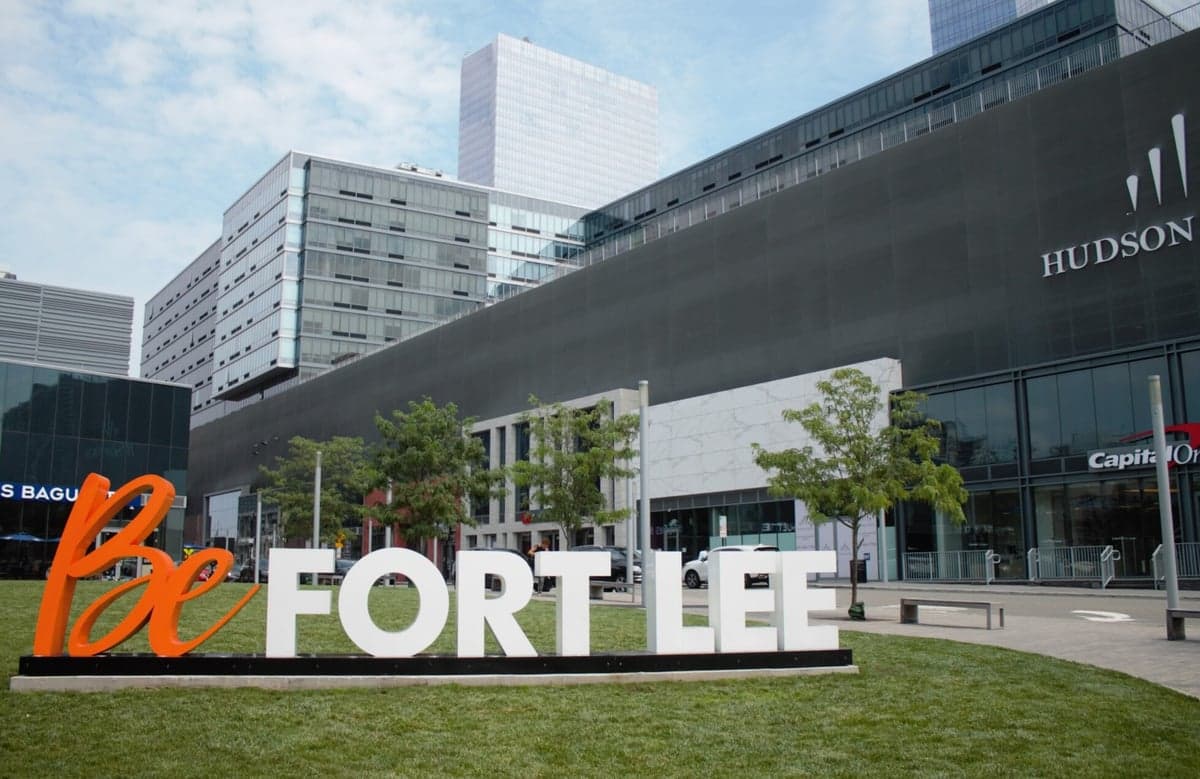
Photo: Wikipedia
Political ClimatePolitical Climate in Fort Lee, NJ
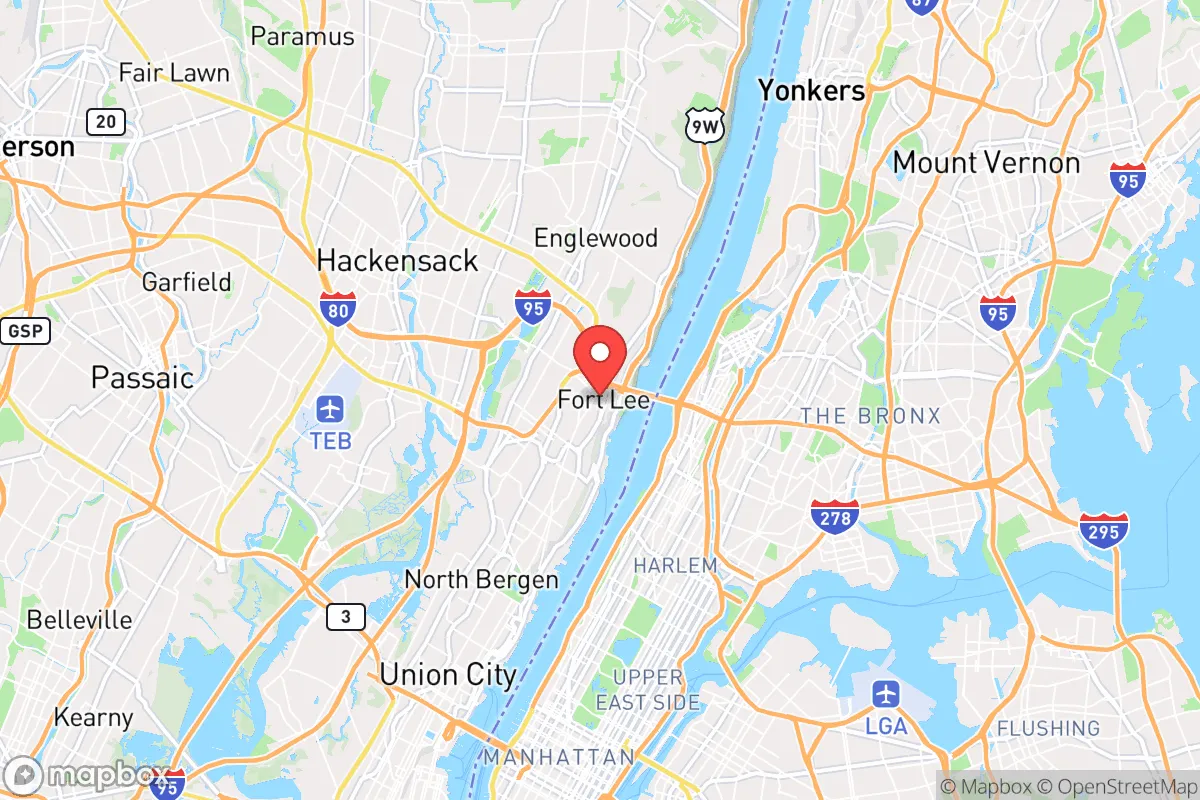
District shown is the primary district for this city’s centroid. Cities may span multiple districts.
Local Political AnalysisPolitical Analysis of Fort Lee, NJ
Fort Lee, New Jersey, has a Cook PVI of D+2, meaning it leans Democratic by a modest two points compared to the national average, but that number doesn't tell the full story of how the town has shifted over the years. I’ve lived here long enough to remember when this was a reliably moderate, blue-collar community where folks kept their politics to themselves and the local government focused on keeping taxes low and streets safe. Now, you’re seeing a steady creep of progressive policies—higher taxes, more zoning restrictions, and a general attitude from the borough council that they know what’s best for you. The D+2 rating actually masks a real tension: the old guard of fiscally conservative, socially moderate residents is being slowly outnumbered by newcomers from New York City who bring big-government habits with them.
How it compares
Drive ten minutes west to Englewood or Teaneck, and you’ll find communities that are far more left-leaning—those towns have embraced rent control ordinances, sanctuary city policies, and school board decisions that prioritize equity over merit. Fort Lee, by contrast, still has a sizable contingent of Korean-American and Italian-American families who value property rights and local control. But the comparison that stings most is with Edgewater, right next door: Edgewater has gone all-in on high-density development and progressive taxation, and Fort Lee is starting to look like it’s following the same playbook. The D+2 rating puts Fort Lee in a weird middle ground—it’s not as conservative as nearby Alpine or Closter, but it’s not as liberal as the Hudson County towns across the river. That balance is fragile, and every election cycle seems to tip it a little further left.
What this means for residents
For anyone who values personal freedom and limited government, the trend here is worrying. The borough has quietly expanded its regulatory reach—new fees on small businesses, stricter rules on short-term rentals, and a school board that’s more interested in social-emotional learning than academic rigor. Property taxes, already among the highest in Bergen County, keep climbing because the town keeps adding programs nobody asked for. If you’re a homeowner or a small business owner, you’re feeling the squeeze: every new ordinance feels like another layer of bureaucracy between you and your own property. The local elections are low-turnout affairs, which means a small group of activists can push through policies that affect everyone. I’ve seen neighbors sell their homes and move to Rockland County or even Pennsylvania just to get away from the creeping overreach.
On the cultural side, Fort Lee still has some old-school charm—the diners, the delis, the sense that people look out for each other—but that’s fading. The town council has been pushing for more “equity initiatives” and diversity training for municipal employees, which sounds nice in a press release but translates to more taxpayer money spent on consultants and less on road repairs. The long-term trajectory is clear: if the current pace of progressive policy adoption continues, Fort Lee will look a lot like Teaneck or Montclair within a decade. That’s fine if you want a government that manages every aspect of your life, but if you value the freedom to run your own household without a dozen new rules every year, you might want to keep an eye on the ballot box—or start packing.

State Political ClimatePolitical Climate in New Jersey
State Political AnalysisPolitical Environment in the State
New Jersey has long been a blue state, but its political climate is far more nuanced than the national headlines suggest. The state leans reliably Democratic at the presidential level—Joe Biden won it by about 16 points in 2020—but that top-line number masks a deeply divided electorate. Over the past 10-20 years, the dominant coalition has been a mix of suburban progressives, union labor, and urban machine Democrats, but a significant and growing conservative minority holds sway in the rural and exurban areas. The trajectory is concerning for conservatives: the state has drifted leftward on social and fiscal policy, driven by out-migration of moderates and in-migration of younger, more progressive voters to the dense northern corridor.
Urban vs. rural divide
The political map of New Jersey is a tale of two states. The northern and central urban corridor—Newark, Jersey City, Paterson, and Elizabeth—is the engine of Democratic dominance. These cities are heavily unionized, diverse, and reliably deliver 70-80% of their votes to Democrats. The suburbs of Bergen, Essex, and Hudson counties have shifted leftward over the last decade, with once-moderate towns like Montclair and Maplewood now firmly progressive. In contrast, the rural and exurban areas—Sussex, Warren, Hunterdon, and Salem counties—are Republican strongholds. Sussex County voted for Trump by 20 points in 2020, and towns like Newton and Sparta are bastions of fiscal conservatism and gun rights. The Jersey Shore is a mixed bag: Ocean County (Toms River, Lakewood) is deeply red, while Monmouth County is a classic swing area, with upscale beach towns like Spring Lake trending blue and inland suburbs staying red. The divide isn't just geographic—it's cultural. Rural residents feel increasingly alienated from the state government in Trenton, which they see as catering to the urban core.
Policy environment
New Jersey's policy environment is a textbook case of progressive governance that conservatives find stifling. The state has the highest property taxes in the nation—averaging over $9,500 annually—and a progressive income tax that tops out at 10.75% for earners over $1 million. The regulatory posture is heavy: the state has its own strict environmental rules (DEP), a strong public-sector union presence, and a minimum wage that hit $15 an hour in 2024. Education policy is dominated by the teachers' union (NJEA), which has successfully resisted school choice and charter expansion. Healthcare is heavily regulated, with the state running its own ACA marketplace and expanding Medicaid. Election laws are among the most liberal: no-excuse mail-in voting was made permanent in 2020, and same-day voter registration is allowed. For a conservative, the message is clear: the state government is deeply involved in your life, your wallet, and your children's education.
Trajectory & freedom
Over the last five years, New Jersey has become less free by any conservative measure. The most glaring example is gun rights: in 2022, Governor Phil Murphy signed a sweeping gun control package that banned carrying firearms in "sensitive places" (parks, libraries, public transit) and required a "justifiable need" for a permit—a law that was later partially struck down by the Supreme Court's Bruen decision, but the state continues to push back. On parental rights, the state passed a law in 2022 that prohibits school districts from notifying parents if a child changes their gender identity or pronouns—a direct blow to family autonomy. Medical autonomy took a hit with the state's strict COVID-19 mandates, which included vaccine requirements for healthcare workers and school staff, and a lingering mask mandate in healthcare settings. Property rights are under constant pressure from the state's aggressive affordable housing mandates (Mount Laurel doctrine), which force towns to zone for high-density development. On the tax front, the 2% property tax cap (2010) has slowed but not stopped increases, and the millionaire's tax was made permanent in 2023. The trajectory is unmistakable: more regulation, less personal freedom, and a government that trusts parents and gun owners less every year.
Civil unrest & political movements
New Jersey has seen its share of political flashpoints. The Black Lives Matter protests in 2020 were large and mostly peaceful in cities like Newark and Trenton, but there were instances of property damage in Jersey City. The state's sanctuary policies are a major point of contention: since 2018, the "Immigrant Trust Directive" limits local police cooperation with ICE, and several cities (Newark, Jersey City, Camden) have formal sanctuary ordinances. This has created tension in suburban and rural areas where residents feel the state is undermining federal immigration law. On the right, the New Jersey Second Amendment Society has been active in lawsuits and protests, and the New Jersey Family Policy Council has mobilized parents against the transgender notification law. Election integrity remains a hot-button issue: the 2020 shift to universal mail-in voting (due to COVID) was made permanent, and while there have been no major scandals, many conservatives remain skeptical of the state's election system. A visible flashpoint for new residents is the annual "March for Life" in Trenton, which draws thousands of pro-life activists, and the counter-protests that have grown in recent years.
Projection
Looking ahead 5-10 years, the trend is not favorable for conservatives. Demographic shifts are working against them: the state's population is aging, and younger, more progressive voters are moving into the urban and inner-suburban areas, while families with children are leaving for lower-tax states like Florida, Texas, and North Carolina. The 2020 Census cost New Jersey a congressional seat, and the state's population growth is the slowest in the Northeast. The Republican Party is increasingly confined to the rural and exurban counties, and while they hold some legislative seats (thanks to gerrymandering by the bipartisan redistricting commission), they are unlikely to win statewide office anytime soon. The state's fiscal situation is precarious—pension liabilities are over $100 billion—which will likely force either massive tax hikes or severe service cuts, neither of which will make the state more attractive to conservatives. A new resident moving in now should expect to find a state that is increasingly progressive, expensive, and regulatory-heavy, with a shrinking but vocal conservative minority fighting rear-guard actions on guns, taxes, and parental rights.
For a conservative considering a move to New Jersey, the bottom line is this: you will be living in a state where your values are in the minority, your taxes are among the highest in the nation, and your freedoms—especially on guns, education, and medical choices—are under constant pressure. The trade-off is proximity to New York City and Philadelphia, excellent public schools in certain suburbs, and a beautiful coastline. But if you value limited government, low taxes, and personal autonomy, New Jersey is a tough place to call home. If you do move here, you'll find your people in the rural counties and the Shore towns, but you'll be fighting an uphill battle against a state government that has no intention of slowing down.
* Values derived from national, state, county, city and local statistics and may differ in a specific area. Last updated: 2026-04-30T00:27:51.000Z
Narrative content on this page is AI-generated and may contain mistakes. Verify any details that matter before acting on them.
ReloMaps may earn a commission from affiliate links at no extra cost to you.

