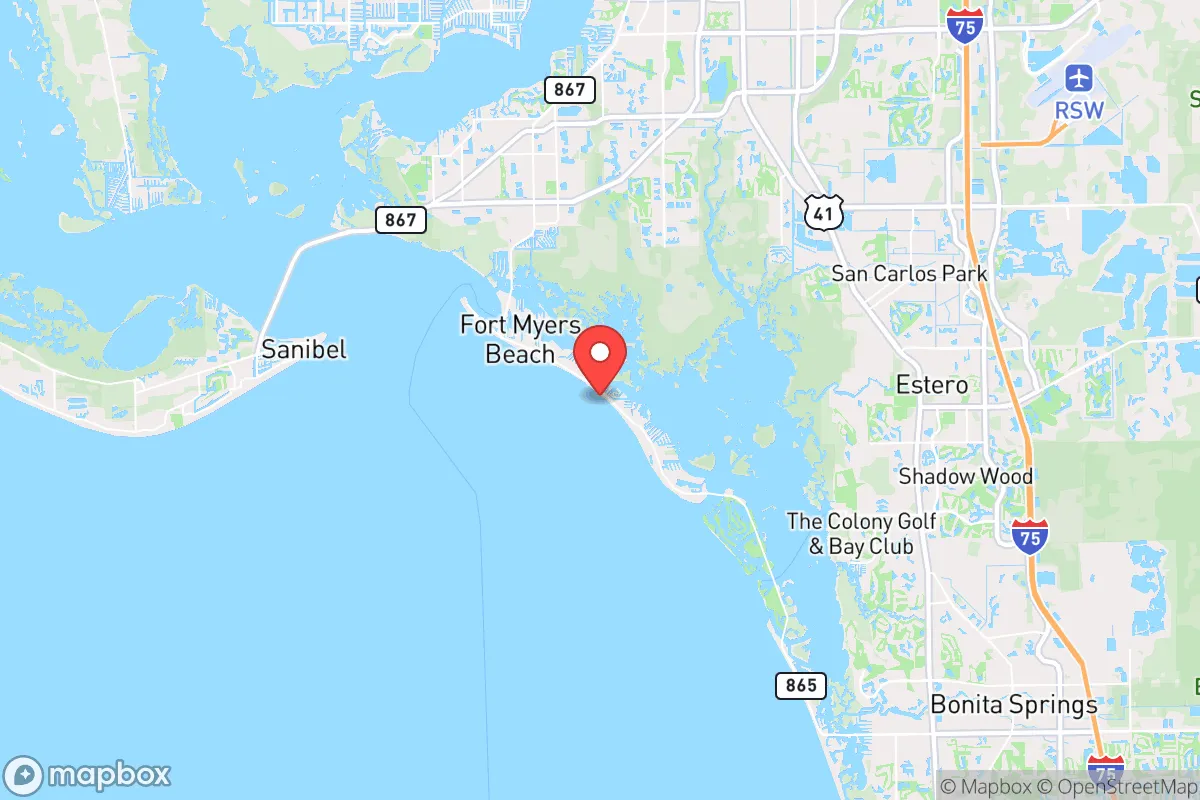
Demographics of Fort Myers Beach, FL
Affluence Level in Fort Myers Beach, FL
An upper-middle-class area. Household wealth, education levels, and homeownership run ahead of national benchmarks.
People of Fort Myers Beach, FL
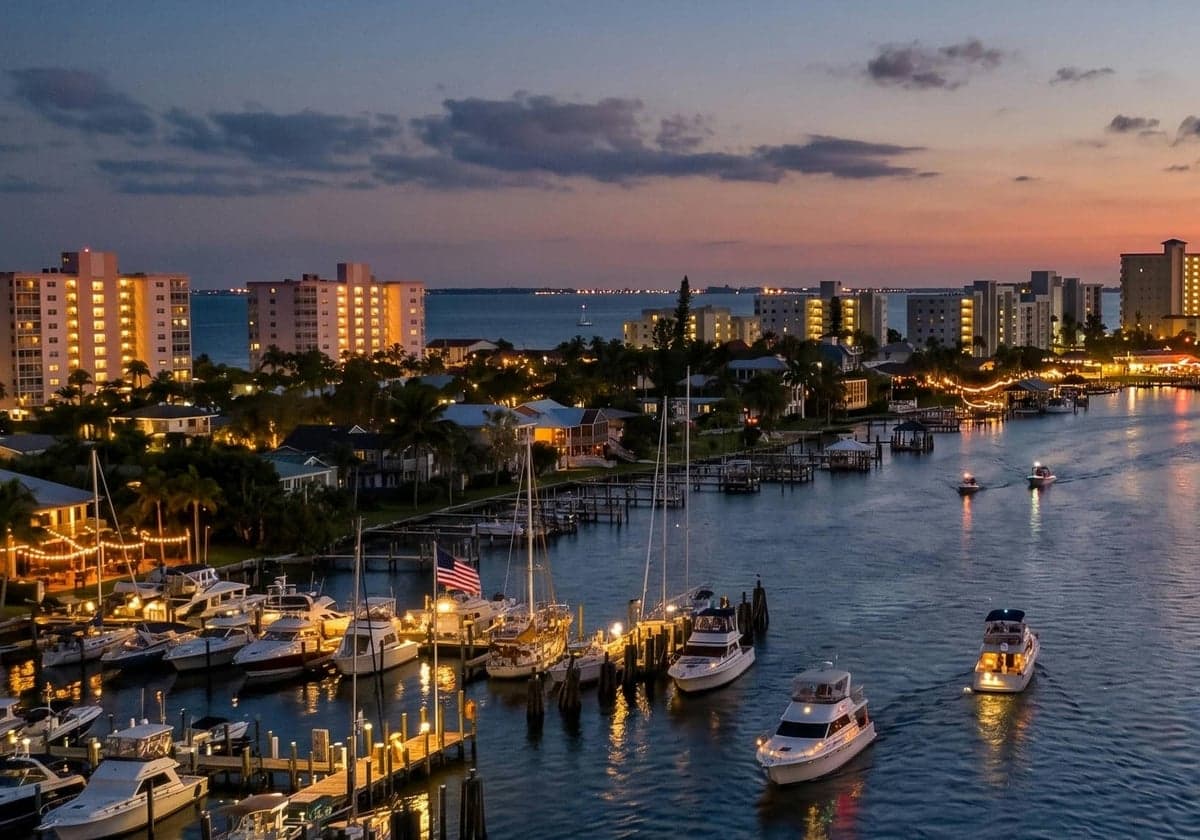
Fort Myers Beach, Florida, is a small, predominantly white coastal community of 5,548 residents, characterized by its high proportion of college-educated individuals (45.0%) and a notably low foreign-born population (2.9%). The city’s identity is shaped by its role as a seasonal tourist destination and a retirement haven, with a demographic profile that is 91.8% White, 6.3% Hispanic, 0.8% East/Southeast Asian, and 0.6% Black, reflecting little of the ethnic diversity seen in larger Southwest Florida metro areas. Residents are concentrated in a handful of distinct beachfront and near-shore neighborhoods, each with its own settlement history.
How the city was settled and grew
Fort Myers Beach was not a pre-colonial or 19th-century settlement; its human history begins in earnest after 1900, driven by the extension of the Atlantic Coast Line Railroad to nearby Fort Myers in 1904. The first permanent residents were fishermen, sponge harvesters, and a few homesteaders who built small shacks along the Gulf of Mexico. The area was originally known as "Estero Island," and the first organized community emerged around what is now Times Square, the historic commercial hub. In the 1920s, the completion of the Matanzas Pass Bridge (1921) and the construction of the San Carlos Boulevard causeway opened the island to automobile traffic, sparking a land boom. During this period, developers subdivided the island into lots, and the Bay Beach neighborhood—on the bay side near the north end—became the first concentration of seasonal cottages for middle-class families from the Midwest. The 1930s through the 1950s saw the arrival of returning World War II veterans and their families, who built modest homes in Estero Island’s central blocks, establishing a year-round population of about 1,000 by 1960. The original population was overwhelmingly white, native-born, and drawn by the promise of affordable waterfront property and a quiet fishing lifestyle.
Modern era (post-1965)
The post-1965 era transformed Fort Myers Beach from a sleepy fishing village into a tourist-oriented town. The Immigration and Nationality Act of 1965 had minimal direct impact here—the foreign-born share remains under 3%—but the broader Sun Belt migration reshaped the population. Beginning in the 1970s, retirees from the Northeast and Midwest, particularly from Ohio, Michigan, and Illinois, began buying second homes and condominiums. This wave concentrated in the Lynn Hall Beach Park area and the southern end of the island near Bowditch Point Park, where new mid-rise condominium complexes replaced older cottages. The 1980s and 1990s saw a second domestic wave: younger families and professionals from the Tampa and Miami metro areas, seeking a quieter beach lifestyle, settled in the Matanzas Shores neighborhood on the bay side, a gated community built around a golf course. The Hispanic population, now 6.3%, began growing in the 1990s, primarily from Cuban and Puerto Rican families moving from Miami for construction and hospitality jobs; they are dispersed across the island but have a slight concentration in the older rental properties near Estero Boulevard. The East/Southeast Asian population (0.8%) is small and consists mostly of Vietnamese-American families who arrived in the 2000s, working in the seafood and restaurant industries. The Black population (0.6%) has remained static since the 1970s, with no distinct neighborhood concentration. The Indian-subcontinent population is effectively zero (0.0%).
The future
The population of Fort Myers Beach is heading toward further homogenization, driven by two forces: rising property values and strict post-Hurricane Ian (2022) rebuilding codes. The storm destroyed roughly 40% of the island’s housing stock, and the resulting rebuild is favoring larger, more expensive single-family homes and luxury condos over the older, smaller cottages. This is accelerating the displacement of middle-class year-round residents and seasonal renters, pushing them to mainland communities like Iona or McGregor. The foreign-born share is unlikely to grow significantly—the high cost of entry and limited rental inventory deter immigrant settlement. The Hispanic population may plateau or grow slowly through natural increase, but it will not form a distinct enclave. The East/Southeast Asian community is too small to sustain growth without a new economic draw. The college-educated share (45.0%) will likely rise as wealthier, remote-work-capable professionals replace the pre-storm retiree and service-worker base. The city is becoming a high-end, predominantly white, seasonal enclave with a shrinking year-round population.
For a conservative-leaning individual or family considering relocation, Fort Myers Beach offers a stable, low-crime, and culturally homogeneous environment with strong property appreciation potential. However, the trade-off is clear: the community is becoming less affordable for year-round living, less diverse, and more oriented toward tourism and seasonal residents. The next decade will likely see the city solidify as an upscale beach destination with a small, affluent permanent population, rather than a diverse, growing suburb.

* Values derived from national, state, county, city and local statistics and may differ in a specific area. Last updated: 2026-05-14T01:45:16.000Z
Narrative content on this page is AI-generated and may contain mistakes. Verify any details that matter before acting on them.
ReloMaps may earn a commission from affiliate links at no extra cost to you.

