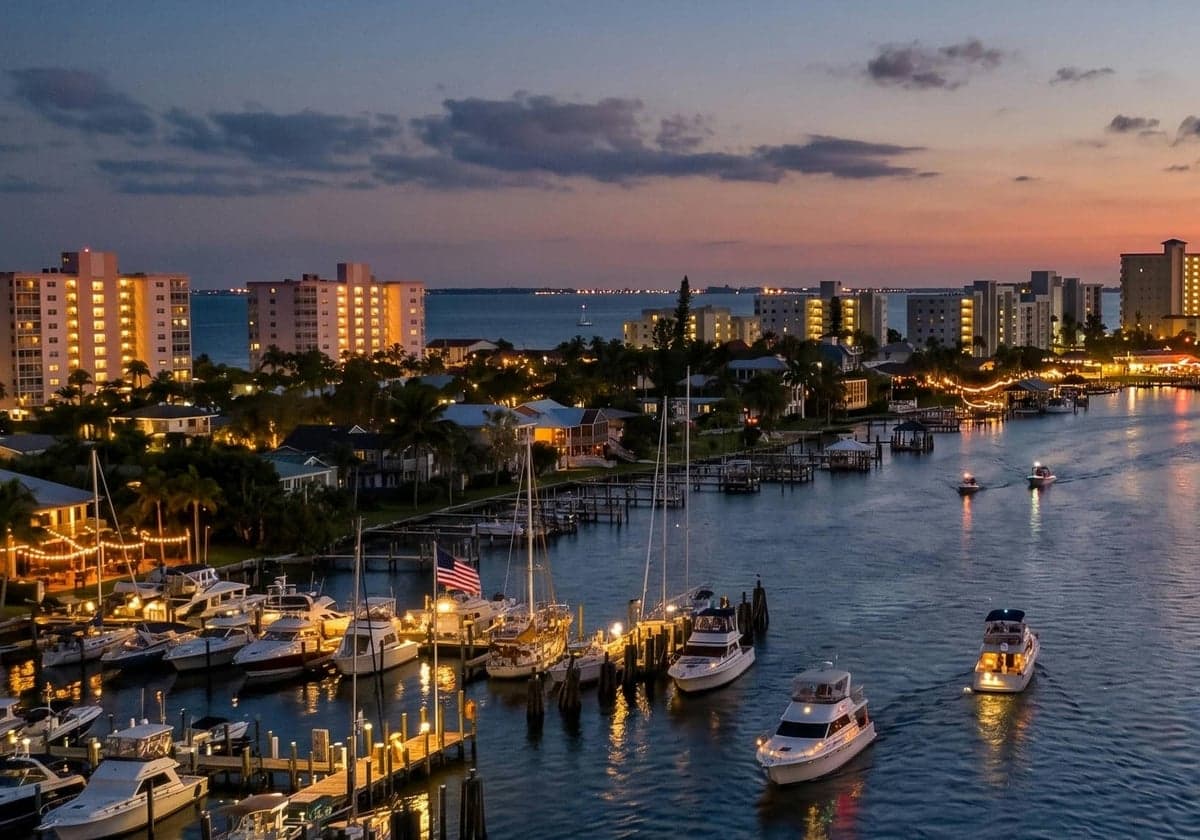
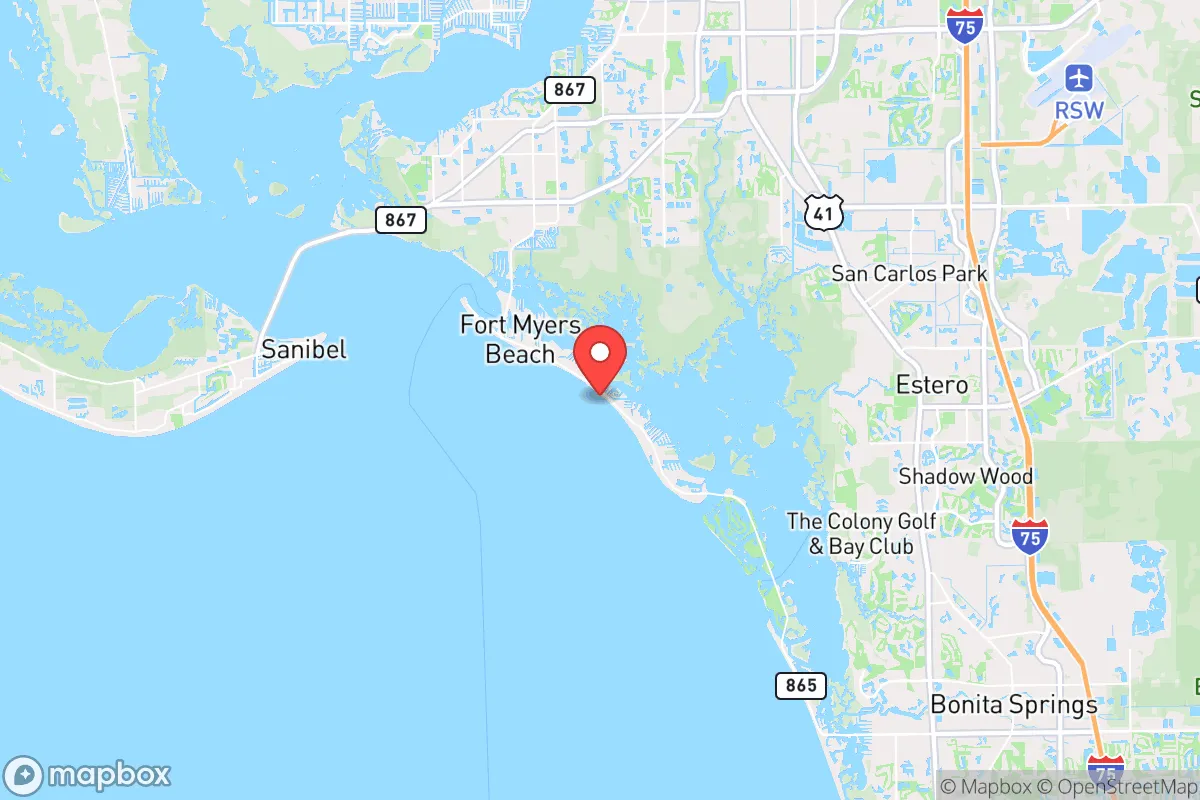
Strategic Assessment of Fort Myers Beach, FL
Meaningful friction. Expect exposure to either population pressure, blast zones, or natural disaster risk. Consider buying a retreat property.
What does the Strategic Assessment tell us?
Our Strategic Assessment grades tactical survivability of an area. Major population centers, military targets, fallout zones, natural disasters, and border exposure all drive risk — lower exposure means a more defensible position in a crisis.
This is heavily inspired by Joel Skousen's Strategic Relocation book. Highly recommended you checkout the book ($)What does this tell us?
Our Strategic Assessment grades tactical survivability of an area. Major population centers, military targets, fallout zones, natural disasters, and border exposure all drive risk — lower exposure means a more defensible position in a crisis.
This is heavily inspired by Joel Skousen's Strategic Relocation book. Highly recommended you checkout the book ($)Strategic Pillars

Key Distances
Regional Safe Places
Below is our recommended "safe zones" in Florida and the surrounding area based on our strategic heuristics. For most people, it's unrealistic to live in a “safe zone” full-time due to work, family or other personal reasons. They tend to be more rural. However, many of these areas are perfect for second homes and retreat properties that double as a vacation home or even a short-term rental.

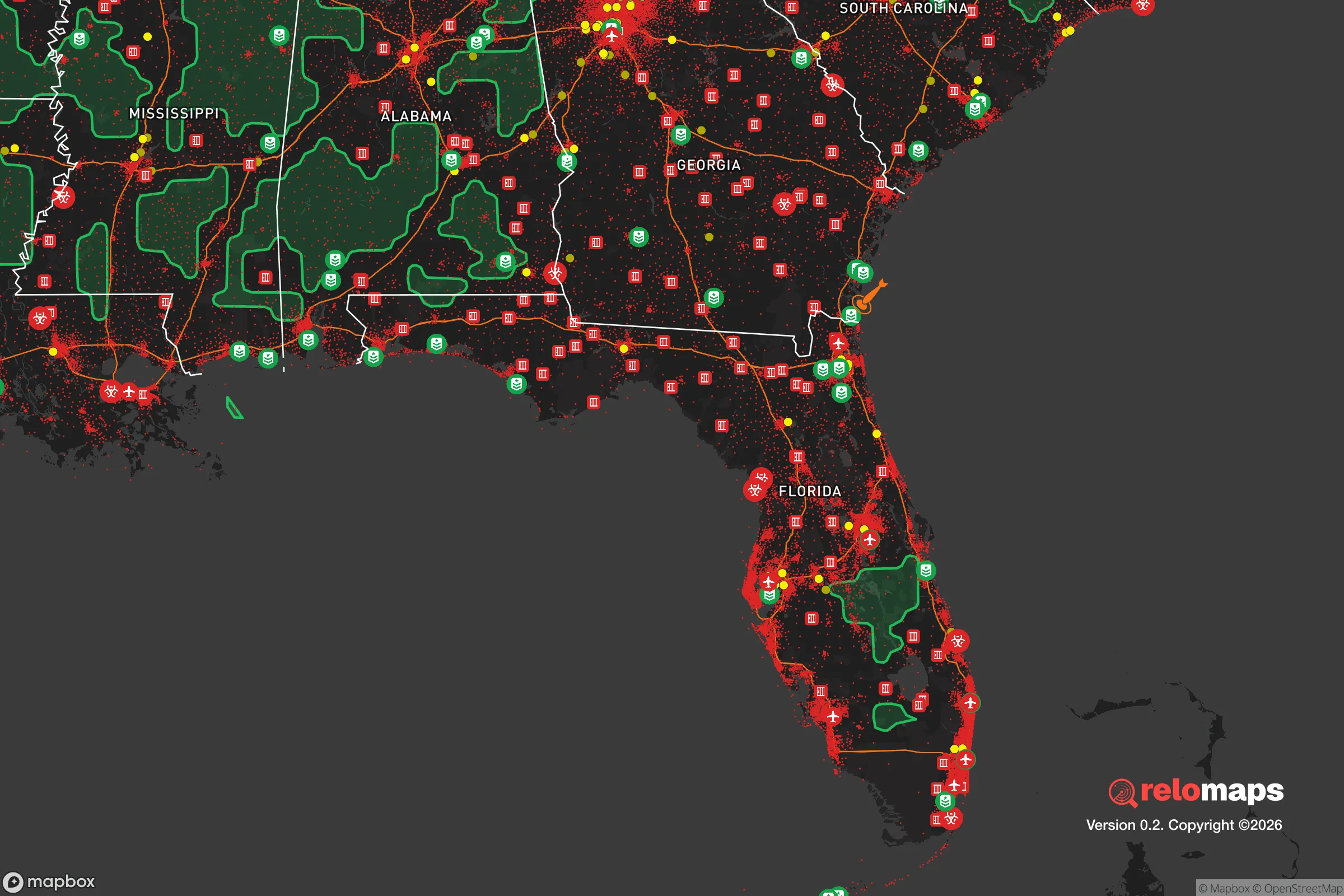


Important Note: For informational purposes only. This does not mean nothing bad ever happens in the green zones. Please use common sense. This is based on public data and modeled with AI. We tried to take a conservative approach but mistakes happen. We update this regularly as new information becomes available.
Solar Generator Recommendations
Backup power matters more here than in safer locations. We've picked three solar generators across budgets and capacity tiers — start with the budget unit if you only need a few essentials, or step up if you want to run a fridge and HVAC for days at a time.

Jackery Portable Power Station Explorer 300
Budget OptionPower on the Go: Weighing only 11 lbs, it's convenient to set up and store with book-sized foldable solar panels

BLUETTI Portable Power Station AC180
Designed for both indoor and outdoor scenarios, AC180 is highly capable as it has a robost capacity and continuous output power.

EF ECOFLOW DELTA Pro Ultra Power Station
Upgraded PickEcoFlow DELTA Pro Ultra is a whole-home energy system designed to grow with your family. Integrated with the Smart Home Panel 2, it scales to meet your evolving energy needs — keeping your home powered, intelligent, and secure through every stage of life.
We earn a commission, at no additional cost to you.
Strategic Assessment Analysis
Fort Myers Beach, Florida, presents a complex strategic picture for the conservative prepper or survivalist. Its primary value lies in its geographic isolation on a barrier island, offering a natural buffer from mainland chaos, but this same isolation creates a critical vulnerability in a crisis. The area’s post-Hurricane Ian rebuild has hardened infrastructure somewhat, but the fundamental trade-off remains: you trade easy access to resources for a defensible, low-profile position that is inherently exposed to weather and supply chain disruptions. For a relocator prioritizing resilience over convenience, this location demands a clear-eyed assessment of its strengths and glaring weaknesses.
Geographic position and natural defensive advantages for long-term survival
Fort Myers Beach sits on Estero Island, a narrow barrier island connected to the mainland by the Matanzas Pass Bridge (State Road 865) and the Big Carlos Pass Bridge to the south. This limited egress is a double-edged sword. In a grid-down scenario or civil unrest, controlling these two choke points would effectively seal the island from mainland threats. The surrounding waters of the Gulf of Mexico and the back-bay estuaries provide a natural moat, making a vehicular assault difficult. The island’s low population density outside peak tourist season—roughly 5,000 year-round residents—means fewer people to compete with for limited resources. The subtropical climate allows for year-round gardening and rainwater collection, and the shallow Gulf waters offer consistent fishing and crabbing opportunities. The proximity to the J.N. “Ding” Darling National Wildlife Refuge on nearby Sanibel provides a massive, undeveloped buffer zone to the south, further reducing exposure to mainland population centers. However, the island’s low elevation—averaging just 5 to 10 feet above sea level—eliminates any high-ground defensive advantage and makes it vulnerable to storm surge.
Risk exposure: hurricane fallout, proximity to population centers, and infrastructure fragility
The most obvious risk is catastrophic hurricane damage. Hurricane Ian (2022) demonstrated that the island is not just vulnerable—it is a target. Storm surge of 10-15 feet destroyed hundreds of structures, and the island was completely cut off for days. For a prepper, this means any long-term plan must account for the possibility of total infrastructure loss: no power, no water, no roads, and no emergency services for weeks. The island’s location also places it within 15 miles of Fort Myers (population ~90,000) and 20 miles of Cape Coral (population ~200,000). In a major civil unrest event, these population centers could become sources of refugee flow toward the beach, overwhelming the limited bridge capacity. The bridges themselves are vulnerable to sabotage or collapse; the Matanzas Pass Bridge is a high-span structure that could be blocked by a single disabled vehicle. Additionally, the island sits roughly 100 miles from MacDill Air Force Base in Tampa, a major military installation that could become a target in a conflict scenario. The nearby Southwest Florida International Airport (RSW) is a potential evacuation choke point and could attract looting or military activity. The presence of the Sanibel Causeway, which was destroyed by Ian, is a reminder that infrastructure here is fragile and slow to rebuild.
Practical resilience for a relocator: food, water, energy, and defensibility
For a single individual or family willing to invest in preparation, Fort Myers Beach offers some genuine resilience advantages. Water is abundant but requires treatment—the shallow aquifer is brackish, but rainwater collection is viable with the region’s 50+ inches of annual rainfall. Reverse osmosis or distillation gear is a must. Food security is strong if you have saltwater fishing skills; the Gulf provides redfish, snook, trout, and crabs year-round. The island’s sandy soil is poor for traditional gardening, but raised beds with imported soil can produce tomatoes, peppers, and greens in the long growing season. Energy independence is achievable—solar panels are common post-Ian, and the constant Gulf breeze makes small wind turbines viable. Battery storage is essential, as the grid is unreliable even in good weather. Defensibility is the island’s strongest card. With only two road access points, a small, organized group could establish checkpoints. The dense mangrove forests along the back bay provide natural cover and make amphibious approaches difficult. The island’s layout—a single main road (Estero Boulevard) with dead-end side streets—creates natural kill zones and makes it easy to monitor movement. However, the lack of cover on the Gulf side (open beach) means any approach from the water is visible from a distance. The biggest weakness is medical evacuation; the nearest hospital (Gulf Coast Medical Center) is 12 miles away in Fort Myers, and the bridge could be impassable. A serious injury or illness in a crisis would be a major problem. Stockpiling trauma kits, antibiotics, and knowing basic field medicine is non-negotiable.
The overall strategic picture for Fort Myers Beach is one of high risk with potentially high reward for the disciplined prepper. It is not a location for someone seeking a low-maintenance retreat—the hurricane threat alone demands constant vigilance and a robust plan for evacuation or shelter-in-place. But for those willing to accept that risk, the island offers a defensible, low-profile position with excellent natural food sources and a small, tight-knit community that has already proven its resilience through disaster. The key is to treat it as a secondary location—a bug-out destination or a seasonal retreat—rather than a primary year-round home. The bridges are the Achilles’ heel, and any serious crisis that blocks them turns the island into a trap. If you can secure a boat capable of crossing the bay to the mainland (a 15-minute trip), that vulnerability becomes manageable. For the conservative relocator who values self-reliance and is comfortable with the trade-offs, Fort Myers Beach is a viable option—but only if you go in with eyes wide open about the weather, the isolation, and the need for serious preparation.

* Values derived from national, state, county, city and local statistics and may differ in a specific area. Last updated: 2026-05-14T01:45:16.000Z
Narrative content on this page is AI-generated and may contain mistakes. Verify any details that matter before acting on them.
ReloMaps may earn a commission from affiliate links at no extra cost to you.

