Photo: Wikipedia
Demographics of Fountain, CO
Affluence Level in Fountain, CO
A middle-class area roughly in line with national averages across income, home values, education, and employment.
People of Fountain, CO
The people of Fountain, Colorado, today number roughly 29,300, forming a notably young, family-oriented community with a strong military and working-class character. The city is less diverse than the national average in foreign-born residents (just 2.4%), yet its racial and ethnic makeup is more varied than many Front Range suburbs, with a White population of 56.1%, a Hispanic share of 25.2%, a Black population of 9.1%, and East/Southeast Asian communities at 3.3%. Distinctive markers include a high proportion of active-duty and veteran households tied to nearby Fort Carson and Peterson Space Force Base, a pronounced conservative-leaning political culture, and a housing stock dominated by post-1980s subdivisions that give the city a sprawling, suburban feel.
How the city was settled and grew
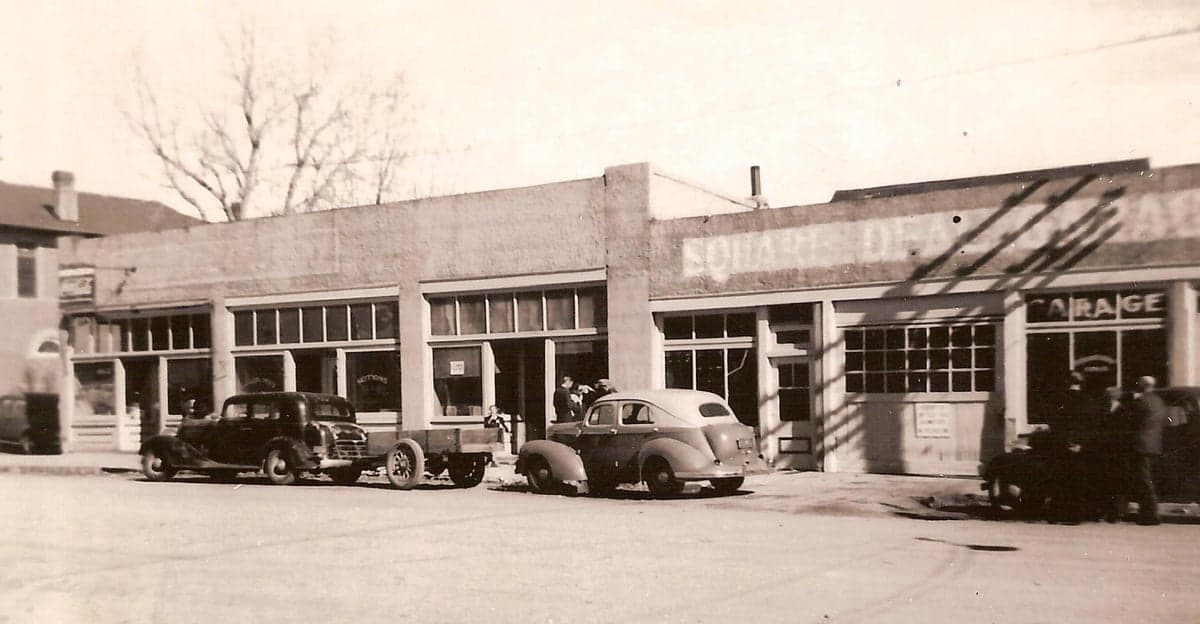
Fountain was founded in 1859 as a stagecoach stop along the Santa Fe Trail, but its population remained tiny for decades. The original settlers were Anglo-American farmers and ranchers drawn by the Fountain Creek valley’s water and grazing land, clustering around what is now the Historic Downtown Fountain district along Main Street. The arrival of the Denver and Rio Grande Railroad in the 1880s spurred a modest wave of merchants and railroad workers, but the town’s population barely topped 500 by 1900. A second, more significant wave came during the Dust Bowl era of the 1930s, when displaced farmers from Oklahoma, Texas, and Kansas—often called “Okies”—moved in, settling in the North Fountain area near the railroad tracks and working as farm laborers or at the nearby sugar beet processing plant. These families, predominantly White and Protestant, established the town’s rural-conservative foundation. The city remained a small agricultural hub through the 1950s, with fewer than 2,000 residents.
Modern era (post-1965)
Fountain’s population exploded after 1965, driven almost entirely by the expansion of Fort Carson and the broader Colorado Springs military-industrial complex. The 1970s and 1980s saw the construction of large master-planned subdivisions like Widefield and Security (technically unincorporated but functionally part of Fountain’s metro area), which absorbed waves of military families transferring in from bases nationwide. These newcomers were disproportionately White and Black, reflecting the U.S. Army’s demographics at the time. A second domestic in-migration wave came in the 1990s and 2000s as Colorado Springs’ high housing costs pushed middle-class families south to Fountain. This group—largely White and Hispanic—settled in newer developments like Mesa Ridge and Woodmen Hills, drawn by affordable new construction and good school ratings. The Hispanic population grew steadily during this period, rising from roughly 12% in 1990 to 25.2% today, concentrated in the Fountain Valley neighborhoods south of U.S. 85/87. The Black population, at 9.1%, is heavily concentrated in the Security-Widefield corridor, reflecting the military housing patterns of the 1980s. East/Southeast Asian residents (3.3%) are a smaller but visible presence, many affiliated with Fort Carson’s medical and technical units, living in the Fountain Mesa area near the base’s Gate 3. The Indian-subcontinent population remains negligible at 0.2%.
The future
Fountain’s population is heading toward further diversification, but the pace is moderate. The Hispanic share is projected to rise to roughly 30-32% by 2040, driven by higher birth rates and continued domestic migration from the Southwest. The White share will likely decline to around 50%, while the Black and East/Southeast Asian shares are expected to hold steady or grow slightly as Fort Carson remains a key assignment post. The city is not tribalizing into distinct ethnic enclaves—neighborhoods like Mesa Ridge and Woodmen Hills are already mixed—but subtle clustering persists: Hispanic families gravitate toward older, more affordable housing in Fountain Valley, while newer subdivisions attract a more balanced mix. The foreign-born share (2.4%) is unlikely to rise sharply, as Fountain lacks the immigrant-service infrastructure and rental housing stock that draw newcomers to Denver or Aurora. The biggest demographic wildcard is the military: if Fort Carson downsizes or shifts its mission, Fountain could see a net outflow of young families, flattening growth. Conversely, continued base expansion—especially in space-related roles at Peterson—would accelerate in-migration of technically skilled, college-educated households, raising the college-educated share (currently 32.6%) and potentially shifting the city’s political center slightly toward the center-right.
For someone moving in now, Fountain is becoming a more diverse, still heavily military-aligned suburb where the dominant culture remains conservative, family-focused, and rooted in service. The city is not gentrifying rapidly, nor is it experiencing the ethnic succession seen in older industrial towns. Instead, it is slowly absorbing a broader mix of backgrounds within a stable, low-crime, middle-class framework—a place where the biggest change over the next decade will be the continued growth of Hispanic families and the gradual aging of the post-1980s subdivisions.

* Values derived from national, state, county, city and local statistics and may differ in a specific area. Last updated: 2026-04-25T07:48:17.000Z
Narrative content on this page is AI-generated and may contain mistakes. Verify any details that matter before acting on them.
ReloMaps may earn a commission from affiliate links at no extra cost to you.

