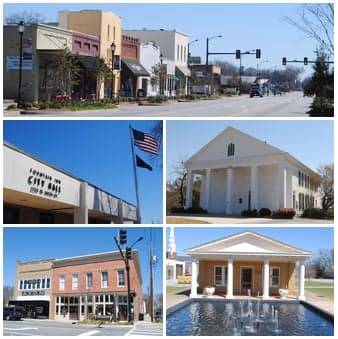
Photo: Wikipedia
Quality of Life in Fountain Inn, SC
A high quality of life with strong walkability, manageable living costs, healthy neighborhood signals, and solid amenity access.
What does Quality of Life tell us?
Quality of Life blends cost of living, nearby amenities, socioeconomic signals, and neighborhood character. City-level scores represent the whole municipality; individual neighborhoods can differ.
What does this tell us?
Quality of Life blends cost of living, nearby amenities, socioeconomic signals, and neighborhood character. City-level scores represent the whole municipality; individual neighborhoods can differ.
Cost of Living
8% below national average
The Real Cost of Living in Fountain Inn, SC for 2026
| Tier | Individual | Family (4) |
|---|---|---|
| Survival | $17k | $32k |
| Comfortable | $50k | $73k |
| Luxury | $98k+ | $151k+ |
| Elite (Top 5%) | $115k+ | $178k+ |
99%
The Area Signal
A metric tracking the socioeconomic signals of the area.
Hobbies
Explore the areaGroceries
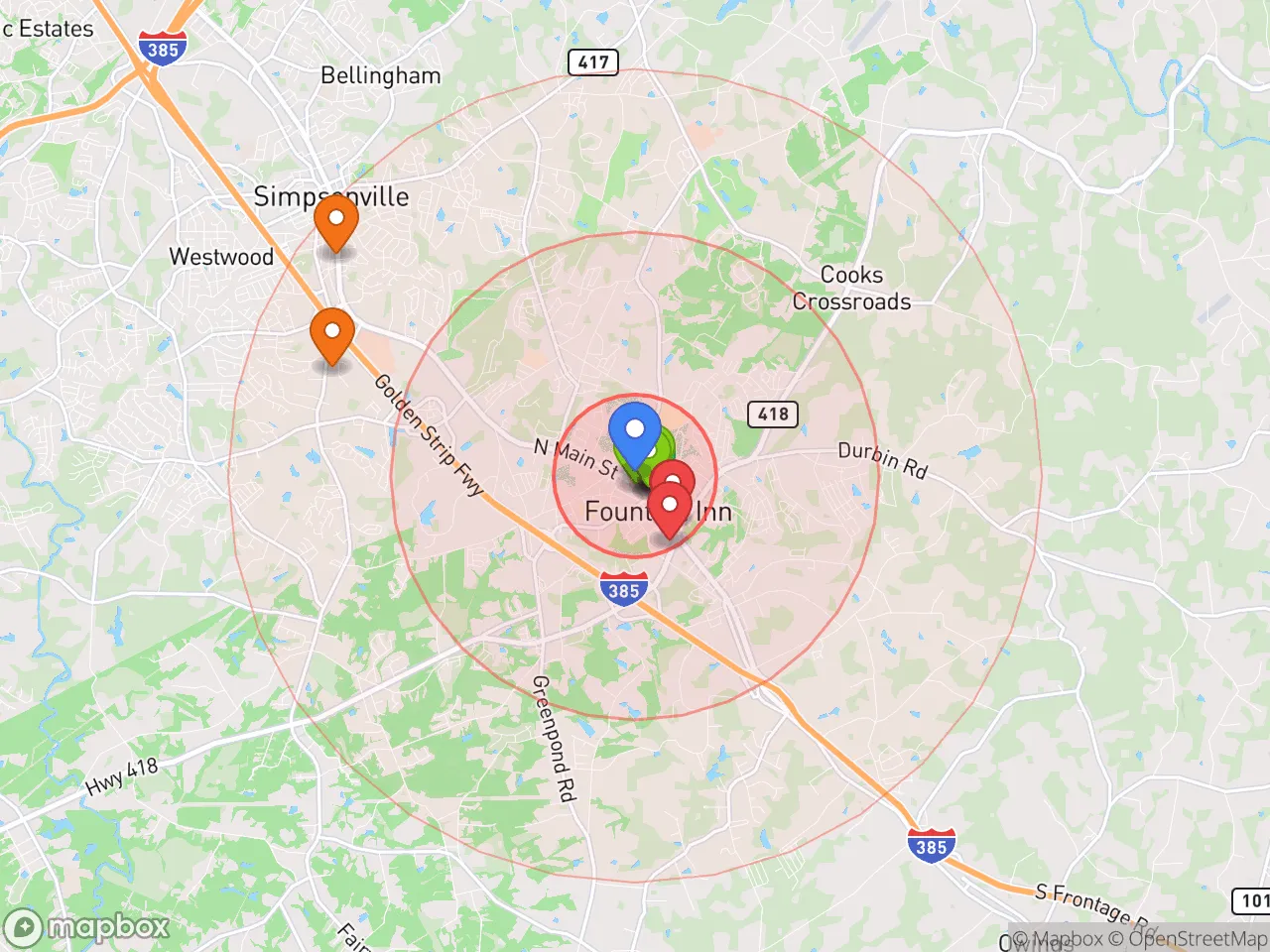
5 within 10 miles
Gas
20 within 10 miles
Hospital
9 within 20 miles
Airport
CLT — Charlotte Douglas International
Post Office
USPS — 290 McCarter Road, Fountain
Critical Amenities
Quality-of-Life Analysis
Fountain Inn, South Carolina, presents a quality of life defined by small-town comfort and rising affluence, attracting a mix of young families, long-time locals, and professionals priced out of Greenville proper. With a cost of living index of 92 (below the US average of 100), the city offers tangible financial breathing room while remaining within a 25-minute commute of Greenville’s job centers. The population skews toward homeowners and those seeking a slower pace, yet the area’s growth—fueled by new subdivisions and retail along Main Street—signals a community in transition from rural crossroads to suburban hub.
Cost of living and housing affordability compared to Greenville and Simpsonville
Fountain Inn’s housing market remains a clear draw for budget-conscious buyers. The median home value sits at $255,400, roughly $70,000 less than Greenville’s median and about $30,000 below Simpsonville’s typical price. For renters, the median monthly rent of $1,072 undercuts the Greenville metro average by nearly $300, making it one of the more affordable rental markets in the Upstate. The overall cost of living index of 92 means everyday expenses—groceries, utilities, and transportation—run about 8% below the national norm. However, property taxes in Laurens County (which covers most of Fountain Inn) are slightly higher than in Greenville County, though still moderate by national standards. The average commute of 21.8 minutes is manageable, with most residents driving west on I-385 or US-276 to reach jobs in Greenville, Simpsonville, or the BMW plant in Greer.
What daily life is like for families: schools, parks, and local amenities
Daily life in Fountain Inn centers on a walkable downtown anchored by the historic Younts Center for Performing Arts and a growing roster of locally owned restaurants and breweries. The city’s parks system includes the 40-acre Fountain Inn Sports Complex and the newer Trailside Park, which connects to the Swamp Rabbit Trail extension—a paved greenway popular for biking and strolling. Public schools fall under Laurens County School District 55, with Fountain Inn Elementary and Bryson Middle School serving most families; Hillcrest High School, located just outside city limits in Simpsonville, draws many students and is consistently rated above state averages. For groceries and daily errands, residents rely on the Ingles and Food Lion on Main Street, while major retail and medical services require a 10- to 15-minute drive to Simpsonville or Mauldin. The rhythm is notably quieter than Greenville’s: restaurants close by 9 p.m. on weeknights, and community events like the weekly Fountain Inn Farmers Market and the annual Art in the Park festival provide the primary social calendar.
Fountain Inn is best suited for those who value affordability and space over urban energy. Families with young children will appreciate the lower housing costs and shorter commutes compared to Greenville’s eastern suburbs, while retirees and remote workers can stretch a fixed income further here than in most of the Upstate. Professionals who crave nightlife or a dense restaurant scene may find the town too quiet, but for anyone seeking a stable, family-oriented base within easy reach of Greenville’s amenities, Fountain Inn delivers a practical and increasingly appealing balance.

Crime in Fountain Inn, SC
Lower crime rates than 79% of comparable U.S. locations.
Violent CrimeViolent Crime Analysis
Property CrimeProperty Crime Analysis
Crime Analysis
Fountain Inn, South Carolina, presents a mixed safety profile for potential residents. The city’s violent crime rate of 244 incidents per 100,000 residents is notably lower than the national average, but its property crime rate of 935.2 per 100,000 exceeds both state and national benchmarks, indicating a higher risk of theft and burglary. As a growing suburb within the Greenville-Anderson-Mauldin metropolitan area, Fountain Inn benefits from the region’s economic strength but also contends with crime patterns influenced by broader urban dynamics and local justice policies.
Crime in context
Fountain Inn’s violent crime rate is roughly 30% below the national average, making it safer than many comparably sized towns in the Upstate region. However, its property crime rate is approximately 20% higher than the national average, driven largely by larceny and vehicle theft. When compared to Greenville County as a whole, Fountain Inn reports slightly lower violent crime but higher property crime per capita. The city’s proximity to Interstate 385 and its role as a commuter hub for Greenville and Simpsonville may contribute to transient property crime, as easy highway access facilitates quick getaways. Residents should note that while violent incidents are rare, they are not unheard of—the 2023 data reflects a small number of aggravated assaults and robberies that skew the per-capita rate.
What residents experience
Daily life in Fountain Inn is generally quiet, with most crime concentrated in commercial corridors and near major roadways. The downtown area and newer subdivisions report very low incident rates, while older neighborhoods closer to the city’s industrial zones see more frequent property crimes. Vehicle break-ins and package thefts are the most common complaints among residents, particularly in apartment complexes and areas with on-street parking. The city’s police department maintains a visible presence, but response times can vary during peak hours. A key concern for those moving from more progressive jurisdictions is the potential impact of local prosecutorial philosophy. Greenville County’s elected solicitor has taken a data-driven approach to prosecution, but critics argue that lenient plea deals and diversion programs for repeat property offenders undermine deterrence. This pattern, common in many metro-area suburbs, means that property crime offenders often cycle through the system quickly, frustrating victims and neighborhood watch groups.
Neighborhood-level variation is significant. The area around Fairview Street and the industrial park sees higher police activity, while the newer developments near the Fountain Inn YMCA and along Highway 418 report minimal crime. Homeowners in the city’s historic district and gated communities enjoy the lowest risk, while renters in multi-family housing near the I-385 interchange face elevated property crime exposure. Prospective residents should consult the Fountain Inn Police Department’s annual report and consider neighborhood-specific crime mapping tools before choosing a specific street or subdivision.
* Values derived from national, state, county, city and local statistics and may differ in a specific area. Last updated: 2026-04-30T00:28:31.000Z
Narrative content on this page is AI-generated and may contain mistakes. Verify any details that matter before acting on them.
ReloMaps may earn a commission from affiliate links at no extra cost to you.

