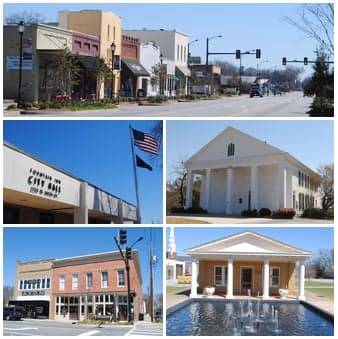
Photo: Wikipedia
Political ClimatePolitical Climate in Fountain Inn, SC
District shown is the primary district for this city’s centroid. Cities may span multiple districts.
Local Political AnalysisPolitical Analysis of Fountain Inn, SC
Fountain Inn is about as solidly conservative as they come in the Upstate, with a Cook PVI of R+21 that tells you pretty much everything you need to know about the local voting patterns. This isn't a recent shift either—folks around here have been voting their values for generations, and the trajectory is holding steady, even as some of the bigger cities nearby start to wobble. You won't find much hand-wringing over progressive policies in this town; the general sentiment is that government should stay out of your business, your wallet, and your family life.
How it compares
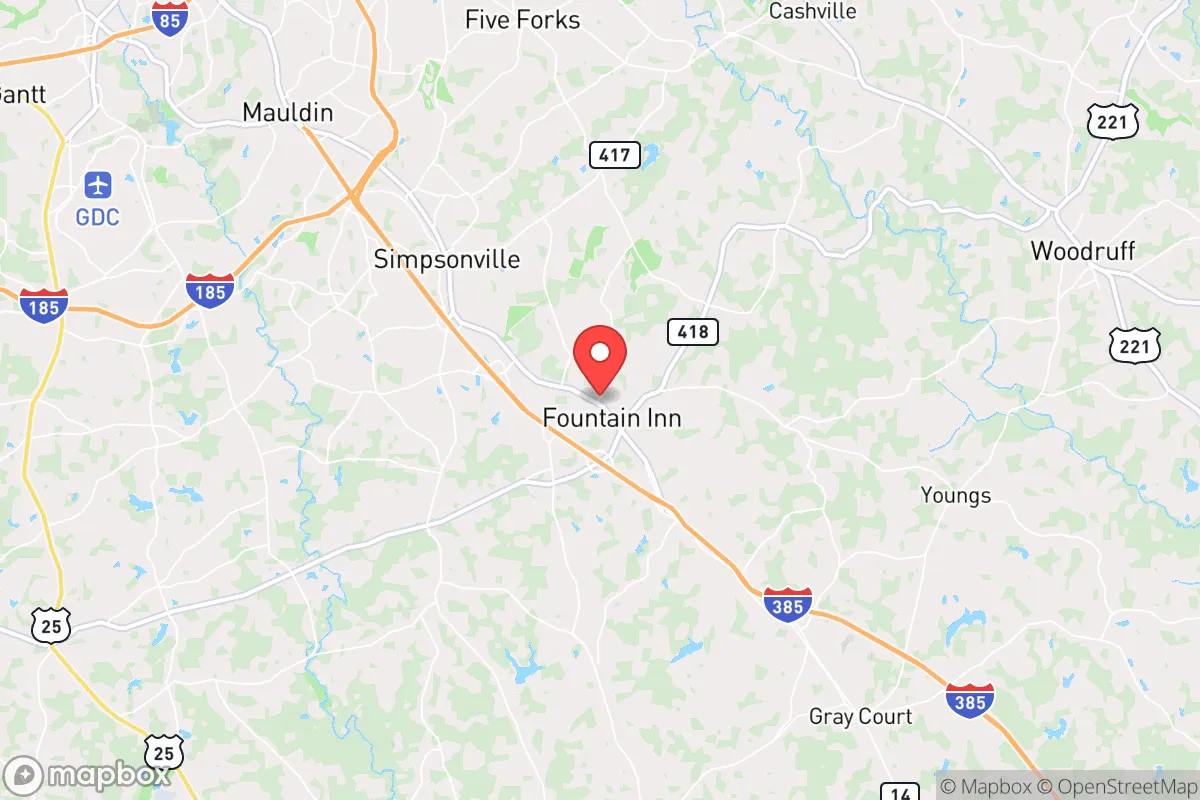
Drive ten miles east to Greenville proper, and you'll start to feel the difference—that city has been trending bluer over the last decade, with a more mixed political vibe and a lot of out-of-state transplants bringing their big-city ideas with them. Simpsonville and Mauldin, closer to Fountain Inn, still lean conservative but have seen some of that same cultural drift as new developments pop up. Head west toward Laurens County, and you're back in deep red territory, but Fountain Inn sits right at the edge of that shift. The contrast is real: in Fountain Inn, you can still have a conversation about property rights or school curriculum without someone lecturing you about "equity" or "systemic change." The local city council and school board elections here tend to be low-key affairs, with candidates who actually believe in limited government and local control—not the kind of people who want to impose top-down mandates from Columbia or Washington.
What this means for residents
For the people who live here, the political climate translates into a pretty straightforward daily life. You don't see a lot of government overreach in Fountain Inn—no heavy-handed zoning rules that tell you what you can do with your own land, no aggressive tax hikes disguised as "investments," and no school board members pushing critical theory nonsense on your kids. The local leadership generally understands that their job is to keep the lights on and the roads paved, not to engineer social change. That said, you do have to keep an eye on the county level—Greenville County as a whole is still conservative, but the urban growth is bringing more progressive voices into the mix, and they're starting to push for things like higher impact fees and more restrictive development rules. If you're the kind of person who values personal freedom and hates seeing bureaucrats meddle in your life, Fountain Inn is still a good bet, but you can't afford to get complacent.
One cultural distinction worth noting: Fountain Inn has a strong sense of community self-reliance that you don't find in the more transient suburbs. People here know their neighbors, and there's an expectation that you handle your own problems before running to the government for help. The local churches and civic groups are the real safety net, not some county program. If the political winds ever shift toward the kind of progressive agenda that's taken hold in places like Charleston or Asheville, you'd see a real fight here—not because people are angry, but because they genuinely believe that freedom and personal responsibility are worth defending. For now, though, Fountain Inn remains a place where common sense still rules, and that's worth holding onto.

State Political ClimatePolitical Climate in South Carolina
State Political AnalysisPolitical Environment in the State
South Carolina has long been a reliably red state, with Republicans holding every statewide office and supermajorities in both legislative chambers, but the political climate here is more layered than a simple partisan label suggests. The state’s overall lean is solidly conservative — Donald Trump won it by 11 points in 2024 — yet the past decade has seen a slow but steady shift in the Lowcountry and a few suburban pockets, driven by an influx of out-of-state transplants. Over the last 20 years, the GOP’s grip has tightened in the Upstate and Midlands, while Charleston and its surrounding areas have become more competitive, creating a dynamic where the state’s conservative foundation remains firm but faces new pressures from growth corridors.
Urban vs. rural divide
The political map of South Carolina is a textbook study in contrast. The rural counties — places like Oconee, Laurens, and Bamberg — vote overwhelmingly Republican, often by margins of 30 to 40 points. These areas are the backbone of the state’s conservative identity, driven by agriculture, manufacturing, and a strong sense of traditional values. On the flip side, the urban centers tell a different story. Charleston County has become a Democratic stronghold, flipping from purple to blue over the last decade as tech workers, retirees, and young professionals from blue states poured in. The city of Charleston itself is now reliably Democratic, while the surrounding suburbs like Mount Pleasant and Summerville remain more competitive but are trending left. Greenville is the conservative counterweight — the Upstate’s booming hub has stayed reliably red, with the city council and county commission firmly in GOP hands, though even here, the downtown core has seen a slight uptick in Democratic votes as new residents arrive. Columbia, the state capital, is a mixed bag: Richland County is solidly Democratic, while neighboring Lexington County is a GOP fortress. The rural-urban divide isn’t just about votes — it’s about culture, with rural areas feeling increasingly alienated from the coastal growth that’s reshaping the state.
Policy environment
South Carolina’s policy environment is broadly conservative, with a few notable wrinkles. The state has a flat income tax rate of 6.2%, which is being phased down to 6% by 2026, and no state estate tax, making it attractive for wealth preservation. Property taxes are among the lowest in the Southeast, thanks to a 2006 law that capped annual increases. On education, the state has expanded school choice through the Education Scholarship Trust Fund Program, which provides vouchers for private school tuition, though it’s been challenged in court. Healthcare policy is a mixed bag: South Carolina did not expand Medicaid under the Affordable Care Act, keeping the system lean, but the state has one of the highest rates of uninsured residents. Election laws are strict — voter ID is required, and early voting was expanded to two weeks in 2022, but same-day registration is not allowed. The state also passed a fetal heartbeat bill in 2023, banning most abortions after six weeks, which has been a major flashpoint. Overall, the policy environment leans toward limited government, but the state’s reliance on federal dollars for infrastructure and disaster recovery creates a tension between rhetoric and reality.
Trajectory & freedom
South Carolina is moving in a direction that most conservatives would call positive, but with some cautionary notes. On the freedom front, the state has been a leader in Second Amendment rights, passing constitutional carry in 2024, which allows law-abiding citizens to carry a concealed firearm without a permit. This was a major win for gun rights advocates. On parental rights, the state passed the Parents’ Bill of Rights in 2023, which requires schools to notify parents about curriculum changes and medical services, a direct response to the woke education trends seen elsewhere. However, there are concerns about medical autonomy: the state’s response to COVID-19 included some business closures and mask mandates, though these were less severe than in blue states. Property rights remain strong, with no statewide rent control and limited zoning restrictions outside of coastal areas. The biggest red flag for freedom-minded residents is the growing influence of federal money in state projects, particularly in transportation and broadband, which could come with strings attached. Overall, the trajectory is toward more personal liberty, but the influx of new residents from high-tax states could shift the political calculus over time.
Civil unrest & political movements
South Carolina has seen its share of political flashpoints, but they’ve been less dramatic than in other states. The Confederate flag removal from the Statehouse grounds in 2015 after the Charleston church shooting was a watershed moment that divided the state — many conservatives saw it as an overreach by political correctness, while others accepted it as a necessary step. Since then, immigration politics have been a simmering issue, with the state passing a law in 2024 that requires local law enforcement to cooperate with federal immigration authorities, a response to sanctuary city policies elsewhere. Election integrity has been a hot topic: the state’s 2020 election was certified without major controversy, but the GOP-controlled legislature tightened voting laws in 2021, including stricter absentee ballot rules. Protest activity has been minimal compared to states like Oregon or Georgia, with the most visible being the 2020 Black Lives Matter demonstrations in Charleston and Columbia, which were largely peaceful. On the right, the Moms for Liberty movement has been active in school board meetings, particularly in Lexington and Greenville, pushing back against critical race theory and LGBTQ curriculum. A new resident would notice that political activism here is more subdued than in swing states, but the undercurrents are real, especially around education and immigration.
Projection
Looking ahead 5 to 10 years, South Carolina is likely to remain a red state, but the margins could narrow in certain areas. The biggest driver of change is in-migration: the state is growing by about 100,000 people per year, with many coming from New York, New Jersey, and California. These newcomers tend to be more moderate or even left-leaning, and they’re concentrating in Charleston, Greenville, and the Myrtle Beach corridor. If this trend continues, the Lowcountry could become a swing region within a decade, while the Upstate and rural areas hold firm. The state’s demographic shift is also notable: the Hispanic population is growing rapidly, particularly in the Spartanburg and Greenville areas, which could introduce new political dynamics. On policy, expect continued battles over school choice, abortion, and election laws, with the GOP likely to hold the line but face increasing pressure from the business community to moderate on social issues. For someone moving in now, the state will feel conservative for the foreseeable future, but the cultural and political landscape will be more contested in the coastal and suburban areas than in the rural heartland.
For a conservative-leaning individual or family, South Carolina offers a strong foundation of low taxes, gun rights, and parental control in education, but the key is choosing your location wisely. If you want the most stable conservative environment, look to the Upstate — Greenville, Spartanburg, or Anderson — where the culture is deeply rooted and the political winds are less likely to shift. If you’re drawn to the coast, be prepared for a more mixed political climate in Charleston and Mount Pleasant, where the influx of out-of-state transplants is slowly changing the character of the area. The bottom line: South Carolina is still a safe bet for conservatives, but the state’s growth means you’ll need to be intentional about where you plant your flag. The rural areas and smaller towns offer the most predictable political environment, while the booming metros are where the future battles will be fought.
* Values derived from national, state, county, city and local statistics and may differ in a specific area. Last updated: 2026-04-30T00:28:31.000Z
Narrative content on this page is AI-generated and may contain mistakes. Verify any details that matter before acting on them.
ReloMaps may earn a commission from affiliate links at no extra cost to you.

