
Photo: Wikipedia
Political ClimatePolitical Climate in Frankfort, KY
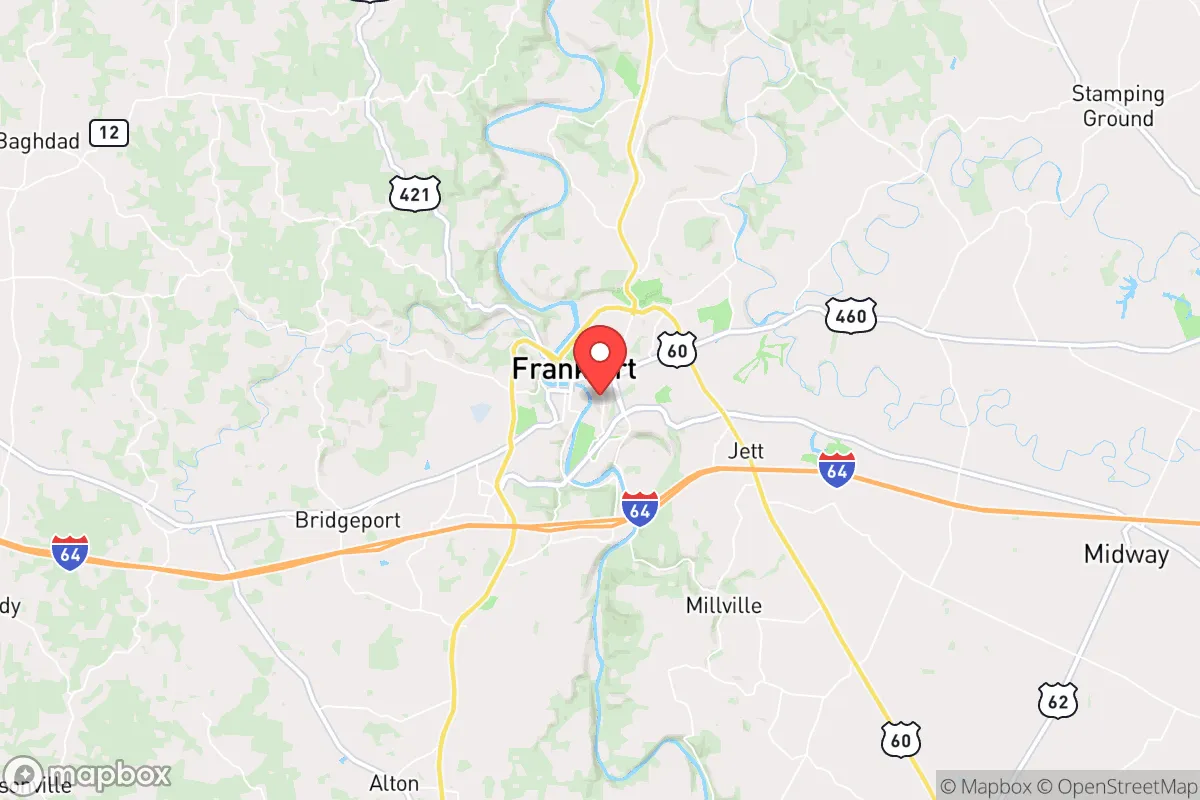
District shown is the primary district for this city’s centroid. Cities may span multiple districts.
Local Political AnalysisPolitical Analysis of Frankfort, KY
Frankfort’s political climate is deeply conservative, anchored by a Cook PVI of R+23 that puts it among the most reliably Republican state capitals in the country. For decades, this town has leaned red in local, state, and federal races, and while the city itself has a small government-worker base that can swing a bit more moderate, the surrounding Franklin County and the broader region vote overwhelmingly for conservative candidates. The trajectory here is steady—Frankfort isn’t flipping blue anytime soon, but you can feel a subtle shift as some younger folks and newcomers from Lexington (about 45 minutes east) bring progressive ideas that clash with the area’s traditional values.
How it compares
Compared to its neighbors, Frankfort is a conservative anchor in a sea of mixed politics. Head east to Lexington, and you’re in a blue-leaning urban hub with a Cook PVI of D+8, where progressive policies on housing, policing, and taxes are more common. Drive west to Louisville, and you’re in a solidly Democratic stronghold (D+14). But look south to Shelbyville or north to Owenton, and you’ll find even redder territory—places where the R+23 of Frankfort actually looks moderate. The contrast is sharp: Frankfort’s state government presence brings a slightly more diverse workforce, but the surrounding rural areas vote like the rest of Kentucky’s heartland. For a conservative, this means Frankfort is a good place to live if you want a mix of small-city amenities without the progressive overreach you’d get in Lexington or Louisville.
What this means for residents
For residents, the conservative lean means lower taxes, fewer regulations, and a government that generally stays out of your personal life—at least for now. Property taxes in Franklin County are among the lowest in the state, and there’s no city income tax, which is a big deal compared to Lexington’s 2.25% payroll tax. You’ll also see less of the “government knows best” attitude on things like business permits or home renovations. But there’s a growing concern: as the state capital, Frankfort is a target for progressive activists pushing for more state-level control over local issues, like zoning or school curriculum. If you value personal freedoms—like choosing your own healthcare, keeping your firearms, or deciding how to educate your kids—the current climate is solid, but you need to stay vigilant. The long-term worry is that as more people move in from blue areas, they’ll bring ballot initiatives that chip away at those rights.
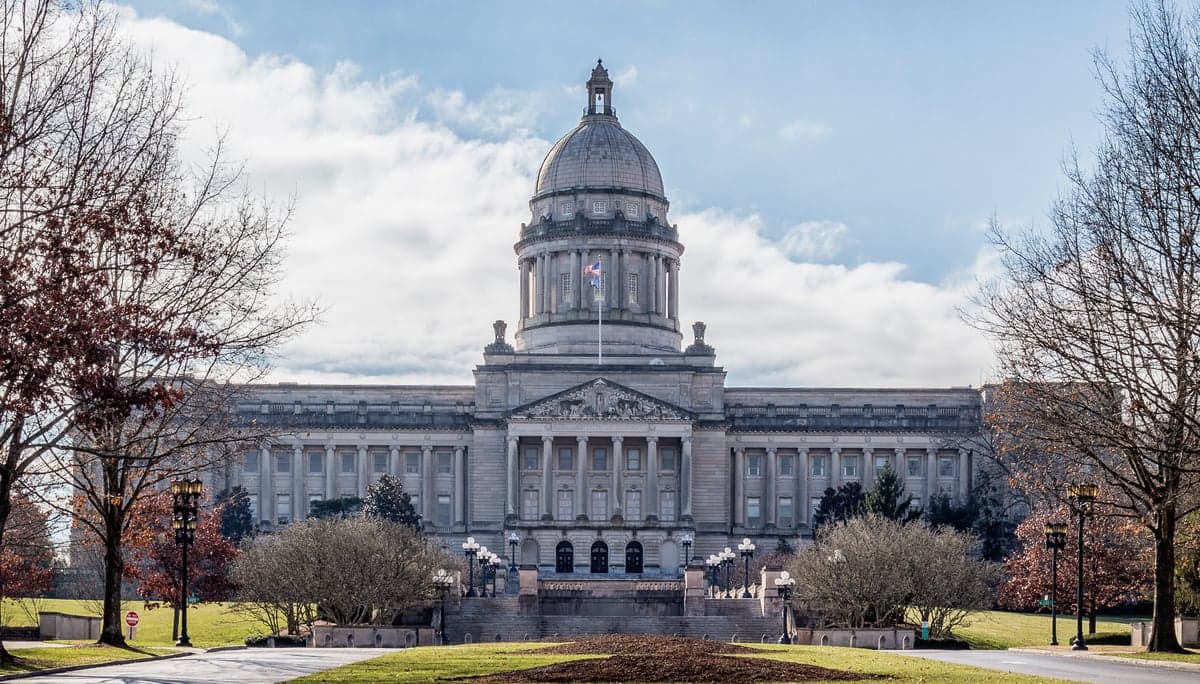
Culturally, Frankfort still feels like a place where neighbors know each other and community decisions are made face-to-face, not by distant bureaucrats. The Kentucky State Capitol sits right downtown, but the state government here is more about fiscal conservatism than social engineering—at least compared to places like Annapolis or Sacramento. You’ll find strong support for Second Amendment rights, with local gun shops and ranges doing steady business, and a general skepticism of federal overreach. The biggest policy distinction is the lack of a local income tax and a hands-off approach to small business regulation. If you’re looking for a place where you can live your life without the government breathing down your neck, Frankfort is still that town—but keep an eye on the newcomers from Lexington. They’re the ones pushing for change, and if they get their way, the R+23 might start to slip.

State Political ClimatePolitical Climate in Kentucky
State Political AnalysisPolitical Environment in the State
Kentucky has long been a reliably Republican state at the federal level, voting for the GOP presidential candidate by double digits in every election since 2000, but its state-level politics tell a more nuanced story. The dominant coalition is a mix of rural conservatives, evangelical Christians, and a growing number of suburban voters who have shifted rightward over the past two decades, while Louisville and Lexington remain Democratic strongholds. Over the last 10-20 years, the state has moved from a purple-trending-red state to a solidly red one, driven by the collapse of the old Blue Dog Democrat coalition in rural areas and the nationalization of local elections.
Urban vs. rural divide
The political map of Kentucky is a textbook case of the urban-rural split. Louisville (Jefferson County) and Lexington (Fayette County) are the two major Democratic anchors, consistently delivering 60%+ margins for Democratic candidates. These cities are home to the state's major universities, healthcare systems, and a growing professional class, which tends to lean left on social issues. In contrast, the rest of the state is overwhelmingly Republican. The Lexington suburbs, like Nicholasville in Jessamine County and Georgetown in Scott County, have flipped from purple to solid red over the past decade, as voters there have become more aligned with national conservative priorities. The Louisville exurbs, such as Shelbyville and Mount Washington, have also trended sharply right. Meanwhile, the eastern coal counties—like Pike, Harlan, and Perry—were once reliably Democratic but now vote Republican by 70-80% margins, driven by cultural conservatism and opposition to federal environmental regulations. The Bowling Green area (Warren County) is a growing conservative hub, fueled by a strong manufacturing base and a large, politically active Christian community.
Policy environment
Kentucky's policy environment is broadly conservative, but with some notable exceptions that concern freedom-minded residents. The state has a flat income tax that is being phased down from 5% to 4% by 2026, with a goal of eventual elimination—a positive trend for those seeking lower tax burdens. Property taxes are low, and there is no state-level estate tax. However, the state's sales tax is 6%, and it applies to most goods, which is a regressive burden. On education, Kentucky has a robust school choice movement, with the 2022 passage of a limited education savings account (ESA) program, though it was struck down by the state Supreme Court in 2023 on procedural grounds. The state's healthcare landscape is mixed: it expanded Medicaid under the Affordable Care Act, which many conservatives view as a federal overreach, but the state has also imposed work requirements for able-bodied adults. Election laws are relatively secure, with voter ID requirements in place and no widespread mail-in voting expansion, though the 2020 election saw some temporary changes that raised eyebrows among election integrity advocates. The state's gun laws are among the most permissive in the nation, with constitutional carry (permitless carry) enacted in 2019, and no red flag law—a clear win for Second Amendment supporters.
Trajectory & freedom
Kentucky is becoming more free in several key areas, but there are warning signs. The 2019 passage of constitutional carry was a major expansion of personal liberty, and the state has consistently resisted federal overreach on gun control. In 2023, the legislature passed a parental rights bill (HB 145) that requires schools to notify parents of any changes to a student's mental, emotional, or physical health, including gender identity—a strong step for family autonomy. The state also passed a religious freedom restoration act in 2013, which protects individuals from government actions that substantially burden their religious exercise. However, the state's medical autonomy took a hit during the COVID-19 pandemic, when then-Governor Andy Beshear (a Democrat) imposed sweeping executive orders, including business closures and mask mandates, which were later challenged in court. The legislature has since passed laws limiting the governor's emergency powers, a positive check on executive overreach. On property rights, Kentucky has a relatively strong right-to-farm law, but there are ongoing concerns about eminent domain abuse for pipeline projects, particularly in the eastern part of the state.
Civil unrest & political movements
Kentucky has seen its share of political flashpoints. The 2020 protests in Louisville over the death of Breonna Taylor were among the most intense in the nation, leading to the activation of the National Guard and significant property damage. These events galvanized both the progressive left and the conservative backlash, with the latter helping to solidify Republican control of the legislature. The state has a strong Second Amendment sanctuary movement, with dozens of counties passing resolutions declaring their intent to resist federal gun control. Immigration politics are less of a flashpoint than in border states, but there is a growing concern over the influx of migrants into cities like Louisville and Bowling Green, where refugee resettlement programs have been active. Election integrity remains a hot topic, with the 2020 election seeing a temporary expansion of absentee voting that many conservatives viewed as a vulnerability; the legislature has since tightened rules. There is no serious secession or nullification rhetoric in Kentucky, but the state's political culture is deeply skeptical of federal authority, particularly on environmental regulations affecting the coal industry.
Projection
Over the next 5-10 years, Kentucky is likely to become more conservative, but with a growing suburban-libertarian wing that may clash with the traditional rural evangelical base. In-migration is modest but accelerating, with people moving from high-tax states like Illinois and California into the Lexington and Bowling Green areas, drawn by lower housing costs and a more freedom-friendly environment. These newcomers tend to be fiscally conservative but socially moderate, which could create tension on issues like marijuana legalization (which is still illegal in Kentucky, though medical use was approved in 2023) and gambling expansion. The Louisville metro area will remain a Democratic island, but its influence will continue to wane as the rest of the state solidifies its red hue. The biggest risk to freedom is the potential for a future Democratic governor to use executive orders to bypass the legislature, as seen during the pandemic. However, the legislature's recent curbs on executive power are a strong safeguard. Expect the flat tax to continue its downward trajectory, and watch for a renewed push for school choice legislation.
For a new resident, the bottom line is this: Kentucky offers a high degree of personal freedom compared to many states, particularly on gun rights, religious liberty, and low taxes. The political climate is stable and conservative, with a government that generally respects individual autonomy. However, you'll need to be comfortable with a strong urban-rural divide, and you should be aware that the state's major cities—especially Louisville—have a very different political culture than the rest of the state. If you're looking for a place where your rights are respected and the government stays out of your life, Kentucky is a solid bet—just keep an eye on the governor's mansion and any future attempts to expand executive power.
* Values derived from national, state, county, city and local statistics and may differ in a specific area. Last updated: 2026-04-21T09:13:12.000Z
Narrative content on this page is AI-generated and may contain mistakes. Verify any details that matter before acting on them.
ReloMaps may earn a commission from affiliate links at no extra cost to you.

