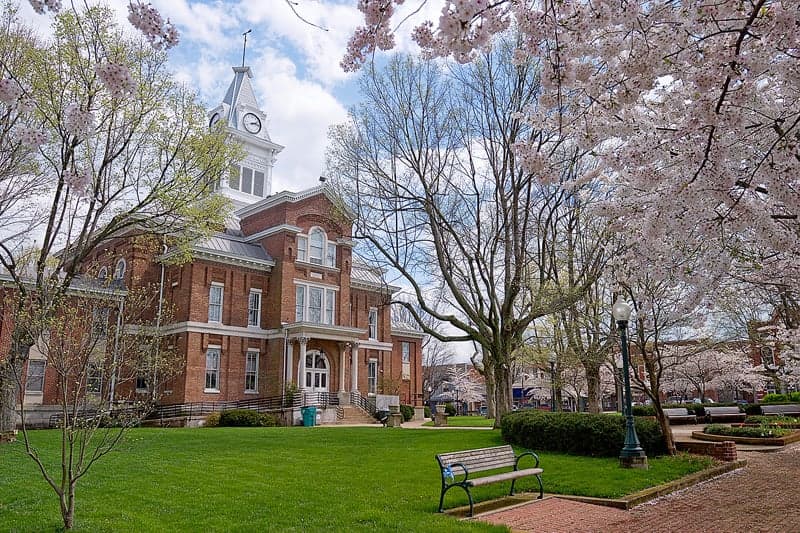
Photo: Wikipedia
Personal Sovereignty in Franklin, KY
Viable for self-reliance. Generally workable, though some barriers may limit total independence.
What does Personal Sovereignty tell us?
Personal Sovereignty measures your capacity for self-reliance and independence with minimal government friction. Higher scores mean fewer barriers between you and the way you want to live... but it assumes you have the space you need and good neighbors.
What does this tell us?
Personal Sovereignty measures your capacity for self-reliance and independence with minimal government friction. Higher scores mean fewer barriers between you and the way you want to live... but it assumes you have the space you need and good neighbors.
State Policy
Energy independence: Importer (60% of energy produced in-state)
Personal Liberty
Homesteading

Personal Liberty Analysis
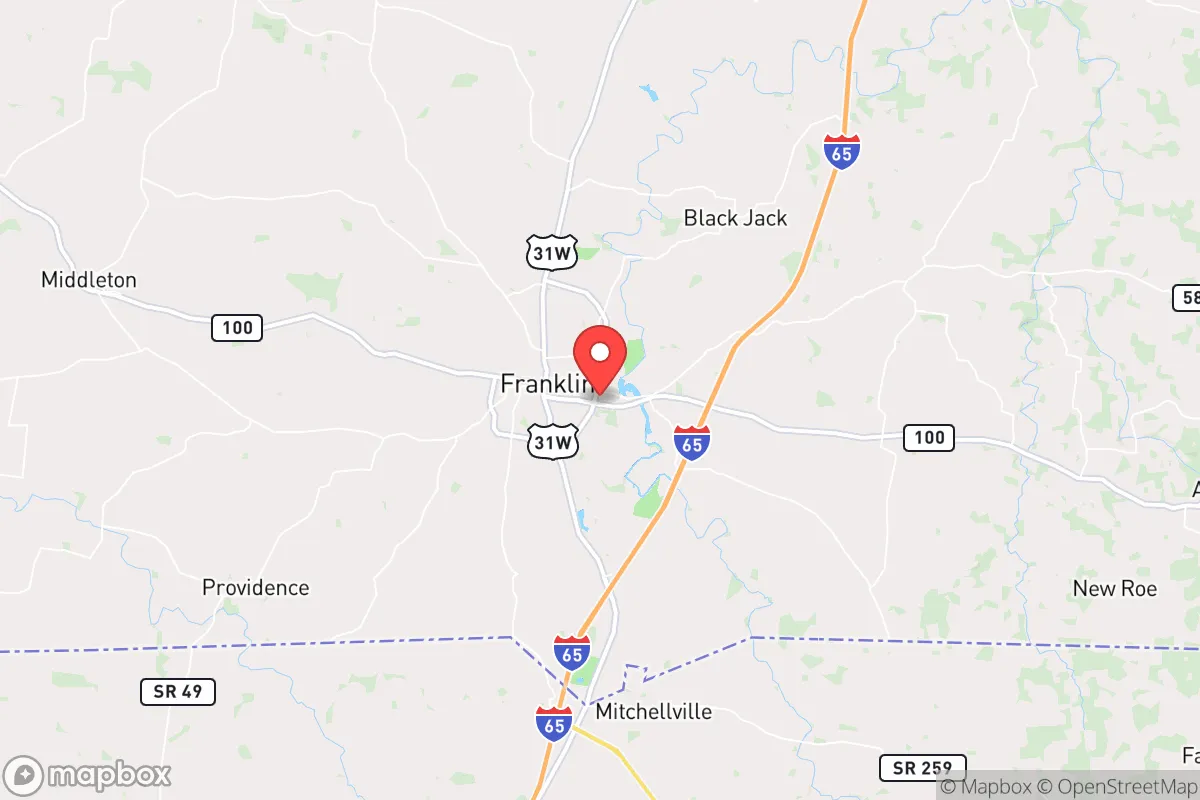
Franklin, Kentucky offers a notably high degree of personal sovereignty, particularly when viewed through a survivalist or prepper lens. The local culture and state legal framework actively resist the kind of government overreach that erodes individual autonomy, making it a strong candidate for those prioritizing self-reliance. While no location is a perfect fortress against federal or global instability, Franklin’s combination of low regulatory pressure, strong self-defense laws, and a community ethos of independence creates an environment where a person can largely live by their own rules.
Tax burden and regulatory posture for the self-reliant individual
Kentucky’s overall tax posture is favorable for those seeking to minimize government entanglement in their finances. The state levies a flat income tax rate of 4.5% as of 2026, with a scheduled reduction to 4.0% by 2027, which is a clear signal of a pro-autonomy fiscal direction. Property taxes in Simpson County, where Franklin sits, are among the most attractive in the nation, with an effective rate around 0.72% of assessed home value. This means a $200,000 property would incur roughly $1,440 annually in property taxes—far less than in high-tax states like New York or California. There is no state-level tax on Social Security benefits, and military pensions are fully exempt, which directly rewards long-term self-sufficiency. From a regulatory standpoint, Kentucky is a right-to-work state with minimal occupational licensing burdens compared to the coasts. The state’s building codes are less restrictive than many, and there is no state-level rent control or aggressive environmental zoning that would prevent a landowner from developing their property as they see fit. For the prepper, this translates to fewer bureaucratic hurdles when constructing a root cellar, installing a backup generator, or building a secure workshop.
Self-defense and gun law specifics in Franklin and Kentucky
Kentucky is a constitutional carry state, meaning no permit is required to carry a concealed firearm for anyone legally allowed to possess one. This is a foundational pillar of personal sovereignty, as it removes a layer of government permission from the exercise of self-defense. The state also has a strong "Stand Your Ground" law, codified in KRS 503.055, which eliminates any duty to retreat before using deadly force if you are in a place you have a legal right to be. This is critical for a survivalist mindset, as it legally empowers an individual to defend their home, vehicle, or person without fear of prosecution for failing to flee. Franklin itself has a gun-friendly culture, with local gun shops and ranges like the Franklin Gun Club supporting the community. There are no local ordinances in Franklin that ban firearms in public parks or restrict magazine capacity, which is common in more urbanized areas. For those concerned about government overreach, Kentucky also passed a Second Amendment Sanctuary resolution in many counties, including Simpson County, signaling local resistance to federal firearms restrictions. The legal environment here is designed to keep the power of self-defense squarely in the hands of the individual.
Self-reliance and homesteading viability in Simpson County
Franklin’s zoning and land-use policies are a major draw for anyone serious about homesteading or off-grid living. The city itself has standard residential zoning, but the surrounding unincorporated areas of Simpson County have very few restrictions. Lot sizes for agricultural or rural residential parcels commonly start at one to five acres, with many tracts of 10 to 40 acres available within a 15-minute drive of downtown. There are no county-wide bans on rainwater collection, composting toilets, or solar panel installation. In fact, Kentucky law (KRS 278.465) explicitly protects the right of property owners to install solar energy systems, preventing HOAs or local governments from outright prohibiting them. Raising livestock—chickens, goats, even a few head of cattle—is generally permitted on parcels over one acre in the county, with no need for a special permit. For those looking to reduce reliance on the grid, the local utility, Franklin Electric Plant Board, has net metering policies that allow homeowners with solar panels to sell excess power back at retail rates. The soil in Simpson County is fertile limestone-based loam, suitable for vegetable gardens and small orchards. Water access is reliable via private wells, which are common on rural properties and cost roughly $5,000 to $8,000 to drill. This combination of low-cost land, permissive zoning, and legal protections for self-sufficient infrastructure makes Franklin a viable location for a serious homesteading operation.
Personal liberties: parental rights, medical autonomy, speech, and property
Kentucky has a strong legal framework for parental rights, which is a key concern for those wary of government overreach in family matters. The state’s "Parental Rights" law (KRS 159.010) affirms that parents have the fundamental right to direct the upbringing, education, and healthcare of their children. This includes the ability to opt out of public school curricula or to homeschool without excessive state interference. Homeschooling in Kentucky requires only a simple notice of intent and an annual assessment, with no mandated curriculum approval or home visits. On medical autonomy, Kentucky has a mixed record: it is not a vaccine mandate state for adults, but it does require certain childhood vaccinations for school attendance, though religious and medical exemptions are available. The state has no forced quarantine laws that would allow indefinite detention without due process, a concern for many preppers. Free speech protections are robust, as Kentucky is in the Sixth Circuit, which has consistently ruled against prior restraint and viewpoint discrimination. Property rights are strongly protected under Kentucky’s "Private Property Protection Act," which requires the government to compensate landowners for any regulatory taking that reduces property value by 50% or more. This is a powerful check against overzealous zoning or environmental regulations that could otherwise be used to restrict how you use your land. For the individualist, these laws collectively create a buffer against the kind of top-down control seen in more progressive states.
Overall, Franklin, Kentucky provides a level of personal sovereignty that is increasingly rare in the United States. The combination of low taxes, constitutional carry, permissive homesteading laws, and strong protections for parental and property rights creates a legal environment where a self-reliant individual can operate with minimal government interference. While no place is immune from federal overreach or global instability, Franklin’s local culture and state-level legal framework are aligned with the values of personal responsibility and autonomy. For someone looking to build a life that is as independent as possible from the state, this area ranks favorably against other conservative strongholds in the South and Midwest, offering a practical balance of affordability, legal freedom, and community resilience.

* Values derived from national, state, county, city and local statistics and may differ in a specific area. Last updated: 2026-04-21T09:52:55.000Z
Narrative content on this page is AI-generated and may contain mistakes. Verify any details that matter before acting on them.
ReloMaps may earn a commission from affiliate links at no extra cost to you.

