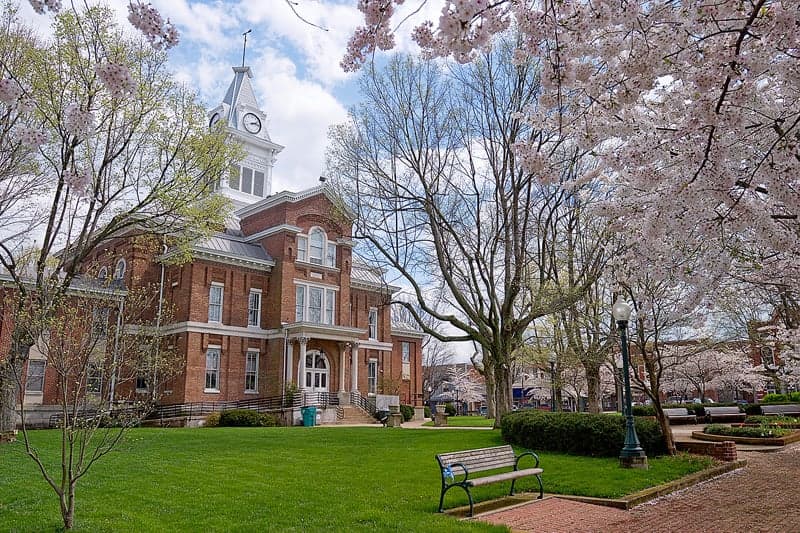
Photo: Wikipedia
Strategic Assessment of Franklin, KY
Workable tactical position. Some exposure to population density or targets, but generally defensible in a crisis.
What does the Strategic Assessment tell us?
Our Strategic Assessment grades tactical survivability of an area. Major population centers, military targets, fallout zones, natural disasters, and border exposure all drive risk — lower exposure means a more defensible position in a crisis.
This is heavily inspired by Joel Skousen's Strategic Relocation book. Highly recommended you checkout the book ($)What does this tell us?
Our Strategic Assessment grades tactical survivability of an area. Major population centers, military targets, fallout zones, natural disasters, and border exposure all drive risk — lower exposure means a more defensible position in a crisis.
This is heavily inspired by Joel Skousen's Strategic Relocation book. Highly recommended you checkout the book ($)Strategic Pillars

Key Distances
Regional Safe Places
Below is our recommended "safe zones" in Kentucky and the surrounding area based on our strategic heuristics. For most people, it's unrealistic to live in a “safe zone” full-time due to work, family or other personal reasons. They tend to be more rural. However, many of these areas are perfect for second homes and retreat properties that double as a vacation home or even a short-term rental.
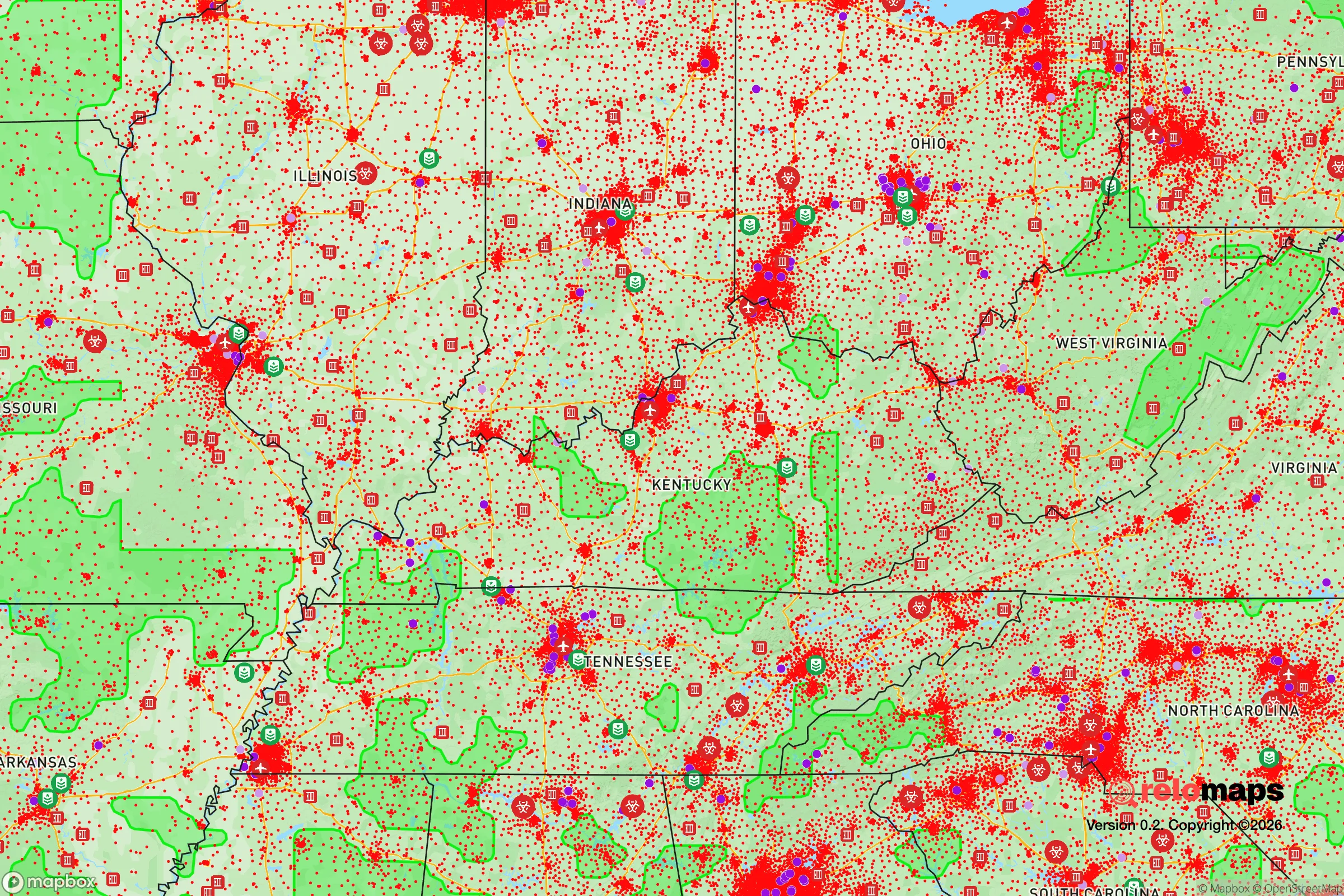
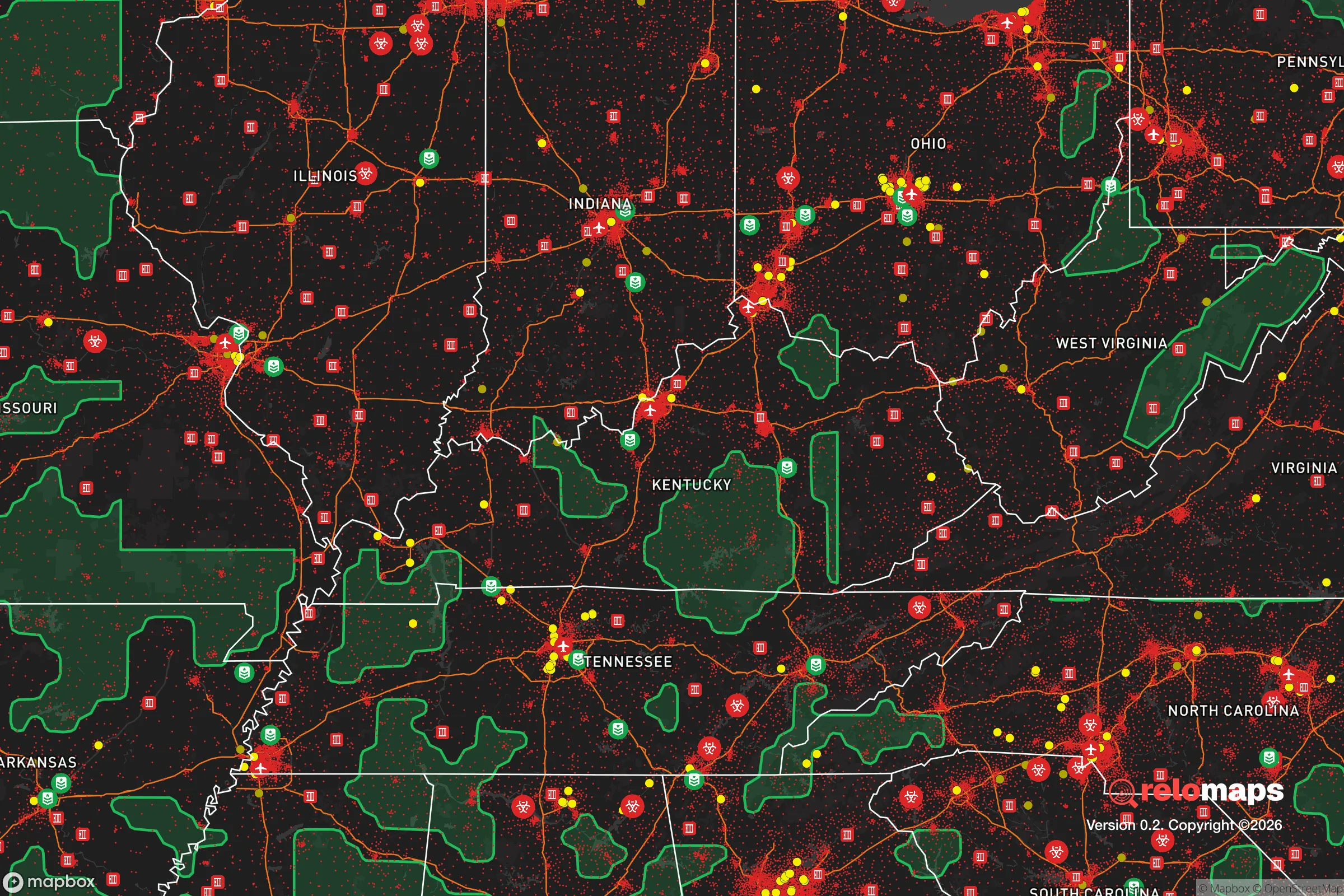


Important Note: For informational purposes only. This does not mean nothing bad ever happens in the green zones. Please use common sense. This is based on public data and modeled with AI. We tried to take a conservative approach but mistakes happen. We update this regularly as new information becomes available.
Solar Generator Recommendations
Backup power matters more here than in safer locations. We've picked three solar generators across budgets and capacity tiers — start with the budget unit if you only need a few essentials, or step up if you want to run a fridge and HVAC for days at a time.

Jackery Portable Power Station Explorer 300
Budget OptionPower on the Go: Weighing only 11 lbs, it's convenient to set up and store with book-sized foldable solar panels

BLUETTI Portable Power Station AC180
Designed for both indoor and outdoor scenarios, AC180 is highly capable as it has a robost capacity and continuous output power.

EF ECOFLOW DELTA Pro Ultra Power Station
Upgraded PickEcoFlow DELTA Pro Ultra is a whole-home energy system designed to grow with your family. Integrated with the Smart Home Panel 2, it scales to meet your evolving energy needs — keeping your home powered, intelligent, and secure through every stage of life.
We earn a commission, at no additional cost to you.
Strategic Assessment Analysis
Franklin, Kentucky sits in a sweet spot that few preppers fully appreciate: close enough to the economic engine of Nashville to build a life, but far enough from the blast zones and crowd-dense chaos that make major metros a liability in a crisis. This Simpson County town of roughly 8,500 people offers a strategic blend of agricultural self-sufficiency, low population density, and access to regional resources without the target-rich environment of a city like Bowling Green or Nashville. For a relocator thinking in terms of decades, not just next year, Franklin provides a foundation that can be hardened without requiring a mountain bunker or a private militia.
Geographic position and natural advantages for long-term security
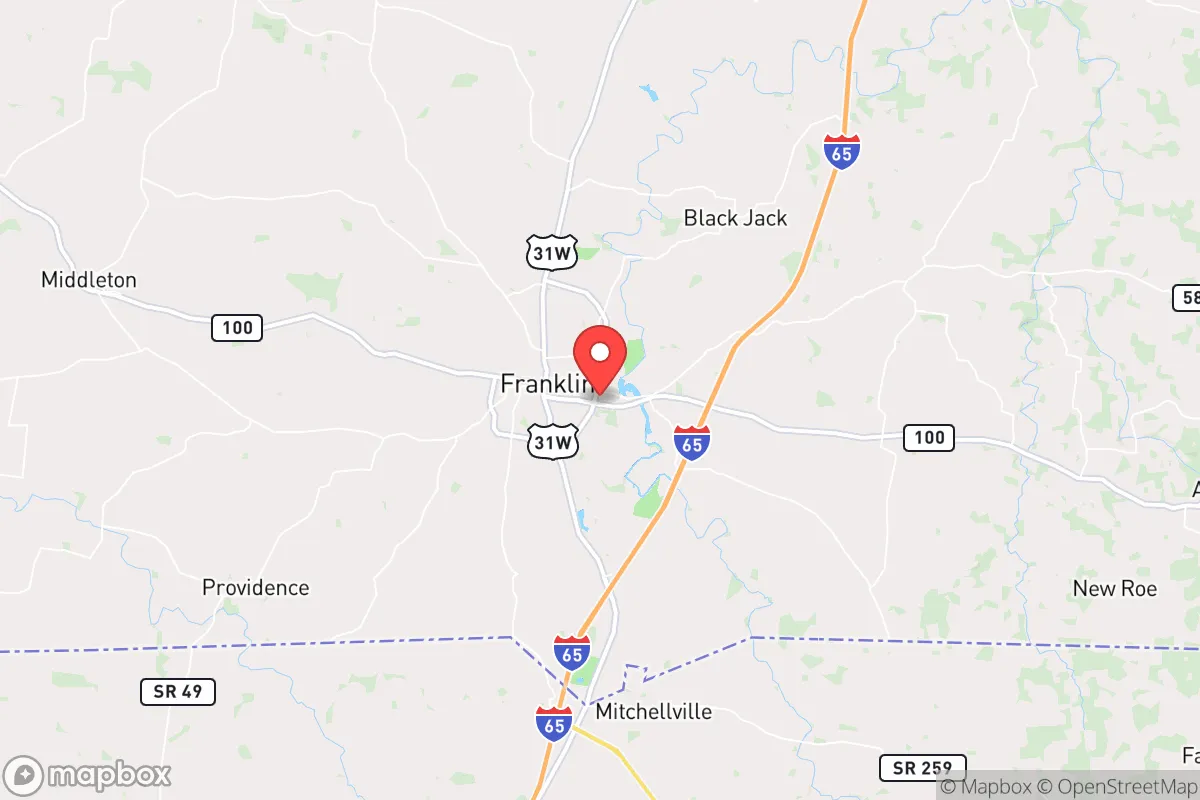
Franklin’s location at the intersection of I-65 and US 31-W is a double-edged sword, but for the prepared, it’s a net positive. You’re 40 miles north of Nashville and about 30 miles south of Bowling Green, placing you within a two-hour drive of two major population centers that would become humanitarian crises in a collapse scenario. However, the immediate area around Franklin is dominated by farmland, rolling hills, and the Barren River Lake watershed to the east. This topography offers natural defensibility: the land is not flat enough for easy mechanized movement but not so rugged that it isolates you from trade or resupply. The Barren River Lake and the Green River system provide a reliable freshwater source that isn’t dependent on municipal treatment plants, and the local aquifer is generally good for shallow wells. The climate is temperate, with four distinct seasons, meaning you can grow food year-round with basic season extension techniques, and you won’t freeze to death in a winter without grid power. The region’s low seismic risk and absence of hurricane or wildfire threats mean your infrastructure is less likely to be wiped out by a natural disaster before you even face the man-made ones.
Risks, exposures, and proximity to fallout-relevant landmarks
No location is without vulnerabilities, and Franklin has a few that demand attention. The most obvious is I-65, a major north-south evacuation route that would become a parking lot of desperate people fleeing Nashville in a crisis. If you live within a mile of that corridor, you’re in the path of refugee flow, looting, and potential military checkpoints. The Bowling Green area, 30 miles north, is home to a General Motors plant and a major logistics hub; in a national emergency, that becomes a target for both civil unrest and potential sabotage. More concerning is the Fort Campbell military installation, roughly 50 miles west of Franklin. While the base itself is a source of stability in normal times, in a scenario involving mass casualty events or foreign conflict, it becomes a high-value target for air or missile strikes. The Tennessee Valley Authority’s power infrastructure runs through the region, including transmission lines and substations that could be targeted for grid-down attacks. Franklin itself has no major industrial hazards, but the Kentucky-Tennessee border region is a corridor for rail transport of hazardous materials, including anhydrous ammonia and chlorine, which could create localized contamination zones if a derailment occurs during a crisis. The proximity to Nashville (a major city with a population over 700,000) means that any pandemic, biological event, or civil unrest originating there will ripple southward within hours. You are not in a remote mountain redoubt; you are in a buffer zone that will see secondary effects.
Practical resilience for a relocator: food, water, energy, and defensibility
For a single individual or a family looking to build a resilient homestead, Franklin offers a realistic path. Agricultural land is still affordable compared to Williamson County, Tennessee, or even Warren County, Kentucky. You can find 5-10 acre parcels with existing wells and septic within 15 minutes of town for under $100,000, which is a fraction of what you’d pay near a major city. The local soil is primarily silt loam, well-suited for row crops, gardens, and pasture. You can raise chickens, goats, and even a few head of cattle without needing a massive operation. Water is the critical resource, and the Barren River Lake watershed provides a backup source if your well goes dry or the grid fails. The lake is large enough to support fishing and small-scale irrigation, but small enough that it won’t attract a massive refugee camp. For energy, solar is viable; the region gets about 4.5 peak sun hours per day, enough to run a modest off-grid system for lights, refrigeration, and communications. The local climate means you’ll need a backup generator for winter weeks with heavy cloud cover, but wood heating is practical given the abundance of hardwood forests in the area. Defensibility is where Franklin shines for the prepared relocator. The town itself is small and walkable, with a historic square that can be secured with minimal manpower. The surrounding rural areas offer dead-end roads, creek crossings, and natural chokepoints that make it hard for large groups to move through undetected. The local sheriff’s office is small but responsive, and the community is tight-knit enough that strangers are noticed quickly. You won’t have the anonymity of a city, which is a feature, not a bug, in a crisis. The Franklin-Simpson County Emergency Management runs regular drills and has a functional communication network, but don’t expect FEMA to show up in the first 72 hours. You need to be self-sufficient for at least two weeks, ideally a month, and the area supports that if you plan ahead.
The overall strategic picture for Franklin is one of calculated risk. You are not in a fortress, but you are in a position that allows you to build one over time. The proximity to Nashville is a double-edged sword: it gives you access to medical care, specialized supplies, and a larger job market during stable times, but it also means you are in the secondary blast radius of any major event that hits the city. The key is to buy land outside the I-65 corridor, preferably east of town toward the lake or west toward the rural areas near the Tennessee line. Build your water storage, plant your garden, and establish relationships with local farmers and tradesmen before you need them. Franklin won’t save you from a direct nuclear strike on Fort Campbell or a pandemic that sweeps through the state, but it gives you a fighting chance to ride out the first wave of chaos and then adapt. For a conservative-minded relocator who wants to be part of a community that still values self-reliance and neighborly mutual aid, this is one of the better options in the mid-South. Just don’t expect to be invisible; you’ll be known, and that reputation will be your best security asset.

* Values derived from national, state, county, city and local statistics and may differ in a specific area. Last updated: 2026-04-21T09:52:55.000Z
Narrative content on this page is AI-generated and may contain mistakes. Verify any details that matter before acting on them.
ReloMaps may earn a commission from affiliate links at no extra cost to you.

