Photo: Wikipedia
Quality of Life in Franklin, KY
A high quality of life with strong walkability, manageable living costs, healthy neighborhood signals, and solid amenity access.
What does Quality of Life tell us?
Quality of Life blends cost of living, nearby amenities, socioeconomic signals, and neighborhood character. City-level scores represent the whole municipality; individual neighborhoods can differ.
What does this tell us?
Quality of Life blends cost of living, nearby amenities, socioeconomic signals, and neighborhood character. City-level scores represent the whole municipality; individual neighborhoods can differ.
Cost of Living
22% below national average
The Real Cost of Living in Franklin, KY for 2026
| Tier | Individual | Family (4) |
|---|---|---|
| Survival | $17k | $31k |
| Comfortable | $33k | $49k |
| Luxury | $83k+ | $129k+ |
| Elite (Top 5%) | $98k+ | $152k+ |
114%
The Area Signal
A metric tracking the socioeconomic signals of the area.
Hobbies
Explore the areaGroceries
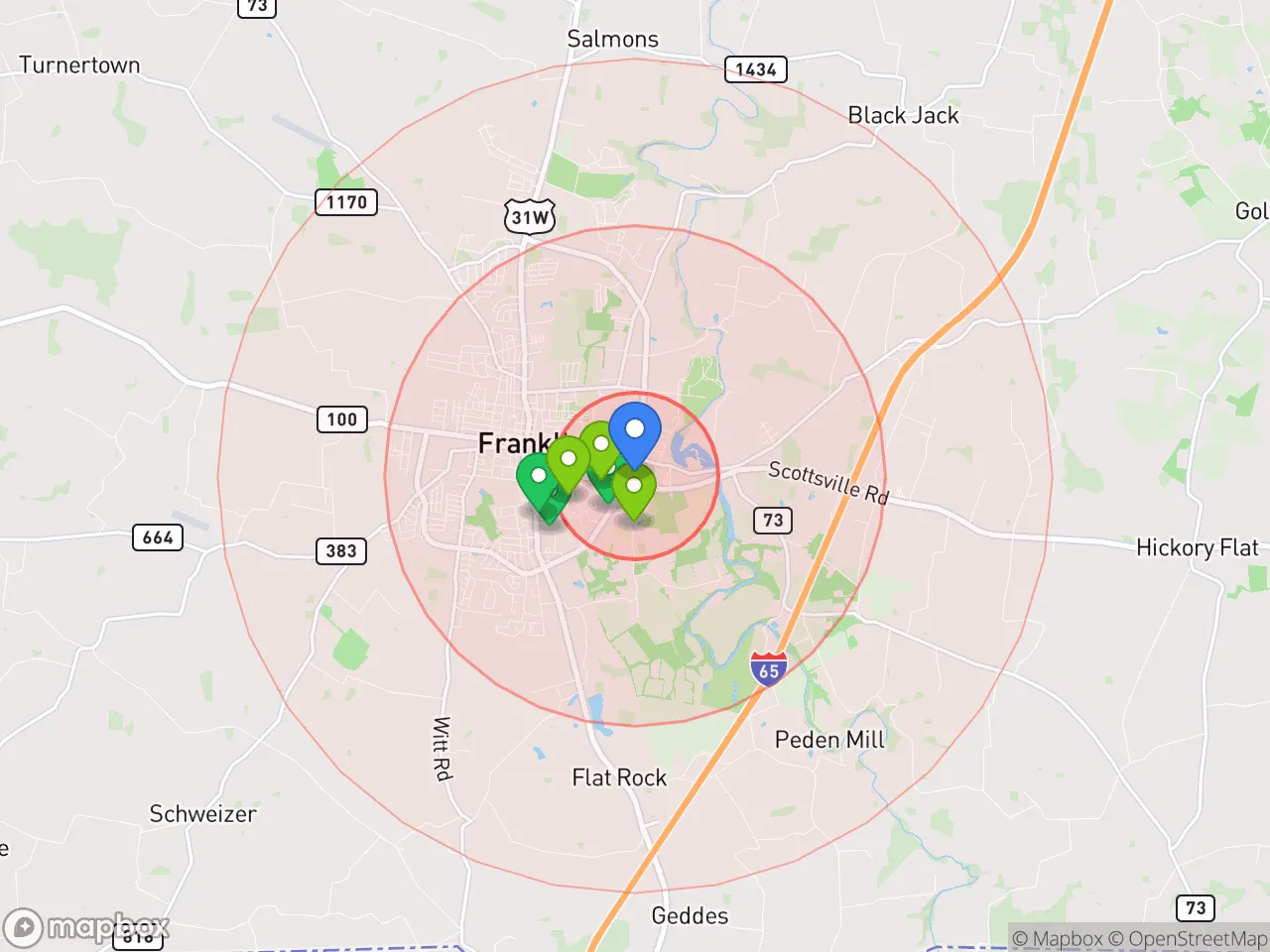
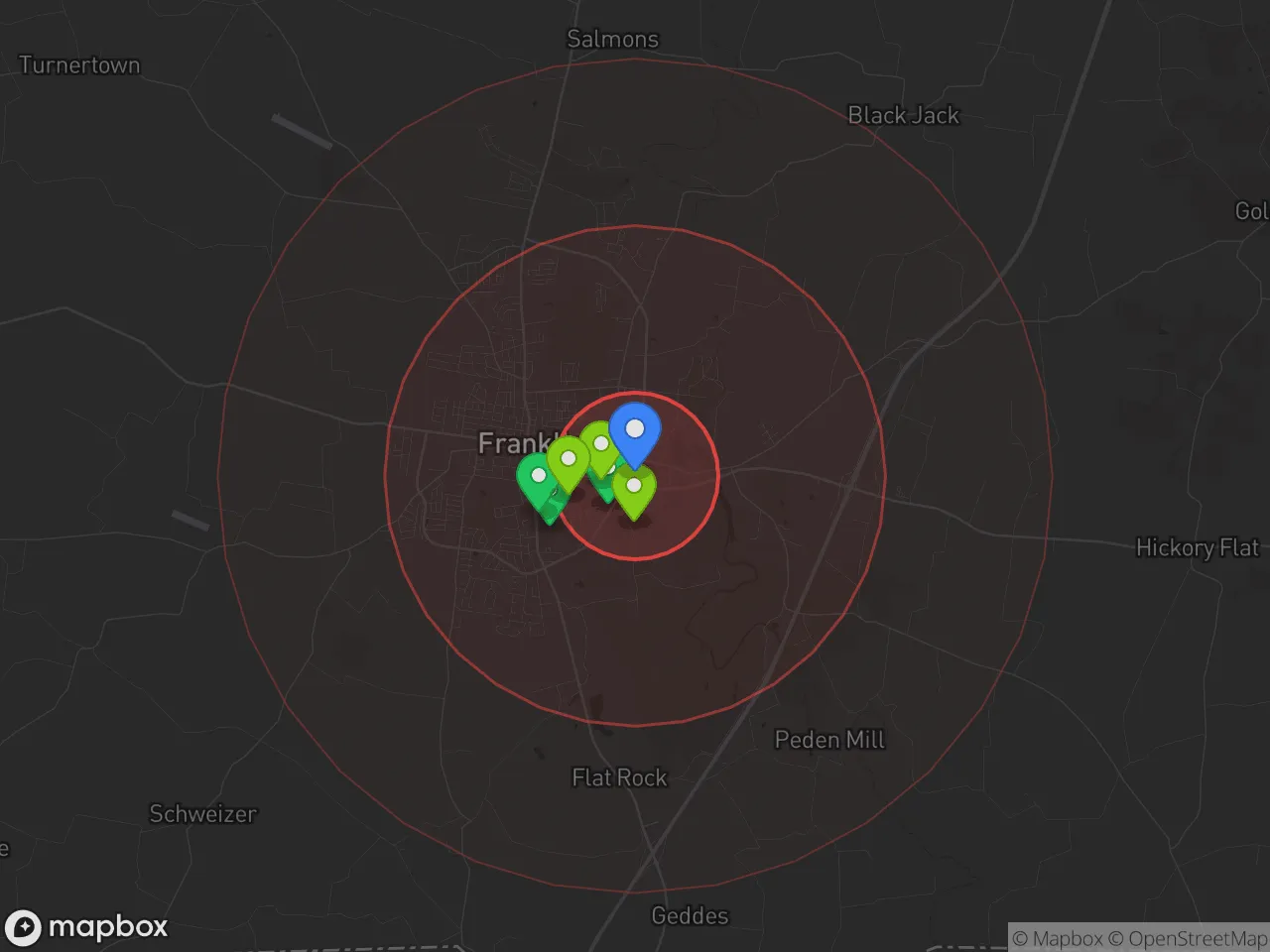
3 within 10 miles
Gas
18 within 10 miles
Hospital
6 within 20 miles
Airport
BNA — Nashville International
Post Office
USPS — Franklin, KY
Critical Amenities
Quality-of-Life Analysis
Franklin, Kentucky, presents a notably affordable quality of life that attracts a mix of young families, retirees, and commuters seeking a lower cost of living without sacrificing small-town character. With a cost of living index of 78 (22% below the U.S. average), the area’s median home value of $170,400 and median rent of $1,034 place it well below national benchmarks, drawing residents from pricier nearby cities like Bowling Green and Nashville. The population skews toward middle-income households and long-term locals, creating a stable, family-oriented community where homeownership is attainable for most earners.
Cost of living, housing affordability, and how Franklin compares to nearby areas
Franklin’s housing market is a primary driver of its affordability, with a median home value of $170,400—roughly 40% lower than the national median—and a median rent of $1,034, which is about 15% below the U.S. average. This makes homeownership feasible for households earning the local median income, and the gap widens when compared to Nashville (median home value ~$430,000) or Bowling Green (~$240,000). The average commute of 18.9 minutes is notably short, reflecting the town’s compact layout and limited traffic congestion, a perk for those working locally or commuting to Franklin’s industrial employers like Fruit of the Loom and Mitsubishi Electric. While property taxes in Simpson County are moderate (around 0.75% of assessed value), residents should note that Kentucky’s state income tax (flat 4.5% as of 2026) adds to overall costs, though the low housing base keeps total expenses manageable. Compared to rural Kentucky peers, Franklin’s prices are slightly elevated due to its proximity to I-65 and Nashville, but it remains a clear value play for buyers priced out of the Tennessee market.
What daily life is like for families: schools, amenities, and local rhythm
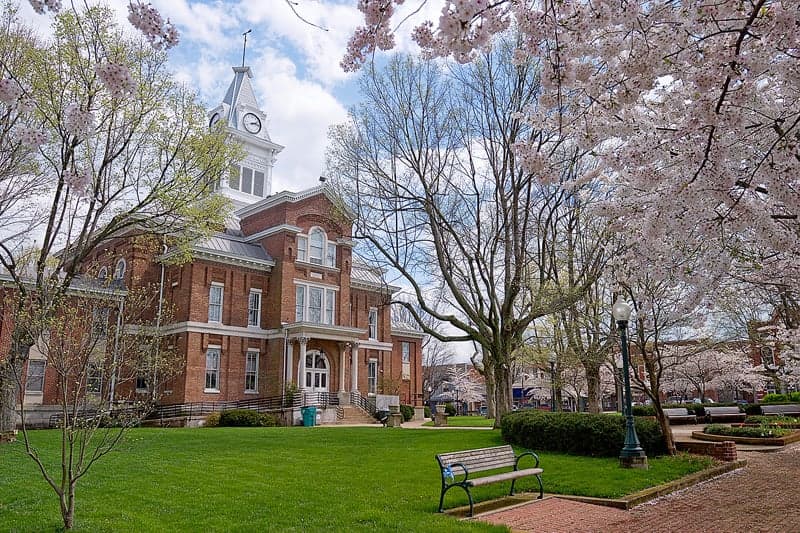
Daily life in Franklin centers on a walkable downtown anchored by the historic Simpson County Courthouse, with local staples like Franklin-Simpson High School (rated above average by the Kentucky Department of Education) and a handful of grocery and retail options. The Franklin-Simpson Park offers sports fields, walking trails, and a community pool, while the Blackwell Run Golf Club provides recreational golf. For shopping and dining, residents often drive 20 minutes north to Bowling Green or 45 minutes south to Nashville for broader choices, but the town itself supports a few locally owned restaurants (e.g., Brickyard Cafe) and a weekly farmers market. The school system, Simpson County Schools, serves about 2,800 students with a student-teacher ratio of 16:1, and the district’s graduation rate hovers around 92%. Commuters appreciate the short drive to I-65, which links to both metro areas, though public transit is limited to a small demand-response service. The overall pace is unhurried, with community events like the Franklin Fall Festival and high school football games drawing consistent participation.
Franklin is best suited for those who prioritize low housing costs, a short commute, and a quiet, family-centered environment over urban nightlife or diverse dining scenes. Retirees on fixed incomes will find the affordability appealing, while remote workers and Nashville commuters can leverage the 18.9-minute average commute and lower home prices to stretch their budgets. Young families benefit from the solid school system and safe streets, though those seeking high-end amenities or cultural density may feel limited. For anyone willing to trade metropolitan buzz for financial breathing room and a slower pace, Franklin offers a practical, grounded quality of life.

Crime in Franklin, KY
Lower crime rates than 84% of comparable U.S. locations.
Violent CrimeViolent Crime Analysis
Property CrimeProperty Crime Analysis
Crime Analysis
Franklin, Kentucky, reports a violent crime rate of 150.9 incidents per 100,000 residents and a property crime rate of 678.9 per 100,000, placing it below national averages for both categories. These figures suggest a community with a lower-than-typical risk of serious offenses, though property crime remains a more frequent concern for households and businesses. The city’s safety profile is shaped by its position as a small, semi-rural county seat in Simpson County, where law enforcement resources and community cohesion play a significant role in maintaining order.
Crime in context
Franklin’s violent crime rate of 150.9 per 100,000 is roughly half the national average of 380 per 100,000, and significantly below Kentucky’s state average of approximately 230 per 100,000. Property crime in Franklin, at 678.9 per 100,000, also falls under the national benchmark of 1,954 per 100,000 and is comparable to other small Kentucky towns like Glasgow or Russellville. These numbers indicate a relatively safe environment, though residents should note that property offenses—such as theft and burglary—are the most common crime type, consistent with statewide trends. The city benefits from a local police department and a county sheriff’s office that maintain visible patrols, and the absence of a large, progressive urban justice system—often associated with higher recidivism and softer sentencing—helps keep crime rates in check. In contrast to larger metro areas where liberal district attorneys may prioritize offender rehabilitation over public safety, Franklin’s judicial environment leans conservative, emphasizing accountability and victim rights.
What residents experience
Daily life in Franklin is generally quiet, with most crime concentrated in specific areas rather than affecting the entire community. Residents report that violent incidents like assault or robbery are rare, and the city’s low population density (around 10,000 people) reduces opportunities for random street crime. Property crime, however, can be a nuisance: unlocked vehicles, sheds, and porches are occasional targets, particularly in neighborhoods near major roads like US-31W or I-65. The Franklin Police Department publishes annual reports showing that larceny-theft accounts for the bulk of property crime, while burglary and motor vehicle theft are less common. Community watch programs and a responsive police force—with an average response time under 10 minutes—help mitigate these risks. For families and retirees, the overall safety picture is positive, but basic precautions like locking doors and securing valuables are still advised.
Neighborhood-level variation in Franklin is modest but worth noting. Older, established areas near downtown—such as those around West Madison Street or the historic district—tend to have lower crime rates due to higher owner-occupancy and neighborly vigilance. Newer subdivisions on the outskirts, like those near Franklin-Simpson High School, also report few incidents. In contrast, rental-heavy pockets along South Main Street or near the industrial park see slightly higher property crime, likely linked to transient populations. The city’s rural character and lack of a large metro-area spillover effect mean that violent crime is not a widespread concern, and most residents feel safe walking or driving at night. Overall, Franklin offers a secure environment that aligns with its small-town identity, provided residents stay aware of property crime risks.
* Values derived from national, state, county, city and local statistics and may differ in a specific area. Last updated: 2026-04-21T09:52:55.000Z
Narrative content on this page is AI-generated and may contain mistakes. Verify any details that matter before acting on them.
ReloMaps may earn a commission from affiliate links at no extra cost to you.

