Quality of Life in Franklin, WI
A high quality of life with strong walkability, manageable living costs, healthy neighborhood signals, and solid amenity access.
What does Quality of Life tell us?
Quality of Life blends cost of living, nearby amenities, socioeconomic signals, and neighborhood character. City-level scores represent the whole municipality; individual neighborhoods can differ.
What does this tell us?
Quality of Life blends cost of living, nearby amenities, socioeconomic signals, and neighborhood character. City-level scores represent the whole municipality; individual neighborhoods can differ.
Cost of Living
17% above national average
The Real Cost of Living in Franklin, WI for 2026
| Tier | Individual | Family (4) |
|---|---|---|
| Survival | $21k | $40k |
| Comfortable | $67k | $98k |
| Luxury | $160k+ | $248k+ |
| Elite (Top 5%) | $188k+ | $292k+ |
110%
The Area Signal
A metric tracking the socioeconomic signals of the area.
Hobbies
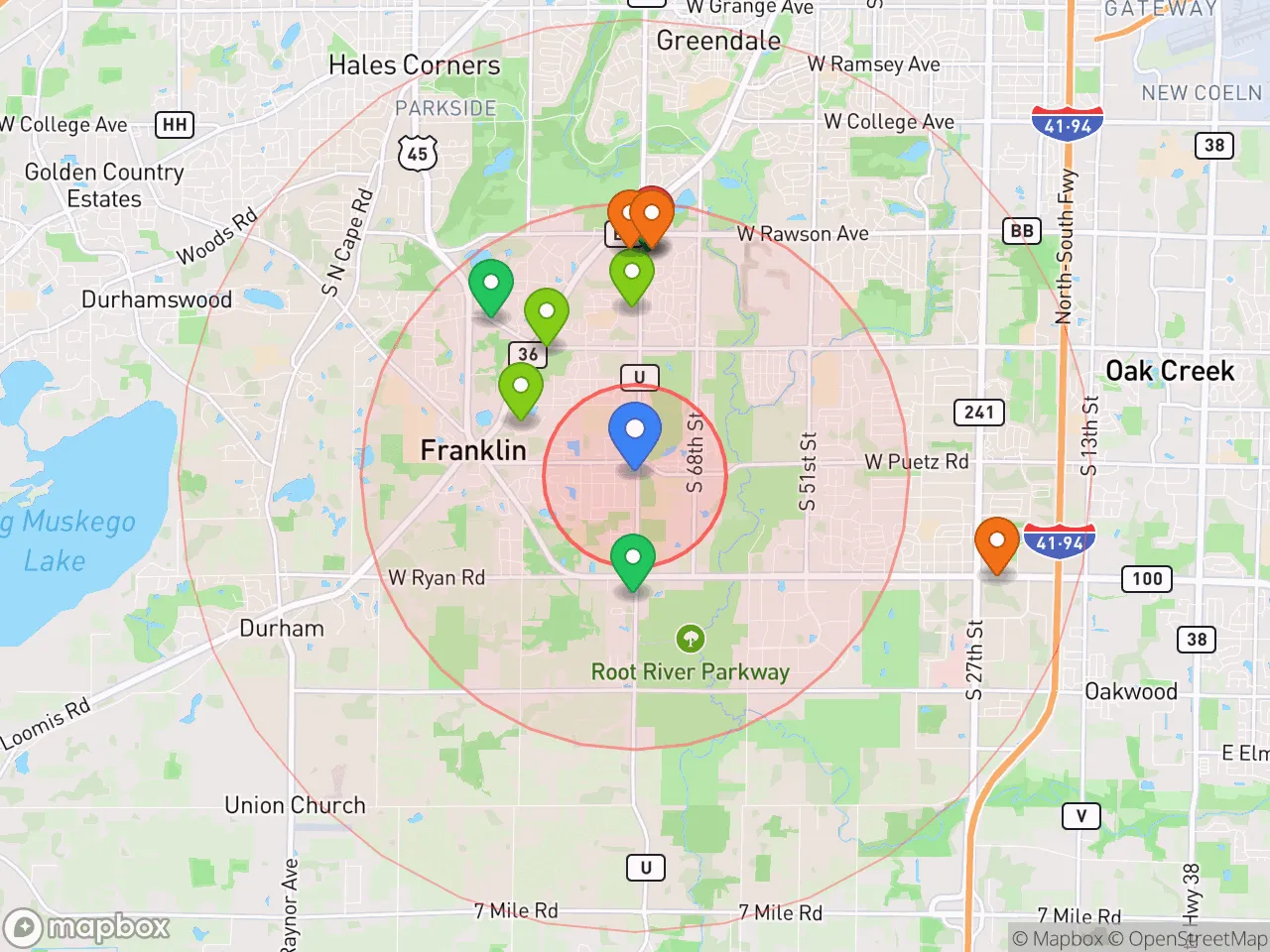
Explore the areaGroceries
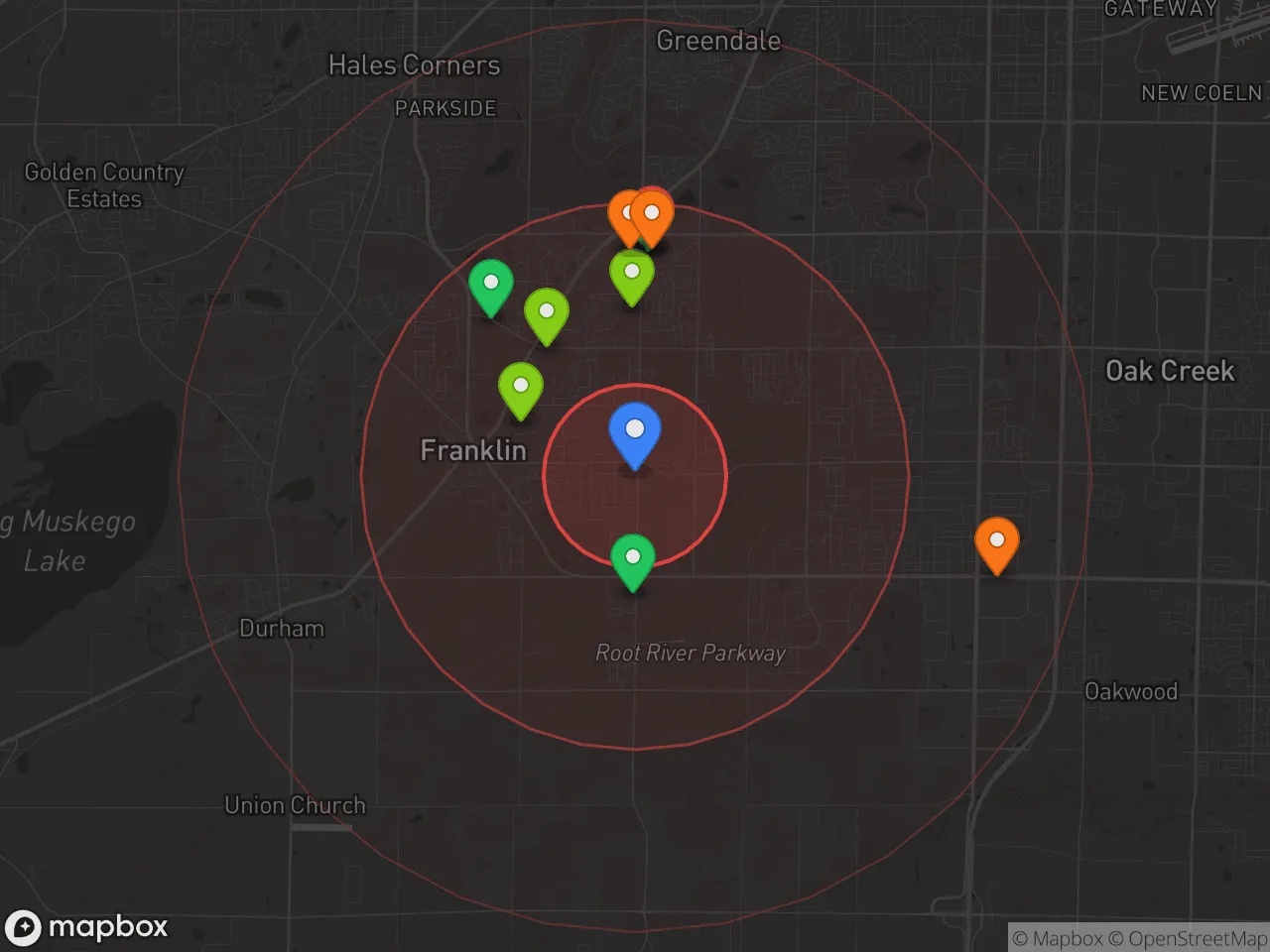
5 within 10 miles
Gas
20 within 10 miles
Hospital
20 within 20 miles
Airport
ORD — O'Hare International
Post Office
USPS — Franklin, WI
Critical Amenities
Quality-of-Life Analysis
Franklin, Wisconsin, presents a quality of life defined by suburban affluence and family-oriented stability, with a cost of living index of 117 (17% above the U.S. average) that reflects its premium position in the Milwaukee metro area. The city attracts a mix of established professionals, growing families, and empty-nesters drawn to its highly rated schools, low crime rates, and access to both urban employment and outdoor recreation. With a median household income well above the national figure, Franklin’s residents typically prioritize space, safety, and community amenities over the lower costs found in more distant exurbs.
Cost of living, housing affordability, and how Franklin compares to nearby areas
Franklin’s housing market is the primary driver of its above-average cost of living. The median home value sits at $343,400, significantly higher than the national median of roughly $350,000 but notably less than the $400,000+ averages seen in neighboring Oak Creek or the more exclusive suburbs of Mequon and Whitefish Bay. Renters face a median monthly rent of $1,325, which is competitive for the region—comparable to Greenfield but about $150–$200 cheaper than downtown Milwaukee. While property taxes in Milwaukee County are among the highest in Wisconsin, Franklin’s tax rate is slightly lower than the county average, offering a relative value for the quality of schools and services received. The average commute of 24.5 minutes is manageable, with most residents driving to jobs in Milwaukee (20–25 minutes), Oak Creek’s industrial corridor, or Racine. For those willing to trade space for lower costs, nearby South Milwaukee or Cudahy offer cheaper homes but less green space and lower school ratings.
What daily life is like for families: schools, parks, and local amenities
Daily life in Franklin revolves around its well-regarded Franklin Public School District, which consistently earns A ratings from Niche and features strong programs at Franklin High School, including Advanced Placement courses and competitive athletics. The city maintains over 20 parks, with the 200-acre Franklin Park and the Oak Leaf Trail providing extensive walking, biking, and sports facilities. The Franklin Public Library and the Franklin Fieldhouse—a community recreation center—anchor family activities, while the nearby Milwaukee County Sports Complex hosts tournaments and leagues. Retail and dining cluster along Highway 36 (S. 27th Street) and Rawson Avenue, with national chains like Target and Kohl’s supplemented by local staples such as the Franklin Farm Market (summer weekends) and the family-run Franklin Deli. The city’s low violent crime rate—roughly half the national average—and well-lit streets contribute to a strong sense of safety, making it a common choice for parents seeking a stable environment for raising children. Weekend rhythms often include youth sports at the Franklin Sports Complex, visits to the nearby Wehr Nature Center, or quick trips to downtown Milwaukee for museums and dining.
Franklin is best suited for families and professionals who value strong public schools, low crime, and suburban space over urban nightlife or ultra-low housing costs. Empty-nesters downsizing from larger homes in the area also find the city’s ranch-style housing stock and proximity to medical facilities appealing. Those who prioritize walkability, a vibrant downtown, or a shorter commute to downtown Milwaukee may prefer Bay View or Wauwatosa, but for a balanced, family-first suburban lifestyle with solid amenities and reasonable commute times, Franklin consistently ranks as one of the Milwaukee area’s most desirable communities.

Crime in Franklin, WI
Lower crime rates than 81% of comparable U.S. locations.
Violent CrimeViolent Crime Analysis
Property CrimeProperty Crime Analysis
Crime Analysis
Franklin, Wisconsin, presents a mixed safety profile that is significantly safer than the national average for violent crime but aligns more closely with state property crime rates. With a violent crime rate of just 49.1 incidents per 100,000 residents, the city is substantially below the U.S. average of roughly 380 per 100,000. However, the property crime rate of 891.6 per 100,000 is higher than the Wisconsin state average of approximately 1,200 per 100,000, indicating that theft and burglary are more common concerns than physical assault or robbery.
Crime in context
Franklin’s violent crime rate is roughly 87% lower than the national average, making it one of the safer communities in Milwaukee County for personal safety. The property crime rate, while lower than the state average, is still a tangible issue. For context, the city’s property crime rate is about 25% below the Wisconsin average but remains elevated compared to smaller, more rural communities in the state. As a suburb of Milwaukee, Franklin benefits from the economic opportunities of a large metro area but also inherits some of the regional crime pressures, including property crimes tied to auto theft and package theft, which have risen across southeastern Wisconsin since 2020.
What residents experience
Residents of Franklin generally report feeling safe in their neighborhoods, particularly during daylight hours and in the city’s many residential subdivisions. The low violent crime rate means incidents like aggravated assault or robbery are rare. However, property crime—especially theft from vehicles, garage break-ins, and occasional home burglaries—is the primary safety concern. The city’s police department maintains a visible presence and has invested in community policing initiatives, but the proximity to Milwaukee means that some property crime trends from the larger city spill over into Franklin. Franklin’s location within Milwaukee County places it under the jurisdiction of a district attorney’s office that has, in recent years, adopted progressive prosecution policies, including reduced cash bail for nonviolent offenders and diversion programs for property crimes. Critics argue that such approaches can lead to repeat offenses and a revolving door for criminals, potentially undermining the safety gains from the city’s own low violent crime numbers. Residents should be aware that while Franklin itself is well-policed, the broader county justice system’s leniency toward property offenders may contribute to persistent theft issues.
Neighborhood-level variation
Crime in Franklin is not evenly distributed. The city’s older, denser neighborhoods near the Franklin Square shopping district and along Highway 36 tend to report higher property crime rates, particularly vehicle break-ins and shoplifting. In contrast, the newer subdivisions in the western and southern parts of the city—such as those near the Franklin Sports Complex and the Oakwood area—see far fewer incidents. Overall, Franklin remains a safe choice for families and professionals, but the property crime rate and the progressive justice policies of Milwaukee County warrant caution, especially for those considering homes near commercial corridors or with easy access to major roads.
* Values derived from national, state, county, city and local statistics and may differ in a specific area. Last updated: 2026-04-21T10:38:37.000Z
Narrative content on this page is AI-generated and may contain mistakes. Verify any details that matter before acting on them.
ReloMaps may earn a commission from affiliate links at no extra cost to you.

