Political ClimatePolitical Climate in Franklin, WI
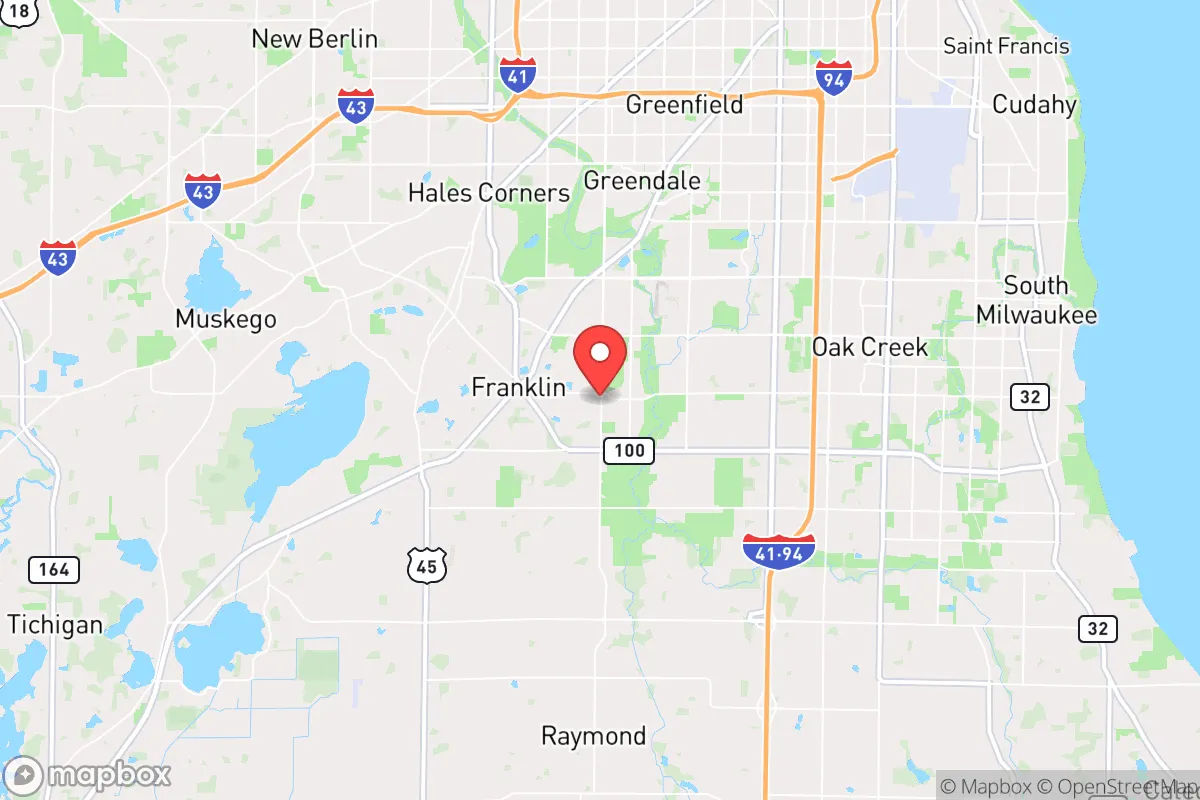
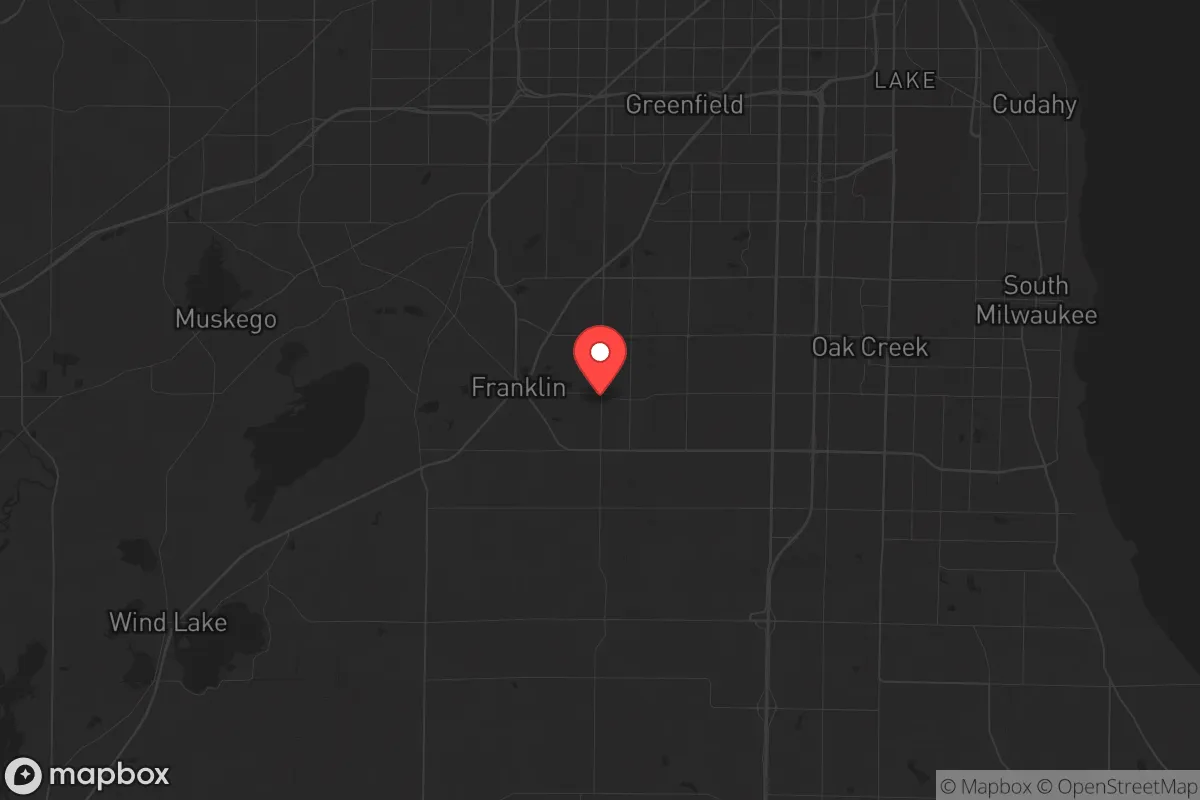
District shown is the primary district for this city’s centroid. Cities may span multiple districts.
Local Political AnalysisPolitical Analysis of Franklin, WI
Franklin, Wisconsin, has long been a solidly conservative community, and while the Cook PVI of R+2 might not scream "deep red," it reflects a quiet, steady Republican lean that has defined the city for decades. I’ve lived here long enough to remember when you could count on a straight-ticket Republican vote in every local election, and that’s still the baseline. But over the last five or six years, you’ve started to see some cracks—not a full shift, but a slow drift toward the kind of suburban moderation that worries folks who value limited government and personal freedoms. The city council and school board races are where you really feel it; they used to be sleepy affairs, but now you’ve got candidates pushing progressive talking points on everything from zoning to curriculum, and it’s getting harder to keep the old guard in place.
How it compares
Franklin sits in a bit of a political bubble compared to its neighbors. Head north into Milwaukee proper, and you’re in a deep-blue stronghold where the city council and county board are all about expanding government programs and restricting property rights. Drive west to Waukesha County—places like Brookfield or Waukesha itself—and you’re in R+15 territory, where the conservative base is so thick you can almost feel it. Franklin is the buffer zone: we’re not as reliably red as Waukesha, but we’re a world away from Milwaukee’s progressive machine. The contrast is stark when you look at how the two counties handle things like tax rates or school choice. In Franklin, we’ve kept property taxes relatively low and resisted the kind of overreach you see in Milwaukee, where the city council has tried to mandate everything from paid leave to rent control. That’s the kind of government creep that makes you nervous, and it’s why a lot of us keep a close eye on any candidate who talks about "equity" or "inclusion" as a policy goal.
What this means for residents
For the average Franklin family, the political climate here means you’ve still got a decent shot at keeping government out of your daily life. The city’s zoning laws are fairly permissive—you can put up a fence or build a shed without jumping through a dozen hoops—and the school board has held the line against the kind of critical race theory and gender ideology battles that have torn apart districts in other suburbs. But it’s not a guarantee. The last few years have seen a push for more "diversity, equity, and inclusion" training in the schools, and while it hasn’t taken full hold, it’s a sign of where things could go if the progressive wing gains more seats. Property taxes here are still reasonable compared to Milwaukee County, but every budget cycle brings new proposals for spending on bike lanes, public art, or "community engagement" programs that feel like a waste of your hard-earned money. If you value personal freedom—the right to live your life without a bureaucrat telling you how to do it—Franklin is still a good bet, but you’ve got to stay engaged. The long-term trend is concerning: as Milwaukee’s influence spreads outward, the pressure to adopt its policies will only grow.
Culturally, Franklin has always been a place where people mind their own business and take care of their own property. You don’t see the kind of activist energy you get in Madison or Milwaukee—no protests on the corner, no city council meetings that turn into shouting matches. That’s a blessing, but it also means the quiet shift toward progressive ideology can happen under the radar. The biggest policy distinction I’d point to is the city’s approach to law enforcement: Franklin has consistently funded its police department and resisted calls to "defund" or redirect resources, which is a huge relief. But if you look at the school board’s recent adoption of a "restorative justice" program, you can see the thin edge of the wedge. It’s not a crisis yet, but it’s a reminder that the fight for limited government and personal freedom never really ends—it just changes zip codes.

State Political ClimatePolitical Climate in Wisconsin
State Political AnalysisPolitical Environment in the State
Wisconsin has long been a classic swing state, but over the past decade it has shifted from a true purple battleground to a state where Republicans hold a structural advantage in state legislative and local races, even as presidential contests remain razor-thin. The 2024 election saw Donald Trump win the state by roughly 1 point, continuing a pattern where rural and exurban voters have consolidated behind the GOP while Milwaukee and Madison have become Democratic strongholds. The 10-20 year trajectory shows a state that is culturally and politically bifurcated, with conservative-leaning voters in the WOW counties (Waukesha, Ozaukee, Washington) and the northern and western rural areas increasingly dominant in state politics, even as the population centers grow more progressive.
Urban vs. rural divide
The political map of Wisconsin is a textbook case of the urban-rural split. Milwaukee County and Dane County (home to Madison) together cast roughly 30% of the state’s vote and deliver massive Democratic margins — Milwaukee County went +40 for Biden in 2020, and Dane County +60. Meanwhile, the WOW counties — Waukesha, Ozaukee, and Washington — are among the most reliably Republican suburban areas in the Midwest, with Waukesha County alone giving Trump a 20-point margin in 2024. The Fox Valley region, including cities like Appleton and Green Bay, has trended rightward as working-class voters moved away from Democrats over cultural and economic issues. The Northwoods counties — Vilas, Oneida, and Sawyer — are deeply red, while the southwestern driftless area, including La Crosse and Eau Claire, has become a competitive mix of college towns and rural conservatives. The key takeaway: if you live outside the I-94 corridor between Milwaukee and Madison, you’re likely in a Republican-leaning area.
Policy environment
Wisconsin’s policy environment is a mixed bag for conservatives. The state has a flat income tax rate of 4.4% (down from 7.65% in 2011), and property taxes are moderate — the median effective rate is about 1.6%, below the national average. The state legislature, under Republican control since 2011, has passed right-to-work legislation (2015) and repealed prevailing wage laws, making it more business-friendly than neighboring Illinois or Minnesota. However, Governor Tony Evers, a Democrat, has vetoed numerous conservative bills, including a 2023 parental rights bill that would have required schools to notify parents of curriculum changes. Education policy is a flashpoint: the state has a robust school choice program (the Milwaukee Parental Choice Program is the oldest in the nation), but Evers has blocked expansion. Election laws are relatively strict — voter ID is required, and absentee ballot drop boxes were effectively banned by the state Supreme Court in 2022. Healthcare is a sore spot: Wisconsin did not expand Medicaid under the Affordable Care Act, but Evers has pushed for it, and the state operates its own health insurance marketplace.
Trajectory & freedom
On personal freedom, Wisconsin is a state in flux. Gun rights are strong: the state has permitless carry (since 2011), no magazine bans, and a “stand your ground” law passed in 2011. The 2023 legislative session saw a bill to eliminate the requirement for a concealed carry permit, but it stalled in the Senate. Parental rights took a hit when Evers vetoed the 2023 bill requiring schools to notify parents of curriculum changes — a major concern for conservative families. Medical freedom saw a win in 2023 when the legislature passed a bill banning COVID-19 vaccine mandates for state employees, which Evers allowed to become law without his signature. Property rights are generally respected, though the state’s Department of Natural Resources has broad authority over land use, particularly in the Northwoods. Taxation has trended in the right direction: the 2023-25 budget included a $2 billion tax cut, mostly through income tax rate reductions. However, the state’s gas tax is indexed to inflation, which means it rises automatically — a hidden tax increase that frustrates conservatives. Overall, Wisconsin is freer than Illinois or Minnesota, but not as free as Florida or Texas.
Civil unrest & political movements
Wisconsin has a history of political volatility. The 2011 Act 10 protests in Madison, which drew over 100,000 people to the Capitol to oppose collective bargaining reforms, were a defining moment — and they galvanized the conservative movement that has dominated state politics since. In 2020, Kenosha became a national flashpoint after the Jacob Blake shooting, leading to riots and the Kyle Rittenhouse trial, which became a cause célèbre for Second Amendment advocates. The Waukesha Christmas parade attack in 2021, where a man drove through a parade killing six, further polarized the state. On the left, groups like the Wisconsin Alliance for Retired Americans and the League of Women Voters are active, while on the right, the Wisconsin Institute for Law & Liberty (WILL) has been a major force in litigation over election laws and school choice. Immigration politics are less heated than in border states, but the 2023 proposal to ban sanctuary cities passed the legislature and was vetoed by Evers. Election integrity remains a live issue: the 2020 election saw Milwaukee and Madison heavily reliant on absentee ballots, and the 2022 state Supreme Court election was the most expensive judicial race in U.S. history, with the liberal candidate winning by 11 points — a sign that the court is now a battleground.
Projection
Over the next 5-10 years, Wisconsin is likely to remain a purple state with a slight Republican lean in state races, but demographic trends are concerning for conservatives. Dane County is growing fast — Madison added 20,000 residents between 2020 and 2024 — and the WOW counties are aging. In-migration from Illinois is bringing more moderate-to-liberal voters to the southeastern part of the state, particularly in Racine and Kenosha. The state Supreme Court flipped to a 4-3 liberal majority in 2023, which could lead to redistricting changes that weaken the Republican advantage in the legislature. However, the rural vote is not going away — the Northwoods and western Wisconsin remain deeply red, and the Fox Valley is solidifying. Expect continued fights over school choice, election laws, and abortion (which is currently legal up to 20 weeks, but a 1849 law banning it is being litigated). A new resident moving in now should expect a state where their vote matters, but where cultural battles will intensify — especially in the suburbs and exurbs.
Bottom line for a new resident: If you’re a conservative looking for a state where your values are reflected in policy, Wisconsin offers a mixed picture. You’ll find strong gun rights, a flat tax, and a legislature that fights for school choice and parental rights — but you’ll also face a governor who vetoes conservative bills, a state Supreme Court that could flip the political map, and growing liberal influence in the two biggest cities. The best bet for a conservative-friendly lifestyle is to settle in the WOW counties or the Fox Valley, where the local culture and politics align with your values. Avoid Madison and Milwaukee unless you’re prepared for a blue bubble. Wisconsin is a state where your involvement in local politics actually matters — so be ready to vote, attend school board meetings, and stay engaged.
* Values derived from national, state, county, city and local statistics and may differ in a specific area. Last updated: 2026-04-21T10:38:37.000Z
Narrative content on this page is AI-generated and may contain mistakes. Verify any details that matter before acting on them.
ReloMaps may earn a commission from affiliate links at no extra cost to you.

