Strategic Assessment of Franklin, WI
Multiple tactical vulnerabilities. Population density, target proximity, or disaster risk are likely compounding. A retreat property and exit planning is required.
What does the Strategic Assessment tell us?
Our Strategic Assessment grades tactical survivability of an area. Major population centers, military targets, fallout zones, natural disasters, and border exposure all drive risk — lower exposure means a more defensible position in a crisis.
This is heavily inspired by Joel Skousen's Strategic Relocation book. Highly recommended you checkout the book ($)What does this tell us?
Our Strategic Assessment grades tactical survivability of an area. Major population centers, military targets, fallout zones, natural disasters, and border exposure all drive risk — lower exposure means a more defensible position in a crisis.
This is heavily inspired by Joel Skousen's Strategic Relocation book. Highly recommended you checkout the book ($)Strategic Pillars

Key Distances
Regional Safe Places
Below is our recommended "safe zones" in Wisconsin and the surrounding area based on our strategic heuristics. For most people, it's unrealistic to live in a “safe zone” full-time due to work, family or other personal reasons. They tend to be more rural. However, many of these areas are perfect for second homes and retreat properties that double as a vacation home or even a short-term rental.
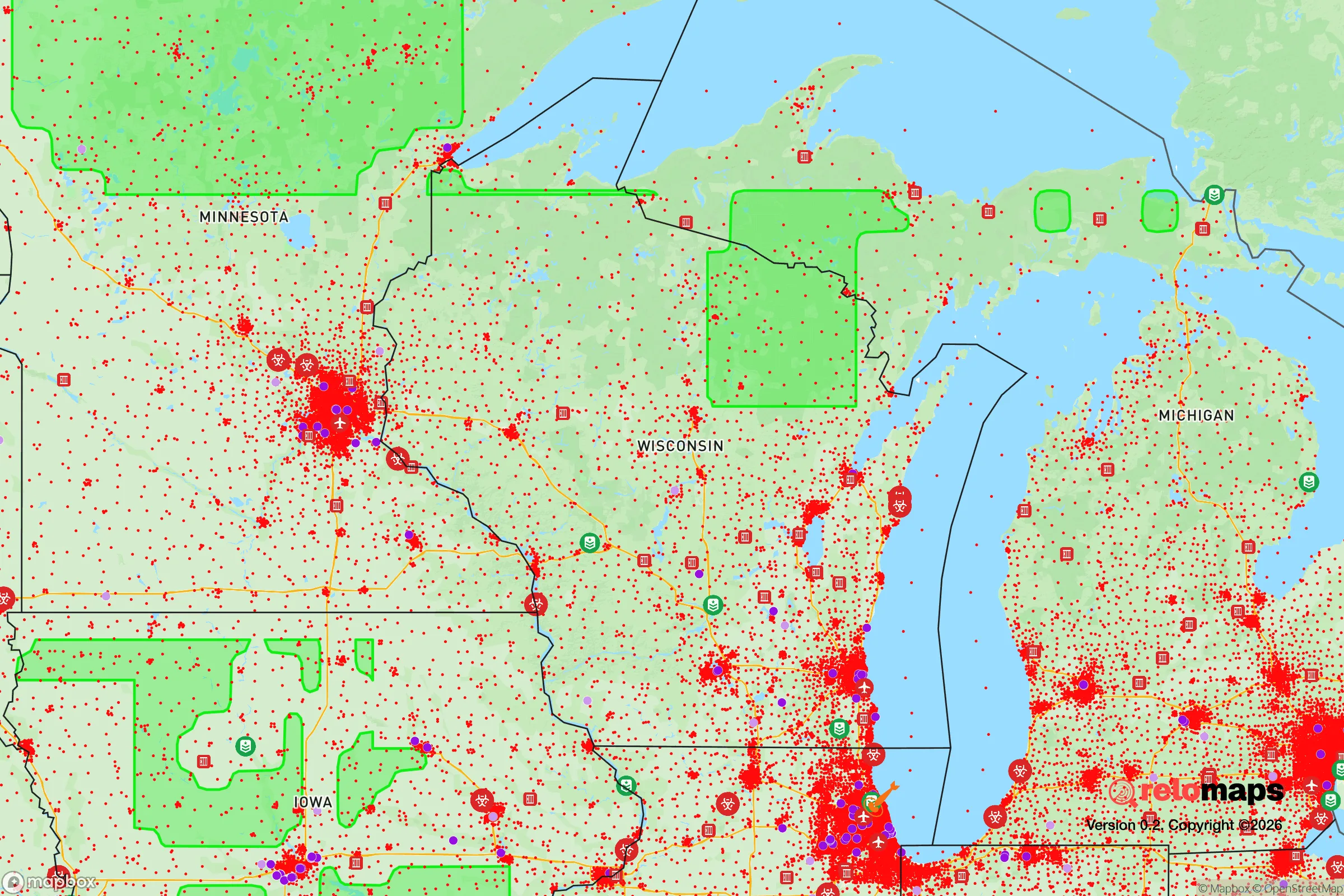
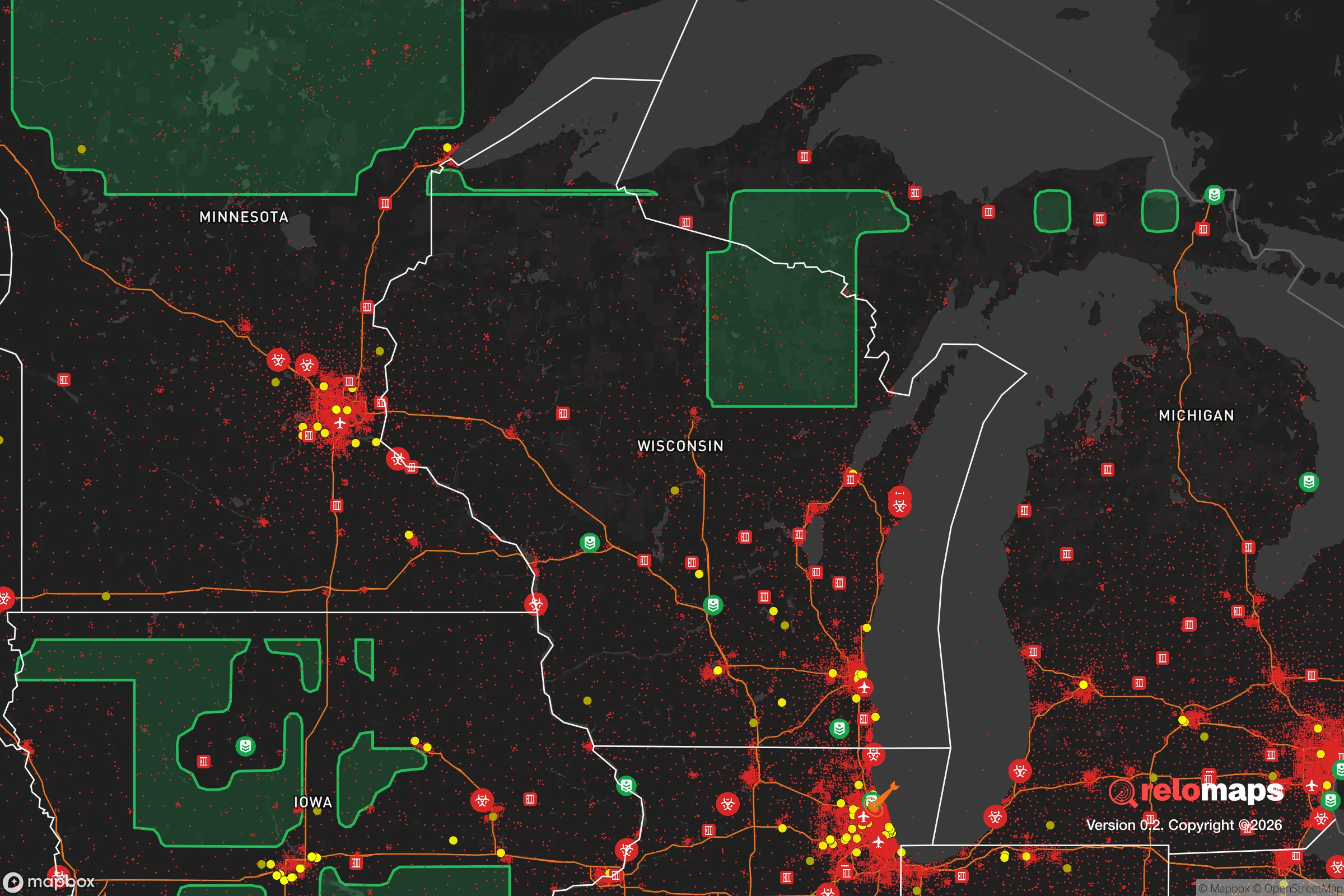


Important Note: For informational purposes only. This does not mean nothing bad ever happens in the green zones. Please use common sense. This is based on public data and modeled with AI. We tried to take a conservative approach but mistakes happen. We update this regularly as new information becomes available.
Solar Generator Recommendations
Backup power matters more here than in safer locations. We've picked three solar generators across budgets and capacity tiers — start with the budget unit if you only need a few essentials, or step up if you want to run a fridge and HVAC for days at a time.

Jackery Portable Power Station Explorer 300
Budget OptionPower on the Go: Weighing only 11 lbs, it's convenient to set up and store with book-sized foldable solar panels

BLUETTI Portable Power Station AC180
Designed for both indoor and outdoor scenarios, AC180 is highly capable as it has a robost capacity and continuous output power.

EF ECOFLOW DELTA Pro Ultra Power Station
Upgraded PickEcoFlow DELTA Pro Ultra is a whole-home energy system designed to grow with your family. Integrated with the Smart Home Panel 2, it scales to meet your evolving energy needs — keeping your home powered, intelligent, and secure through every stage of life.
We earn a commission, at no additional cost to you.
Strategic Assessment Analysis
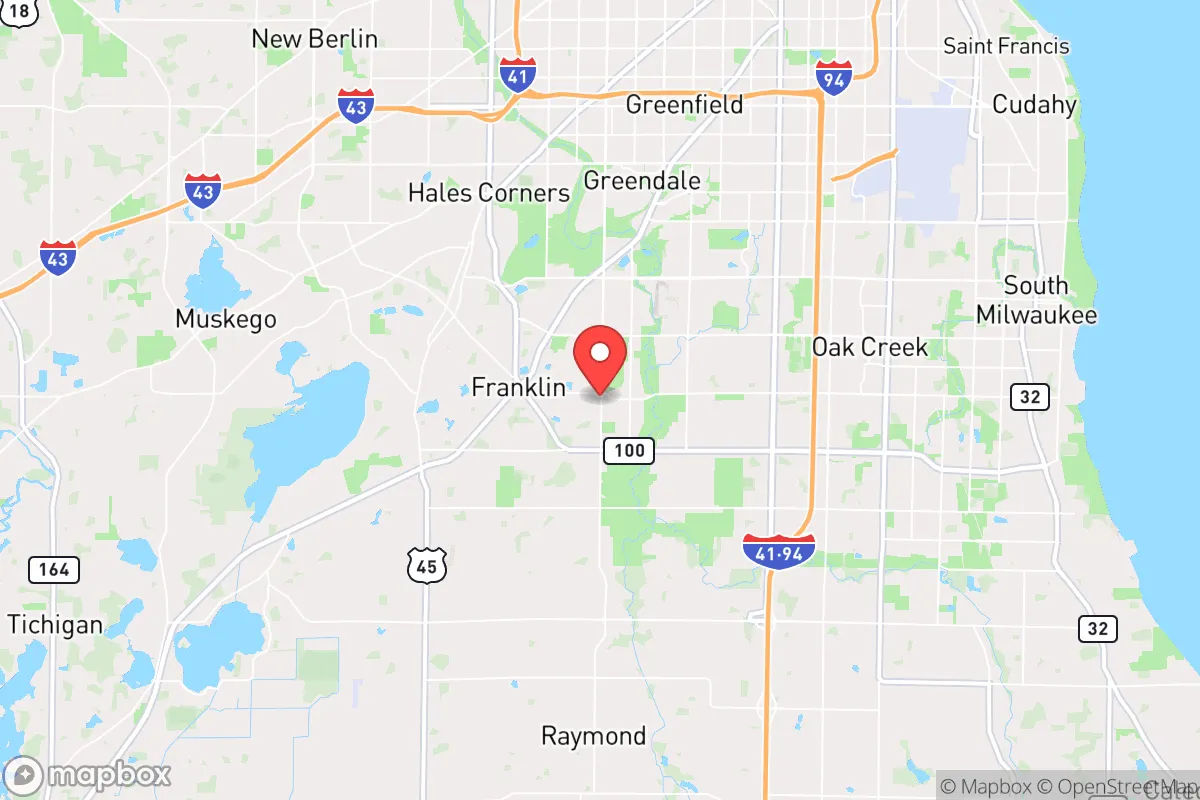
Franklin, Wisconsin, offers a surprisingly resilient strategic position for those prioritizing preparedness, sitting far enough from Milwaukee’s urban core to avoid the worst of potential civil unrest while remaining close enough to leverage its resources. Its location in southwestern Milwaukee County places it on the edge of the suburban sprawl, with direct access to major highways like I-43 and I-894 for evacuation or supply runs, yet it lacks the dense, target-rich environment of the city itself. For a conservative-leaning relocator concerned with societal breakdown, mass casualty events, or natural disasters, Franklin’s blend of low-density housing, industrial tax base, and proximity to rural escape routes makes it a viable base of operations—provided you understand its specific vulnerabilities.
Geographic position and natural advantages for long-term security
Franklin sits on a relatively flat, elevated plateau in the Kettle Moraine region, which offers decent drainage and avoids the floodplain risks that plague communities along the Root River to the south. The area’s glacial topography provides natural cover and varied terrain, with scattered woodlots and agricultural land that can support small-scale food production or concealment. The city’s 2020 census population of roughly 36,000 is spread over 35 square miles, giving a density of about 1,000 people per square mile—low enough to reduce competition for resources during a crisis but high enough to maintain some community structure. The nearby Oak Creek power plant (a coal and gas facility) and the We Energies distribution hub provide redundant energy sources, though these are also potential targets. The real advantage is the network of county highways (like Highway 36 and Highway 100) that allow you to bypass Milwaukee’s gridlock and head west into Waukesha County’s more rural areas, or south into Walworth County’s farmland, within 20 minutes. For a prepper, this means you can live in a suburban home with a basement and a garage while maintaining a bug-out location within a short drive—a rare combination in southeastern Wisconsin.
Risks, exposures, and proximity to fallout-relevant landmarks
The most significant risk for Franklin is its proximity to Milwaukee’s urban core, roughly 12 miles north. In a scenario involving civil unrest, mass casualty events, or a coordinated attack, Milwaukee’s population of 577,000 (metro area 1.6 million) could become a source of looting, refugee flows, or secondary effects like fire and disease. The city is also home to the Mitchell International Airport (5 miles east), a major transportation hub that could be a target for terrorism or a staging ground for federal response—both of which could draw unwanted attention. Further south, the Kenosha-Racine corridor (15 miles) has seen its own unrest and industrial decline, and the I-94 corridor is a known chokepoint for evacuation. On the industrial side, Franklin itself hosts a large Amazon fulfillment center and several chemical storage facilities along the railroad lines, which could become hazardous if damaged. The nearby Oak Creek power plant, while useful, is also a potential target for sabotage or EMP-related grid failure. The city’s water supply comes from Lake Michigan via the Milwaukee Water Works, meaning a disruption to that system (e.g., a cyberattack or contamination event) would leave Franklin without a local surface water source—most homes rely on municipal supply, not wells. For a survivalist, the lack of a robust private well network is a notable weakness, though the Root River and several small ponds offer backup options if properly filtered.
Practical resilience for a relocator: food, water, energy, and defensibility
Franklin’s residential zoning allows for backyard gardens and small livestock (chickens, rabbits) without much hassle, and the city’s farmers market and local CSAs provide fresh food in normal times. For long-term storage, the area has several big-box stores (Costco, Sam’s Club, Walmart) within a 10-minute drive, but these will be stripped quickly in a crisis—so pre-stocking is essential. The city’s energy grid is tied to the regional Midwest system, which has proven vulnerable to winter storms (like the 2021 polar vortex that caused rolling blackouts) and cyberattacks. Solar panels are permitted but require permits and HOA approval in some subdivisions; a backup generator is a near-necessity for any serious prepper here. Defensibility is mixed: the newer subdivisions on the south and west sides have cul-de-sacs and limited entry points, making them easier to secure, while the older neighborhoods near the city center have more grid-like streets. The Franklin Police Department is well-funded (about 40 officers for 36,000 residents) and has a strong community presence, which is a plus for deterring crime but could also mean more scrutiny of unusual activities (like stockpiling or fortifications). The city’s proximity to the Milwaukee County Sheriff’s Office and the Wisconsin National Guard’s 128th Air Refueling Wing at Mitchell Field means a rapid law enforcement response, but also a higher likelihood of being caught in a security cordon during a major event. For a single individual or family, the best strategy is to buy a home on the western edge of Franklin, near the Waukesha County line, where you can blend into the rural landscape while still having access to the city’s infrastructure.
Overall, Franklin presents a calculated trade-off for the conservative prepper: it offers a suburban buffer zone with decent resources and escape routes, but it sits within the blast radius of Milwaukee’s potential collapse. The city’s industrial base and transportation links make it a node in the regional economy, which is good for day-to-day life but bad for a long-term survival scenario where you want to be off the grid. If your primary concern is weathering a short-term crisis (a week of unrest, a winter storm, a supply chain disruption), Franklin’s infrastructure and community resilience are solid. If you’re planning for a complete societal breakdown or a nuclear event, you’ll want to be further west, in the Driftless Area or the Northwoods. For the relocator who wants to stay close to Milwaukee’s jobs and healthcare while maintaining a credible preparedness posture, Franklin is one of the better options in the metro area—just don’t mistake it for a fortress. The key is to treat it as a forward operating base, not a final redoubt, and to have your bug-out plan locked in before you need it.

* Values derived from national, state, county, city and local statistics and may differ in a specific area. Last updated: 2026-04-21T10:38:37.000Z
Narrative content on this page is AI-generated and may contain mistakes. Verify any details that matter before acting on them.
ReloMaps may earn a commission from affiliate links at no extra cost to you.

