 Popular
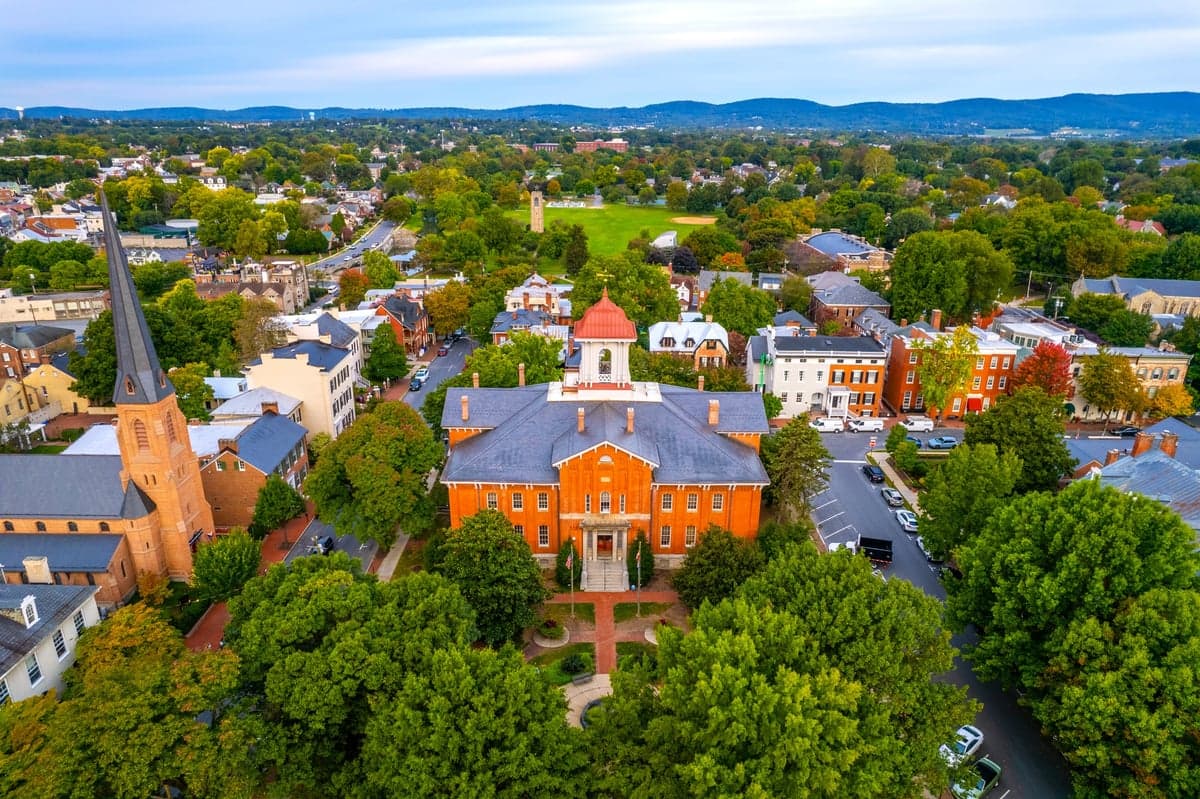
Photo: Wikipedia
Strategic Assessment of Frederick, MD
Multiple tactical vulnerabilities. Population density, target proximity, or disaster risk are likely compounding. A retreat property and exit planning is required.
What does the Strategic Assessment tell us?
Our Strategic Assessment grades tactical survivability of an area. Major population centers, military targets, fallout zones, natural disasters, and border exposure all drive risk — lower exposure means a more defensible position in a crisis.
This is heavily inspired by Joel Skousen's Strategic Relocation book. Highly recommended you checkout the book ($)What does this tell us?
Our Strategic Assessment grades tactical survivability of an area. Major population centers, military targets, fallout zones, natural disasters, and border exposure all drive risk — lower exposure means a more defensible position in a crisis.
This is heavily inspired by Joel Skousen's Strategic Relocation book. Highly recommended you checkout the book ($)Strategic Pillars

Key Distances
Regional Safe Places
Below is our recommended "safe zones" in Maryland and the surrounding area based on our strategic heuristics. For most people, it's unrealistic to live in a “safe zone” full-time due to work, family or other personal reasons. They tend to be more rural. However, many of these areas are perfect for second homes and retreat properties that double as a vacation home or even a short-term rental.
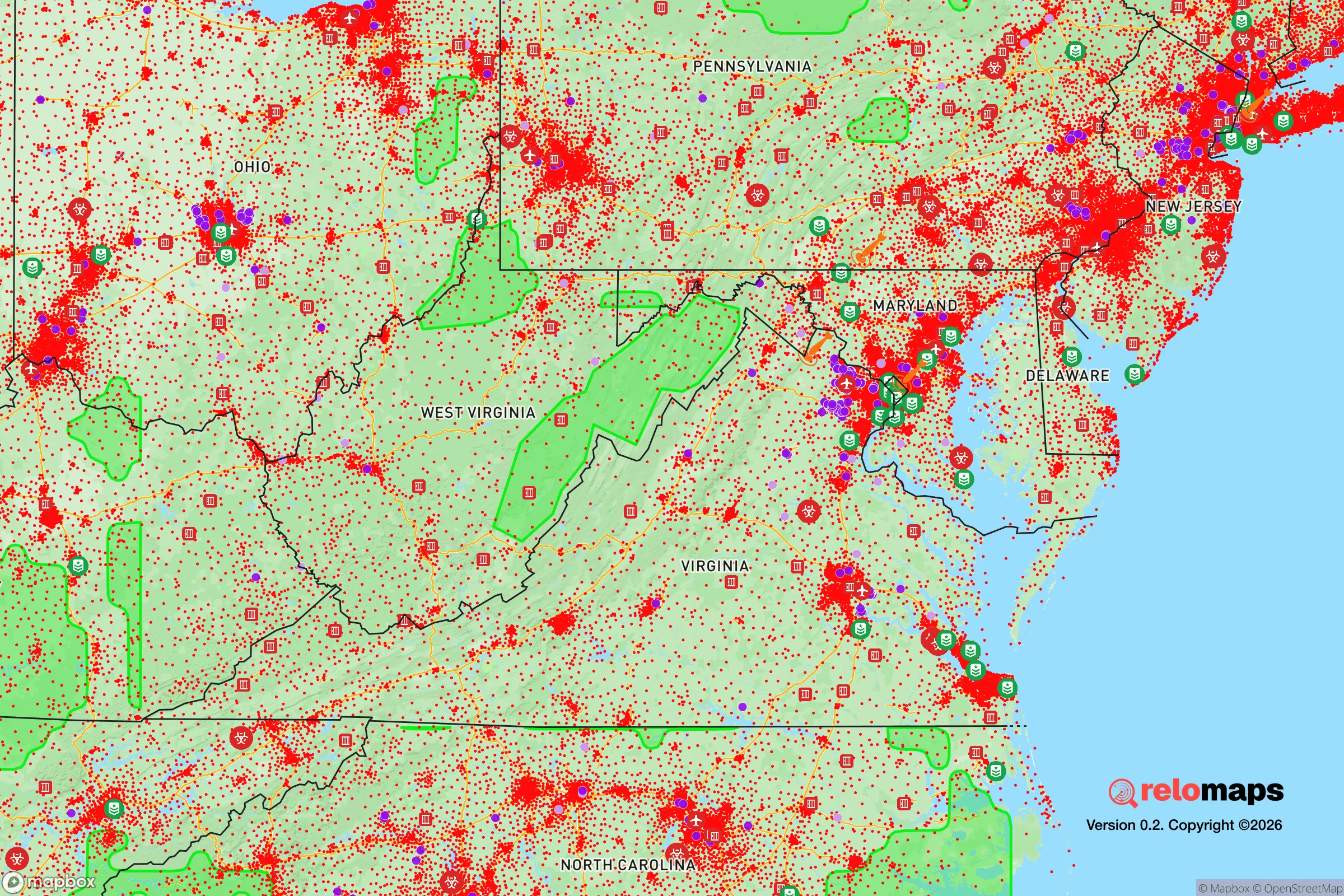
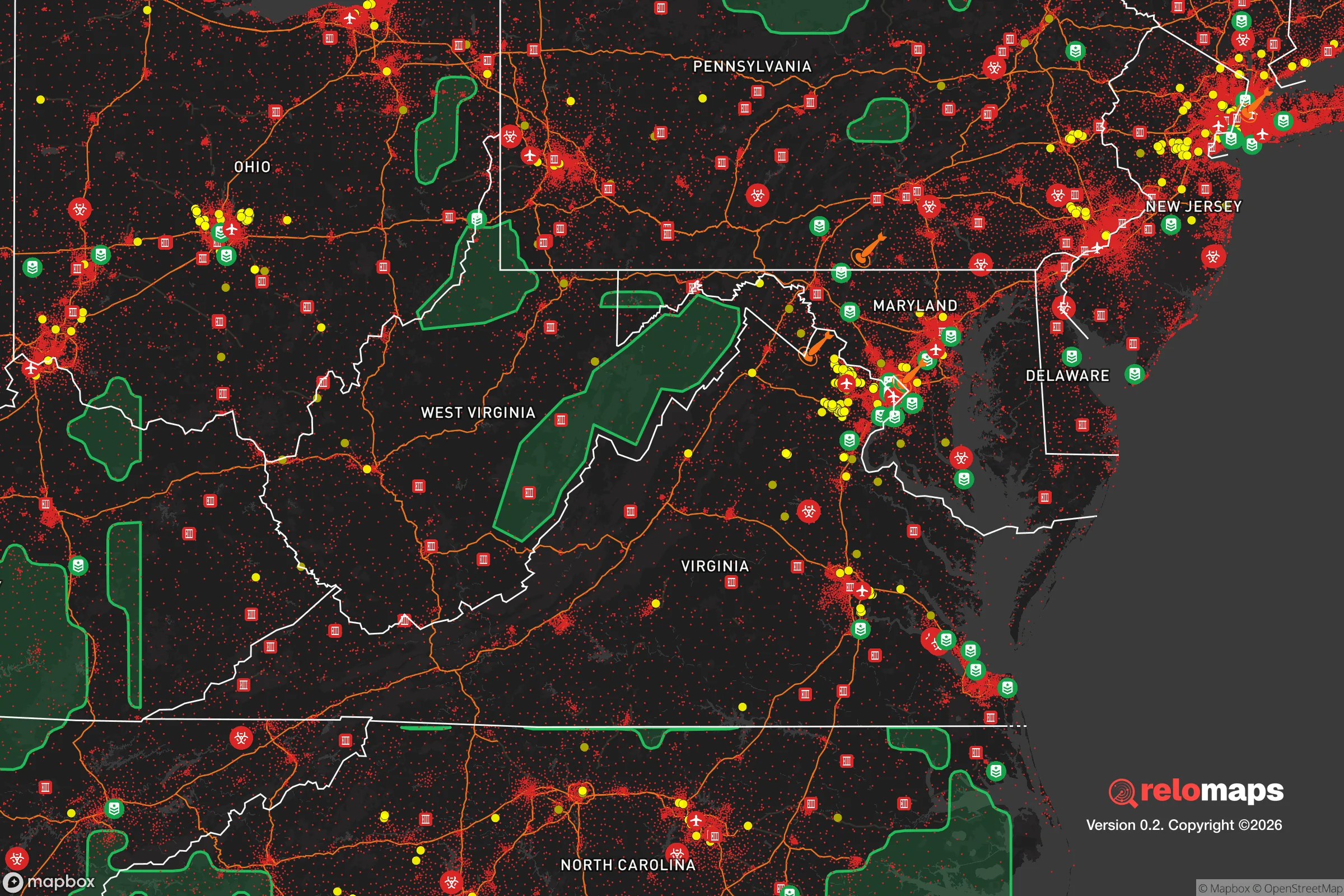


Important Note: For informational purposes only. This does not mean nothing bad ever happens in the green zones. Please use common sense. This is based on public data and modeled with AI. We tried to take a conservative approach but mistakes happen. We update this regularly as new information becomes available.
Solar Generator Recommendations
Backup power matters more here than in safer locations. We've picked three solar generators across budgets and capacity tiers — start with the budget unit if you only need a few essentials, or step up if you want to run a fridge and HVAC for days at a time.

Jackery Portable Power Station Explorer 300
Budget OptionPower on the Go: Weighing only 11 lbs, it's convenient to set up and store with book-sized foldable solar panels

BLUETTI Portable Power Station AC180
Designed for both indoor and outdoor scenarios, AC180 is highly capable as it has a robost capacity and continuous output power.

EF ECOFLOW DELTA Pro Ultra Power Station
Upgraded PickEcoFlow DELTA Pro Ultra is a whole-home energy system designed to grow with your family. Integrated with the Smart Home Panel 2, it scales to meet your evolving energy needs — keeping your home powered, intelligent, and secure through every stage of life.
We earn a commission, at no additional cost to you.
Strategic Assessment Analysis
Frederick, Maryland, sits in a precarious but potentially advantageous position for those prioritizing resilience and strategic relocation. Its location along the I-270 corridor places it roughly 45 miles from Washington, D.C., and 50 miles from Baltimore, which is a significant negative for anyone concerned with proximity to high-value targets and potential fallout zones. However, the city’s position at the base of the Catoctin Mountains, near the Monocacy River, and within a county that has a mix of agricultural land and forested ridges offers a rare combination of access to resources and natural defensibility that many closer-in suburbs lack. For a conservative-minded prepper, Frederick represents a calculated trade-off: you are close enough to major population centers to be affected by their collapse, but far enough and geographically positioned to potentially serve as a staging area or a secondary fallback if you have the right property and plan.
Geographic position and natural advantages for long-term survival
Frederick’s geography is its strongest card. The city sits in the Frederick Valley, flanked by the Catoctin Mountain range to the west and the Monocacy River to the east. This creates natural chokepoints and defensible terrain. The Catoctin Mountains offer elevation, cover, and water sources—Cunningham Falls and Hunting Creek Lake are within 20 minutes of downtown. The Monocacy River provides a reliable water source for filtration, though it is not a major navigable waterway. The surrounding farmland, particularly in northern Frederick County and into neighboring Carroll County, is some of the most productive in the Mid-Atlantic. For a relocator, this means you can realistically source food locally within a 15- to 30-minute drive from the city center, especially if you establish relationships with farms in the Walkersville, Woodsboro, or Libertytown areas. The presence of Fort Detrick, a U.S. Army biodefense research facility, is a double-edged sword: it brings federal investment and infrastructure, but also makes Frederick a potential target for asymmetric threats. However, the base’s perimeter and the surrounding military housing create a buffer zone that could slow civil unrest moving outward from the I-270 corridor.
Risks, exposures, and proximity to fallout-relevant landmarks
The primary risk for Frederick is its proximity to the Washington-Baltimore metropolitan area. In a scenario involving a major terrorist attack, EMP event, or civil unrest, the I-270 corridor would become a funnel for refugees fleeing the capital. Frederick is directly in the path of any evacuation from D.C. and Baltimore, with I-270 and US-15 being the main arteries. This means the city could face a surge of displaced populations within hours of a major event. Additionally, the city itself has several soft targets: the Frederick Municipal Airport, the Fort Detrick biolabs, and the major rail lines running through the city (CSX and MARC) that carry both freight and hazardous materials. The proximity to the Catoctin Mountain region also means that any fallout from a nuclear event in D.C. (roughly 45 miles south) would likely be carried by prevailing winds to the northeast, potentially sparing Frederick from direct heavy fallout but still exposing it to secondary contamination. The risk of a cascading failure in the power grid is real—Frederick is served by Potomac Edison, and the region’s aging infrastructure is vulnerable to both cyberattacks and physical sabotage. For a relocator, the key takeaway is that Frederick is not a bug-out location; it is a forward operating base that requires a plan to either hold and defend or to move deeper into the mountains (toward Hagerstown or Cumberland) if the situation deteriorates.
Practical resilience for a relocator: food, water, energy, and defensibility
For a single individual or a family, Frederick offers a mixed bag of practical resilience. Water is abundant but requires treatment. The Monocacy River and its tributaries (such as Carroll Creek running through downtown) are accessible, but they are also subject to agricultural runoff and potential contamination from upstream sources. Investing in a high-quality Berkey or similar gravity filter is non-negotiable if you plan to rely on surface water. The city’s municipal water supply comes from the Monocacy and the Potomac River, which means it is vulnerable to both upstream contamination and infrastructure failure. For food, the local farmers’ markets (the Frederick City Market and the Westside Farmers Market) are excellent in season, but a prepper should focus on establishing direct relationships with farms in the county. The Frederick County Farm Bureau and local CSAs (Community Supported Agriculture) are good starting points. Energy is a concern: the grid is reliable in normal times, but the area is prone to winter storms and occasional summer thunderstorms that cause outages. Solar with battery backup is feasible, but the tree cover in many residential areas limits panel efficiency. For defensibility, the city itself is not ideal—it’s a dense, walkable urban core with narrow streets and limited fields of fire. However, the surrounding rural areas, particularly west of the city toward the mountains, offer properties with natural barriers, long sightlines, and limited access points. The best defensive posture is to live on the western edge of the county, near the Catoctin Mountains, with a vehicle capable of navigating unimproved roads and a pre-planned route to a secondary cache or retreat location further west.
Overall, Frederick is a strategic compromise. It offers the economic and social benefits of a growing city—good schools, a vibrant downtown, and access to healthcare—while still being within striking distance of rural retreat areas. For a conservative-minded relocator, the calculus is clear: you can live in Frederick and build a resilient lifestyle, but you must treat it as a base of operations, not a final destination. The city’s location along major transit corridors and its proximity to high-value federal assets make it a potential flashpoint in a crisis. However, its access to water, farmland, and defensible terrain to the west gives it a resilience profile that is far superior to anything inside the Beltway or along the I-95 corridor. If you are willing to invest in a property with a well, solar panels, and a root cellar, and you maintain a low profile in the community, Frederick can serve as a viable long-term hub. Just keep a full tank of gas, a go-bag, and a map of the back roads to the mountains. The city is a good place to live, but it is not a fortress. Plan accordingly.

* Values derived from national, state, county, city and local statistics and may differ in a specific area. Last updated: 2026-04-22T01:52:17.000Z
Narrative content on this page is AI-generated and may contain mistakes. Verify any details that matter before acting on them.
ReloMaps may earn a commission from affiliate links at no extra cost to you.

