 Popular
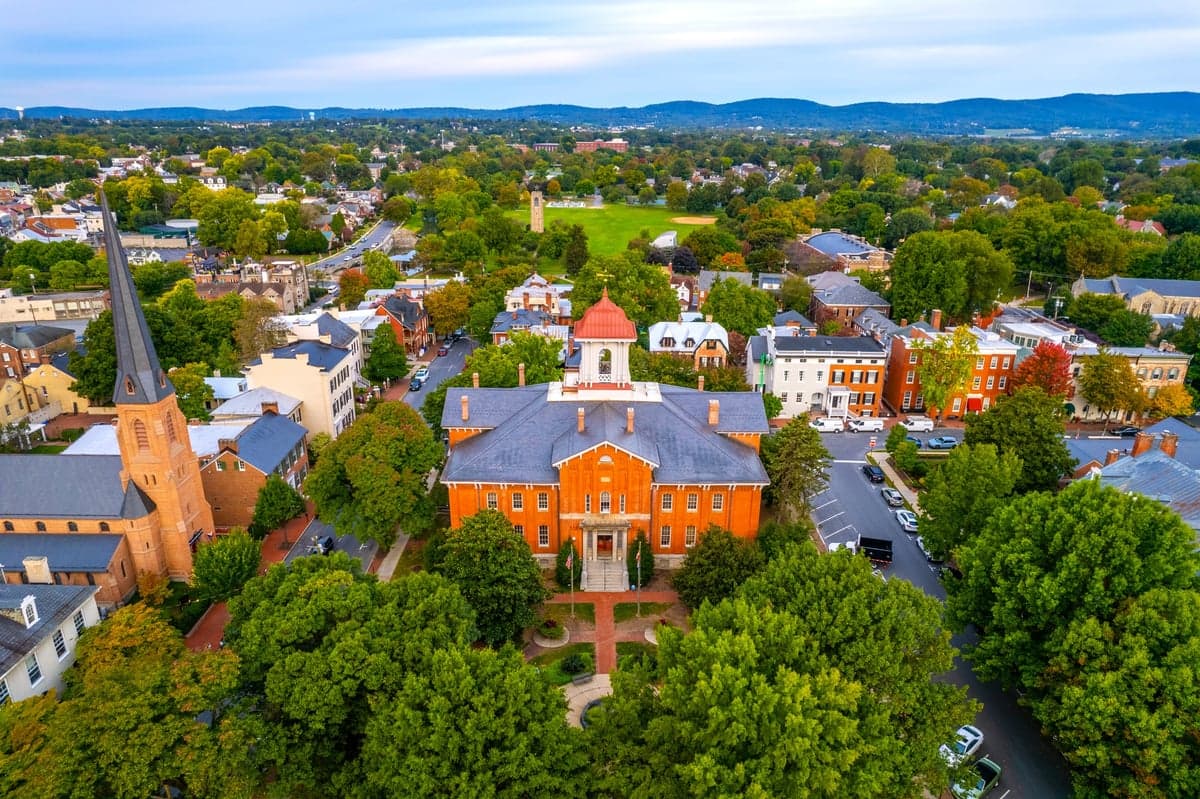
Photo: Wikipedia
Quality of Life in Frederick, MD
A high quality of life with strong walkability, manageable living costs, healthy neighborhood signals, and solid amenity access.
What does Quality of Life tell us?
Quality of Life blends cost of living, nearby amenities, socioeconomic signals, and neighborhood character. City-level scores represent the whole municipality; individual neighborhoods can differ.
What does this tell us?
Quality of Life blends cost of living, nearby amenities, socioeconomic signals, and neighborhood character. City-level scores represent the whole municipality; individual neighborhoods can differ.
Cost of Living
39% above national average
The Real Cost of Living in Frederick, MD for 2026
| Tier | Individual | Family (4) |
|---|---|---|
| Survival | $27k | $51k |
| Comfortable | $71k | $104k |
| Luxury | $143k+ | $221k+ |
| Elite (Top 5%) | $168k+ | $260k+ |
91%
The Area Signal
A metric tracking the socioeconomic signals of the area.
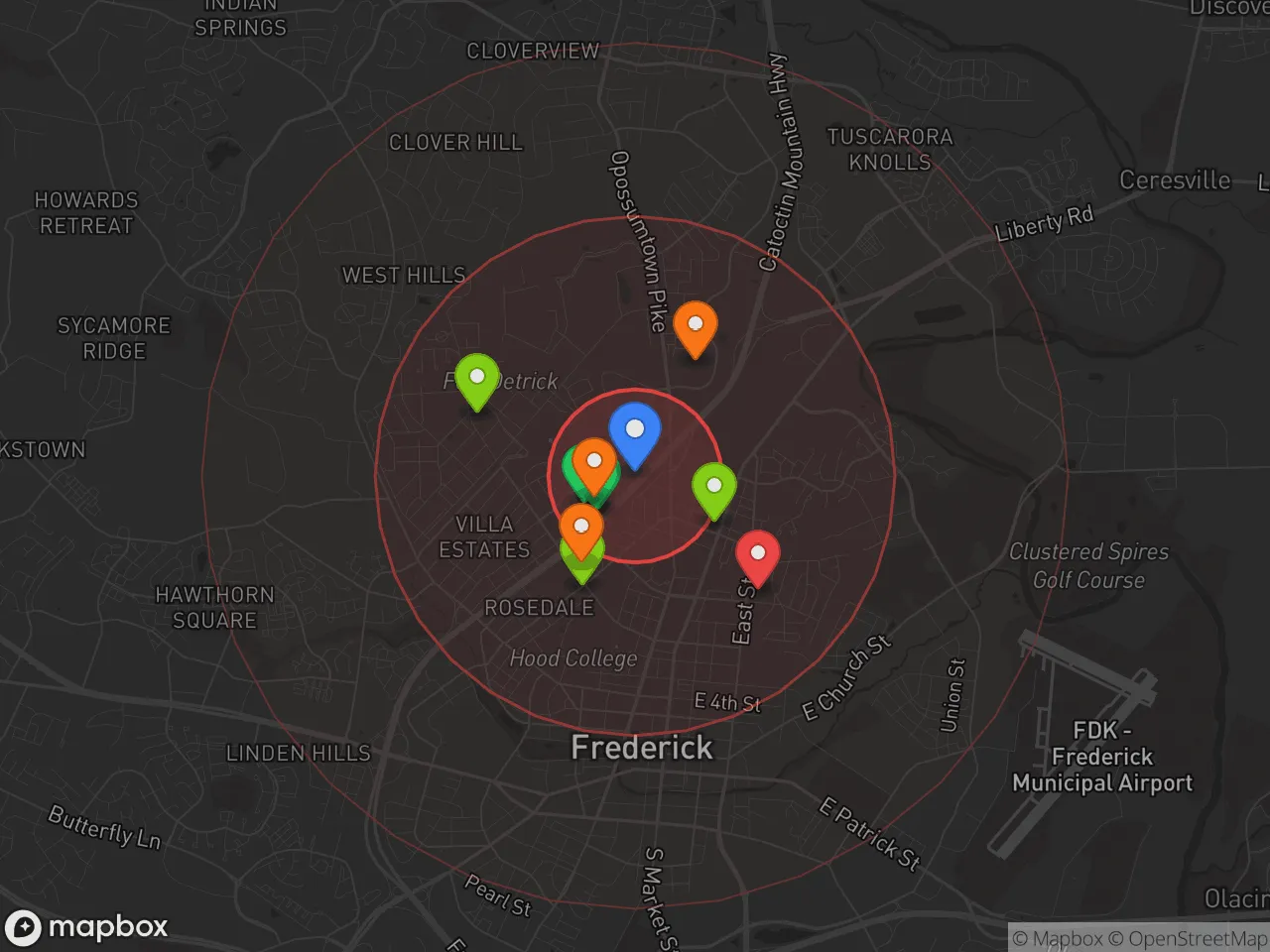
Hobbies
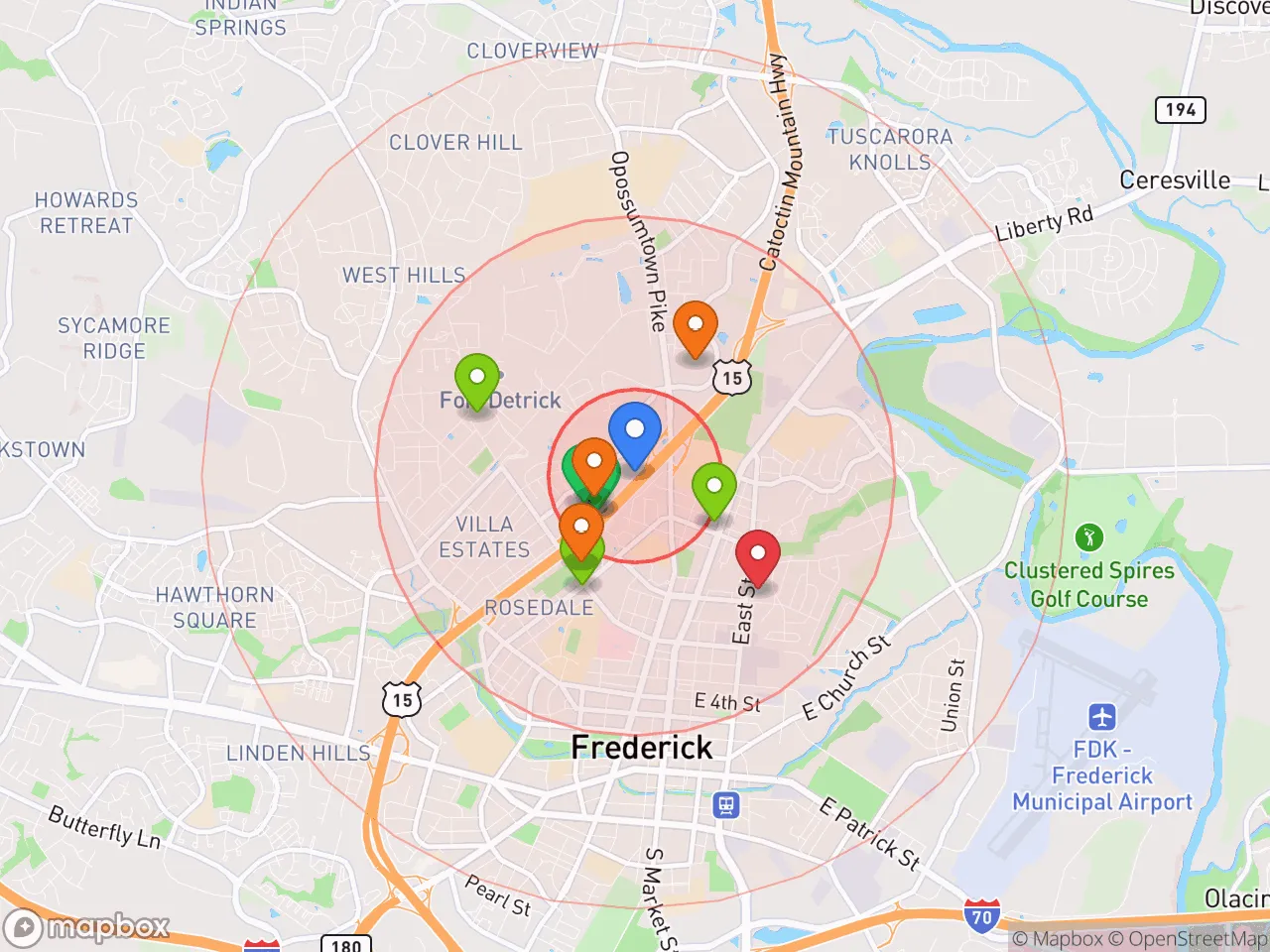
Explore the areaGroceries
6 within 10 miles
Gas
20 within 10 miles
Hospital
5 within 20 miles
Airport
IAD — Washington Dulles International
Post Office
USPS — Frederick, MD
Critical Amenities
Quality-of-Life Analysis
Frederick, Maryland, attracts a predominantly affluent, well-educated population drawn by its blend of historic charm and modern economic opportunity. With a cost-of-living index of 139 (39% above the national average), the city sits at a premium price point compared to the U.S. as a whole, yet remains a relative bargain for professionals priced out of the Washington, D.C., suburbs. The median household income hovers well above the national figure, supporting a community of commuters, remote workers, and local professionals who value walkable neighborhoods, a vibrant downtown, and proximity to the I-270 technology corridor.
How Frederick’s cost of living and housing compare to D.C. and Baltimore
Frederick’s housing market is the primary driver of its elevated cost of living. The median home value of $365,200 is roughly 40% lower than the median in nearby Montgomery County, making Frederick a popular alternative for buyers seeking more space and a slower pace without abandoning the D.C. metro area entirely. Median rent sits at $1,688, which is competitive for the region but still significantly above the national median of roughly $1,200. The average commute time of 30 minutes reflects the city’s role as a bedroom community: many residents drive south to jobs in Rockville, Gaithersburg, or D.C., while others work locally in Frederick’s growing healthcare, biotech, and manufacturing sectors. Property taxes in Frederick County are moderate for Maryland, and while state income taxes are high, the trade-off is access to well-funded public services and infrastructure.
What daily life is like for families and professionals in Frederick
Daily life in Frederick centers on a compact, historic downtown with independent shops, farm-to-table restaurants, and a robust calendar of events including the monthly First Saturday gallery walk and the annual Frederick Festival of the Arts. The city’s public schools are consistently rated among the top in Maryland, with Urbana High School and Linganore High School earning national recognition for academic performance and extracurricular offerings. For outdoor recreation, the city maintains over 80 parks and the 14-mile Frederick Creek Greenway, while nearby Gambrill State Park and Catoctin Mountain Park provide hiking and mountain biking within a 20-minute drive. The commute to D.C. can stretch beyond 60 minutes during peak hours, but the MARC Brunswick Line train offers a direct rail option from Frederick station to Union Station, a popular alternative for downtown D.C. workers. Healthcare access is strong, anchored by Frederick Health Hospital and a dense network of specialty clinics along the I-270 corridor.
Who thrives in Frederick and who might look elsewhere
Frederick is best suited for professionals and families who value a high quality of life and are willing to pay a premium for it. The city works well for dual-income households earning above $100,000 annually, for remote workers who can avoid the worst of the I-270 traffic, and for empty-nesters downsizing from larger suburban homes. Those on tighter budgets may struggle with the housing market, as entry-level homes under $300,000 are scarce and rental vacancy rates remain low. Young singles seeking a vibrant nightlife scene may find Frederick quieter than D.C. or Baltimore, though the downtown bar and music scene has grown steadily. Overall, Frederick offers a compelling balance of economic opportunity, natural beauty, and community amenities for those who can afford its premium cost of living.

Crime in Frederick, MD
Generally safer than 62% of comparable U.S. locations.
Violent CrimeViolent Crime Analysis
Property CrimeProperty Crime Analysis
Crime Analysis
Frederick, Maryland, presents a mixed safety profile that warrants careful consideration for potential residents. The city’s violent crime rate of 351.4 incidents per 100,000 residents and property crime rate of 1,814.9 per 100,000 place it above the national average for cities of its size, though below the averages for many larger metropolitan areas. However, Frederick’s location within a liberal-leaning state and its proximity to the progressive justice systems of the Washington, D.C. and Baltimore metro areas introduces a significant concern: policies that prioritize offender rehabilitation over public safety can lead to higher recidivism and more criminals on the street, directly impacting victims and the general public.
Crime in context
Frederick’s violent crime rate is roughly 1.5 times the national average for all cities, while its property crime rate is about 1.3 times the national average. Compared to the state of Maryland as a whole, Frederick’s violent crime rate is slightly lower than the state average of roughly 400 per 100,000, but its property crime rate is higher than the state average of approximately 1,600 per 100,000. The city’s crime index is notably higher than in nearby suburban jurisdictions like Carroll County, which benefit from more conservative prosecutorial policies. The influence of progressive district attorneys in surrounding counties—who often implement cash bail reform, decline to prosecute certain low-level offenses, and emphasize diversion programs—can result in offenders cycling back into communities like Frederick, undermining local law enforcement efforts.
What residents experience
Residents report that property crime—particularly vehicle break-ins, package theft, and burglary—is the most common safety concern in daily life. The downtown historic district and areas near the Golden Mile commercial corridor see higher concentrations of these incidents. Violent crime, while less frequent, is not isolated; aggravated assaults and robberies occur, often linked to disputes or drug-related activity. Many residents express frustration that repeat offenders are quickly released back into the community due to lenient bail policies and plea deals favored by progressive prosecutors in the region. This creates a perception that the justice system prioritizes the rights of offenders over the safety of law-abiding citizens, a sentiment that is especially strong among families and small business owners.
Neighborhood-level variation
Safety varies significantly across Frederick’s neighborhoods. The western and northern parts of the city—such as the areas near Baker Park and the Villages of Urbana—generally experience lower crime rates and are considered safer. In contrast, the downtown core, particularly around the Carroll Creek area and the South End, sees higher rates of both property and violent crime. The eastern side of the city, including the neighborhoods near the Frederick Municipal Airport, also reports elevated property crime. Prospective residents should research specific block-level data and consider that even in safer neighborhoods, the spillover effects of regional progressive justice policies can erode the sense of security over time.
* Values derived from national, state, county, city and local statistics and may differ in a specific area. Last updated: 2026-04-22T01:52:17.000Z
Narrative content on this page is AI-generated and may contain mistakes. Verify any details that matter before acting on them.
ReloMaps may earn a commission from affiliate links at no extra cost to you.

