 Popular
Photo: Wikipedia
Political ClimatePolitical Climate in Frederick, MD
District shown is the primary district for this city’s centroid. Cities may span multiple districts.
Local Political AnalysisPolitical Analysis of Frederick, MD
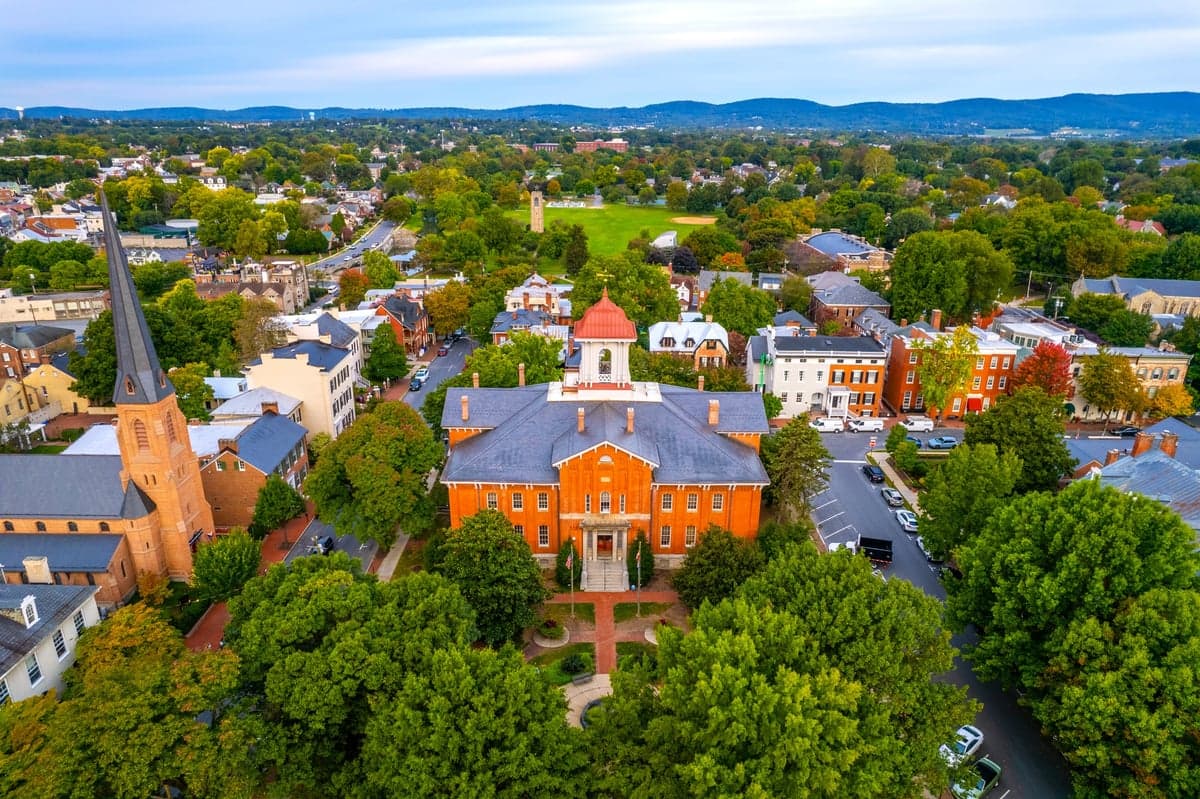
Frederick, Maryland, has a political climate that’s shifted noticeably over the past decade. The Cook PVI rating of D+3 tells you it leans Democratic, but that’s a relatively recent development. For a long time, this was a reliably conservative area, a place where folks valued personal responsibility and limited government. Now, you see a real split: the city itself has gone pretty progressive, while the surrounding county—places like Walkersville, Middletown, and the rural areas toward Hagerstown—still holds onto those traditional values. It’s a tale of two Fredericks, and the tension is real.
How it compares
If you drive just 20 minutes south to Montgomery County, you’re in a different universe—solidly D+20 territory, with all the high taxes and heavy regulations that come with it. Frederick is still a bit of a buffer zone. Head west toward Hagerstown or down to Washington County, and you’ll find a much more conservative, gun-friendly, lower-tax environment. Even within Frederick County, the contrast is stark: the city council has pushed things like sanctuary city policies and zoning changes that feel like government overreach, while the rural parts of the county are fighting to keep property rights and school choice intact. It’s not uncommon to hear long-time residents say they feel like they’re living in two different states.
What this means for residents
For someone who values personal freedoms and minimal government interference, the trend in Frederick is concerning. The city has seen a push for more regulations on short-term rentals, stricter building codes, and a general attitude that the government knows best. Property taxes have crept up, and there’s a growing sense that your voice matters less if you don’t align with the progressive agenda. On the flip side, the county government has remained more balanced, with a mix of Republicans and moderates who have pushed back on some of the more extreme proposals. If you’re looking for a place where your Second Amendment rights are respected and your business isn’t buried in red tape, the rural parts of the county are still a solid bet. But if you’re inside the city limits, expect more of that “we’re here to help” attitude that often feels like a leash.
Looking ahead, the trajectory is worrying. The influx of people from D.C. and Montgomery County has accelerated the shift, bringing with them a preference for higher taxes and more government control. The 2024 election saw Frederick County’s suburban precincts swing further left, while the rural precincts held firm. In the near term, expect more battles over school curriculum, land use, and local ordinances that chip away at personal liberty. Long term, if this trend continues, Frederick could become another Montgomery County—a place where the government’s hand is in everything, from what you can build on your property to how you run your small business. For now, it’s still a place where you can find a balance, but you have to be intentional about where you live and who you vote for. The old Frederick is fading, and it’s up to those who remember it to keep the flame alive.

State Political ClimatePolitical Climate in Maryland
State Political AnalysisPolitical Environment in the State
Maryland has long been a solidly blue state, but its political landscape is far more complex than a simple partisan label suggests. The state’s Democratic dominance is driven overwhelmingly by the Washington, D.C. suburbs and Baltimore City, while the rest of the state—particularly the Eastern Shore and Western Maryland—votes reliably Republican. Over the past 20 years, the state has shifted leftward on cultural and economic issues, but that trend has slowed as conservative-leaning residents have begun migrating to more rural counties and as national polarization has sharpened local divides.
Urban vs. rural divide
The political map of Maryland is a textbook case of the urban-rural split. The core Democratic strongholds are Montgomery County and Prince George’s County, which together cast nearly a third of the state’s votes and deliver margins of 70-80% for Democratic candidates. Baltimore City adds another deep-blue anchor, though its shrinking population has reduced its statewide influence. The D.C. suburbs are home to federal employees, defense contractors, and a highly educated, affluent population that leans progressive on social issues and taxes. In contrast, the Eastern Shore counties—Worcester, Wicomico, and Queen Anne’s—vote Republican by 20-30 point margins, driven by a mix of agriculture, tourism, and a more traditionalist culture. Western Maryland, including Garrett and Allegany counties, is even more conservative, often voting +40 points Republican. The swing counties that decide close races are in the Baltimore suburbs—Anne Arundel, Howard, and Harford—where moderate voters have trended left in recent cycles but still show resistance to the most progressive policies. Carroll County, once a Republican stronghold, has become a battleground as D.C. commuters move in, but it still leans red.
Policy environment
Maryland’s policy environment is heavily shaped by its Democratic supermajority in the General Assembly. The state has a progressive income tax structure with rates from 2% to 5.75%, plus local piggyback taxes that push the top combined rate over 7% in some counties. Property taxes are moderate but vary widely—Baltimore City’s rate is among the highest in the nation at over 2%, while rural counties like Garrett are under 1%. Sales tax is 6%, with no exemptions for groceries or clothing. The regulatory posture is business-friendly in some sectors (biotech, cybersecurity) but burdensome for small businesses, with a high minimum wage ($15.00 as of 2024) and strict labor laws. Education policy is dominated by the Blueprint for Maryland’s Future, a massive funding plan that pours billions into public schools but has drawn criticism for top-down mandates and lack of accountability. Healthcare is heavily regulated, with a state-run insurance exchange and strict certificate-of-need laws that limit hospital competition. Election laws are among the most progressive in the country: no-excuse mail-in voting, same-day registration, and automatic voter registration are all in place. This has made voting convenient but also raised concerns about ballot security among conservatives.
Trajectory & freedom
Maryland’s trajectory over the past decade has been toward less personal freedom, particularly on gun rights, parental rights, and taxation. The Firearm Safety Act of 2013 banned assault weapons and limited magazine capacity, and the state has since added a handgun permit requirement that effectively ended constitutional carry. In 2023, the General Assembly passed a law requiring a background check for all rifle and shotgun sales, closing the so-called “gun show loophole.” Parental rights have been a flashpoint: the state’s Healthy Youth Act mandates comprehensive sex education in public schools, and a 2024 law requires schools to adopt policies that affirm transgender students’ gender identity, overriding parental notification. On medical freedom, Maryland was one of the first states to mandate COVID-19 vaccines for healthcare workers and school staff, and it has not repealed those mandates. Property rights are constrained by strict zoning laws, particularly in the D.C. suburbs, where upzoning has been used to force higher-density development. Taxation remains a top concern: the state’s estate tax kicks in at $5 million, and the gas tax is automatically indexed to inflation. The only bright spot for conservatives is that Maryland has not enacted a statewide rent control law, and the state’s right-to-work status remains unchanged, though union influence is strong.
Civil unrest & political movements
Maryland has seen its share of civil unrest, most notably the 2015 Baltimore riots following the death of Freddie Gray, which exposed deep racial and economic divides. Since then, organized activist movements have been active on both sides. On the left, groups like CASA and the ACLU of Maryland have pushed for sanctuary policies, driver’s licenses for undocumented immigrants, and defunding the police. Baltimore City has seen repeated protests over police brutality and housing inequality. On the right, the Maryland Republican Party has struggled to gain traction, but grassroots groups like the Maryland Shall Issue (gun rights) and the Maryland Family Alliance (parental rights) have been effective at mobilizing voters. Immigration politics are a major fault line: Montgomery County and Prince George’s County are sanctuary jurisdictions, and the state has a law limiting cooperation with ICE. This has led to tensions with more conservative counties like Frederick and Harford, where local sheriffs have resisted. Election integrity has been a persistent issue: the 2020 election saw widespread use of mail-in ballots, and the state’s automatic voter registration system has been criticized for registering non-citizens, though no widespread fraud has been proven. Secession rhetoric is mostly confined to online forums, but there is a real sense of cultural alienation among conservatives in Western Maryland and the Eastern Shore.
Projection
Over the next 5-10 years, Maryland is likely to become more polarized, not less. The D.C. suburbs will continue to grow and become more progressive, driven by federal employment and tech migration. Baltimore City will continue to lose population, reducing its political clout. The rural counties will remain deeply red, but their share of the state’s population is shrinking. The key battleground will be the outer Baltimore suburbs—Howard, Anne Arundel, and Harford—where moderate voters are being pulled left by cultural issues but remain skeptical of high taxes. In-migration from other states is a wild card: Maryland has seen net domestic out-migration for years, with many residents moving to Florida, Texas, and the Carolinas. Those who stay tend to be younger, more diverse, and more liberal. The state’s fiscal outlook is concerning: the Blueprint for Maryland’s Future will require massive tax increases or spending cuts, and the state’s pension system is underfunded. A new resident moving in now should expect a state that is increasingly progressive on social issues, with high taxes and a growing regulatory burden, but with strong job markets in biotech, cybersecurity, and federal contracting. The political climate will feel comfortable for liberals but increasingly hostile for conservatives, who will find themselves concentrated in a few rural enclaves.
For a conservative-leaning individual or family considering relocation, Maryland presents a mixed picture. The state offers excellent schools in the D.C. suburbs, a strong economy, and beautiful natural areas, but the political and policy environment is moving decisively left. If you value low taxes, gun rights, parental control over education, and limited government, you will find yourself increasingly at odds with state law. The best bet for a conservative is to look at Carroll County, Frederick County, or the Eastern Shore, where local governments are more aligned with traditional values, but you will still be subject to state-level policies you may find objectionable. The bottom line: Maryland is a blue state that is getting bluer, and if you are not comfortable with that trajectory, you may want to look elsewhere.
* Values derived from national, state, county, city and local statistics and may differ in a specific area. Last updated: 2026-04-22T01:52:17.000Z
Narrative content on this page is AI-generated and may contain mistakes. Verify any details that matter before acting on them.
ReloMaps may earn a commission from affiliate links at no extra cost to you.

