 Popular
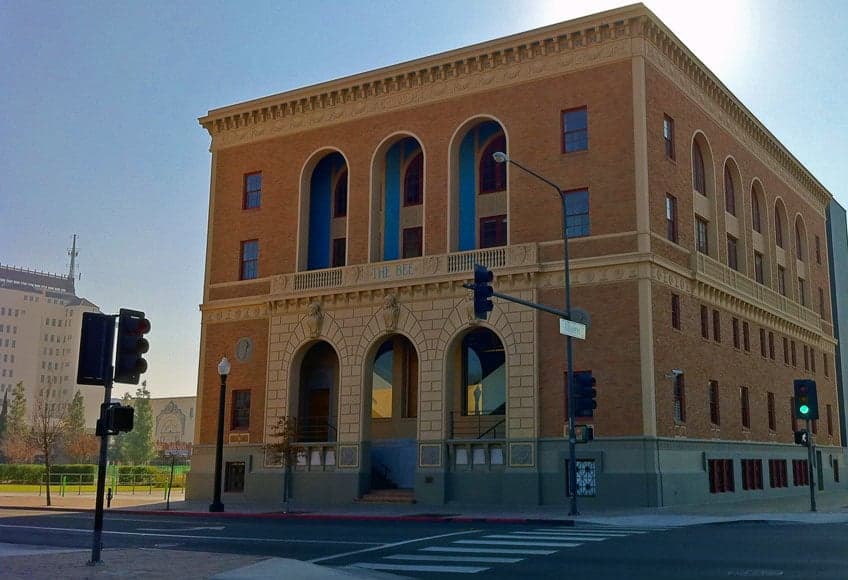
Photo: Wikipedia
Demographics of Fresno, CA
Affluence Level in Fresno, CA
A middle-class area roughly in line with national averages across income, home values, education, and employment.
People of Fresno, CA
Fresno, California is a majority-minority city of 543,615 residents, defined by its large Hispanic population (50.6%) and significant East/Southeast Asian (10.5%) and Indian (3.4%) communities. The city’s white population stands at 24.7%, while Black residents make up 6.3%. With a foreign-born share of 9.0% and a college attainment rate of 24.9%, Fresno is a working-class agricultural hub that has become a primary destination for immigrant families and domestic migrants seeking affordable housing and Central Valley job opportunities.
How the city was settled and grew
Fresno was founded in 1872 as a railroad stop for the Central Pacific Railroad, replacing an earlier settlement called Millerton that was submerged by the construction of Friant Dam. The city’s early growth was driven by the expansion of irrigated agriculture, particularly raisins, grapes, and cotton. The original white settlers were predominantly Anglo-American farmers and merchants from the Midwest and South, who established the Downtown Fresno and Tower District neighborhoods as the commercial and cultural core. By the early 1900s, Armenian immigrants fleeing Ottoman persecution arrived in significant numbers, settling in the Old Armenian Town district (now part of downtown) and establishing Fresno as a center of Armenian-American life. Japanese and Filipino farmworkers followed in the 1910s–1920s, forming enclaves in the West Fresno area, though many were displaced by internment during World War II. Mexican laborers arrived in large numbers during the Bracero Program (1942–1964), settling in West Fresno and the Calwa neighborhood, laying the foundation for the city’s Hispanic majority today.
Modern era (post-1965)
The Immigration and Nationality Act of 1965 reshaped Fresno’s demographics dramatically. Hmong refugees from Laos began arriving in the late 1970s and 1980s, creating one of the largest Hmong communities in the United States, concentrated in Southeast Fresno and the Clovis border area. Indian immigrants, primarily from Punjab, arrived in the 1980s and 1990s, drawn by agricultural work and small business opportunities, settling in North Fresno and the Fig Garden neighborhood. East/Southeast Asian communities—Vietnamese, Chinese, and Korean—grew steadily, with Vietnamese families clustering in Central Fresno near the Fresno Pacific University area. Domestic in-migration from California’s coastal cities accelerated after 2000, as families priced out of Los Angeles and the Bay Area moved to Fresno for cheaper housing. This wave has been predominantly white and Hispanic, settling in newer subdivisions in North Fresno and Clovis. The Black population, historically small, has remained stable at 6.3%, with concentrations in West Fresno and Southwest Fresno.
The future
Fresno’s population is trending toward greater ethnic diversity and geographic sorting. The Hispanic share is projected to grow past 55% by 2035, driven by higher birth rates and continued immigration from Mexico and Central America. The East/Southeast Asian and Indian populations are growing slowly but steadily, primarily through family reunification and professional migration to the healthcare and tech sectors. The white population is declining in absolute numbers, as older white residents age out and younger white families continue to move to the suburbs of Clovis and Madera. The city is not homogenizing; rather, it is tribalizing into distinct enclaves: North Fresno is becoming a multiethnic middle-class zone, West Fresno remains predominantly Hispanic and Black with lower incomes, and Southeast Fresno is solidifying as a Hmong and East/Southeast Asian hub. The foreign-born share (9.0%) is below the national average, suggesting that second- and third-generation families are assimilating linguistically and economically, though ethnic clustering persists.
For a conservative-leaning individual or family moving to Fresno, the city offers a low-cost, family-oriented environment with strong agricultural and logistics employment, but with clear neighborhood sorting by ethnicity and income. The North Fresno and Clovis areas provide the most stable, higher-income, and politically moderate environments, while West Fresno and Southwest Fresno face higher crime and poverty rates. Fresno is becoming a more diverse, suburbanized city, but one where ethnic enclaves remain distinct and where newcomers will find their experience shaped heavily by which neighborhood they choose.

* Values derived from national, state, county, city and local statistics and may differ in a specific area. Last updated: 2026-04-30T07:51:53.000Z
Narrative content on this page is AI-generated and may contain mistakes. Verify any details that matter before acting on them.
ReloMaps may earn a commission from affiliate links at no extra cost to you.

