 Popular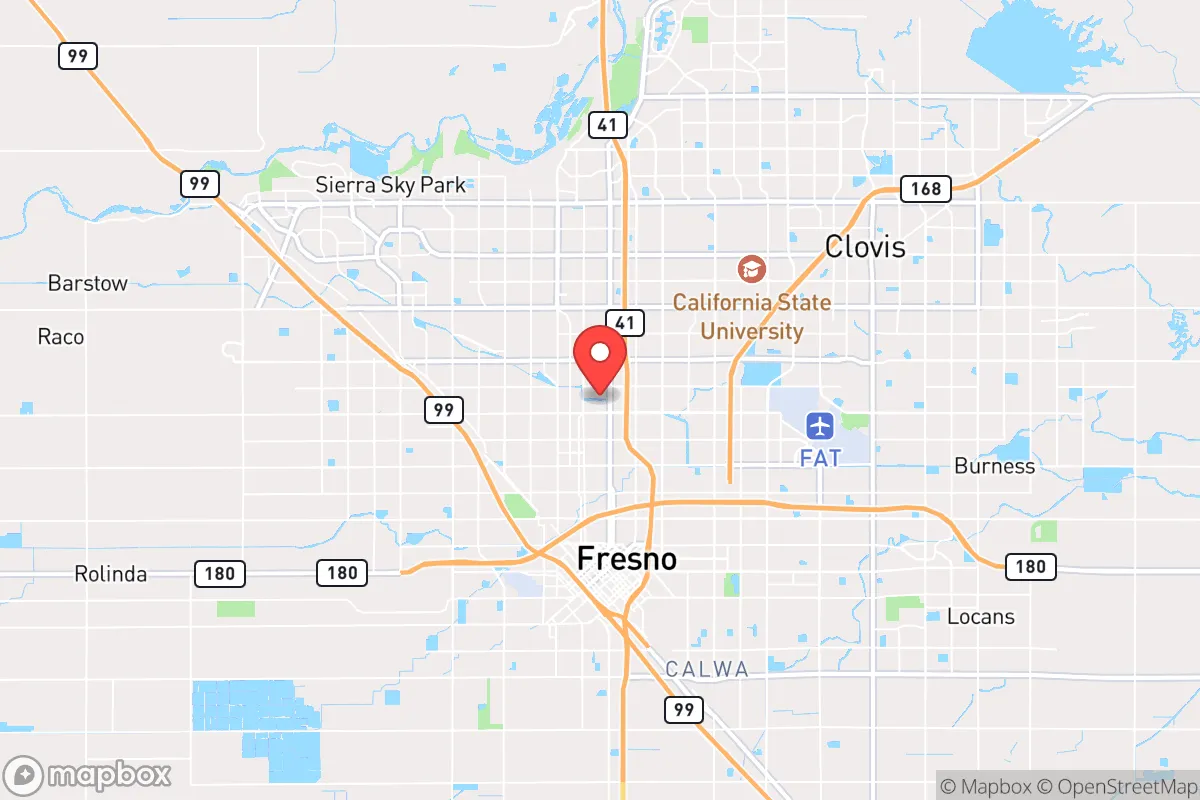
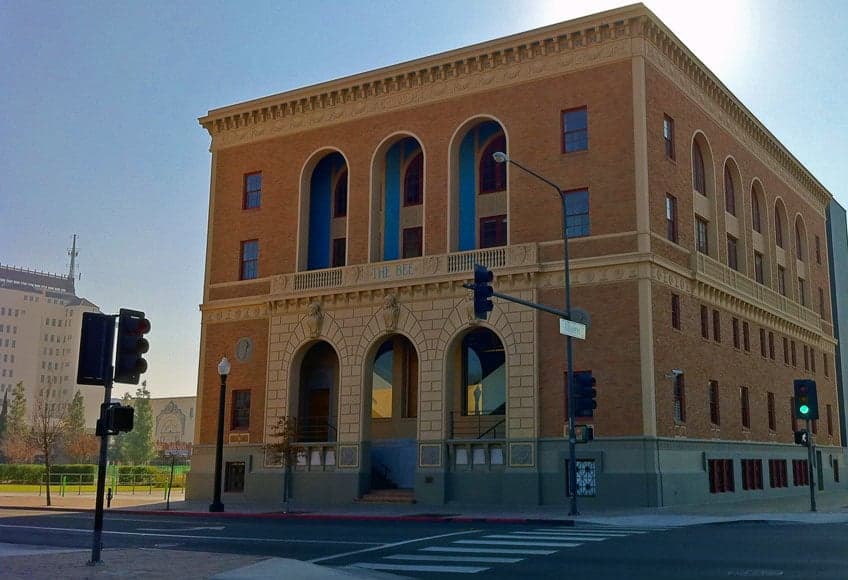
Photo: Wikipedia
Strategic Assessment of Fresno, CA
Multiple tactical vulnerabilities. Population density, target proximity, or disaster risk are likely compounding. A retreat property and exit planning is required.
What does the Strategic Assessment tell us?
Our Strategic Assessment grades tactical survivability of an area. Major population centers, military targets, fallout zones, natural disasters, and border exposure all drive risk — lower exposure means a more defensible position in a crisis.
This is heavily inspired by Joel Skousen's Strategic Relocation book. Highly recommended you checkout the book ($)What does this tell us?
Our Strategic Assessment grades tactical survivability of an area. Major population centers, military targets, fallout zones, natural disasters, and border exposure all drive risk — lower exposure means a more defensible position in a crisis.
This is heavily inspired by Joel Skousen's Strategic Relocation book. Highly recommended you checkout the book ($)Strategic Pillars

Key Distances
Regional Safe Places
Below is our recommended "safe zones" in California and the surrounding area based on our strategic heuristics. For most people, it's unrealistic to live in a “safe zone” full-time due to work, family or other personal reasons. They tend to be more rural. However, many of these areas are perfect for second homes and retreat properties that double as a vacation home or even a short-term rental.

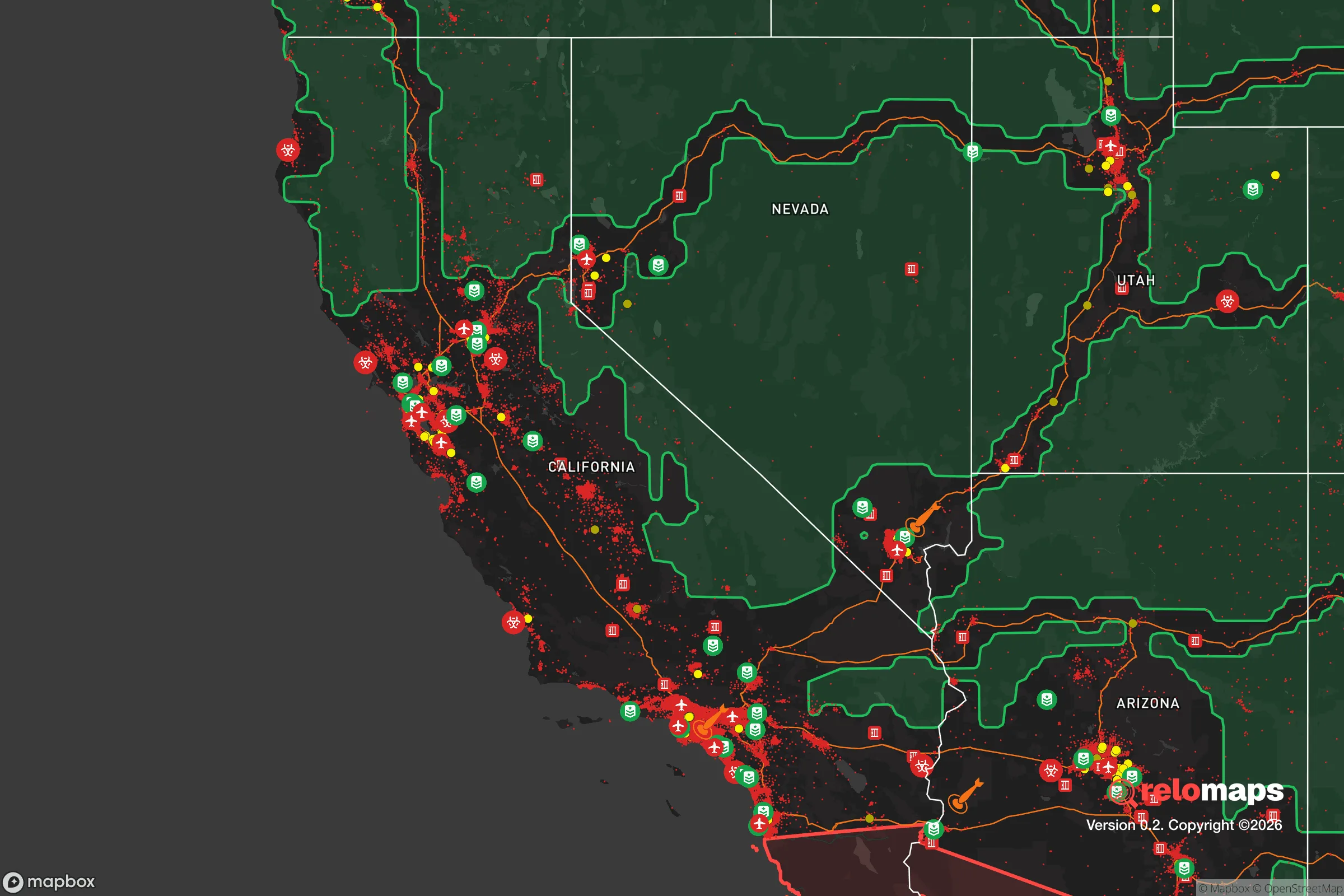


Important Note: For informational purposes only. This does not mean nothing bad ever happens in the green zones. Please use common sense. This is based on public data and modeled with AI. We tried to take a conservative approach but mistakes happen. We update this regularly as new information becomes available.
Solar Generator Recommendations
Backup power matters more here than in safer locations. We've picked three solar generators across budgets and capacity tiers — start with the budget unit if you only need a few essentials, or step up if you want to run a fridge and HVAC for days at a time.

Jackery Portable Power Station Explorer 300
Budget OptionPower on the Go: Weighing only 11 lbs, it's convenient to set up and store with book-sized foldable solar panels

BLUETTI Portable Power Station AC180
Designed for both indoor and outdoor scenarios, AC180 is highly capable as it has a robost capacity and continuous output power.

EF ECOFLOW DELTA Pro Ultra Power Station
Upgraded PickEcoFlow DELTA Pro Ultra is a whole-home energy system designed to grow with your family. Integrated with the Smart Home Panel 2, it scales to meet your evolving energy needs — keeping your home powered, intelligent, and secure through every stage of life.
We earn a commission, at no additional cost to you.
Strategic Assessment Analysis
Fresno sits in a geographic sweet spot that gives it genuine strategic depth, but it also carries serious liabilities that any prepper or conservative relocator needs to weigh. The city's position in the Central Valley offers a mix of agricultural self-sufficiency, inland security, and access to mountain redoubts, yet its proximity to major population centers and critical infrastructure targets means it's not a standalone survival haven. For a single individual or family looking to ride out civic unrest, economic collapse, or a major disaster, Fresno is a solid base of operations—provided you understand its exposure and plan accordingly.
Geographic position and natural advantages for long-term security
Fresno's location is its strongest card. It sits roughly halfway between Los Angeles and San Francisco, but it's far enough from both that you're not in the immediate blast zone of a coastal event—whether that's a tsunami, a nuclear strike on a major port, or the chaos of a city-wide collapse. The Sierra Nevada mountains lie to the east, offering a natural escape corridor into high-altitude terrain with abundant water, timber, and defensible positions. To the west, the Coast Ranges provide a buffer against coastal fallout and a secondary retreat option. The valley floor itself is flat, open, and intensely agricultural—Fresno County produces more than $7 billion in agricultural goods annually, making it one of the most productive farming regions in the world. That means local food supply is not a theoretical concern; it's a daily reality. For a prepper, that translates into direct access to fresh produce, dairy, and meat without relying on fragile supply chains. The climate is also a net positive: hot, dry summers reduce mold and pest issues for stored goods, and the winter rains are predictable enough to support rainwater catchment. The region's groundwater basin is one of the largest in California, and while it's been overdrafted for decades, it still provides a buffer during drought years that coastal cities simply don't have.
Risks, exposures, and proximity to fallout-relevant landmarks
Here's where the analysis gets sobering. Fresno's strategic value is undercut by its proximity to several high-value targets. California's major military installations—including Naval Air Station Lemoore (home to the Navy's F/A-18 fleet) and Fort Irwin—are within a 2-3 hour drive. In a major conflict or terrorist event, these are primary targets. The San Onofre Nuclear Generating Station, though decommissioned, still sits on the coast about 200 miles south, and the Diablo Canyon plant is about 150 miles west. A radiological release from either could contaminate the Central Valley's water and soil, depending on wind patterns. More immediately, Fresno itself is a transportation and logistics hub: Highway 99 and Interstate 5 both run through the region, and the city has a major rail yard and a commercial airport. In a grid-down scenario, those arteries become chokepoints for refugees fleeing the coast, and Fresno would likely see a surge of displaced people within 48-72 hours. The city's population of roughly 550,000 swells to over a million when you include the metro area, and that density is a liability when civil order fractures. Gang activity is persistent—Fresno has historically ranked among the top 20 most violent cities in the U.S. per capita—and in a crisis, that pre-existing criminal infrastructure will mobilize faster than any neighborhood watch. The 2020 civil unrest saw looting and property damage in Fresno's downtown and shopping districts, a preview of what a larger collapse could look like.
Practical resilience for a relocator: food, water, energy, and defensibility
For a relocator serious about self-sufficiency, Fresno offers a mixed bag. On the food front, you're in the heart of the nation's salad bowl. Farmers markets operate year-round, and you can buy directly from growers at prices that undercut grocery stores by 30-50%. Canning, dehydrating, and root-cellar storage are viable here because of the dry climate. Water is the bigger concern. The city's municipal supply comes from a combination of surface water (via the Friant-Kern Canal and Millerton Lake) and groundwater. In a prolonged drought or infrastructure failure, wells are your lifeline—but drilling a new well in Fresno County can cost $20,000-$40,000, and permits are not guaranteed. If you're renting or buying in a subdivision, you're tied to the municipal grid. Solar is a strong play here: Fresno averages 271 sunny days per year, and net metering policies (though under attack in California) still make rooftop solar a sound investment for reducing grid dependence. Battery storage is essential, because the grid is aging and PG&E has a track record of public safety power shutoffs during high-wind events. Defensibility is the weak link. The city is flat and sprawling, with few natural chokepoints. A rural property on the eastern fringe, near the foothills of the Sierra, offers better terrain for perimeter security and escape routes. Neighborhoods like Clovis, Sanger, or Reedley are more defensible than central Fresno, but they still sit on open ground. For a single individual or a family, the smart play is to secure a property with a well, solar, and a clear line of sight to approach routes, then treat Fresno proper as a supply hub rather than a permanent redoubt.
The overall strategic picture for Fresno is one of calculated trade-offs. It's not a bug-out location in the classic sense—you can't disappear into the woods and live off the land here. But it is a functional base with real logistical advantages: abundant food, decent water if you plan ahead, and a climate that supports off-grid energy and long-term storage. The risks are real—proximity to military targets, vulnerability to coastal refugee flows, and a baseline crime rate that will spike in any crisis. For a conservative relocator who values community, self-reliance, and the ability to produce rather than just consume, Fresno offers a foothold in California without the existential exposure of the coast. The key is to treat it as a staging ground, not a final destination. Secure your water, harden your home, build a network of like-minded neighbors, and keep a vehicle gassed up with a route to the mountains. If you do that, Fresno can work. If you don't, it's just another city waiting for the next disaster to expose its cracks.

* Values derived from national, state, county, city and local statistics and may differ in a specific area. Last updated: 2026-04-30T07:51:53.000Z
Narrative content on this page is AI-generated and may contain mistakes. Verify any details that matter before acting on them.
ReloMaps may earn a commission from affiliate links at no extra cost to you.

