 Popular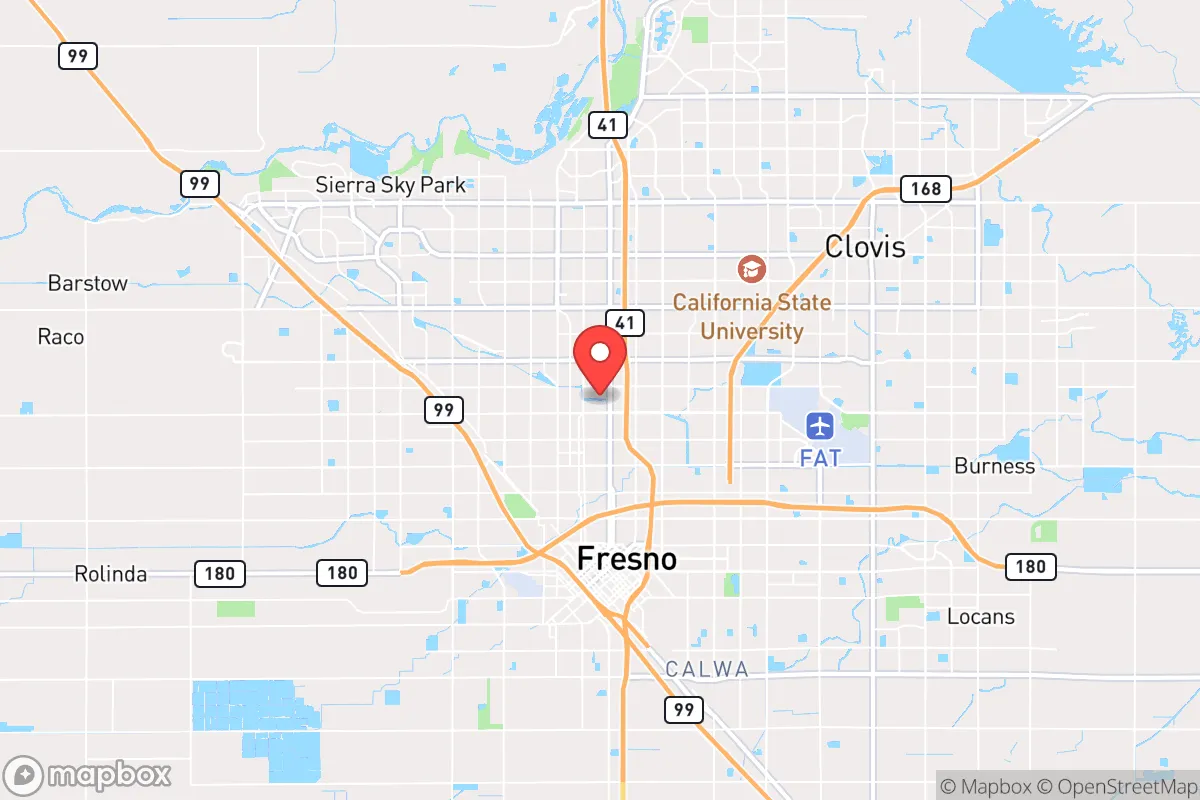
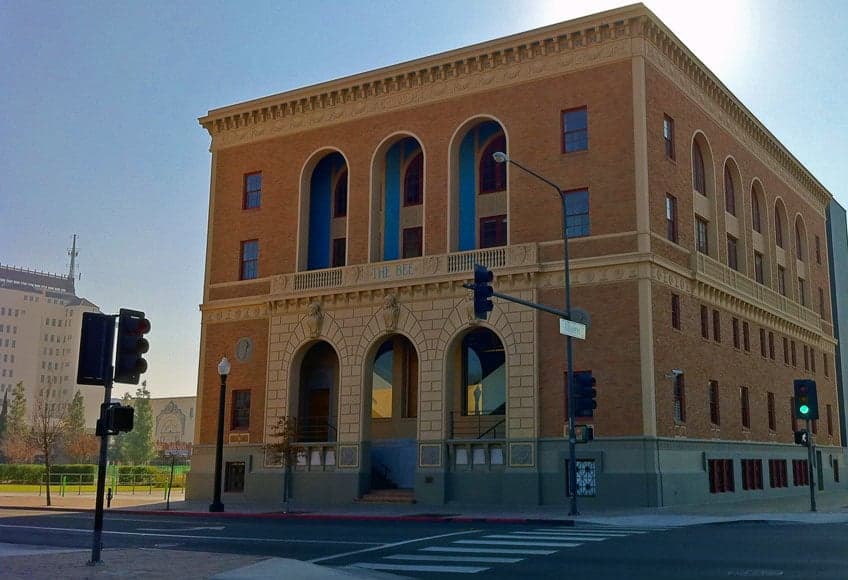
Photo: Wikipedia
Political ClimatePolitical Climate in Fresno, CA
District shown is the primary district for this city’s centroid. Cities may span multiple districts.
Local Political AnalysisPolitical Analysis of Fresno, CA
Fresno’s political climate has shifted noticeably leftward over the past decade, and if you’ve lived here as long as I have, you’ve felt it. The Cook PVI sits at D+4, meaning the city leans about four points more Democratic than the national average, but that number doesn’t tell the whole story. While the city itself votes reliably blue in presidential years—Biden took Fresno County by about 10 points in 2020—the surrounding areas tell a different tale. Head just 20 minutes north to Clovis or east to Sanger, and you’ll find reliably red precincts where folks still fly Trump flags and talk about property rights like they’re sacred. The real tension is between Fresno’s urban core, which has embraced progressive policies on housing and policing, and the outlying communities that want nothing to do with it.
How it compares
Fresno’s D+4 rating puts it in a weird middle ground compared to California’s coastal cities. It’s nowhere near as liberal as San Francisco (D+26) or Los Angeles (D+28), but it’s also not the conservative stronghold it was 20 years ago. Back in the 1990s, Fresno County regularly voted Republican in statewide races—Pete Wilson carried it in 1994. Today, the city council has a solid progressive majority, and the mayor, Jerry Dyer, is a former police chief who tries to walk a moderate line, but he’s constantly fighting against a council that wants to defund police programs and impose rent control. Compare that to Clovis, where the city council is all Republican and they’ve actively resisted state mandates on housing density. The contrast is stark: drive five miles north from downtown Fresno into Clovis, and you’ve crossed from a place where “equity” is the buzzword to one where “personal responsibility” still carries weight.
What this means for residents
For folks who value personal freedoms and limited government, Fresno’s trajectory is concerning. The city council has pushed through ordinances that feel like overreach—things like strict short-term rental regulations that make it harder to Airbnb your own property, and a “just cause” eviction ordinance that ties landlords’ hands even when tenants are causing problems. The school board has also leaned into progressive curriculum changes that some parents feel prioritize social activism over academics. If you’re a homeowner or small business owner, you’re dealing with more red tape and higher fees than you would in Clovis or even nearby Madera. The property tax base is still relatively low thanks to Prop 13, but the city is finding ways to nickel-and-dime residents with utility surcharges and development impact fees. Long-term, if the progressive wing keeps gaining ground, expect more zoning changes that favor high-density apartments over single-family homes, and more pressure on police to de-escalate rather than enforce.
One cultural distinction that stands out is Fresno’s relationship with water rights and agriculture. This is the heart of the Central Valley, where farming isn’t just an industry—it’s a way of life. The progressive push for environmental regulations, like stricter groundwater pumping limits and habitat restoration mandates, has real consequences for farmers and the working-class families who depend on them. You’ll hear a lot of talk about “sustainability” at city hall, but out in the fields, it feels like Sacramento bureaucrats are strangling livelihoods. The local gun culture is also strong—plenty of folks hunt and shoot recreationally—and the city’s attempts to pass safe-storage ordinances have been met with fierce resistance. If you’re looking for a place where government stays out of your business, Fresno’s urban core is becoming less friendly by the year, but the surrounding towns still offer a refuge for those who prefer the old ways.

State Political ClimatePolitical Climate in California
State Political AnalysisPolitical Environment in the State
California is a deep blue state where Democrats hold a supermajority in the legislature and control every statewide office, but its reputation as a monolithic progressive paradise hides a far more fractured reality. Over the last 20 years, the state has lurched sharply left on social and economic policy, yet that shift has triggered a measurable conservative backlash in the interior and even in some suburban pockets. For a conservative considering relocation, the key takeaway is that California is not one place—it’s a collection of warring political ecosystems, and where you land matters enormously.
Urban vs. rural divide
The political map of California is a tale of two nations. The coastal metros—Los Angeles, San Francisco, San Jose, and Oakland—drive the state’s blue lean with margins of 30 to 50 points. These areas are home to the tech oligarchy, entertainment industry, and public-sector unions that fund and vote for progressive candidates. In contrast, the Central Valley and inland regions are reliably red or purple. Bakersfield (Kern County) votes Republican by double digits, as does Redding (Shasta County) and most of the Sierra foothills. Even in blue strongholds, there are cracks: Orange County, once a GOP bastion, flipped to Biden in 2020 by a narrow margin, but its northern suburbs like Yorba Linda and Huntington Beach remain conservative redoubts. The rural-urban divide is so stark that some inland counties have passed symbolic “Second Amendment sanctuary” resolutions, while coastal cities ban gas stoves and mandate vaccine passports.
Policy environment
California’s policy environment is a case study in progressive governance—and a warning for freedom-minded residents. The state has the highest personal income tax rate in the nation (13.3%), a regressive sales tax that can exceed 10% in some cities, and some of the strictest gun laws in the country, including an assault weapons ban, a 10-day waiting period, and a “may issue” concealed carry regime that was recently tightened by SB 2 (2023). Education policy is dominated by the California Teachers Association, which has blocked school choice expansion and fought parental notification laws. In 2024, the legislature passed AB 1955, which prohibits schools from requiring staff to notify parents if a child changes their gender identity—a direct blow to parental rights. Healthcare is heavily regulated, with a state-run exchange (Covered California) and mandates that have driven up premiums. Election laws are among the most permissive: universal mail-in voting, same-day registration, and no voter ID requirement. For a conservative, the policy environment feels like a slow-motion erosion of personal autonomy, with Sacramento dictating everything from what kind of car you can drive to how you heat your home.
Trajectory & freedom
On the freedom index, California is moving in the wrong direction. The state has become less free over the past decade, especially on economic liberty and Second Amendment rights. The 2023 passage of SB 2 effectively ended “shall issue” concealed carry, forcing law-abiding citizens to prove “good cause” to a sheriff—a standard that is often denied in blue counties. On medical freedom, California was one of the first states to mandate COVID-19 vaccines for schoolchildren (though the mandate was paused), and it maintains some of the strictest vaccine requirements in the country. Property rights are under assault via the California Environmental Quality Act (CEQA), which is weaponized by NIMBY groups to block housing and infrastructure projects. On the positive side, Proposition 13 (1978) still caps property tax increases at 2% annually, offering some stability for homeowners, though it’s been eroded by commercial property tax splits and transfer taxes. The trajectory is clear: more regulation, higher taxes, and less individual discretion.
Civil unrest & political movements
California has been a flashpoint for political unrest, from the 2020 George Floyd protests that saw widespread looting in Los Angeles and San Francisco to the ongoing battles over homelessness and drug decriminalization. The state’s sanctuary law (SB 54, 2017) limits cooperation between local law enforcement and federal immigration authorities, creating tension with ICE and fueling a backlash in inland counties. In 2024, Huntington Beach passed a voter ID requirement for municipal elections, directly challenging state law and sparking a lawsuit from the attorney general. The “Calexit” movement, while fringe, has gained some traction among disaffected conservatives, and several counties have passed resolutions supporting secession or nullification of state gun laws. Election integrity remains a hot-button issue: after the 2020 election, the state’s universal mail-in system was criticized by conservatives for lax signature verification and ballot harvesting, though no widespread fraud was proven. A new resident will notice the political polarization in everyday life—from bumper stickers to local news coverage—and the constant tension between coastal progressivism and inland conservatism.
Projection
Over the next 5-10 years, California will likely become more blue, but also more internally fractured. Demographic trends favor Democrats: the state’s growing Latino population leans left, and the white working-class base that once supported Republicans is shrinking. However, the high cost of living and regulatory burden are driving a net domestic out-migration of about 300,000 people per year, many of them middle-class conservatives moving to Texas, Arizona, or Idaho. This “brain drain” of red-leaning residents will make the state even more Democratic, but it will also hollow out the interior, leaving behind a population that is increasingly polarized between wealthy coastal liberals and struggling inland conservatives. The state’s budget is a ticking time bomb—pension liabilities and a volatile income tax base (heavily dependent on capital gains) could trigger a fiscal crisis within a decade. For a conservative moving in now, expect to pay higher taxes, face more regulations, and live in a state where your vote in statewide elections will be marginalized. But if you choose your county wisely—say, Placer County (suburban Sacramento) or San Diego County (where the GOP still holds some local offices)—you can find a community that reflects your values, at least at the local level.
Bottom line: California is a beautiful state with a world-class economy, but it is governed by a political class that is increasingly hostile to conservative values. If you move here, you will pay more in taxes, face more restrictions on your freedoms, and live in a state where your political voice is diluted. However, if you are willing to fight at the local level—school boards, city councils, county sheriffs—you can carve out a life that works. Just don’t expect the state to change course anytime soon. The progressive machine is too entrenched, and the people who would vote against it are leaving.
* Values derived from national, state, county, city and local statistics and may differ in a specific area. Last updated: 2026-04-30T07:51:53.000Z
Narrative content on this page is AI-generated and may contain mistakes. Verify any details that matter before acting on them.
ReloMaps may earn a commission from affiliate links at no extra cost to you.

