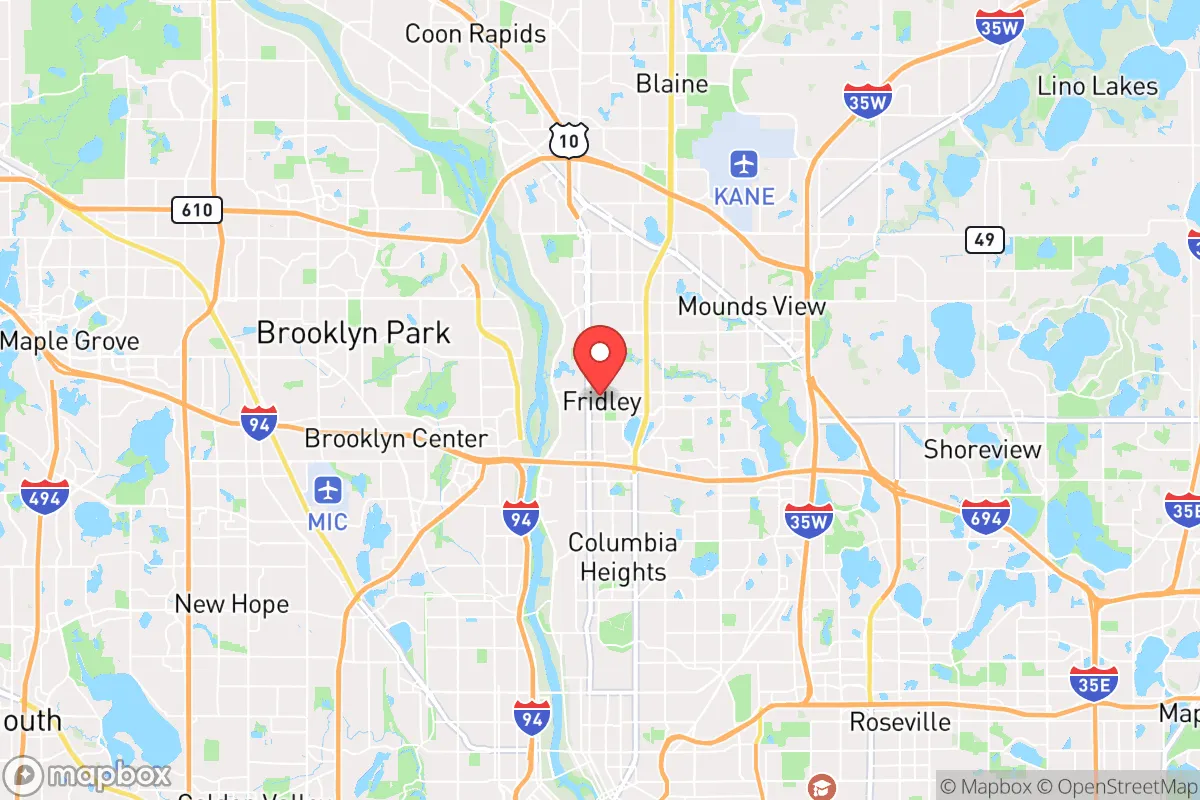
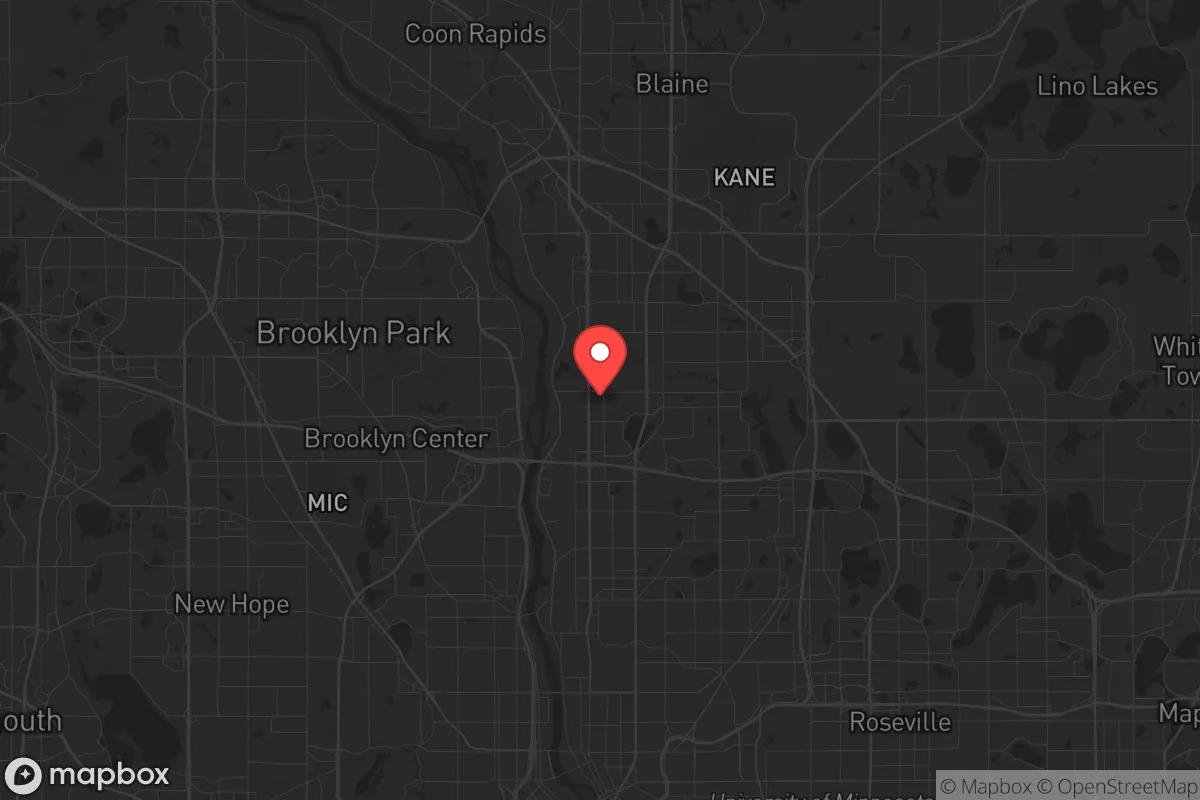
Personal Sovereignty in Fridley, MN
Viable for self-reliance. Generally workable, though some barriers may limit total independence.
What does Personal Sovereignty tell us?
Personal Sovereignty measures your capacity for self-reliance and independence with minimal government friction. Higher scores mean fewer barriers between you and the way you want to live... but it assumes you have the space you need and good neighbors.
What does this tell us?
Personal Sovereignty measures your capacity for self-reliance and independence with minimal government friction. Higher scores mean fewer barriers between you and the way you want to live... but it assumes you have the space you need and good neighbors.
State Policy
Energy independence: Importer (20% of energy produced in-state)
Personal Liberty
Homesteading

Personal Liberty Analysis
Fridley, Minnesota, presents a mixed picture for those prioritizing personal sovereignty, where the state’s progressive regulatory framework often clashes with the practical autonomy many conservative-leaning individuals seek. While the city itself is a modestly-sized suburb of Minneapolis, its legal and political environment is heavily shaped by state-level mandates that can feel intrusive to those valuing self-reliance and minimal government overreach. For a survivalist or prepper mindset, Fridley offers some logistical advantages—like proximity to supply chains and a relatively stable community—but the overarching regulatory climate demands careful navigation, particularly regarding taxes, self-defense, and personal liberties.
Tax burden and regulatory posture: How state-level policies affect your wallet and freedom
Minnesota’s tax burden is among the highest in the nation, and Fridley residents feel this acutely. The state imposes a progressive income tax with rates topping out at 9.85% for high earners, and combined state and local sales taxes in Fridley exceed 8%. Property taxes in Anoka County are also above the national average, with the effective rate hovering around 1.1% of home value. For a prepper focused on financial independence, this means a significant portion of income is diverted to government programs you may not support. The regulatory posture extends beyond taxes: Minnesota has strict environmental and land-use rules, including a robust state building code and wetland protections that can complicate even minor property modifications. The state’s energy code is particularly stringent, requiring high-efficiency HVAC and insulation standards that raise the cost of new construction or major renovations. While these rules aim for sustainability, they also represent a layer of bureaucratic oversight that can feel like government overreach when you simply want to build a shed or install a backup generator without permits.
Self-defense and gun law specifics: What you can and cannot do in Fridley
Minnesota is a “shall-issue” state for concealed carry permits, meaning law-abiding residents can obtain a permit to carry a firearm without subjective discretion from local authorities. However, the state has a patchwork of restrictions that limit where you can carry, including schools, government buildings, and private property with posted signage. Fridley itself does not have additional local gun ordinances beyond state law, which is a positive for gun rights advocates. But the state’s red flag law—enacted in 2023—allows law enforcement or family members to petition a court to temporarily remove firearms from individuals deemed a risk. For those concerned about government overreach, this law raises red flags about due process and potential abuse. Additionally, Minnesota bans “assault weapons” and large-capacity magazines under a 2023 law, which directly impacts preppers who prioritize AR-15s or high-round-count setups for home defense or SHTF scenarios. The state also requires a 30-day waiting period for handgun purchases and universal background checks for private sales. In short, while you can own firearms in Fridley, the legal landscape is increasingly restrictive, and the trend is toward further limitations.
Self-reliance and homesteading viability: Lot sizes, zoning, and off-grid feasibility
Fridley is a fully developed inner-ring suburb, which means large-scale homesteading is not realistic. Typical residential lots range from 0.15 to 0.3 acres, and zoning is predominantly single-family residential with strict setback requirements. Raising chickens is allowed with a permit, but larger livestock like goats or pigs are prohibited. Gardening is permitted, but homeowners associations (HOAs) in some neighborhoods may impose restrictions on front-yard gardens or unsightly structures like greenhouses. Off-grid living is effectively impossible within city limits: Fridley requires connection to municipal water and sewer, and building codes mandate grid-tied electrical systems. Solar panels are allowed but must comply with utility interconnection rules, and battery storage systems face fire code inspections. For those serious about self-reliance, Fridley’s density and regulations make it a poor fit. However, the city’s location along the Mississippi River and near major highways (I-694 and I-35W) offers strategic advantages for resupply and mobility in a crisis. If you’re looking for true homesteading viability, you’d need to look at exurban areas like Isanti or Chisago counties, where lot sizes of 5+ acres are common and zoning is far more permissive.
Personal liberties: Parental rights, medical autonomy, speech, and property
Parental rights in Minnesota are under increasing pressure. The state has a “safe and supportive schools” law that allows students to use preferred names and pronouns without parental notification, and school districts like Fridley’s have policies that can override parental authority on medical decisions. This is a major concern for conservative parents who believe they should have the final say in their children’s upbringing. Medical autonomy is similarly constrained: Minnesota has a vaccine mandate for school attendance (with limited exemptions), and the state’s emergency powers during COVID-19 included lockdowns and business closures that many viewed as excessive. On speech, Minnesota is generally protective of First Amendment rights, but the state has a “bias-motivated crime” law that can enhance penalties for speech perceived as hateful, which some argue chills political expression. Property rights are relatively strong in Fridley, with no rent control or extreme eminent domain abuses, but the state’s environmental regulations can limit what you do with your land—for example, you cannot clear wetlands without a permit, and shoreline buffers are mandatory near the Mississippi. Overall, personal liberties in Fridley are constrained by a state government that actively intervenes in family, medical, and property decisions, which may feel suffocating to those who prioritize individual sovereignty.
In the broader context of the Upper Midwest, Fridley’s sovereignty profile is below average for conservative-leaning individuals. Compared to states like Wisconsin or South Dakota, Minnesota’s tax burden, gun restrictions, and regulatory density are significantly higher. Even within Minnesota, rural counties like Morrison or Kanabec offer far more freedom in terms of land use, lower taxes, and less government intrusion. Fridley’s main draw is its proximity to jobs and infrastructure, but for those who value self-reliance and minimal government overreach, it’s a location that requires constant vigilance and compromise. If you’re serious about prepping and personal sovereignty, Fridley is a place to pass through, not settle down.

* Values derived from national, state, county, city and local statistics and may differ in a specific area. Last updated: 2026-04-30T08:29:21.000Z
Narrative content on this page is AI-generated and may contain mistakes. Verify any details that matter before acting on them.
ReloMaps may earn a commission from affiliate links at no extra cost to you.

