Political ClimatePolitical Climate in Fridley, MN
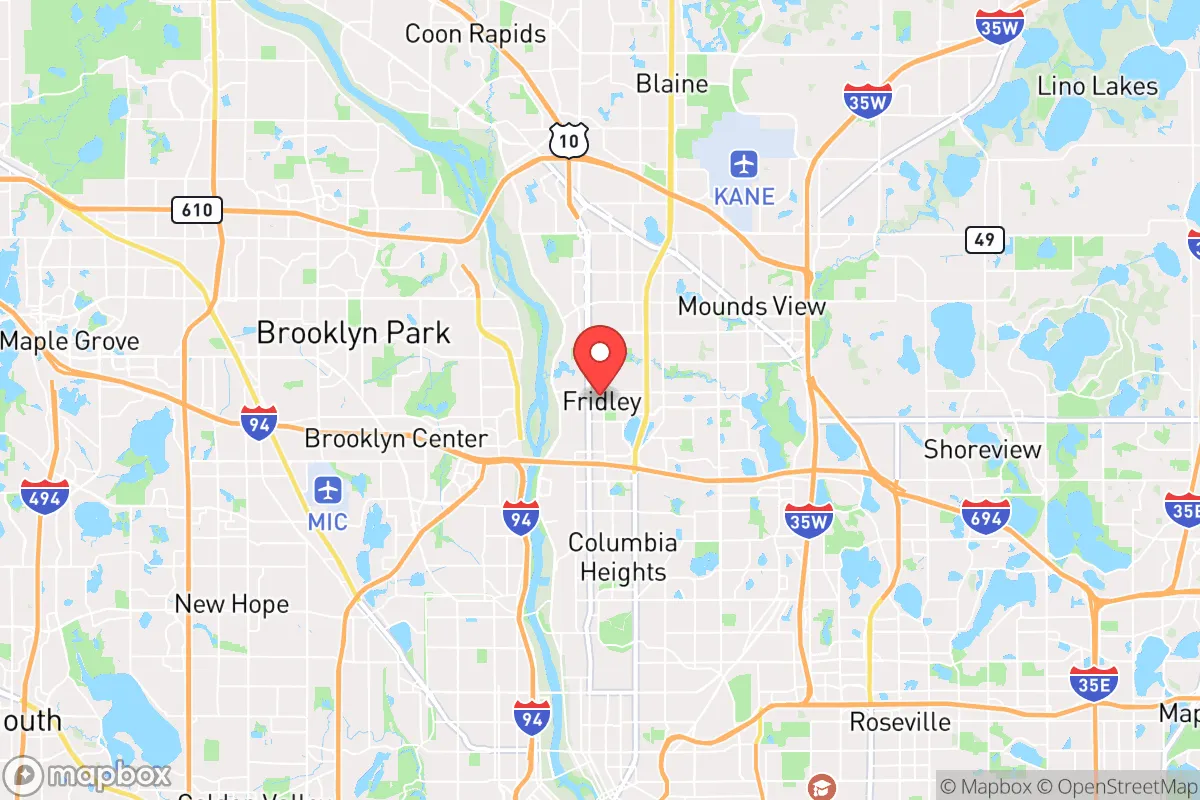
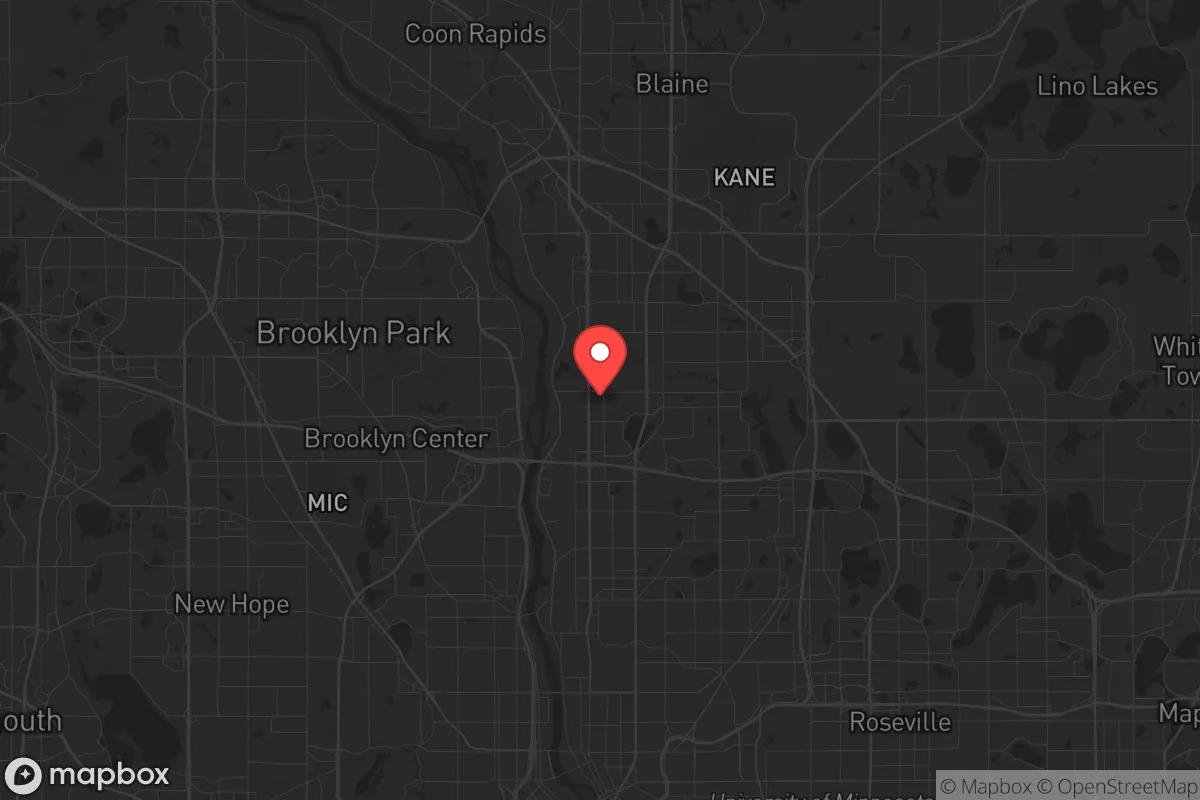
District shown is the primary district for this city’s centroid. Cities may span multiple districts.
Local Political AnalysisPolitical Analysis of Fridley, MN
Fridley is about as deep blue as it gets in Minnesota, with a Cook PVI of D+32, meaning it votes more than 30 points more Democratic than the national average. That wasn't always the case—this used to be a solidly working-class, union Democrat town where folks were more focused on a fair day's pay than on social experiments. Over the last decade or so, the shift has been toward a much more progressive, government-heavy approach, and it's not slowing down. You can feel it in everything from local ordinances to how the city spends its money.
How it compares
If you drive ten minutes north to Blaine or east to Lino Lakes, you'll find a completely different political vibe—those areas lean more conservative, with a mix of libertarian-leaning independents and traditional Republicans. Fridley, by contrast, is surrounded by suburbs that have gone the same direction: Columbia Heights and Brooklyn Center are similarly blue, while New Brighton is a bit more purple but still left of center. The real contrast is with Anoka County as a whole, which is more balanced, but Fridley is an island of deep-blue politics within it. Statewide, Fridley's delegation in the legislature is reliably progressive, and local city council races rarely see serious conservative challengers. It's a one-party town in practice, which means there's not much debate on the direction things are heading.
What this means for residents
For someone who values personal freedom and limited government, living here means watching the city get more involved in your daily life. Fridley has embraced progressive policies like rent control discussions, strict zoning rules that limit property rights, and a general willingness to raise taxes for social programs. The school district has also pushed equity initiatives and curriculum changes that some parents find intrusive. If you're a small business owner or a homeowner who wants to be left alone, you'll feel the pressure of a government that sees itself as a problem-solver for everything. The upside is that services are well-funded—parks, libraries, and public safety are top-notch—but the trade-off is a steady creep of regulations and mandates that can feel suffocating if you're not on board with the agenda.
Looking ahead, I don't see this changing much. The demographics are shifting younger and more diverse, which tends to reinforce the progressive tilt. The long-term trend is toward even more government involvement in housing, energy, and even how you use your own property. If you're a conservative or even a moderate who values fiscal restraint and personal autonomy, you'll likely find yourself increasingly at odds with the local direction. It's not a bad place to live if you keep your head down and don't rock the boat, but don't expect the political climate to become more friendly to your values anytime soon. The culture here is one of collective action over individual liberty, and that's baked into the cake at this point.

State Political ClimatePolitical Climate in Minnesota
State Political AnalysisPolitical Environment in the State
Minnesota has shifted from a classic purple battleground to a reliably blue state over the past two decades, with Democrats now controlling the governorship, both legislative chambers, and the entire federal delegation. The state voted for Hillary Clinton by 1.5 points in 2016, Joe Biden by 7 points in 2020, and Kamala Harris by 4 points in 2024, but the real story is the collapse of Republican performance in the Twin Cities suburbs and the simultaneous hardening of rural red counties. For a conservative considering relocation, the state offers a stark split: a progressive metro core that drives statewide policy, and vast stretches of conservative-leaning countryside that feel increasingly disconnected from St. Paul.
Urban vs. rural divide
The political map of Minnesota is a tale of two states. The Twin Cities metro — Hennepin, Ramsey, and Dakota counties — delivers roughly 55% of the state’s vote and leans heavily Democratic. Minneapolis and St. Paul themselves are deep blue, but the real shift has been in the inner-ring suburbs like Edina, Bloomington, and Richfield, which were once competitive and now routinely vote 60-70% Democratic. Outstate Minnesota, by contrast, is overwhelmingly Republican: the Iron Range (St. Louis County) has flipped from reliably Democratic to competitive or even red in recent cycles, while counties like Stearns (St. Cloud), Olmsted (Rochester), and Washington (Woodbury) remain purple but trending left. The rural-urban divide is so sharp that a conservative living in a place like Bemidji or Mankato will find their state government dominated by representatives from Minneapolis, with little say in the policies that affect their daily lives.
Policy environment
Minnesota’s policy environment has shifted dramatically leftward since Democrats took full control in 2023. The state now has a progressive income tax with a top rate of 9.85%, one of the highest in the nation, and a statewide sales tax of 6.875% that local governments can stack on top. Property taxes are above average, especially in the metro. The 2023 session saw the passage of a paid family and medical leave program funded by a new payroll tax, a carbon-free electricity mandate by 2040, and the legalization of recreational marijuana. On education, Minnesota has some of the strongest teacher union protections in the country, and the state recently eliminated the requirement for school districts to notify parents of curriculum changes involving gender identity or sexual orientation — a move that has sparked parental rights battles in districts like Rochester and St. Cloud. Election laws now include automatic voter registration, same-day registration, and no-excuse absentee voting, which critics argue erodes ballot security. For a conservative, the policy environment feels increasingly hostile to traditional values and fiscal restraint.
Trajectory & freedom
Over the past three years, Minnesota has become markedly less free by any measure of personal liberty that conservatives value. The 2023 legislative session was a firehose of progressive bills: the aforementioned paid leave mandate, a ban on non-compete agreements, a law requiring all new buildings to meet strict energy codes, and a "clean car" rule that effectively bans new gas-powered vehicle sales by 2035. On gun rights, Minnesota passed a red flag law and universal background checks in 2023, and a permit-to-carry law remains in place but is under constant attack. The state also enacted a "trans refuge" law shielding gender-affirming care for minors from out-of-state parents seeking to intervene, which directly conflicts with parental rights laws in neighboring states like South Dakota and Iowa. Property rights have been eroded by a new law allowing local governments to impose rent control and by aggressive environmental regulations that limit development in rural areas. The trajectory is clear: each session brings more mandates, higher taxes, and less individual autonomy.
Civil unrest & political movements
Minnesota has been a flashpoint for civil unrest since the George Floyd protests in 2020, which caused over $500 million in damage in Minneapolis and St. Paul and led to a lasting breakdown in trust between law enforcement and the progressive establishment. The state’s sanctuary policies — including a 2023 law that limits local cooperation with federal immigration enforcement — have made it a destination for illegal immigration, particularly in the Twin Cities and in agricultural areas like Worthington and Willmar, where meatpacking plants have drawn large immigrant populations. On the right, the "Take Back Minnesota" movement and local school board takeovers in places like Lakeville and Prior Lake have mobilized parents against curriculum and library policies. Election integrity remains a hot-button issue: the 2020 election saw a narrow Biden win, but allegations of ballot harvesting and irregularities in the metro have never been fully resolved to the satisfaction of many conservatives. The political atmosphere is tense, with visible polarization in everything from yard signs to school board meetings.
Projection
Looking ahead five to ten years, Minnesota is likely to become even more blue. The Twin Cities metro continues to grow, while rural counties lose population, meaning the political center of gravity shifts further left with each census. In-migration from blue states like California and Illinois is accelerating, particularly to the western suburbs and exurbs like Maple Grove and Chanhassen, bringing voters accustomed to progressive governance. The state’s Democratic trifecta is unlikely to be broken anytime soon, as the GOP has struggled to win statewide races since Tim Pawlenty left office in 2011. A conservative moving to Minnesota now should expect higher taxes, more regulations, and a cultural environment that increasingly marginalizes traditional values. The best bet for a like-minded individual is to settle in a red-leaning exurb or rural county like Wright County or Sherburne County, where local government remains conservative, but state-level policy will continue to be dictated by the metro.
For a conservative considering Minnesota, the bottom line is this: you can find a good life here in the right community, but you will be swimming against a strong progressive current at the state level. The schools, infrastructure, and natural beauty are top-notch, but the cost in taxes and lost freedoms is high. If you value low taxes, gun rights, parental control over education, and a government that stays out of your life, Minnesota is no longer a safe bet — and the trend lines suggest it will only get worse.
* Values derived from national, state, county, city and local statistics and may differ in a specific area. Last updated: 2026-04-30T08:29:21.000Z
Narrative content on this page is AI-generated and may contain mistakes. Verify any details that matter before acting on them.
ReloMaps may earn a commission from affiliate links at no extra cost to you.

