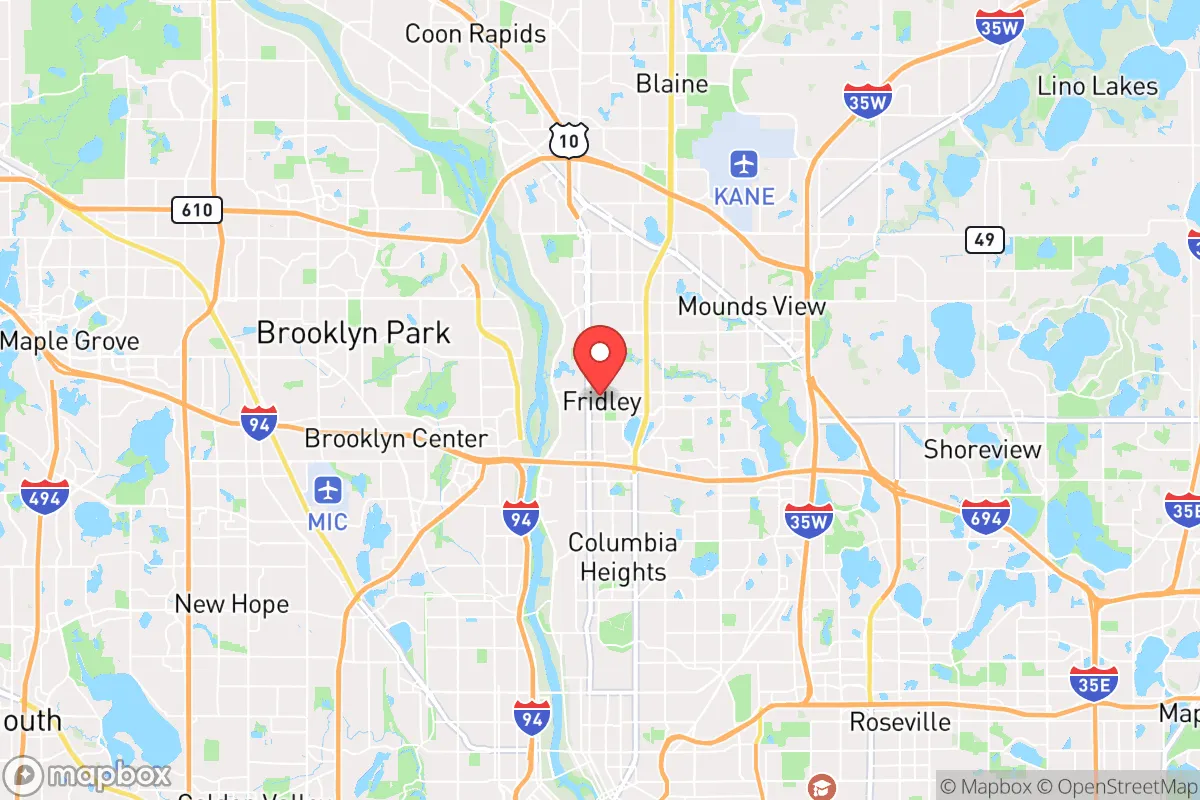
Quality of Life in Fridley, MN
Above-average quality of iife. The area offers a reasonable cost of living, decent mobility, and a mix of neighborhood amenities.
What does Quality of Life tell us?
Quality of Life blends cost of living, nearby amenities, socioeconomic signals, and neighborhood character. City-level scores represent the whole municipality; individual neighborhoods can differ.
What does this tell us?
Quality of Life blends cost of living, nearby amenities, socioeconomic signals, and neighborhood character. City-level scores represent the whole municipality; individual neighborhoods can differ.
Cost of Living
5% above national average
The Real Cost of Living in Fridley, MN for 2026
| Tier | Individual | Family (4) |
|---|---|---|
| Survival | $20k | $38k |
| Comfortable | $54k | $79k |
| Luxury | $119k+ | $184k+ |
| Elite (Top 5%) | $140k+ | $217k+ |
100%
The Area Signal
A metric tracking the socioeconomic signals of the area.
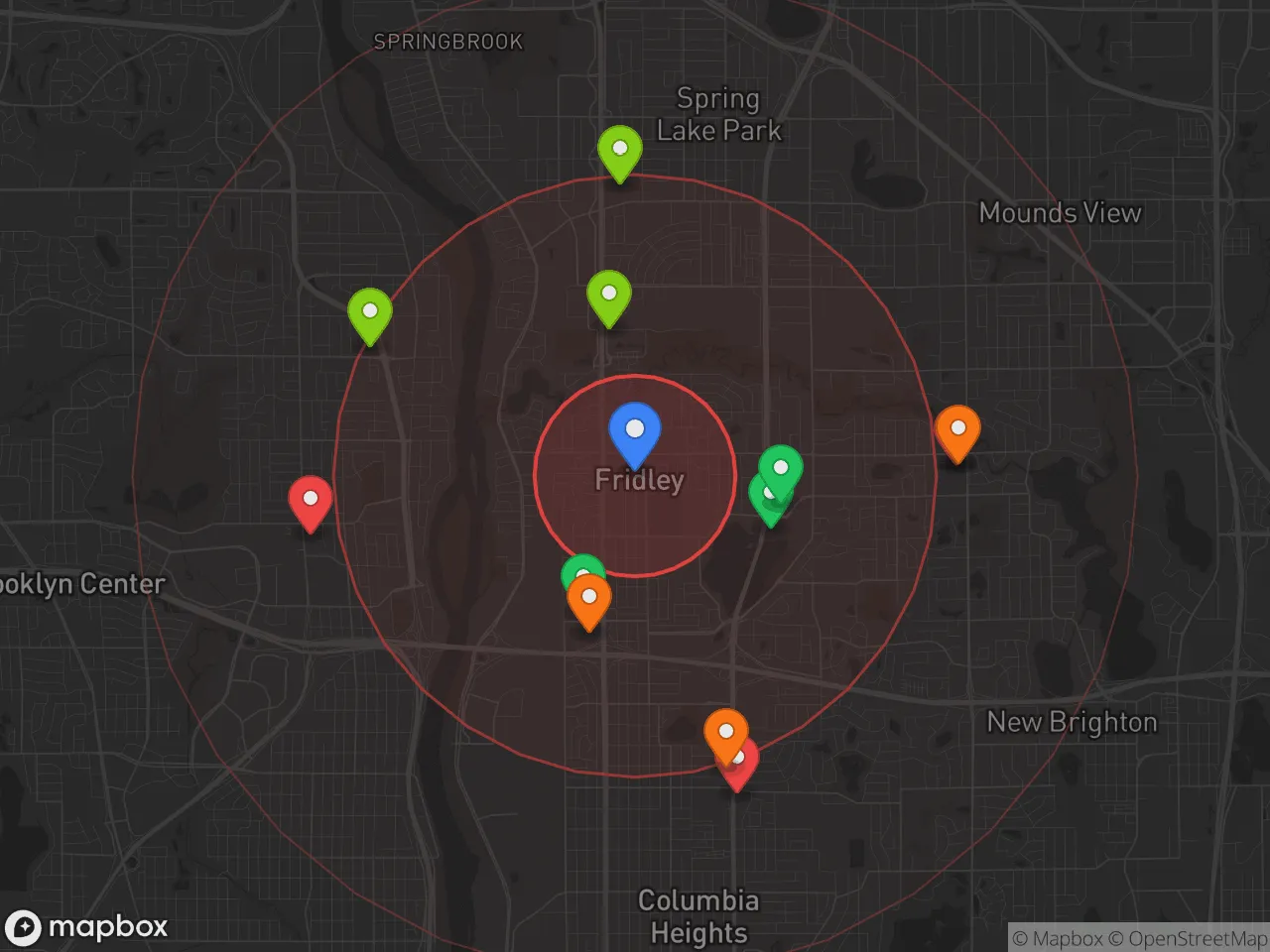
Hobbies
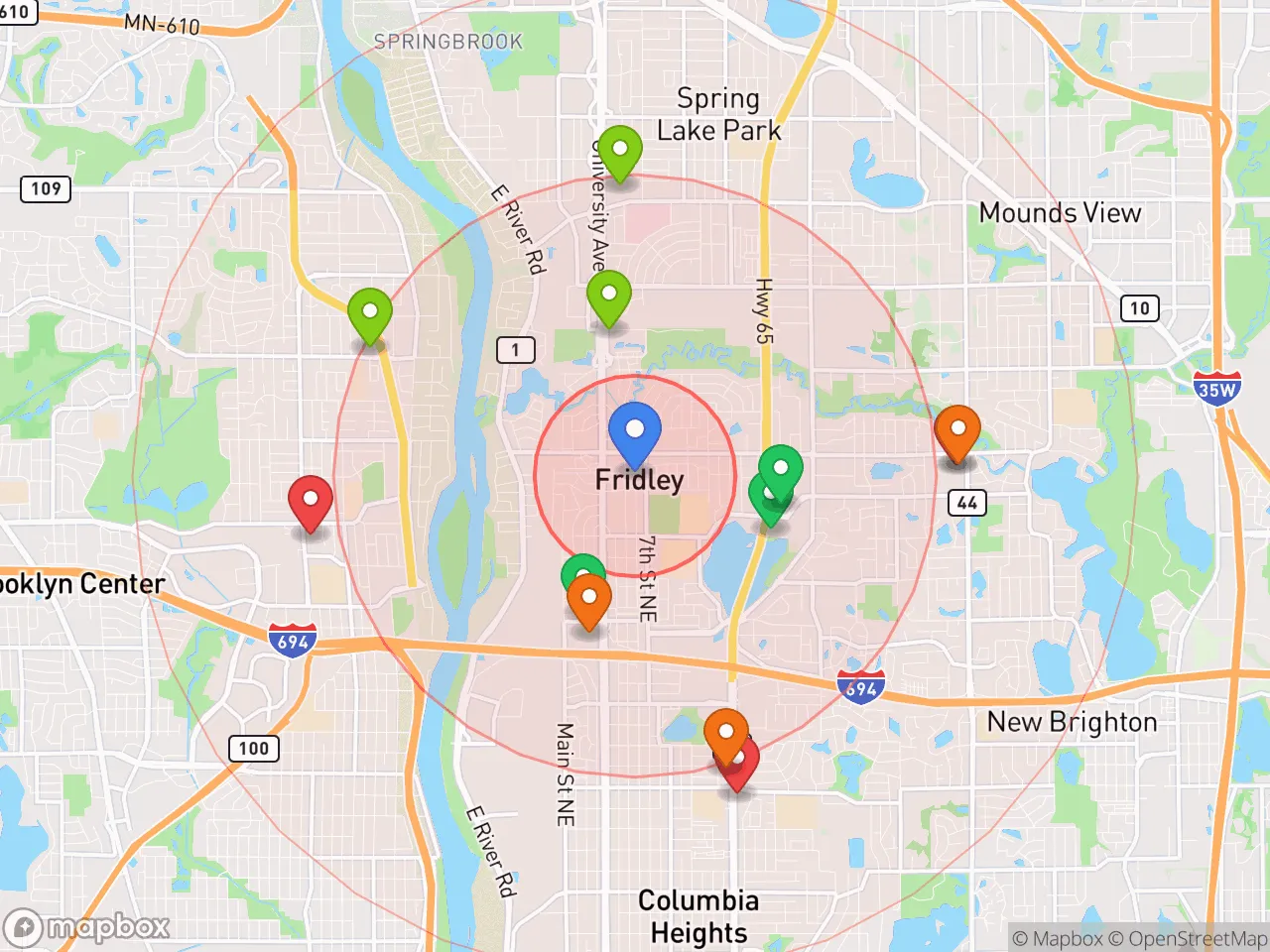
Explore the areaGroceries
5 within 10 miles
Gas
20 within 10 miles
Hospital
20 within 20 miles
Airport
JFK — John F. Kennedy Memorial
Post Office
USPS — Fridley, MN
Critical Amenities
Quality-of-Life Analysis
Fridley, Minnesota, offers a middle-market quality of life that balances suburban comfort with urban proximity, attracting a mix of young professionals, growing families, and long-term residents. With a cost of living index of 105 (just 5% above the U.S. average) and a median home value of $277,100, the city provides a more attainable entry point into the Twin Cities metro than pricier neighbors like Edina or Minnetonka. The typical resident is a working professional or tradesperson who values short commutes, solid public schools, and access to the Mississippi River corridor without the premium price tag of Minneapolis proper.
How housing costs and daily expenses compare to nearby suburbs
Fridley’s affordability stands out in Anoka County. The median home value of $277,100 is roughly $50,000 below the metro-area median, while median rent of $1,270 undercuts Minneapolis averages by about $200 per month. This pricing gap is driven by Fridley’s older housing stock—many ranch-style and split-level homes built in the 1950s and 1960s—which keeps entry costs low compared to newer developments in Blaine or Coon Rapids. The average commute of 23.5 minutes is a key draw: Interstate 694 and Highway 65 cut through the city, giving residents a faster drive to downtown Minneapolis (15–20 minutes) than many western suburbs. Utility costs and grocery prices align closely with national averages, though property taxes in Anoka County run slightly higher than in adjacent Ramsey County, adding roughly $200–$400 annually to a typical mortgage payment.
What daily life is like for families: schools, parks, and local amenities
Fridley Public Schools (ISD 14) serve most of the city, with Hayes Elementary and Fridley Middle School earning consistent ratings above state averages on standardized tests. The district’s small size—about 2,800 students—allows for personalized attention, and the Fridley High School International Baccalaureate program attracts families seeking college-prep rigor. For recreation, the city maintains over 20 parks, with Bohanon Park offering a splash pad, sports fields, and a community garden, while the Rice Creek Chain of Lakes Regional Park provides 5 miles of paved trails for biking and walking just north of town. Daily errands center on the Fridley Marketplace area (Cub Foods, Target, and local eateries), and the nearby Northtown Mall in Blaine adds retail and dining options. The rhythm of life here is quieter than in Minneapolis but more connected than exurbs like Andover—residents frequently cross into Columbia Heights or St. Anthony for dining and entertainment, and the Mississippi River’s Locks and Dam No. 1 offers a scenic spot for fishing or kayaking within a 10-minute drive.
Fridley is best suited for budget-conscious buyers who want a functional, low-fuss lifestyle within striking distance of downtown jobs and cultural amenities. It appeals strongly to first-time homeowners, tradespeople working at nearby industrial employers like Medtronic or Boeing, and families who prioritize short commutes and solid schools over prestige addresses. Retirees on fixed incomes also find value here, given the reasonable rents and proximity to Unity Hospital in Fridley. Those seeking high-end shopping, nightlife, or top-tier school rankings should look west to Maple Grove or south to Edina, but for a practical, well-connected base in the northern metro, Fridley delivers consistent value.

Crime in Fridley, MN
Generally safer than 63% of comparable U.S. locations.
Violent CrimeViolent Crime Analysis
Property CrimeProperty Crime Analysis
Crime Analysis
Fridley, Minnesota, reports a violent crime rate of 287.4 incidents per 100,000 residents and a property crime rate of 3,081.1 per 100,000, placing it above national averages for both categories. As a small city within the Minneapolis-Saint Paul metropolitan area, its safety profile is influenced by regional crime trends and the broader criminal justice policies of Anoka County and the state. Prospective residents should weigh these statistics against the realities of living in a densely populated metro region where progressive judicial philosophies often prioritize rehabilitation over incarceration, a factor that can contribute to higher recidivism and reduced public safety.
Crime in context
Fridley’s violent crime rate is roughly 20% higher than the national average of approximately 240 per 100,000, while its property crime rate is nearly double the national average of about 1,600 per 100,000. Compared to the state of Minnesota, which reported a violent crime rate of roughly 260 per 100,000 in recent years, Fridley is slightly elevated. The city’s property crime figure is particularly concerning, driven largely by thefts and burglaries common in suburban areas with easy highway access (I-694 and I-35W). These numbers reflect the challenges of a metro-adjacent community where crime from the urban core can spill over, and where local law enforcement operates within a state legal framework that has seen declining prosecution rates for non-violent offenses.
What residents experience
Residents report that property crime—including vehicle break-ins, package theft, and garage burglaries—is the most frequent safety concern, especially in neighborhoods near commercial corridors like Central Avenue and University Avenue. Violent crime is less common but not rare; incidents such as aggravated assaults and robberies occur, often concentrated around transit hubs and apartment complexes. The presence of progressive district attorneys in the Twin Cities metro, who have implemented policies like cash bail reform and reduced charging for certain thefts, means that repeat offenders are more likely to remain on the streets. This directly impacts Fridley residents, as property crime offenders often cycle through the system without meaningful consequences, eroding community trust and increasing the sense of vulnerability.
Neighborhood-level variation
Safety in Fridley is not uniform. The eastern side of the city, closer to the Mississippi River and featuring older single-family homes, tends to see lower crime rates than the western and central areas near major retail and multifamily housing. The Lakes District and areas around Moore Lake report fewer incidents, while the vicinity of the Fridley Marketplace and the Northtown Mall corridor experiences higher theft and disorder calls. Gated apartment communities and well-lit neighborhoods with active block clubs fare better, but the overall metro-area trend of lenient sentencing for property crimes means that even safer pockets are not immune to opportunistic theft. For those considering relocation, a thorough review of specific block-level crime maps and conversations with local police precincts are strongly advised.
* Values derived from national, state, county, city and local statistics and may differ in a specific area. Last updated: 2026-04-30T08:29:21.000Z
Narrative content on this page is AI-generated and may contain mistakes. Verify any details that matter before acting on them.
ReloMaps may earn a commission from affiliate links at no extra cost to you.

