Personal Sovereignty in Frisco, TX
Strong independent fundamentals that actively favor personal liberty and low regulation.
What does Personal Sovereignty tell us?
Personal Sovereignty measures your capacity for self-reliance and independence with minimal government friction. Higher scores mean fewer barriers between you and the way you want to live... but it assumes you have the space you need and good neighbors.
What does this tell us?
Personal Sovereignty measures your capacity for self-reliance and independence with minimal government friction. Higher scores mean fewer barriers between you and the way you want to live... but it assumes you have the space you need and good neighbors.
State Policy
Energy independence: Net exporter (220% of energy produced in-state)
Personal Liberty
Homesteading

Personal Liberty Analysis
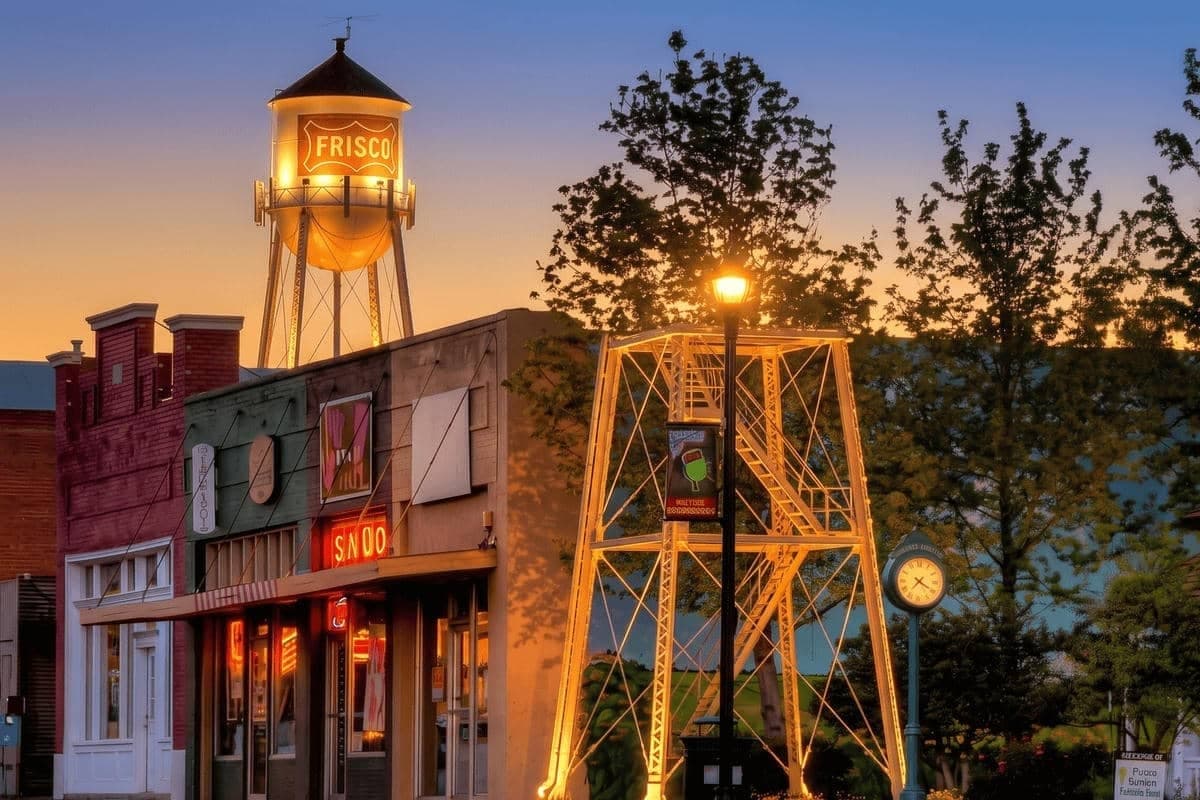
Frisco, Texas, offers a personal sovereignty environment that is among the strongest in the Dallas-Fort Worth metroplex, driven by Texas’s broad state-level protections for individual rights and a local regulatory posture that leans heavily toward property owner discretion. The city’s rapid growth—from roughly 6,000 residents in 1990 to over 220,000 today—has been shaped by a deliberate policy of low taxes, minimal zoning friction, and deference to personal choice in areas like self-defense, education, and property use. For a relocation reader prioritizing autonomy, Frisco represents a place where the default answer from government is often “yes,” provided you follow clear, predictable rules.
Tax burden and regulatory posture in Frisco: how light is the touch?
Frisco’s tax burden is among the lowest in the nation for a city its size, anchored by Texas’s absence of a state income tax. The combined property tax rate in Frisco typically falls between 2.0% and 2.3% of assessed value, which is moderate by Texas standards but higher than the national average due to the state’s reliance on property taxes to fund services. However, the city has no municipal property tax—Frisco’s general fund is supported by sales tax, franchise fees, and development charges—so the bulk of your property tax goes to the Frisco Independent School District (roughly 1.4%) and Collin County (about 0.5%). For a $500,000 home, that translates to roughly $10,000–$11,500 annually, a figure that is predictable and stable, with no income tax bite on earnings. Regulatory posture is similarly light: Frisco uses a form-based zoning code that emphasizes design standards rather than use restrictions, meaning you can operate a home-based business, park an RV in your driveway (within setback rules), and keep chickens in most single-family zones without a special permit. The city’s development review process is streamlined—most residential permits are issued within 10 business days—and there is no rent control, no business license requirement for most home occupations, and no city-level minimum wage ordinance. For a sovereignty-minded individual, the key takeaway is that Frisco’s government treats you as a capable decision-maker, not a subject requiring permission for every choice.
Self-defense and gun law specifics: what you can and cannot do in Frisco
Texas law provides some of the strongest self-defense protections in the United States, and Frisco fully operates under that state framework. The city has no local ordinances restricting the carry, storage, or purchase of firearms beyond state and federal law. As of 2026, Texas is a permitless carry state: any adult 21 or older who is not prohibited from possessing a firearm may carry a handgun openly or concealed without a license. Frisco does not impose additional waiting periods, magazine capacity limits, or registration requirements. The Castle Doctrine and Stand Your Ground laws apply fully in Frisco, meaning you have no duty to retreat before using deadly force in your home, vehicle, or workplace if you reasonably believe it is necessary to prevent imminent death or great bodily harm. For self-defense in public, the same standard applies—no retreat required. One practical nuance: Frisco is a home-rule city, but its city council has consistently declined to pass any “safe storage” or “gun show” ordinances that would exceed state law. The Collin County Sheriff’s Office, which has primary law enforcement jurisdiction in unincorporated areas and supports Frisco PD, is known for a pro-Second Amendment culture; deputies do not routinely ask about firearm possession during traffic stops unless there is probable cause. For a reader who values the right to defend themselves without bureaucratic hurdles, Frisco offers a near-maximum autonomy environment within the bounds of federal law.
Self-reliance and homesteading viability: lot sizes, zoning, and off-grid feasibility
Frisco’s rapid suburbanization means that true off-grid homesteading is not practical within city limits, but the regulatory environment is surprisingly accommodating for self-reliance within a conventional home. Standard single-family lots in Frisco range from 5,000 to 8,000 square feet in newer subdivisions, with some older neighborhoods offering quarter-acre lots (10,000–12,000 sq ft). The city’s zoning code explicitly permits backyard chickens (hens only, no roosters) on lots of 5,000 square feet or more, with no limit on the number of birds—a rare flexibility for a suburb of this size. Beekeeping is allowed with a simple registration, and rain barrels up to 500 gallons are permitted without a permit. However, full off-grid living—solar panels with battery storage, well water, septic systems—is effectively impossible within city limits because Frisco requires connection to municipal water and sewer for any habitable structure. Solar panels are allowed but must comply with HOA design guidelines in most subdivisions; HOAs can restrict panel placement on front-facing roof slopes. For a reader seeking true self-sufficiency, the better option is to look at unincorporated Collin County land just north of Frisco (e.g., near Celina or Weston), where lot sizes of 1–5 acres are common, no HOA exists, and you can drill a well, install septic, and build a detached workshop or barn without city permits. Within Frisco itself, the sovereignty trade-off is clear: you get a low-regulation environment for daily life, but you must accept municipal utility connections and HOA covenants in most neighborhoods.
Personal liberties in Frisco: parental rights, medical autonomy, speech, and property
Frisco’s personal liberties environment is shaped by Texas state law and a local culture that strongly favors individual choice. On parental rights, Texas law gives parents broad authority over their children’s education, medical decisions, and upbringing. Frisco ISD, like all Texas public schools, allows parents to opt their children out of sex education, requires parental consent for any non-emergency medical treatment, and does not enforce mask or vaccine mandates for students (state law prohibits them). The district also has a robust school choice ecosystem: there are over 15 private schools in Frisco, plus multiple charter schools and a growing homeschool community (estimated at 5–7% of school-age children). Medical autonomy is similarly strong: Texas law prohibits any state or local mandate for COVID-19 vaccines or masks, and there is no city-level requirement for business or school closures during health emergencies. On speech, Frisco has no local ordinances restricting signs, leafleting, or public assembly beyond standard time-place-manner rules; you can display political signs in your yard year-round (no size limit in city code, though HOAs may impose restrictions). Property rights are protected by Texas’s strong eminent domain laws, which require a public purpose and just compensation, and by the absence of rent control or inclusionary zoning mandates. One notable liberty: Frisco has no city-level “source of income” discrimination law, meaning landlords can freely choose tenants without government interference. For a reader who values the right to make decisions for their family without government second-guessing, Frisco’s local government is deliberately hands-off, deferring to state law and individual judgment.
Overall, Frisco ranks among the most sovereignty-friendly suburbs in the Dallas-Fort Worth area, offering a light regulatory touch, strong self-defense protections, and broad personal liberties that align with a conservative-leaning view of autonomy. The trade-offs are clear: you cannot live fully off-grid within city limits, and HOAs may restrict some property choices, but the default posture of local government is trust in the individual. Compared to cities like Austin or Portland, where local ordinances frequently override state-level freedoms, Frisco’s approach is consistently deferential to personal choice. For a relocation reader who wants a high-growth, low-friction environment where the government stays out of your way, Frisco delivers a sovereignty score that is among the highest in Texas for a city of its size.

* Values derived from national, state, county, city and local statistics and may differ in a specific area. Last updated: 2026-09-21T16:18:55.000Z
Narrative content on this page is AI-generated and may contain mistakes. Verify any details that matter before acting on them.
ReloMaps may earn a commission from affiliate links at no extra cost to you.

