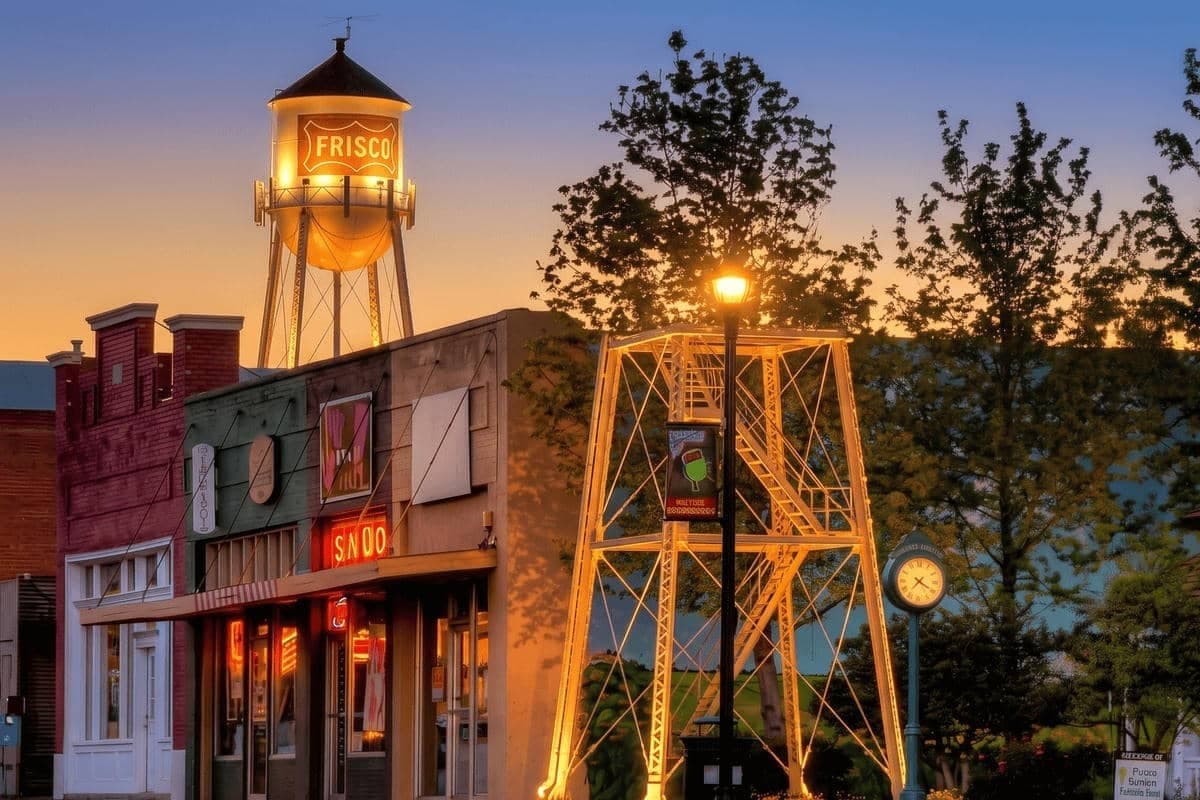
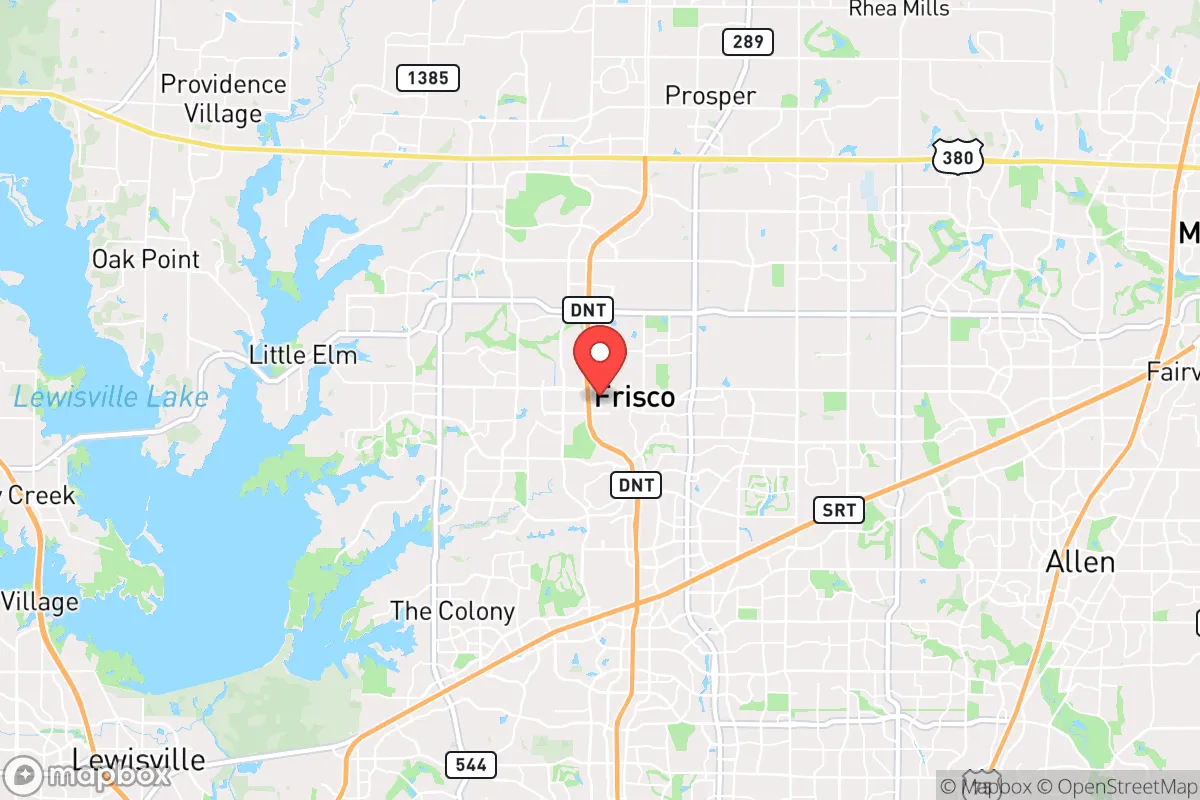
Quality of Life in Frisco, TX
A high quality of life with strong walkability, manageable living costs, healthy neighborhood signals, and solid amenity access.
What does Quality of Life tell us?
Quality of Life blends cost of living, nearby amenities, socioeconomic signals, and neighborhood character. City-level scores represent the whole municipality; individual neighborhoods can differ.
What does this tell us?
Quality of Life blends cost of living, nearby amenities, socioeconomic signals, and neighborhood character. City-level scores represent the whole municipality; individual neighborhoods can differ.
Cost of Living
83% above national average
The Real Cost of Living in Frisco, TX for 2026
| Tier | Individual | Family (4) |
|---|---|---|
| Survival | $30k | $57k |
| Comfortable | $116k | $170k |
| Luxury | $237k+ | $367k+ |
| Elite (Top 5%) | $278k+ | $431k+ |
86%
The Area Signal
A metric tracking the socioeconomic signals of the area.


Hobbies
Explore the areaGroceries
9 within 10 miles
Gas
20 within 10 miles
Hospital
20 within 20 miles
Airport
DFW — Dallas/Fort Worth International
Post Office
USPS — 8700 Stonebrook Parkway, Frisco
Critical Amenities
Quality-of-Life Analysis
Frisco, Texas, is a master-planned, affluent suburb roughly 30 miles north of Dallas that has become one of the fastest-growing cities in the United States. With a cost of living index of 183 (nearly double the national average of 100), the city attracts a demographic dominated by upper-middle-class families, corporate transferees, and professionals seeking top-tier schools and new-construction housing. The population, which surged past 200,000 in the early 2020s, skews young and educated, with a median age around 36 and a high concentration of dual-income households employed in the nearby Telecom Corridor, financial services, and healthcare sectors.
Cost of living, housing affordability, and how Frisco compares to Plano and McKinney
Frisco’s cost of living is the highest among its immediate Collin County neighbors, driven almost entirely by housing. The median home value sits at $595,400, roughly $50,000 more than in adjacent McKinney and about $30,000 above Plano. For renters, the median monthly rent of $1,902 is similarly elevated, reflecting a market where new luxury apartment complexes near the Dallas North Tollway command premiums. While groceries and healthcare are only modestly above national averages, the housing premium means that a household earning the local median income of roughly $120,000 will still spend about 30% of gross pay on a mortgage. Compared to Dallas proper, Frisco offers newer inventory and lower property tax rates (around 2.1% effective rate versus 2.5% in Dallas ISD zones), but the absolute dollar cost is significantly higher. The average one-way commute of 28.6 minutes is typical for the region, as many residents drive south to jobs in Dallas or Richardson, though the city’s own employment base—anchored by Toyota North America’s headquarters and the PGA of America—is steadily shortening that trip for new arrivals.
What daily life is like for families: schools, parks, and the "everything is new" rhythm
Daily life in Frisco revolves around its nationally recognized public school system, Frisco ISD, which consistently ranks among the top 5% of Texas districts for college readiness and offers specialized academies in STEM and fine arts. The city operates over 50 parks and 100 miles of hike-and-bike trails, with the 12,000-seat Ford Center at The Star serving as both the Dallas Cowboys’ practice facility and a community event hub. The retail landscape is dominated by Stonebriar Centre mall and the mixed-use development at The Rail District, but the defining characteristic is newness: nearly every subdivision, school, and commercial strip was built after 2000, creating a uniform, car-dependent environment with wide boulevards and minimal historic character. Restaurants and entertainment lean heavily toward chain concepts and family-oriented venues like the National Videogame Museum and Frisco RoughRiders minor-league baseball games. Traffic along the Dallas North Tollway and Preston Road is a consistent frustration during peak hours, though the city’s grid of frontage roads and toll lanes mitigates the worst congestion.
Frisco is best suited for families and professionals who prioritize school quality, low crime rates, and new housing over urban density, walkability, or cultural diversity. Empty-nesters and young singles may find the suburban homogeneity and high housing costs less appealing, while remote workers will appreciate the fast fiber internet and proximity to DFW Airport (35 minutes). The city’s rapid growth shows no signs of slowing, but newcomers should budget carefully for the elevated cost of living and prepare for a lifestyle where the car is essential for nearly every errand.

Crime in Frisco, TX
Crime rates similar to the national median for U.S. locations.
Violent CrimeViolent Crime Analysis
Property CrimeProperty Crime Analysis
Crime Analysis
Frisco, Texas, maintains a reputation as one of the safest large suburbs in the Dallas-Fort Worth metroplex, but its crime rates still demand attention from potential movers. The city’s violent crime rate stands at 342.3 incidents per 100,000 residents, while property crime occurs at a rate of 1,780.9 per 100,000. These figures place Frisco in a middle tier among Collin County communities, safer than many national averages but not immune to the property crime challenges affecting growing suburban hubs.
Crime in context
When measured against national benchmarks, Frisco’s violent crime rate of 342.3 per 100K is roughly 8% below the U.S. average of approximately 370 per 100K, and significantly lower than the Texas state average of about 445 per 100K. Property crime in Frisco, at 1,780.9 per 100K, runs about 15% below the national average of roughly 2,100 per 100K. However, these comparisons can be misleading: Frisco’s property crime rate is notably higher than in neighboring Plano (around 1,500 per 100K) or Allen (around 1,400 per 100K), reflecting the city’s dense retail corridors and high-value vehicle targets. The city benefits from a well-funded police department and a relatively affluent tax base, but its proximity to larger metro areas means it is not insulated from regional crime trends.
What residents experience
For everyday residents, the most common crimes are theft from vehicles, package theft, and occasional burglaries in newer subdivisions. Violent crime is rare but not absent: aggravated assaults account for the majority of violent incidents, often stemming from domestic disputes rather than random attacks. The presence of progressive judicial policies in Dallas County (which borders Frisco’s southern edge) and, to a lesser extent, in Collin County itself, is a legitimate concern. Prosecutorial leniency and reduced bail requirements in the broader DFW region have been linked to repeat property offenders cycling through the system quickly. Frisco’s own municipal court and police department take a stricter stance, but the city cannot fully control outcomes in county-level courts. Residents should be aware that property crime, especially auto burglary and catalytic converter theft, has ticked upward since 2021, correlating with regional trends in recidivism.
Neighborhood-level variation
Crime in Frisco is not evenly distributed. The highest property crime concentrations occur near major retail corridors like the Stonebriar Centre mall area (along the Dallas North Tollway) and the Preston Road corridor. Neighborhoods west of the tollway, particularly those with older housing stock and more rental properties, report slightly higher incident rates. Conversely, gated communities and newer master-planned developments in the northern and eastern parts of the city—such as those near Panther Creek and the Fields development—see near-zero violent crime and property crime rates below 800 per 100K. For families prioritizing safety, choosing a home in a homeowners’ association with active neighborhood watch programs and limited through-traffic is a practical strategy. Overall, Frisco remains a safe choice by national standards, but the regional justice system’s ideological tilt warrants vigilance, particularly regarding property crime prevention.
* Values derived from national, state, county, city and local statistics and may differ in a specific area. Last updated: 2026-09-21T16:18:55.000Z
Narrative content on this page is AI-generated and may contain mistakes. Verify any details that matter before acting on them.
ReloMaps may earn a commission from affiliate links at no extra cost to you.

