Political ClimatePolitical Climate in Frisco, TX
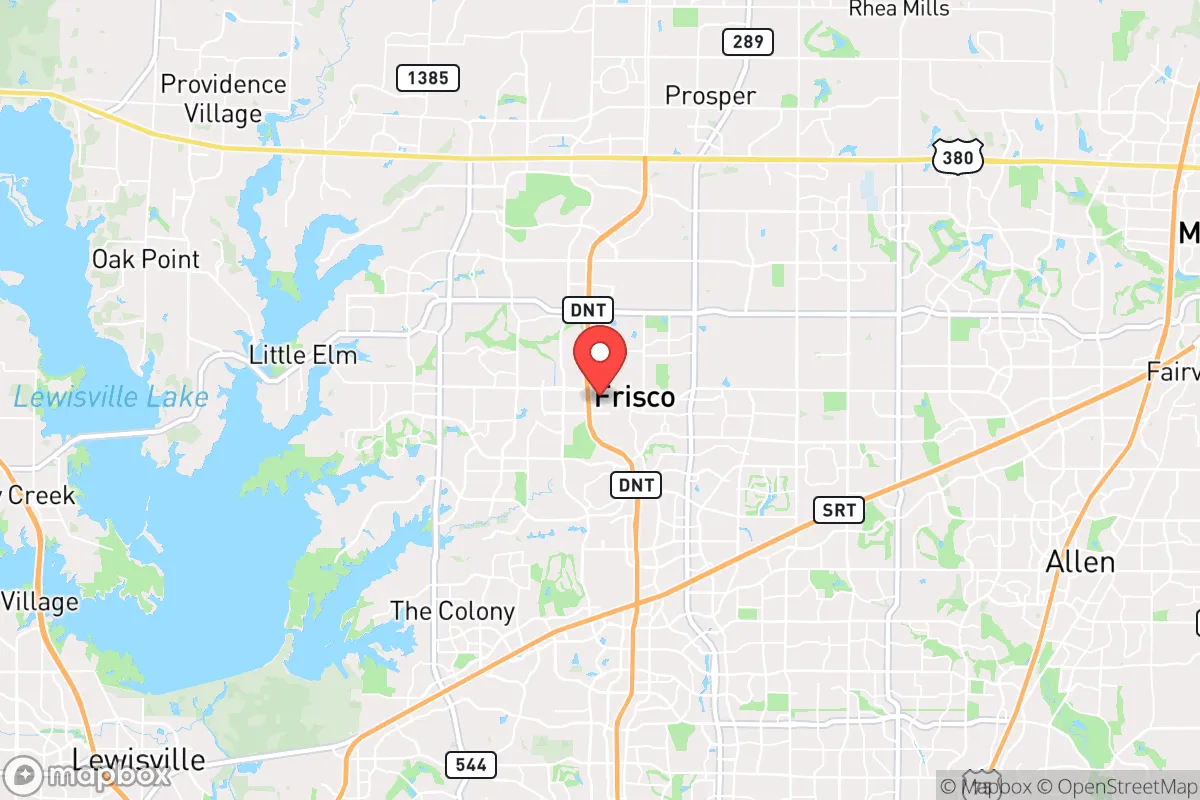
District shown is the primary district for this city’s centroid. Cities may span multiple districts.
Local Political AnalysisPolitical Analysis of Frisco, TX
Frisco’s political climate is solidly conservative, anchored by a Cook Partisan Voting Index of R+16, meaning the city leans about 16 points more Republican than the national average. That’s a bit more Republican than Collin County as a whole (R+14) and noticeably to the right of neighboring Dallas County, which has trended blue in recent cycles. Over the past decade, Frisco’s explosive growth—from roughly 116,000 residents in 2010 to over 200,000 today—has brought in a wave of new families, many drawn by top-rated schools and corporate relocations, but the overall partisan balance has held steady. If you look at the 2024 presidential results, Collin County went about 57% Republican, and Frisco’s precincts generally mirrored that, with some of the newer master-planned communities on the north side voting even more heavily red. The trajectory here isn’t toward a purple shift; it’s more like a slow, steady consolidation of the conservative base, with pockets of moderate suburban voters keeping things from swinging too far right.
How it compares
Compared to Texas as a whole, Frisco is noticeably more Republican. The state’s overall Cook PVI is unknown, but statewide elections typically land around R+5 to R+8, meaning Frisco’s R+16 puts it in the top tier of conservative suburbs. Drive 20 minutes south to Dallas proper, and you’re in a Democratic stronghold (D+25 or so). Head west to Denton, and you’ll find a college town that votes blue by a slim margin. Even within Collin County, there’s contrast: Plano, just south of Frisco, has a growing Asian-American population and a more moderate tilt, while McKinney to the east leans conservative but with a slightly softer edge. Frisco’s political identity is shaped by its rapid development—think Toyota’s North American headquarters, the Dallas Cowboys’ Star complex, and a flood of tech and finance jobs—which attracts a workforce that tends to prioritize low taxes, business-friendly policies, and school choice. That’s not to say it’s a monolith; the city’s diversity is increasing, with a significant South Asian and East Asian population, and those communities often vote more moderately, especially on economic issues. But the overall comparison to Texas is clear: Frisco is a bellwether for the state’s suburban conservative future, not its rural or urban extremes.
What this means for residents
For conservative residents, Frisco feels like home. Local elections are reliably Republican, city council races rarely see competitive Democratic challengers, and the school board tends to lean traditional on curriculum and parental rights issues. You’ll find plenty of GOP campaign signs in yards, and the local party infrastructure is active. For liberal residents, the reality is more nuanced. You won’t feel isolated—there are progressive-leaning pockets, especially in older neighborhoods near the Dallas North Tollway, and the city’s diversity means you’ll encounter a range of viewpoints. But you’re unlikely to see your preferred candidates win local offices, and policy debates often center on growth management, property taxes, and school funding rather than social issues. Both sides can agree on one thing: Frisco’s political climate is pragmatic. The city’s rapid expansion means leaders focus on infrastructure, traffic, and economic development, which keeps partisan fights somewhat muted compared to nearby cities like Austin or Houston. In practice, a liberal resident can live comfortably, join a local Democratic club, and find allies, but they’ll need to accept that the dominant political culture is conservative.
One cultural distinction worth noting: Frisco’s political identity is less about ideological purity and more about results. The city’s leadership has historically been pro-business and pro-development, which means even conservative policies are often framed in terms of economic growth rather than cultural warfare. You won’t see the same level of social-conservative activism here as in, say, rural East Texas. Instead, the tone is more “keep taxes low, keep schools excellent, and keep the city moving forward.” That pragmatic streak has helped Frisco avoid some of the bitter partisan divides seen in other fast-growing suburbs, and it’s likely to persist as the city continues to attract a mix of corporate transplants and young families. If you’re moving here, expect a conservative-leaning environment that’s more focused on the bottom line than the culture wars.

State Political ClimatePolitical Climate in Texas
State Political AnalysisPolitical Environment in the State
Texas has been a reliably Republican state for the past three decades, but the margin of victory has been shrinking. In 2024, Donald Trump won the state by roughly 9 points, down from 11 points in 2020 and 16 points in 2012. The dominant coalition remains a mix of rural conservatives, suburban moderates, and evangelical voters, but explosive growth in the metroplexes of Dallas-Fort Worth, Houston, and San Antonio is steadily shifting the state’s overall complexion. The long arc is a slow, grinding move from deep red to competitive red, with the tipping point likely still a decade or more away.
Urban vs. rural divide
The political map of Texas is a study in extremes. The major urban centers — Austin, Dallas, Houston, San Antonio, and El Paso — are solidly Democratic, with Harris County (Houston) and Travis County (Austin) routinely voting blue by 15-25 points. Meanwhile, the vast rural and exurban stretches, from the Panhandle down through West Texas and into East Texas, are deep red. The real battleground is the suburbs. Places like Collin County (north of Dallas) and Fort Bend County (southwest of Houston) have flipped from reliably Republican to competitive, with Collin County voting for Trump by only 4 points in 2024 after giving him 15 points in 2016. The Rio Grande Valley, historically a Democratic stronghold, has seen a notable rightward shift, with counties like Starr and Hidalgo moving double-digits toward the GOP in recent cycles, driven by conservative social values and frustration with border policy.
Policy environment
Texas operates under a low-tax, low-service model. There is no state income tax, but property taxes are among the highest in the nation, averaging about 1.6% of home value. The regulatory posture is business-friendly, with minimal zoning in many cities and a right-to-work law that weakens union power. Education policy is dominated by the school choice debate; the state has expanded charter schools and passed a school voucher-like program in 2023 (HB 3) that allows public funds to follow students to private schools. Healthcare is a flashpoint: Texas has the highest uninsured rate in the country (around 17%), having refused Medicaid expansion under the ACA. Election laws have tightened since 2021 with SB 1, which added ID requirements for mail-in ballots, limited drive-through voting, and banned 24-hour polling places. The state also has a near-total abortion ban (trigger law from 2021) with no exceptions for rape or incest, and a permitless carry law (HB 1927, 2021) that allows most adults to carry a handgun without a license.
Recent policy direction
The last five years have seen a sharp rightward push on cultural and liberty issues. On gun and self-defense law, Texas passed permitless carry in 2021, and in 2023, it expanded the "stand your ground" doctrine to include no duty to retreat in any place where a person is lawfully present. Parental and education rights have been a central focus: the 2023 "Parental Bill of Rights" (HB 900) requires schools to notify parents of any curriculum changes and restricts library materials deemed "sexually explicit." On speech and privacy, the state passed a law in 2023 (HB 20) that prohibits social media platforms from moderating content based on viewpoint, though it is currently tied up in court. Medical and bodily autonomy is heavily restricted: the abortion ban is total, and the state has also restricted gender-affirming care for minors (SB 14, 2023). Property rights remain strong, with no state-level rent control and a homestead exemption that protects primary residences from forced sale. Taxation has seen a modest shift: in 2023, the state approved a $12.7 billion property tax cut, funded by a surplus, that raised the homestead exemption from $40,000 to $100,000. Voting and ballot access has tightened, but turnout remains high — Texas saw record turnout in 2020 and 2024, driven by both sides.
Civil unrest & political movements
Texas has a long history of political activism, and recent years have been no exception. The 2020 protests over George Floyd’s murder in Minneapolis sparked large demonstrations in Austin, Dallas, and Houston, with some turning violent in Austin. The state legislature responded with a 2021 law (HB 9) that increased penalties for rioting and blocking highways. On the right, the "Patriot" movement and constitutional sheriff groups are active in rural counties, particularly in East Texas and the Panhandle. Immigration politics are a constant flashpoint: Governor Greg Abbott’s Operation Lone Star (2021-present) has deployed state troopers and National Guard to the border, bused migrants to Democratic-led cities, and installed razor wire along the Rio Grande. The state has also passed a law (SB 4, 2023) that allows state law enforcement to arrest and deport migrants, though it is blocked by federal courts. Secession rhetoric, while not mainstream, has a vocal fringe — the "Texit" movement has held rallies and pushed for a 2024 ballot initiative, though it failed to gain traction. Election integrity controversies have been less intense than in states like Georgia, but the 2020 audit of four counties (including Harris) found no evidence of widespread fraud, though it did identify administrative errors.
Projection
Over the next 5-10 years, Texas will continue to trend purple, but the pace depends on who moves in. The state is adding roughly 1,000 new residents per day, many from California and the Northeast, and they tend to be younger and more diverse. The suburbs of Dallas, Houston, and Austin will continue to shift left, while the Rio Grande Valley may become a true swing region. Republicans will likely hold the state legislature and governor’s office through 2030 due to gerrymandering and the concentration of Democratic voters in cities, but the presidential margin could drop to 5 points or less. The policy environment will remain conservative on cultural issues — expect further restrictions on abortion and transgender rights — but may moderate on economic issues as the state’s infrastructure strains under growth. A new resident moving in now should expect a state that is still red, but with a growing blue minority that will make every election a fight.
For a new resident, the bottom line is this: Texas offers low taxes, strong property rights, and a business-friendly climate, but you’ll pay for it with high property taxes, limited public services, and a political environment that is increasingly polarized. If you’re conservative, you’ll find a state that largely aligns with your values on guns, education, and abortion. If you’re liberal, you’ll find vibrant cities and a growing opposition, but you’ll also face a state government that is actively hostile to many of your priorities. Either way, the state is changing fast, and the politics of 2035 will look very different from today.
* Values derived from national, state, county, city and local statistics and may differ in a specific area. Last updated: 2026-09-21T16:18:55.000Z
Narrative content on this page is AI-generated and may contain mistakes. Verify any details that matter before acting on them.
ReloMaps may earn a commission from affiliate links at no extra cost to you.

