
Photo: Wikipedia
Quality of Life in Gainesville, GA
A high quality of life with strong walkability, manageable living costs, healthy neighborhood signals, and solid amenity access.
What does Quality of Life tell us?
Quality of Life blends cost of living, nearby amenities, socioeconomic signals, and neighborhood character. City-level scores represent the whole municipality; individual neighborhoods can differ.
What does this tell us?
Quality of Life blends cost of living, nearby amenities, socioeconomic signals, and neighborhood character. City-level scores represent the whole municipality; individual neighborhoods can differ.
Cost of Living
11% above national average
The Real Cost of Living in Gainesville, GA for 2026
| Tier | Individual | Family (4) |
|---|---|---|
| Survival | $20k | $37k |
| Comfortable | $65k | $96k |
| Luxury | $117k+ | $181k+ |
| Elite (Top 5%) | $159k+ | $246k+ |
67%
The Area Signal
A metric tracking the socioeconomic signals of the area.
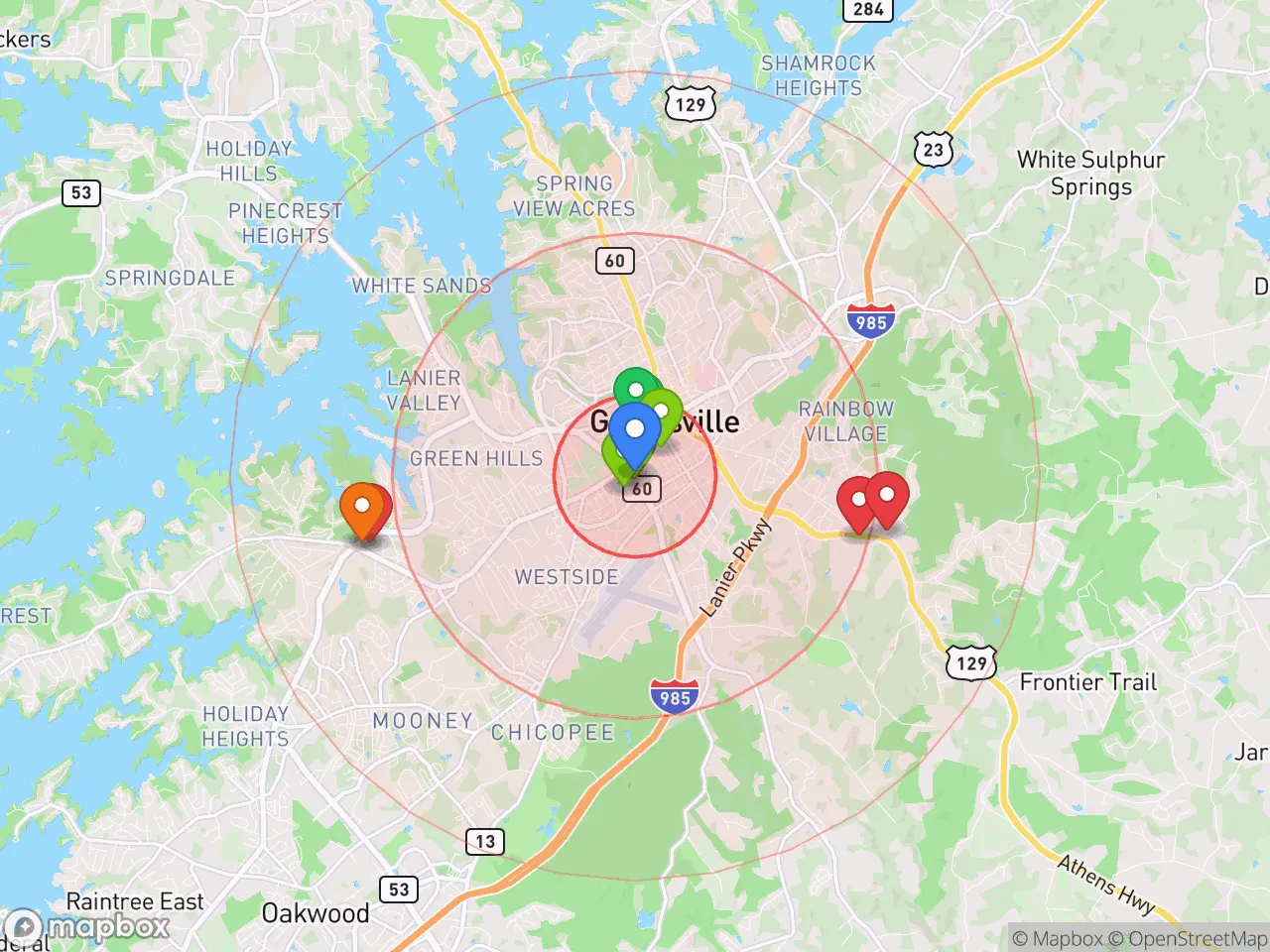
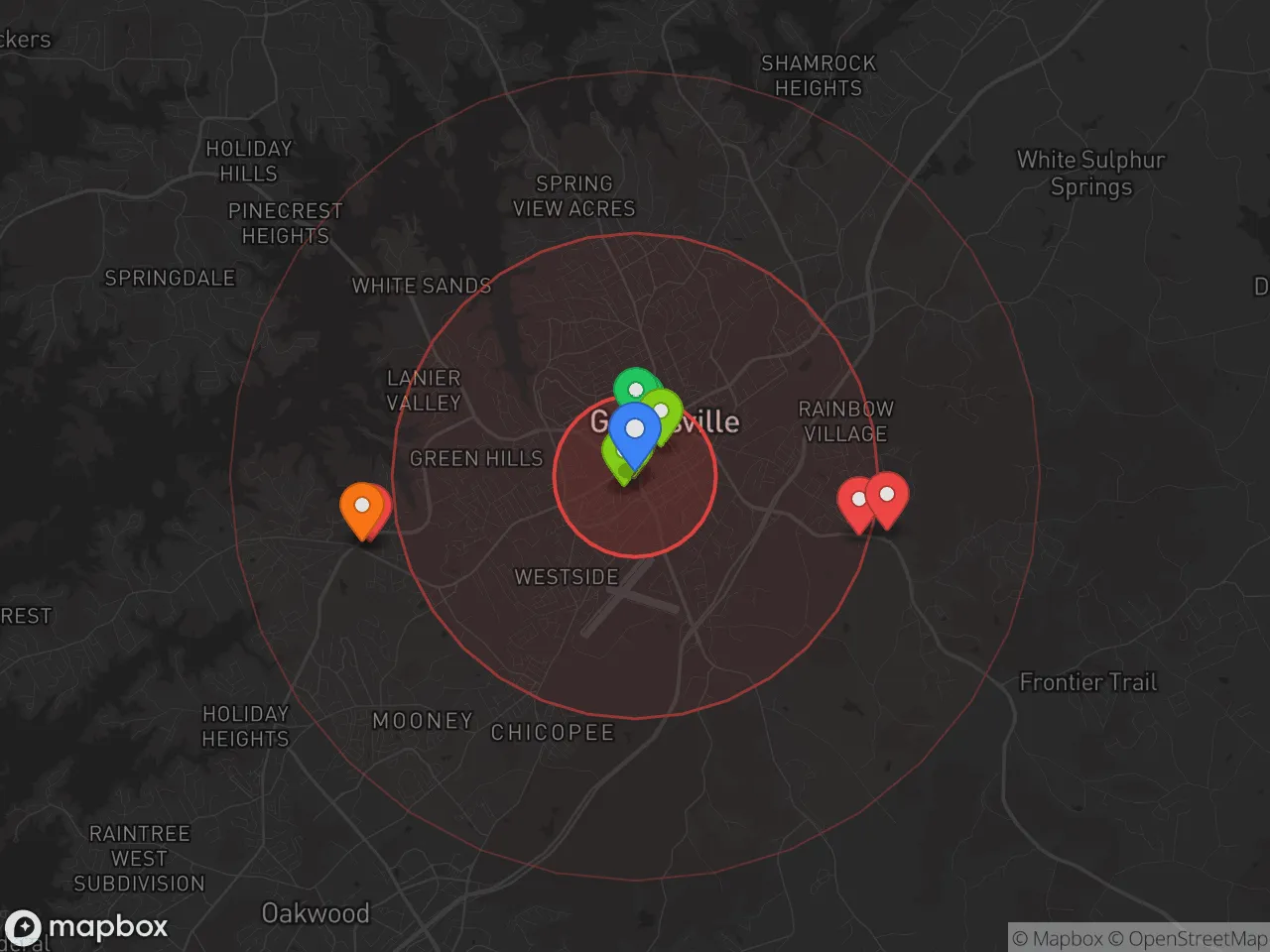
Hobbies
Explore the areaGroceries
6 within 10 miles
Gas
20 within 10 miles
Hospital
4 within 20 miles
Airport
ATL — Hartsfield–Jackson Atlanta International
Post Office
USPS — Gainesville, GA
Critical Amenities
Quality-of-Life Analysis
Gainesville, Georgia, presents a quality of life defined by steady economic growth, a strong sense of community, and a cost of living that sits noticeably above the national average. With a cost-of-living index of 111 (where 100 equals the U.S. average), the city attracts a mix of young professionals, established families, and retirees drawn to its position as the hub of Hall County and its proximity to Lake Lanier. The population skews toward those who value a slower pace than metro Atlanta, yet still require access to regional employment centers and outdoor recreation.
Cost of living and housing affordability compared to Atlanta and Lake Lanier
Housing is the primary driver of Gainesville’s above-average cost of living. The median home value sits at $337,000, which is roughly 15% higher than the national median but notably lower than the Atlanta metro median of approximately $400,000. Median rent is $1,234, making it more affordable than nearby cities like Alpharetta or Cumming, where rents often exceed $1,600. For buyers, the market is competitive but not as overheated as Atlanta’s core; inventory has improved slightly since 2024. The average commute of 23.9 minutes is shorter than the Atlanta metro average of 30+ minutes, a meaningful advantage for workers employed locally at major employers like Northeast Georgia Health System, Kubota, or Fieldale Farms. Property taxes in Hall County are moderate, and while overall expenses are higher than rural Georgia, Gainesville remains cheaper than most of the Atlanta suburbs within a 30-minute drive.
Schools, amenities, and the daily rhythm of life in Gainesville
Daily life in Gainesville revolves around a blend of small-town walkability and regional amenities. The Gainesville City School District consistently earns above-average ratings, with Gainesville High School offering an International Baccalaureate program and a strong fine-arts track. For families, the presence of the Lake Lanier Olympic Park and the Gainesville Theatre Alliance provides year-round recreation and cultural events. The downtown square, anchored by the historic Hall County Courthouse, hosts a farmers market and seasonal festivals that draw residents from across the county. Grocery and retail options are ample, with the Gainesville Marketplace and Lakeshore Mall covering daily needs. The city’s proximity to the Chattahoochee National Forest and Brasstown Bald means hiking, fishing, and boating are within a 30-minute drive, giving the area a distinctly outdoor-oriented rhythm that contrasts with the more car-centric sprawl of southern Gwinnett County.
Gainesville is best suited for those who want a lower-stress commute, solid public schools, and immediate access to Lake Lanier without paying North Atlanta prices. Retirees and remote workers will find the slower pace appealing, while families benefit from the district’s academic programs and the city’s low violent crime rate relative to similarly sized Georgia towns. Professionals who work in Gainesville’s healthcare, manufacturing, or logistics sectors will find the cost-to-income ratio favorable. However, those seeking ultra-urban nightlife or a sub-$250,000 home may need to look further north or into more rural Hall County communities. For the right buyer, Gainesville offers a balanced, lake-adjacent lifestyle that is increasingly rare in the expanding Atlanta orbit.

Crime in Gainesville, GA
Crime rates similar to the national median for U.S. locations.
Violent CrimeViolent Crime Analysis
Property CrimeProperty Crime Analysis
Crime Analysis
Gainesville, Georgia, reports a violent crime rate of 402.4 incidents per 100,000 residents and a property crime rate of 1,658.4 per 100,000, placing it above both state and national averages for public safety risk. As a growing city within commuting distance of Atlanta, Gainesville faces crime pressures common to suburban hubs near large metro areas, where population growth and transient populations can strain local law enforcement. The city’s proximity to a major progressive metropolitan region raises specific concerns about the broader justice system’s approach to crime, which directly impacts safety outcomes for residents.
Crime in context
Gainesville’s violent crime rate of 402.4 per 100,000 is roughly 15% higher than the national average and significantly above the Georgia state average of approximately 380 per 100,000. Property crime at 1,658.4 per 100,000 also exceeds the national benchmark of around 1,950, though it is slightly below the Georgia state average. These figures place Gainesville in a higher-risk tier compared to smaller, more rural Hall County communities. The presence of progressive prosecutorial policies in the broader Atlanta judicial district—where district attorneys often emphasize diversion programs and reduced sentencing—is a documented factor in recidivism rates. Readers should understand that such policies, while sympathetic to offenders, can result in more criminals returning to the streets, undermining public safety and victim justice.
What residents experience
Daily life in Gainesville involves a heightened awareness of property crimes such as vehicle break-ins, package theft, and residential burglaries, which are the most common offenses. Violent incidents, including aggravated assault and robbery, occur with enough frequency that many residents avoid certain areas after dark. The city’s police department has implemented community policing initiatives, but the underlying challenge remains the revolving-door effect of a justice system that prioritizes offender rehabilitation over incarceration. For families and retirees, this means a greater need for home security systems, neighborhood watch participation, and vigilance when parking or walking in commercial districts. The local economy’s reliance on the poultry industry and logistics also brings a transient workforce, which can correlate with higher crime turnover.
Neighborhood-level variation
Safety in Gainesville is not uniform. The downtown core and areas near the Lake Lanier shoreline tend to see lower violent crime rates due to higher property values and more active patrols. In contrast, neighborhoods along Jesse Jewell Parkway and the industrial corridors near I-985 report higher incidences of both property and violent crime. The city’s eastern and southern quadrants, particularly around the New Holland community, have historically experienced more frequent police calls. Prospective residents should examine block-level crime maps and consider that the progressive judicial philosophy in Hall County’s superior courts may lead to shorter sentences for repeat offenders, making neighborhood choice a critical factor in personal safety.
* Values derived from national, state, county, city and local statistics and may differ in a specific area. Last updated: 2026-04-30T03:02:14.000Z
Narrative content on this page is AI-generated and may contain mistakes. Verify any details that matter before acting on them.
ReloMaps may earn a commission from affiliate links at no extra cost to you.

