 Popular
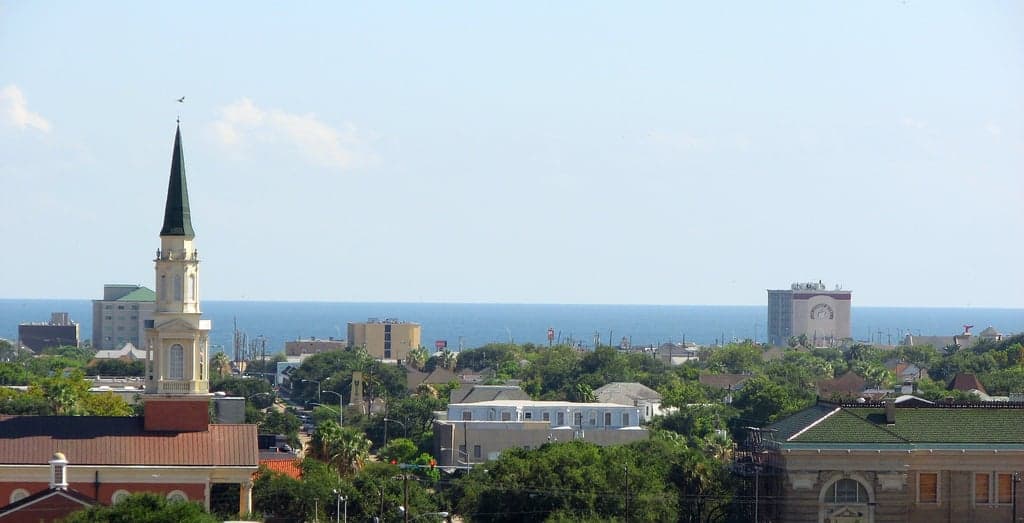
Photo: Wikipedia
Personal Sovereignty in Galveston, TX
Strong independent fundamentals that actively favor personal liberty and low regulation.
What does Personal Sovereignty tell us?
Personal Sovereignty measures your capacity for self-reliance and independence with minimal government friction. Higher scores mean fewer barriers between you and the way you want to live... but it assumes you have the space you need and good neighbors.
What does this tell us?
Personal Sovereignty measures your capacity for self-reliance and independence with minimal government friction. Higher scores mean fewer barriers between you and the way you want to live... but it assumes you have the space you need and good neighbors.
State Policy
Energy independence: Net exporter (220% of energy produced in-state)
Personal Liberty
Homesteading

Personal Liberty Analysis
Galveston, Texas offers a notably high degree of personal sovereignty compared to most of the United States, but it is not a libertarian paradise. The city operates under Texas state law, which provides strong protections for gun rights, property rights, and parental authority, yet local ordinances and the realities of island life—including flood zones, tourism pressures, and a Democratic-leaning city council—create friction points for those seeking maximum autonomy. For a survivalist or prepper evaluating Galveston, the key trade-off is between the state’s robust legal framework for self-reliance and the local government’s tendency toward regulation, particularly in building codes and short-term rental restrictions. The overall environment leans favorable for individuals and families who prioritize personal responsibility, but it requires active vigilance against municipal overreach.
Tax burden and regulatory posture in Galveston compared to the rest of Texas
Texas has no state income tax, which is a foundational advantage for personal sovereignty—every dollar you earn stays in your pocket. Galveston County’s property tax rate hovers around 2.1% of assessed value, slightly above the state average, driven by local school districts and flood control infrastructure. The city itself imposes a sales tax of 8.25% (state + local), which is standard for Texas but higher than rural counties. Regulatory posture is mixed: the city enforces strict building codes in flood zones (FEMA-mandated elevation requirements), which can add $30,000–$50,000 to construction costs and limit off-grid modifications like ground-level cisterns or unpermitted sheds. However, Texas’s lack of zoning in unincorporated areas does not apply inside Galveston city limits—here, zoning is active, with residential, commercial, and historic district overlays that restrict land use. For a prepper, this means you cannot simply buy a lot and build a bunker without navigating the city’s planning department. The upside: no state-level business or inventory taxes, and no personal property tax on vehicles or boats, which preserves capital for self-sufficiency investments.
Self-defense rights and specific gun laws in Galveston
Texas is a constitutional carry state as of 2021, meaning no permit is required to carry a handgun openly or concealed for anyone 21 or older who can legally possess a firearm. Galveston does not impose additional local restrictions beyond state law, so you can carry in most public spaces—including parks, sidewalks, and businesses that do not post 30.06 or 30.07 signage. The city has a few sensitive locations (courthouses, schools, airports) where carry is prohibited by state statute, but these are standard. Stand-your-ground laws apply statewide, with no duty to retreat in any place you are lawfully present. Magazine capacity is unlimited, and there is no state-level registry or waiting period. For preppers, the key detail is that Texas law preempts local firearm ordinances, so Galveston cannot ban carry in city parks or impose its own background checks. However, the city’s police department has a reputation for aggressive enforcement of disorderly conduct statutes near tourist areas—so carrying discreetly is wise. Self-defense with a firearm in your home or vehicle is strongly protected, but using deadly force in a public confrontation still invites legal scrutiny, even under stand-your-ground.
Self-reliance and homesteading viability: lot sizes, zoning, and off-grid feasibility
Galveston’s island geography severely limits traditional homesteading. The average residential lot size is 5,000 to 7,000 square feet, with many homes on narrow lots in historic districts. Zoning prohibits livestock (chickens are allowed with a permit, but no goats or larger animals) and restricts accessory structures like workshops or greenhouses in many neighborhoods. Off-grid feasibility is low: the city requires connection to municipal water and sewer in most areas, and solar panels must comply with building codes and HOA rules if applicable. Rainwater collection is legal but limited by roof size and cistern capacity—typical systems yield only 500–1,000 gallons per month, insufficient for full independence. For a serious prepper, Galveston is not a homesteading location; it is a coastal urban environment where self-reliance means stockpiling supplies, maintaining a bug-out vehicle, and having a plan to evacuate during hurricanes. The upside: Texas has no state-level restrictions on food storage, seed saving, or medical stockpiles, and the island’s proximity to Houston (45 minutes) provides access to bulk suppliers and medical facilities. If you want acreage for a self-sufficient compound, look inland to counties like Chambers or Liberty, not Galveston.
Personal liberties: parental rights, medical autonomy, speech, and property
Texas is one of the strongest states for parental rights in education. Parents have the legal right to opt their children out of any curriculum or activity they find objectionable, and the state’s 2023 “Parental Bill of Rights” (HB 900) requires schools to notify parents of instructional materials and allows them to review library books. Galveston ISD, while generally compliant, has faced local controversies over library content and transgender policies—so active parental involvement is necessary. Medical autonomy is robust: Texas does not mandate COVID-19 vaccines for adults or children, and there is no state-level vaccine passport. However, Galveston’s public hospitals (UTMB) follow federal CMS mandates for staff vaccination, which may limit employment options for healthcare workers who refuse vaccines. Speech is protected under the First Amendment, and Texas has no hate speech laws that criminalize political expression. Property rights are strong: Texas has no state-level eminent domain abuse beyond federal standards, and Galveston’s city council cannot seize property for private development without just compensation. The main threat to property sovereignty is flood insurance mandates—if you have a federally backed mortgage in a flood zone, you must carry flood insurance, which is effectively a government-imposed cost on ownership.
Overall, Galveston ranks above average for personal sovereignty among U.S. cities, but it is not a top-tier location for hardcore preppers or survivalists. The state-level protections—no income tax, constitutional carry, parental rights, and medical freedom—create a solid foundation. The local drawbacks—zoning restrictions, flood regulations, and limited homesteading potential—mean that your autonomy is best exercised through legal compliance and strategic planning, not by ignoring the system. Compared to coastal cities in California or the Northeast, Galveston is a haven; compared to rural Texas counties, it is a compromise. For a conservative individual or family who values self-reliance but needs coastal access and urban infrastructure, Galveston offers a workable balance—provided you stay informed, stay armed, and stay ready to push back against local overreach.

* Values derived from national, state, county, city and local statistics and may differ in a specific area. Last updated: 2026-05-12T00:16:58.000Z
Narrative content on this page is AI-generated and may contain mistakes. Verify any details that matter before acting on them.
ReloMaps may earn a commission from affiliate links at no extra cost to you.

